
Cinque vergognosi minuti di Bruno Vespa. L’intervento del consigliere Rai, Roberto Natale
@Giornalismo e disordine informativo
articolo21.org/2026/02/cinque-…
“I ‘Cinque Minuti’ che Bruno Vespa ha proposto nell’intervista ad Angelo Bonelli meritano di entrare nella
Francesco Capaldini likes this.
The Surprising Hackability Of A Knock-Off Chinese Toy Camera

My colleague Lewin on the other side of the world has recently bought himself a new camera. It’s a very cute little thing, a Kodak Charmera, the latest badge-engineered device to carry the venerable photography company’s name. It’s a keyring camera, not much bigger than my thumb, and packing a few-megapixel sensor and a little fixed-focus camera module. They’re all the rage and thus always sold out, so when I saw something similar on AliExpress for just under a tenner I was curious enough to drop in an order. How bad could it be?
A Blatant-Knock-Off With Interesting Internals
My G6 Thumb Camera arrived a few days later, as straightforward a copy of a branded product as I have seen, and while it’s by any measure not a high quality camera, I am pleasantly surprised how bad it isn’t. I’ve received a three megapixel camera with image and movie quality that’s far better than that of the kids toy cameras I’ve played with before at a similar price, and that’s something I find amazing. This isn’t a review of a cheap camera, instead it’s an investigation of what goes into a camera like this one. How can they make a camera that’s almost useful, for under a tenner?
If I were setting out to make this camera, I would reach for a microcontroller and one of the variety of cheap all-in-one camera modules on the market. You can buy just that for a similar price, the so-called ESP32-cam module, which pairs the Tensilica version of the microcontroller with a parallel-interface camera module. You can do all manner of hacks with an ESP32-cam and I have too, but unlike my knock-off Kodak it’s not quite fast enough for usable video. Plus, it doesn’t come with a battery and screen.
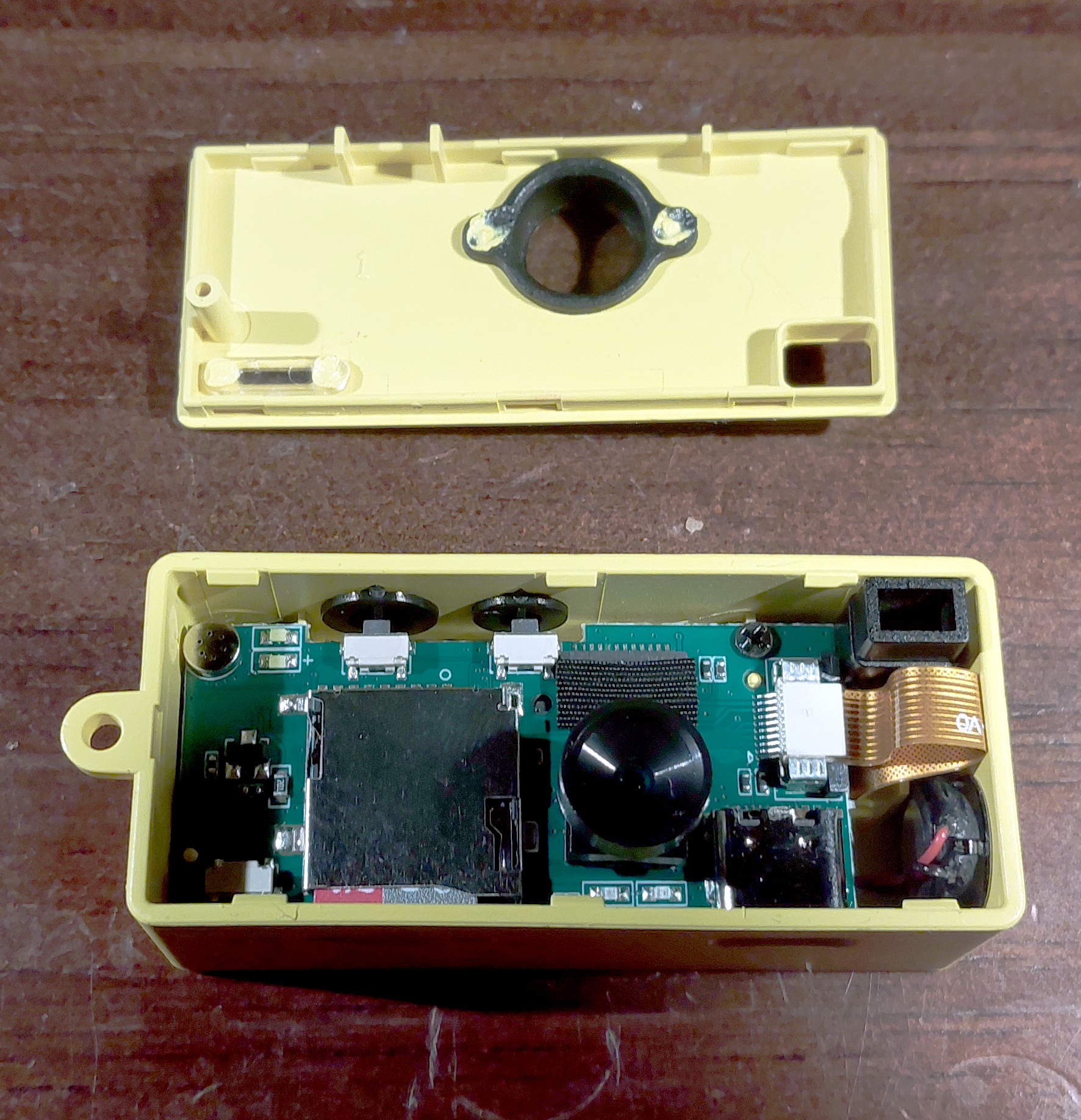
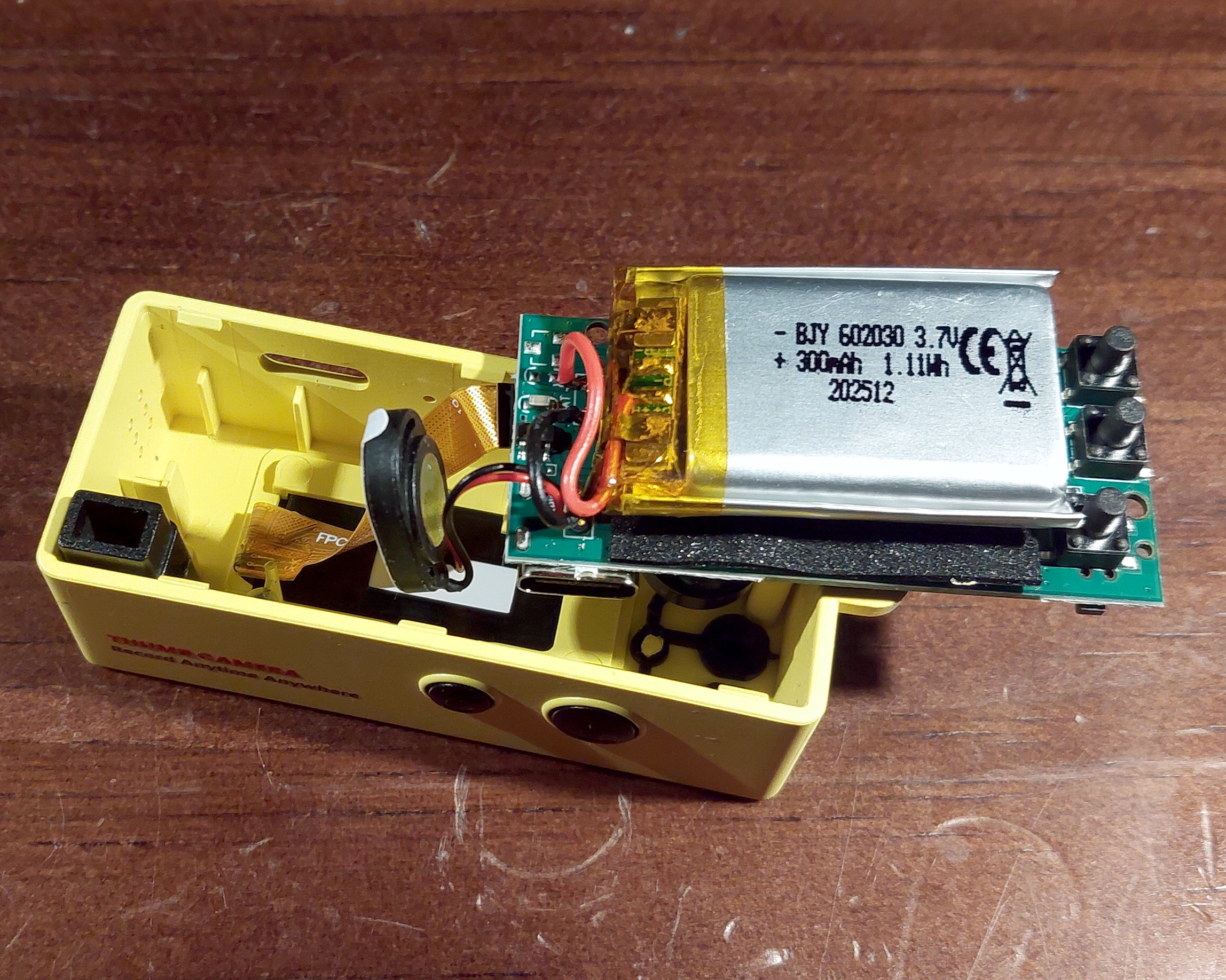
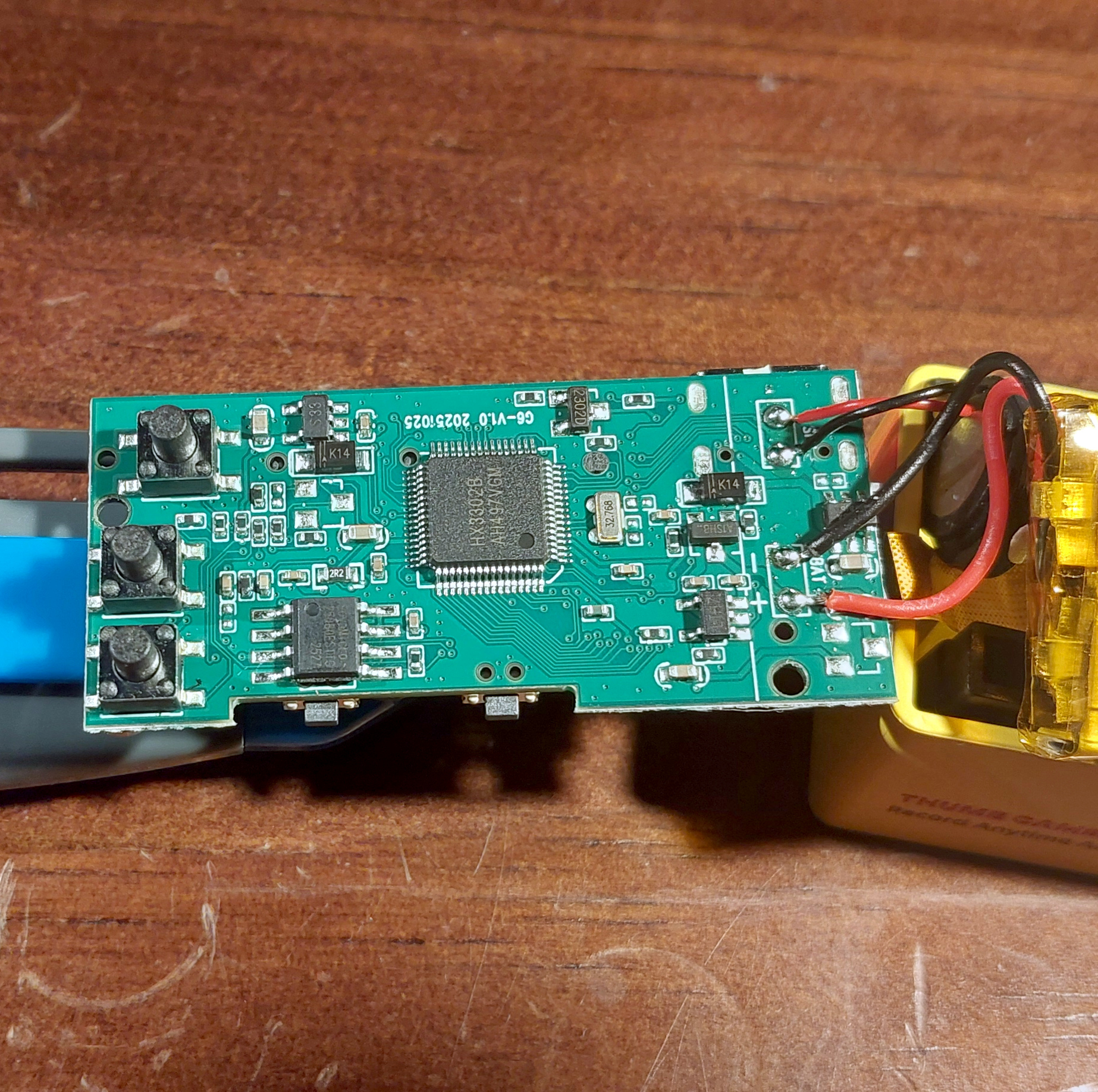
The little thumb camera is easy enough to crack open, and doing so reveals a small PCB with as expected a camera module dangling from it on a flexible PCB. It’s got a lens with an M8 mount which technically makes it an interchangeable lens camera, but we doubt anyone’s going to change lenses on this thing. Undoing a couple of screws, the board comes out along with the battery, speaker, and display connection, and on the reverse is the SoC, and a Flash memory chip. It’s an HX-Tech HX3302B, a dedicated IC for small cameras which appears in so many of these devices, but one which is sadly one of those Chinese chips for which almost no info can be found online. Oddly some of the best info comes from a familiar source, Sprite_TM has done a little hacking here and discovered that it has an openRISC 1000 core and the firmware is usually accessible, but beyond that no handy data sheets are to be had.
Just Good Enough To Be A Camera-As-A-Module
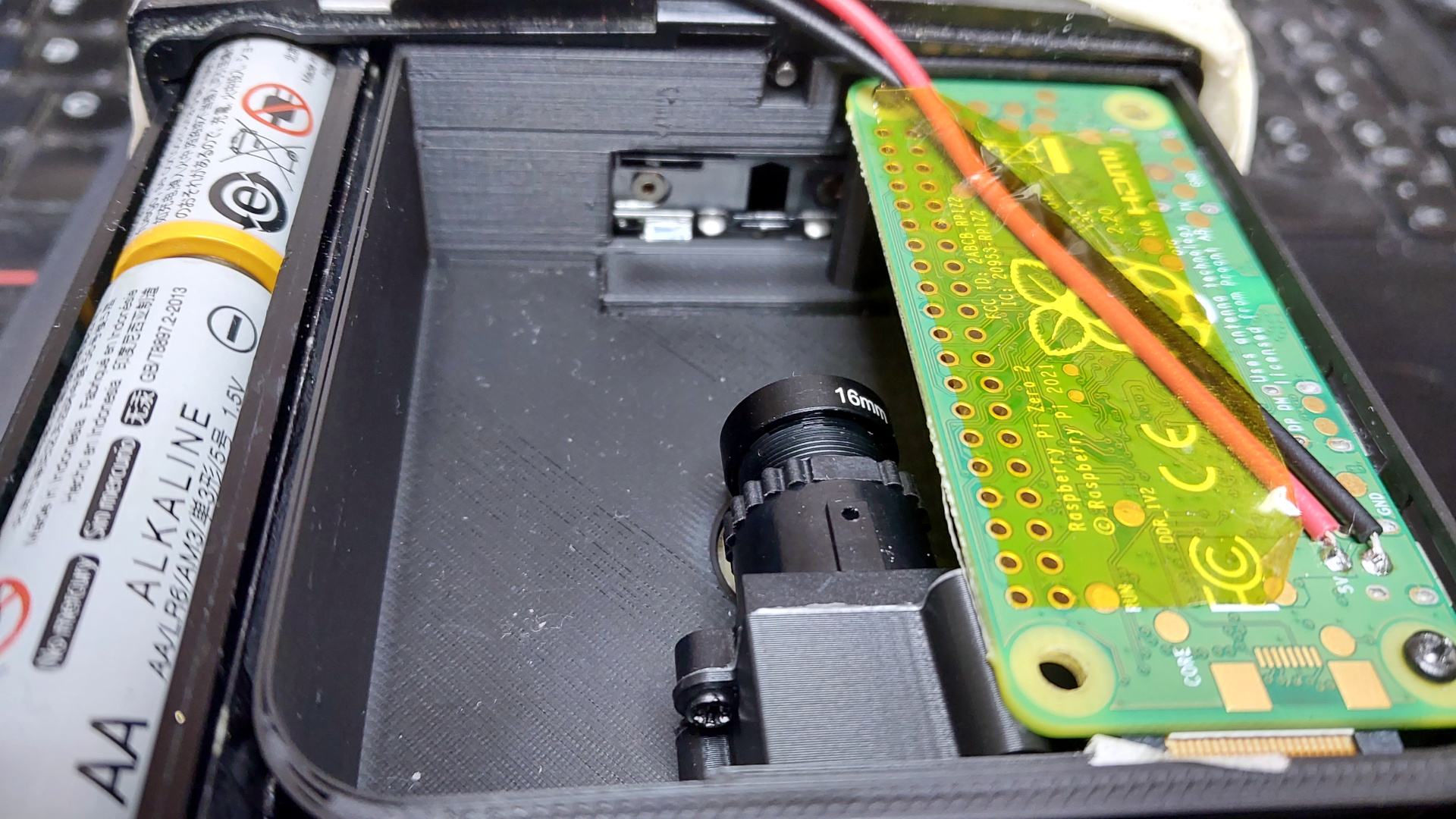
My camera then can be software-hacked, but not easily. If that were all then we’d be at the end of it, and I’d have merely another trinket. But there’s another reason I bought this thing, and that’s because I wanted a hardware hackable camera, not a software one. I want to use a small sensor like this behind all manner of custom lenses and mirrors in projects featuring repurposed 1970s snapshot cameras, and while I can and have used Raspberry Pi cameras and those ESP32s to do the job, that introduces annoying things like software and power systems to the equation. This camera has the germ of a digital camera as a module; I can take away the M8 lens and surround to replace it with my own optics, and in an instant I have a digital camera of my own without the hassle. Suddenly a just-good-enough novelty camera becomes rather interesting.
So my knock-off novelty integrates a package I would struggle to replicate for the price, and holds the promise of many creative camera hacks to come. I’ll probably follow the path I have with Pi cameras of fitting an M12 macro lens, and rear-focusing on the focal plane of a full-frame film camera for retro digital fun.
In the ten days or so since the work for this article started, the G6 Thumb Camera has been removed from AliExpress in Europe. You can still find it by switching your country to somewhere far-flung, but given that as you can see from the photos above it really is a blatant knock-off of the Kodak product it is hardly surprising that some lawyers have probably made a call. The good news is though that for hacking it doesn’t matter what the case says. I’ll be looking out for the inevitable follow-up, a thumb camera that’s not such a knock-off but which packs the same internals, and if you’re enjoying camera hacking, I suggest you do too.


The Graph Theory of Circuit Sculptures

Like many of us, [Tim]’s seen online videos of circuit sculptures containing illuminated LED filaments. Unlike most of us, however, he went a step further by using graph theory to design glowing structures made entirely of filaments.
The problem isn’t as straightforward as it might first appear: all the segments need to be illuminated, there should be as few powered junctions as possible, and to allow a single power supply voltage, all paths between powered junctions should have the same length. Ideally, all filaments would carry the same amount of current, but even if they don’t, the difference in brightness isn’t always noticeable. [Tim] found three ways to power these structures: direct current between fixed points, current supplied between alternating points so as to take different paths through the structure, and alternating current supplied between two fixed points (essentially, a glowing full-bridge rectifier).
To find workable structures, [Tim] represented circuits as directed graphs, with each junction being a vertex and each filament a directed edge, then developed filter criteria to find graphs corresponding to working circuits. In the case of power supplied from fixed points, the problem turned out to be equivalent to the edge-geodesic cover problem. Graphs that solve this problem are bipartite, which provided an effective filter criterion. The solutions this method found often had uneven brightness, so he also screened for circuits that could be decomposed into a set of paths that visit each edge exactly once – ensuring that each filament would receive the same current. He also found a set of conditions to identify circuits using rectifier-type alternating current driving, which you can see on the webpage he created to visualize the different possible structures.
We’ve seen some artistic illuminated circuit art before, some using LED filaments. This project doesn’t take exactly the same approach, but if you’re interested in more about graph theory and route planning, check out this article.


Polizei im Netz: Wie die Polizei Soziale Netzwerke mit Copaganda flutet
netzpolitik.org/2026/polizei-i…

[2026-02-14] CAZZURILLO with da Magik Band ♥︎ ESSAIRA ♥︎ UNITED SAUDADE OF AMERICA @ Casa Occupata Gorizia @ Casa Occupata Gorizia
CAZZURILLO with da Magik Band ♥︎ ESSAIRA ♥︎ UNITED SAUDADE OF AMERICA @ Casa Occupata Gorizia
Casa Occupata Gorizia - Via Vigevano 2, Milano
(sabato, 14 febbraio 21:30)
♡ SABATO 14 FEBBRAIO ♡

♥︎ CAZZURILLO with da Magik Band - Apocalyptic chilly mess (Grinchland)
cazzurillo.bandcamp.com/feed/r…
youtu.be/g0zD039WYEE?si=vxecpp…
♥︎ ESSAIRA - Punkstrial Against Genocide (Bologna)
rawculture.bandcamp.com/album/…
♥︎ UNITED SAUDADE OF AMERICAS - Ex tropicalarabian sound (Ex Arabia)
lepers.bandcamp.com/album/amer…
Gabbie aperte dalle 21:00
[2026-02-12] Sala Open 2026 - Proiezione di "D'istruzione Pubblica" @ Cinema Galliera
Sala Open 2026 - Proiezione di "D'istruzione Pubblica"
Cinema Galliera - Via Giacomo Matteotti 27
(giovedì, 12 febbraio 21:00)
𝟭𝟮 𝗘 𝟭𝟳 𝗙𝗘𝗕𝗕𝗥𝗔𝗜𝗢 - 𝗗❜𝗜𝗦𝗧𝗥𝗨𝗭𝗜𝗢𝗡𝗘 𝗣𝗨𝗕𝗕𝗟𝗜𝗖𝗔 𝗔𝗥𝗥𝗜𝗩𝗔 𝗜𝗡 𝗦𝗔𝗟𝗔 𝗢𝗣𝗘𝗡! con OpenDDB

📖 𝗖𝗵𝗲 𝗰𝗼𝘀’𝗲̀ 𝗱𝗮𝘃𝘃𝗲𝗿𝗼 𝗹𝗮 𝘀𝗰𝘂𝗼𝗹𝗮 𝗼𝗴𝗴𝗶? 𝗘 𝘀𝗼𝗽𝗿𝗮𝘁𝘁𝘂𝘁𝘁𝗼: 𝗰𝗵𝗲 𝗰𝗼𝘀𝗮 𝘀𝘁𝗮 𝗱𝗶𝘃𝗲𝗻𝘁𝗮𝗻𝗱𝗼?
🎞 𝐃’𝐈𝐬𝐭𝐫𝐮𝐳𝐢𝐨𝐧𝐞 𝐏𝐮𝐛𝐛𝐥𝐢𝐜𝐚, di Federico Greco e Mirko Melchiorre, è un film-inchiesta che, attraverso la storia di un dirigente scolastico e le voci di docenti, filosofi ed esperti, ricostruisce il processo - lento ma continuo- di graduale smantellamento dell’istruzione pubblica e della sua trasformazione in un modello sempre più aziendale.
📍 Cinema Teatro Galliera – Bologna
🗓 𝟭𝟮 𝗙𝗲𝗯𝗯𝗿𝗮𝗶𝗼 - 𝗼𝗿𝗲 𝟮𝟭 🎙ospiti in sala Mirko Melchiorre co-regista e Lorenzo Varaldo protagonista
🗓 𝟭𝟳 𝗙𝗲𝗯𝗯𝗿𝗮𝗶𝗼 - 𝗼𝗿𝗲 𝟭𝟵
👀 𝗖𝗶 𝘃𝗲𝗱𝗶𝗮𝗺𝗼 𝗶𝗻 𝘀𝗮𝗹𝗮. 𝗜𝗻𝗳𝗼 𝗲 𝗽𝗿𝗼𝗴𝗿𝗮𝗺𝗺𝗮 𝗰𝗼𝗺𝗽𝗹𝗲𝘁𝗼
⚠️ 𝗣𝗿𝗲𝗻𝗼𝘁𝗮𝘇𝗶𝗼𝗻𝗲 𝗮𝗹𝘁𝗮𝗺𝗲𝗻𝘁𝗲 𝗰𝗼𝗻𝘀𝗶𝗴𝗹𝗶𝗮𝘁𝗮⚠️
👉cinemateatrogalliera.it/distru…
****
SINOSSI
SCUOLA. Termine derivante dal lat. Schŏla, che in origine significava (come otium) tempo libero, piacevole uso delle proprie disposizioni intellettuali, indipendentemente da ogni bisogno o scopo pratico.
Da anni Lorenzo Varaldo è dirigente scolastico dell’Istituto Sibilla Aleramo di Torino, che comprende elementari e medie. Ma lui preferisce essere chiamato “preside”, o meglio: “direttore didattico”. In questa scelta, apparentemente banale, c’è invece un’idea precisa ed estremamente consapevole di mondo e di lotta. La lotta per impedire la distruzione dell’istruzione pubblica, la sua aziendalizzazione, che Lorenzo vede attuarsi da ormai quarant’anni.
Una distruzione che viene da molto lontano, come spiegano docenti, filosofi ed esperti italiani e internazionali: dagli Stati Uniti di fine Ottocento, passando per l’Unione europea degli anni ’90 e infine dalle riforme della scuola a partire da quella dell’autonomia di Bassanini e Berlinguer.
[2026-02-12] Hackerare i dispositivi digitali per restituirli all’uso @ Vivero
Hackerare i dispositivi digitali per restituirli all’uso
Vivero - via Antonio Raimondi 37
(giovedì, 12 febbraio 19:00)
Giovedì 12 febbraio alle 19 - Dal Laboratorio Palestina alle strategie di sabotaggio e consapevolezza digitale

Giovedì 12 febbraio, dalle 19:00 alle 21:30, nell’ambito dell’iniziativa 100x100gaza , per rispondere collettivamente alla catastrofe provocata dal genocidio, Rotta Genuina e Vivèro ospitano una serata di approfondimento su cybersicurezza, controllo digitale e tecnologie conviviali.
Le tecnologie digitali non sono mai neutre: tracciano, profilano, monitorano e spesso replicano disuguaglianze che esistono offline.
Sono strumenti di dominio con impatti sociali e politici molto concreti.
Partendo dal “Laboratorio Palestina”, dove le tecnologie digitali vengono sperimentate come strumenti di controllo, sorveglianza e guerra, allargheremo lo sguardo alla dimensione geopolitica globale, fino ad arrivare all’Italia, per capire come le tecnologie controllano e attraversano i nostri territori.
Proveremo a immaginare modelli tecnologici e pratiche alternative a quelli grandi piattaforme, costruendo insieme una nuova “cassetta degli strumenti”.
Ne parleremo insieme a
- Dario Guarascio - docente di economia a La Sapienza, autore del libro Imperialismo Digitale, Laterza
- Graffio - del gruppo di ricerca C.I.R.C.E.
- GazaWeb – Gli alberi della rete
📌 Di cosa discuteremo:
🔹 come i dispositivi digitali possono essere usati per controllare, sorvegliare e normalizzare forme di violenza
🔹 il “Laboratorio Palestina”: sperimentazione di strumenti digitali di controllo
🔹 il ruolo delle Big Tech e dei finanziamenti europei nel mantenimento di questi sistemi
🔹 pratiche di boicottaggio e alternative tecnologiche conviviali
🔹 strumenti concreti di consapevolezza digitale
🔹 come sostenere progetti di tecnologie solidali e di lotta
🍷Aperitivo, banchetti di GazaWeb e Women for Gaza + raccolta fondi per la settimana 100x100 Gaza.
📍 Vivero –via Antonio Raimondi 37 | 12 febbraio | 19:00–21:30
A seguire concerto benefit da zazienelmetro_bar
[2026-02-07] Cenere e diamanti @ Candelo - Oratorio di San Pietro
Cenere e diamanti
Candelo - Oratorio di San Pietro - via San Pietro, 5 - Candelo
(sabato, 7 febbraio 21:00)
No al bullismo e al cyberbullismo.

Archiviazione dei siti web dedicati ai Giochi olimpici invernali di Milano Cortina 2026
La Biblioteca nazionale centrale di Firenze, nell’ambito del proprio servizio di Web archiving, sostiene la campagna promossa dall’IIPC – International Internet Preservation Consortium per la creazione di una collezione internazionale e cooperativa di siti e altre risorse web dedicata ai Giochi olimpici invernali di Milano Cortina 2026.
L’IIPC, infatti, archivia da 15 anni risorse web sui Giochi olimpici, sia estivi che invernali.
Considerato che quest’anno i Giochi si svolgeranno sul nostro territorio nazionale, la conservazione del patrimonio informativo web in lingua italiana è prioritario.
Sono di interesse per la collezione le seguenti tipologie di risorse:
- Siti web
- Sezioni di siti web
- Singoli articoli
- Notizie
- Blog
- Contenuti audiovisivi
Per motivi tecnici, non sarà possibile raccogliere contenuti pubblicati sulle piattaforme Social.
Un elenco non esaustivo delle tematiche di maggiore interesse comprende:
- Atleti/Squadre
- Videogames
- Doping/Truffa e corruzione
- Questioni ambientali
- Fandom
- Questioni di genere (ad es. copertura mediatica, molestie sessuali, ecc.)
- Notizie generali/Commenti
- Questioni relative ai diritti umani
- Sedi olimpiche/paraolimpiche
- Sicurezza
- Eventi sportivi
Si invitano, pertanto, tutti i proprietari o responsabili di siti e risorse web italiani o in lingua italiana ad aderire alla campagna di archiviazione compilando l’apposito form online (tempo di compilazione: 5 minuti) entro il 22 marzo 2026.
Maggiori informazioni possono essere richieste all’indirizzo mail della Biblioteca:
bnc-fi.magazzinidigitali@cultura.gov.it
L'articolo Archiviazione dei siti web dedicati ai Giochi olimpici invernali di Milano Cortina 2026 proviene da Biblioteca nazionale centrale di Firenze.
After 30 Years, Virtual Boy Gets its Chance to Shine

When looking back on classic gaming, there’s plenty of room for debate. What was the best Atari game? Which was the superior 16-bit console, the Genesis or the Super NES? Would the N64 have been more commercially successful if it had used CDs over cartridges? It goes on and on. Many of these questions are subjective, and have no definitive answer.
But even with so many opinions swirling around, there’s at least one point that anyone with even a passing knowledge of gaming history will agree with — the Virtual Boy is unquestionably the worst gaming system Nintendo ever produced. Which is what makes its return in 2026 all the more unexpected.

In many ways it’s the forebear of modern virtual reality (VR) headsets, but its high cost, small library of games, and the technical limitations of its unique display technology ultimately lead to it being pulled from shelves after less than a year on the market.
Now, 30 years after its disappointing debut, this groundbreaking system is getting a second chance. Later this month, Nintendo will be releasing a replica of the Virtual Boy into which players can insert their Switch or Switch 2 console. The device essentially works like Google Cardboard, and with the release of an official emulator, users will be able to play Virtual Boy games complete with the 3D effect the system was known for.
This is an exciting opportunity for those with an interest in classic gaming, as the relative rarity of the Virtual Boy has made it difficult to experience these games in the way they were meant to be played. It’s also reviving interest in this unique piece of hardware, and although we can’t turn back the clock on the financial failure of the Virtual Boy, perhaps a new generation can at least appreciate the engineering that made it possible.
Cutting Edge Technology
Looking at the Virtual Boy today, it’s easy to assume that it operates on more or less the same principles as modern VR headsets, with two independent displays used to show slightly different perspectives of the same scene to the player in order to trick their brain into seeing a three dimensional image. Indeed, that’s how it would be done today if you were to create a modern version of the Virtual Boy, and is essentially how the Switch version of the system will work.

The solution ended up coming from an American company, Reflection Technology. In the late 1980s they had developed a product called “The Private Eye”, a wearable monocle display that could connect to a standard computer. Utilizing the company’s patented Scanned Linear Array technology, it had a resolution of 720×280 and retailed for $795.
Reflection tried shopping the Scanned Linear Array technology around to other companies, including Sega, but were repeatedly turned down due to its cost and complexity. Eventually Gunpei Yokoi, head of Nintendo’s R&D and legendary creator of the Game Boy, came across the device and was impressed. He believed a scaled-down version of the technology could create a new type of gameplay experience that would be difficult for competitors to match, and so Nintendo entered into an exclusive licensing agreement for the Scanned Linear Array as it applied to gaming.
More than Meets the Eye
Contrary to our contemporary expectations, the Virtual Boy doesn’t have two screens. In fact, it doesn’t even have one. Instead, the Scanned Linear Array makes use of a single column of LEDs and a rapidly oscillating mirror to project an image into the user’s eye. By scanning back and forth across the eye fast enough, persistence of vision makes the viewer see a complete image.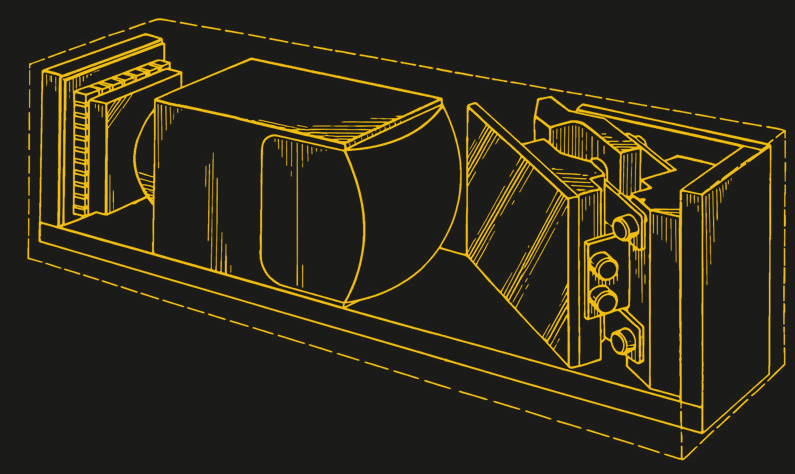
The Private Eye used a single Scanned Linear Array element to create a 2D image in one eye, but the Virtual Boy featured two identical units to achieve its 3D effect. To bring the cost down, the resolution was dropped to 384×224, which corresponded to a column of 224 tiny LEDs for each eye. Recently The Slow Mo Guys on YouTube captured incredible footage of how the technology actually works inside the Virtual Boy, utilizing some clever video editing to demonstrate how each 1×244 LED array is able to draw out an entire frame of video.
youtube.com/embed/jW7M8H99x7Y?…
Monochromatic Miscalculation
As impressive as the Scanned Linear Array technology was, it had a critical flaw in that it could only produce an image in shades of red. While technically you could produce a full-color image via this method, it would require a red, green, and blue array for each eye, plus the necessary optics to combine their output.
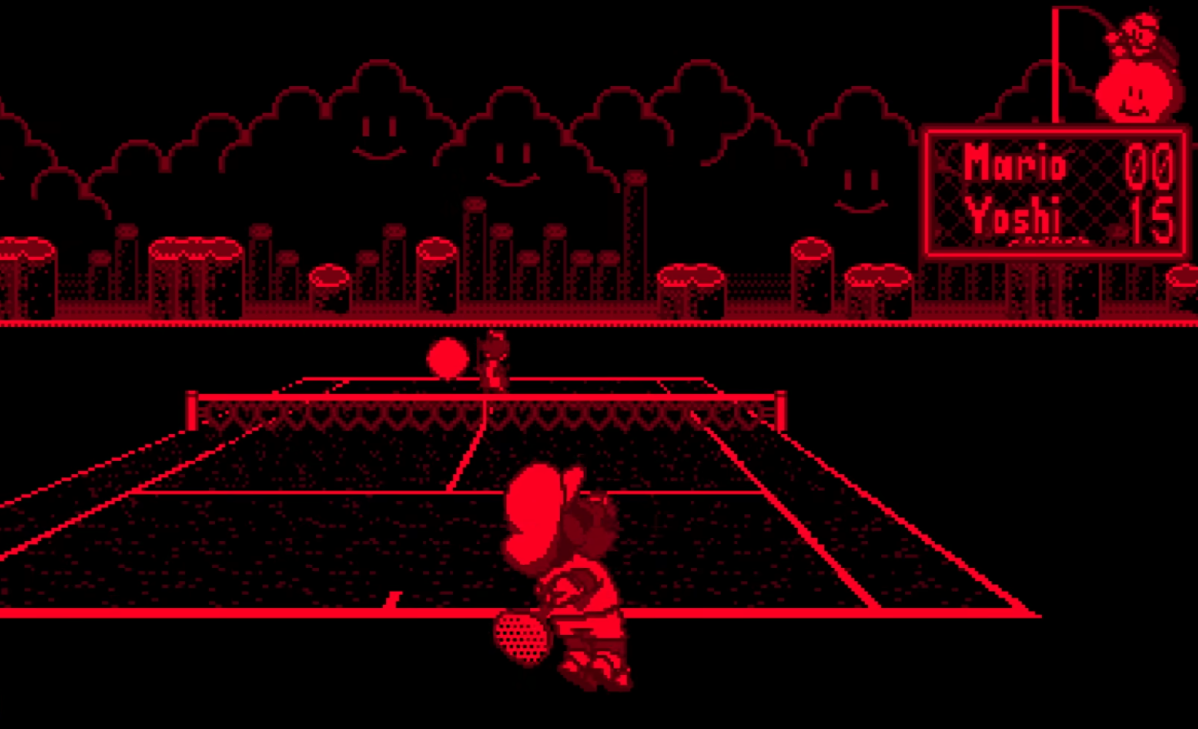
By the time the Virtual Boy was being developed, blue LEDs were available but they were not yet common, and would have substantially raised the cost of the device. But even if this wasn’t the case, there was no way to fit all six LED arrays and the required optics into the Virtual Boy. As it was, the system was too heavy to wear like a modern VR headset, and needed to be held up to eye level with a tabletop stand. The power consumption would also have been prohibitive — even with just the two LED arrays, the system could only run for approximately four hours on six AA batteries.
Despite these challenges, Nintendo reportedly did experiment with versions of the Virtual Boy that could display more colors. But in the end, just like The Private Eye that came before it, the console was only capable of a red-on-black color scheme that users found unpleasant to view for extended periods of time. As if that wasn’t bad enough for a game system, many players experienced eyestrain from the 3D imagery, and even Nintendo’s own advertisements claimed children under the age of seven shouldn’t use the system due to the potential for eye damage.
The Modern Solution
While the Switch support for Virtual Boy games will at least mean these titles get to be played by a larger audience, there’s something bittersweet about how it will work. The Virtual Boy accessory for the Switch is nothing but a hollow plastic shell with a slot for the player to insert their Switch, and for those that don’t want to spend $99, Nintendo says there’ll even be a cardboard version that accomplishes the same goal. Like Google’s phone-based VR offering, all you really need is to hold a couple of lenses and partition off each eye.
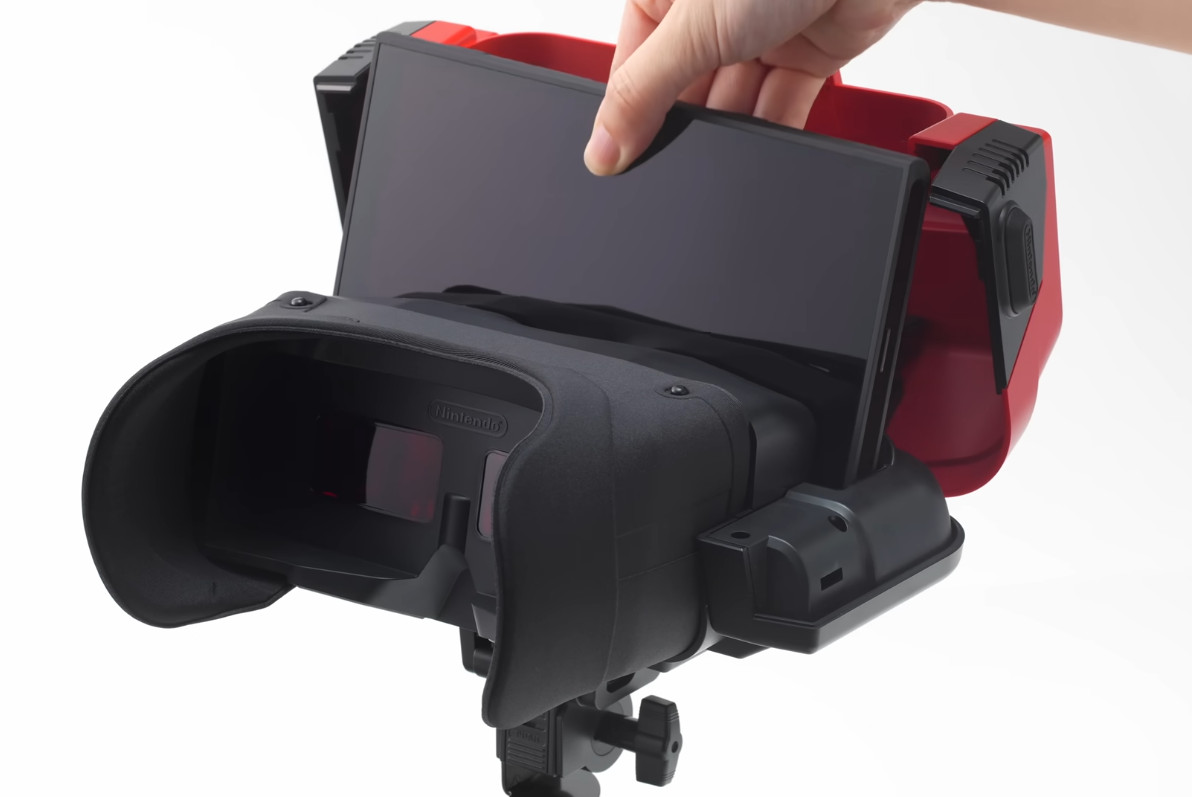
All the heavy lifting will be done in software, with the two perspectives on gameplay being displayed in a split-screen fashion. A simple and easy to implement approach that takes advantage of the Switch’s modern high-resolution widescreen display and processing power.
It’s a logical solution to a problem which once took hundreds of dollars worth of custom hardware to solve, and will undoubtedly work even better than the original version. This is especially true since Nintendo has said they plan on adding support for rendering the games in colors other than red.
Still, it won’t be nearly as impressive as the engineering that went into the Virtual Boy itself. So if you find yourself playing Mario Tennis or Galactic Pinball through the literal rose-tinted glasses of the Switch’s upcoming accessory, take a moment to appreciate all the incredible work that went into developing the hardware capable of rendering them thirty years ago.
#USA e #Iran, guerra rimandata?

USA e Iran, guerra rimandata? -
Quello a cui si è assistito in questi giorni sull’asse Washington-Teheran è l’ennesimo dietro front di Donald Trump a un passo dallo scatenare un nuovo fronteMario Lombardo (altrenotizie.org)
Medusa ha colpito il Comune di Battipaglia
@Informatica (Italy e non Italy 😁)
La ransomware gang Medusa ha rivendicato un attacco ai server informatici del Comune di Battipaglia, con l'esfiltrazione di oltre 200.000 files.
Source
L'articolo proviene dal blog #ZeroZone di @Mic Pin
zerozone.it/cybersecurity/medu…
19 FEBBRAIO: LA PROTESTA TORNA IN CORTEO SULL' ARDEATINA
Giovedì 19 febbraio torniamo in corteo sull’Ardeatina per manifestare contro la condanna che Gualtieri vorrebbe infliggere alla terra dove viviamo.
La nostra protesta contro le decisioni di Gualtieri e del potere romano tutto, vuol rendere chiaro che la comunità di donne e uomini impegnata da anni contro l’inceneritore non ha nessuna intenzione di piegarsi ma, al contrario, rilancia la mobilitazione intensificando le azioni territoriali perché vogliamo che molte più persone prendano coscienza del male che il mostro brucia rifiuti porta al nostro vivere.
Torneremo a manifestare per le bambine e i bambini che hanno aperto i nostri cortei estivi e i cui occhi continueranno a trasmetterci la forza che serve per restare liberi dai veleni di Roma.
Partiremo dal piazzale di via Ardeatina, angolo con via della Cancelliera, dove, poco meno di due anni ci stringemmo nel giuramento di Santa Palomba.
Ci troviamo là dalle 17.00.

#Ambiente #StopInceneritore #NoInceneritore #NoInceneritori #ZeroWaste #Rifiuti #Riciclo #EconomiaCircolare #termovalorizzatore #rifiuti #gualtieri #inquinamento #Roma
Francesco Capaldini likes this.
LED Interior Lighting Could Compromise Human Visual Performance

LED lighting is now commonplace across homes, businesses, and industrial settings. It uses little energy and provides a great deal of light. However, a new study suggests it may come with a trade-off. New research suggests human vision may not perform at its peak under this particular form of illumination.
The study ran with a small number of subjects (n=22) aged between 23 to 65 years. They were tested prior to the study for normal visual function and good health. Participants worked exclusively under LED lighting, with a select group then later also given supplemental incandescent light (with all its attendant extra wavelengths) in their working area—which appears to have been a typical workshop environment.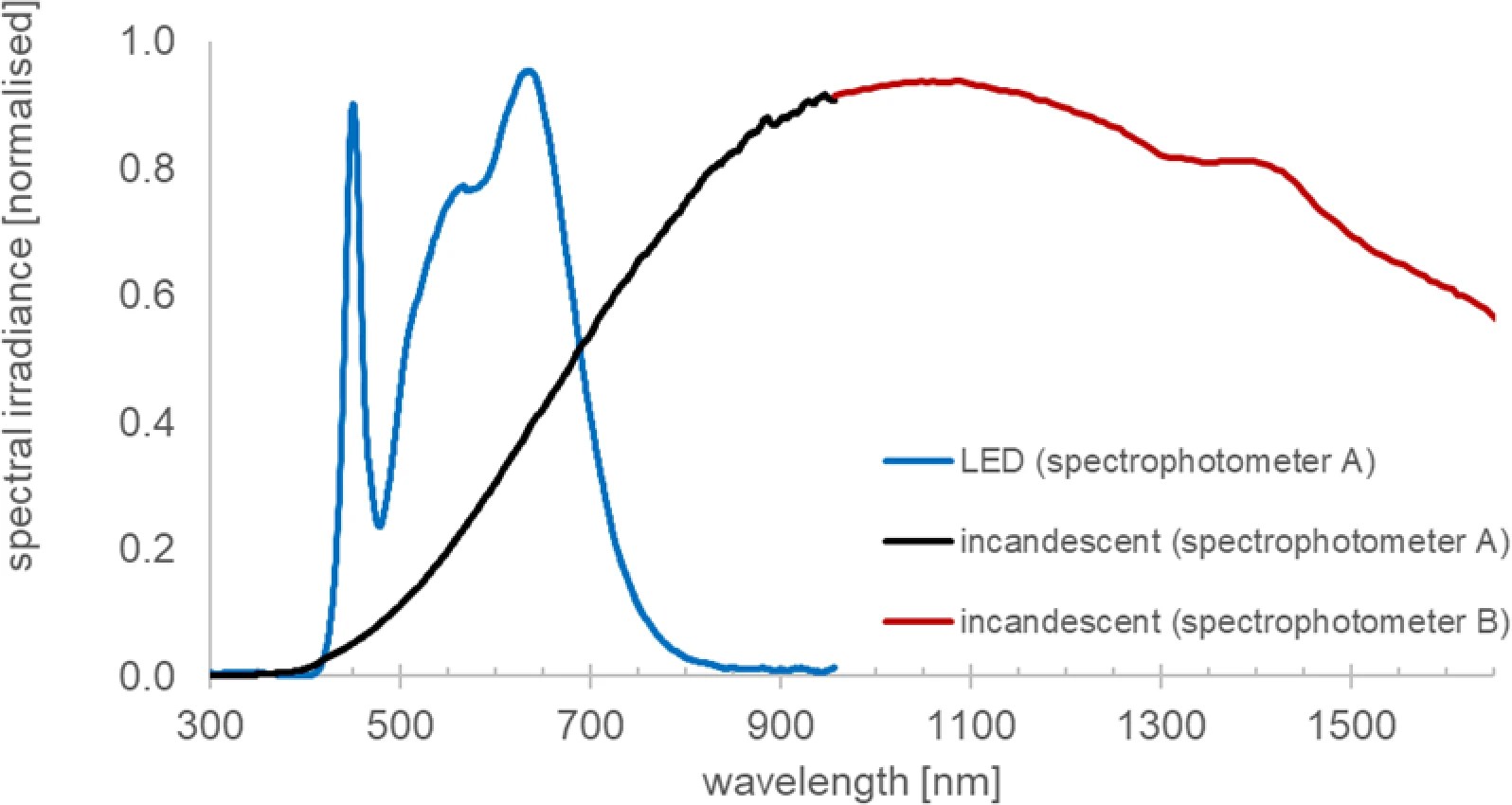
Notably, once incandescent lighting was introduced, those experimental subjects showed significant increases in visual performance using ChromaTest color contrast testing. This was noted across both tritan (blue) and protan (red) axes of the test, which involves picking out characters against a noisy background. Interestingly, the positive effect of the incandescent lighting did not immediately diminish when those individuals returned to using purely LED lighting once again. At tests 4 and 6 weeks after the incandescent lighting was removed, the individuals continued to score higher on the color contrast tests. Similar long-lasting effects have been noted in other studies involving supplementing LED lights with infrared wavelengths, however the boost has only lasted for around 5 days.
The exact mechanism at play here is unknown. The study authors speculate as to a range of complex physical and biological mechanisms that could be at play, but more research will be needed to tease out exactly what’s going on. In any case, it suggests there may be a very real positive effect on vision from the wider range of wavelengths provided by good old incandescent bulbs. As an aside, if you’ve figured out how to get 40/40 vision with a few cheap WS2812Bs, don’t hesitate to notify the tip line.
Thanks to [Keith Olson] for the tip!
Referendum, da Comitati No lettera a parlamentari per voto fuorisede
@Giornalismo e disordine informativo
articolo21.org/2026/02/referen…
“Oltre cinque milioni di persone rischiano di essere esclusi da partecipazione democratica”. Una lettera indirizzata a tutti i parlamentari per un intervento legislativo
Lo “scudo” contro lo stato di diritto
@Giornalismo e disordine informativo
articolo21.org/2026/02/lo-scud…
Cinquantamila persone hanno manifestato pacificamente a Torino. Alcune migliaia si sono infiltrate e hanno provocato violenze ingiustificabili. Il risultato è sotto gli occhi di tutti: la manifestazione è stata completamente oscurata nella narrazione e la violenza,
Referendum: democratici, autolesionistico astenersi
@Giornalismo e disordine informativo
articolo21.org/2026/02/referen…
La risposta più vincolante che dovremo dare, da cittadini democratici, il 22 e 23 marzo, è se la riforma della giustizia proposta dalla maggioranza Fdi, Lega, Forza Italia, Noi Moderati e da un ministro che ancora oggi
Linda Sartini reshared this.
Draghi rilancia gli Stati Uniti d’Europa. I Giovani Federalisti Europei a TPI: “È ora di prendere in mano il nostro destino”
@Politica interna, europea e internazionale
Mario Draghi è stato chiaro: il mondo che ha cullato l’Europa nel benessere e nella sicurezza non esiste più e l’unica alternativa, non solo per sopravvivere ma per entrare nel novero
Calma e sangue freddo. A proposito dei molti ddl sicurezza
@Giornalismo e disordine informativo
articolo21.org/2026/02/calma-e…
Quello che Trump ha messo in atto, a Minneapolis come in tutto il paese, arriva anche qui, correndo attraverso i legami di una Internazionale Nera che ormai è sotto gli occhi di tutti
L'articolo Calma
Francesco Capaldini likes this.
Unica speranza: essere sani!
@Privacy Pride
Il post completo di Christian Bernieri è sul suo blog: garantepiracy.it/blog/lincubo/
"Quando c'è la salute..." magari fosse una banalità, purtroppo è una tragedia annunciata. Chi frequenta gli ospedali per lavoro si distingue al volo: ha uno sguardo corrucciato ma sereno, a volte affaccendato, a volte nullafacente, ma sereno. Questi sguardi sereni incrociano spesso
Leonardo–Adani, anche con gli elicotteri si eleva la partnership Italia-India
@Notizie dall'Italia e dal mondo
L’accordo tra Leonardo e Adani Defence & Aerospace per la costruzione di un ecosistema elicotteristico in India va letto oltre la dimensione industriale e commerciale. La firma del Memorandum of Understanding annunciata a Nuova Delhi segna un passaggio rilevante
[2026-02-07] BENEFIT INGUAIATX: SOTHIAC + THE HOUSE OF WAX @ collettivo anarchico Bandiera Nera
BENEFIT INGUAIATX: SOTHIAC + THE HOUSE OF WAX
collettivo anarchico Bandiera Nera - viale Monza 255
(sabato, 7 febbraio 21:30)

“La riscossa europea parte dai cittadini”: a Parigi il Congresso di Eumans
@Politica interna, europea e internazionale
Un milione e duecentomila firme di cittadini di tutta l’Unione europea hanno prodotto un effetto preciso e verificabile: l’obbligo formale per la Commissione Ue di esprimersi sull’accesso all’aborto sicuro in Europa. È quanto avvenuto con “My Voice, My Choice”, l’iniziativa dei Cittadini Europei
like this
reshared this
Oh bene, una volta tanto una scissione a destra 😂


Vannacci ha deciso di lasciare la Lega
https://www.ilpost.it/2026/02/03/vannacci-lascia-lega/?utm_source=flipboard&utm_medium=activitypubPubblicato su News @news-ilPost
Vannacci ha deciso di lasciare la Lega
Dopo mesi di disaccordi con il leader Matteo Salvini, che l'aveva accolto nel partito per sfruttare la sua popolarità presso l'elettorato di destra più radicaleIl Post

like this
Poliversity - Università ricerca e giornalismo reshared this.
agi.it/cronaca/news/2026-02-03…
sono quelle cose "indimostrabili" nel senso che se anche pensi che una persona ne soffra una persona di fatto "fragile" neppure accetta che tu lo dica, perché interpreta tutto come una critica.
informapirata ⁂ reshared this.
È giunta l’ora di un’Europa finalmente ritrovata? L’opinione del gen. Del Casale
@Notizie dall'Italia e dal mondo
Il primo ministro canadese, Mark Carney, è stato il protagonista indiscusso dell’annuale World economic forum di Davos. Il suo richiamo alla realtà per le “medie potenze” è uno spartiacque tra la tradizionale visione del mondo basata sulla centralità degli
Nds 2026, l’industria Usa è pronta a una guerra con la Cina?
@Notizie dall'Italia e dal mondo
La National defense strategy 2026 degli Stati Uniti ha il merito della franchezza. Per la prima volta in un documento strategico di questo livello, il Pentagono ammette esplicitamente che la base industriale della difesa americana non è dimensionata per sostenere un conflitto ad alta intensità contro


Roberto Vannacci lascia la Lega: annuncio imminente
@Politica interna, europea e internazionale
Roberto Vannacci lascia la Lega. L’annuncio ufficiale dovrebbe arrivare nel Consiglio federale del partito, in calendario a Milano nel pomeriggio di oggi, martedì 3 febbraio. L’indiscrezione emerge dopo nella serata di ieri l’eurodeputato – che è anche vicesegretario del Carroccio – ha avuto un faccia a faccia con

Il crollo demografico e quello dei salari...
ilsole24ore.com/art/italia-cro…

Italia: il crollo demografico e la riduzione dei salari
Il crollo demografico in Italia è una realtà che abbiamo documentato in un precedente articolo. Ci sono diverse cause ed una di queste, a nostro ...Il Sole 24 ORE
Il collasso del liberalismo globale
m.youtube.com/watch?v=0pPzS5Qg…
Una riflessione di Michele Serra sui fatti di Torino in cui mi riconosco molto.
Il giorno che picchiano la marmotta
https://www.ilpost.it/ok-boomer/il-giorno-che-picchiano-la-marmotta/?utm_source=flipboard&utm_medium=activitypubPubblicato su News @news-ilPost
Il giorno che picchiano la marmotta
«Ogni tanto (e per fortuna) il già visto e il già noto, per quanto tu ci sia abituato, ti mordono la pancia come quando avevi vent’anni»Il Post

Poliversity - Università ricerca e giornalismo reshared this.

ISIS. Gli USA frenano i trasferimenti dei detenuti in Iraq
@Notizie dall'Italia e dal mondo
Il rallentamento è legato alle riserve dei governi occidentali nel riportare a casa i propri cittadini che si erano uniti allo Stato islamico
L'articolo ISIS. Gli USA frenano i pagineesteri.it/2026/02/03/med…
Decreto sicurezza: da Torino alla deriva autoritaria.
noblogo.org/transit/decreto-si…


Decreto sicurezza: da Torino alla deriva autoritaria.
(203)
Dopo gli scontri di #Torino di sabato scorso, il governo #Meloni ha colto l’occasione per accelerare su un nuovo decreto sicurezza, trasformando un episodio di violenza circoscritto in pretesto per una stretta repressiva sul dissenso.
Non si tratta di una reazione improvvisata, ma dell’evoluzione di un’idea di “sicurezza” che parte da lontano nella strategia della destra al potere, radicata nei pacchetti sicurezza del passato e in una narrazione binaria tra “buoni cittadini” e “teppisti” da contenere a ogni costo.
Il contenuto del decreto (perquisizioni immediate sul posto, fermi preventivi fino a 12 ore senza vaglio giudiziario, cauzioni obbligatorie per gli organizzatori di cortei e uno “scudo penale” ampliato per le forze dell’ordine) mira a rendere costoso e rischioso l’esercizio del diritto di manifestare, spostando l’equilibrio verso un potere discrezionale della polizia quasi illimitato.
Questa logica trasforma l’ordine pubblico in stato d’eccezione permanente: un corteo violento a Torino diventa grimaldello per limitare proteste pacifiche, centri sociali e sindacati conflittuali, colpendo il cuore dell’uguaglianza democratica e rendendo la piazza un privilegio per chi ha risorse economiche.
Le origini di questa repressione affondano nelle precedenti norme del governo, come il primo decreto sicurezza con oltre sessanta misure su immigrazione, blocchi navali e tutele alle forze dell’ordine, che già riprendevano la retorica securitaria inaugurata anni fa da altre destre.
Culturalmente, è il trionfo di una visione che legge l’insicurezza sociale solo come minaccia da reprimere, ignorando le sue radici in disuguaglianze e mancata redistribuzione, per normalizzare un clima di sospetto verso chiunque dissenta.
Ma i profili costituzionali sono il vero nodo: l’uso del decreto-legge viola l’articolo 77, che richiede reale urgenza e non un pretesto politico per aggirare il Parlamento, come già contestato da costituzionalisti sui provvedimenti passati.
Le restrizioni su riunioni e manifestazioni (artt. 17 e 21 della #Costituzione) appaiono sproporzionate, con fermi e divieti basati su semplici denunce che erodono garanzie fondamentali, mentre lo scudo penale rischia di ledere l’uguaglianza davanti alla legge (art. 3) e i pesi e contrappesi dello Stato di diritto. Organismi internazionali hanno già ammonito l’Italia su queste derive, che comprimono il dissenso pacifico in modo inaccettabile.
In fondo, non è solo un pacchetto norme: è una scelta politica netta, che governa conflitti sociali con polizia e codice penale anziché con dialogo e politiche inclusive. Torino è solo la scintilla; il fuoco è un modello di democrazia sempre più autoritario, dove il garantismo cede il passo a un esecutivo onnipotente. Resta da vedere se il Parlamento e la Consulta porranno rimedio a questa deriva, ma non si può essere troppo ottimisti. Pure la speranza potrebbe essere scambiata per pericolosa provocazione.
#Blog #DecretoSicurezza #GovernoMeloni #Politica #Società #DirittiCivili
Mastodon: @alda7069@mastodon.unoTelegram: t.me/transitblogFriendica: @danmatt@poliverso.orgBlue Sky: bsky.app/profile/mattiolidanie…Bio Site (tutto in un posto solo, diamine): bio.site/danielemattioli
Gli scritti sono tutelati da “Creative Commons” (qui)
Tutte le opinioni qui riportate sono da considerarsi personali. Per eventuali problemi riscontrati con i testi, si prega di scrivere a: corubomatt@gmail.com


Luca🇮🇹🚜🏎️✈️ reshared this.
Contro la “Nato islamica” si rafforza l’asse tra Emirati e India (e Israele)
@Notizie dall'Italia e dal mondo
Gli Emirati rafforzano l'intesa con l'India per tentare di contrastare il patto di “mutua difesa” firmato da Riad e Islamabad al quale potrebbe sommarsi la Turchia
L'articolo Contro la “Nato islamica” si rafforza l’asse tra Emirati e India (e Israele) proviene da
Potere e privilegi
linuxtrent.it/potere-e-privile…
Segnalato dal LinuxTrent di #Trento e pubblicato sulla comunità Lemmy @GNU/Linux Italia
Segnaliamo questa interessante serata che si terrà domani martedì 3 febbraio 2026 presso la sala Bookique di Trento alle ore 20.00 Si parlerà di potere…
Jacob Urlich 🌍
in reply to simona • • •