
WhatsApp invita ad aggiungere la mail al proprio account: vantaggi e rischi futuri
@Informatica (Italy e non Italy 😁)
Sono numerose le novità per l'app di messaggistica istantanea di Meta. WhatsApp ha prima introdotto il PIN per proteggere le chat e ora invita gli utenti ad aggiungere il proprio indirizzo di posta per difendere il servizio dagli attacchi
Informatica (Italy e non Italy 😁) reshared this.
Verso il summit dell’Aia. La Nato semplifica la macchina interna
@Notizie dall'Italia e dal mondo
In vista del summit che si terrà all’Aia il 24 e 25 giugno, la Nato ha avviato una riorganizzazione interna che prevede la soppressione di alcune divisioni e la riduzione di posizioni nel quartier generale di Bruxelles. L’operazione è parte di un piano di razionalizzazione delle attività
Notizie dall'Italia e dal mondo reshared this.


Game Boy? NES? Why not Both!

If you’re a retro Nintendo fan you can of course carry a NES and a Game Boy around with you, but the former isn’t very portable. Never fear though, because here’s [Chad Burrow], who’s created a neat handheld console that emulates both.
It’s called the Acolyte Handheld, and it sports the slightly unusual choice for these parts of a PIC32 as its main processor. Unexpectedly it can use Sega Genesis controllers, but it has the usual buttons on board for portable use. It can drive either its own LCD or an external VGA monitor, and in a particularly nice touch, it switches between the two seamlessly. The NES emulator is his own work, while Game Boy support comes courtesy of Peanut-GB.
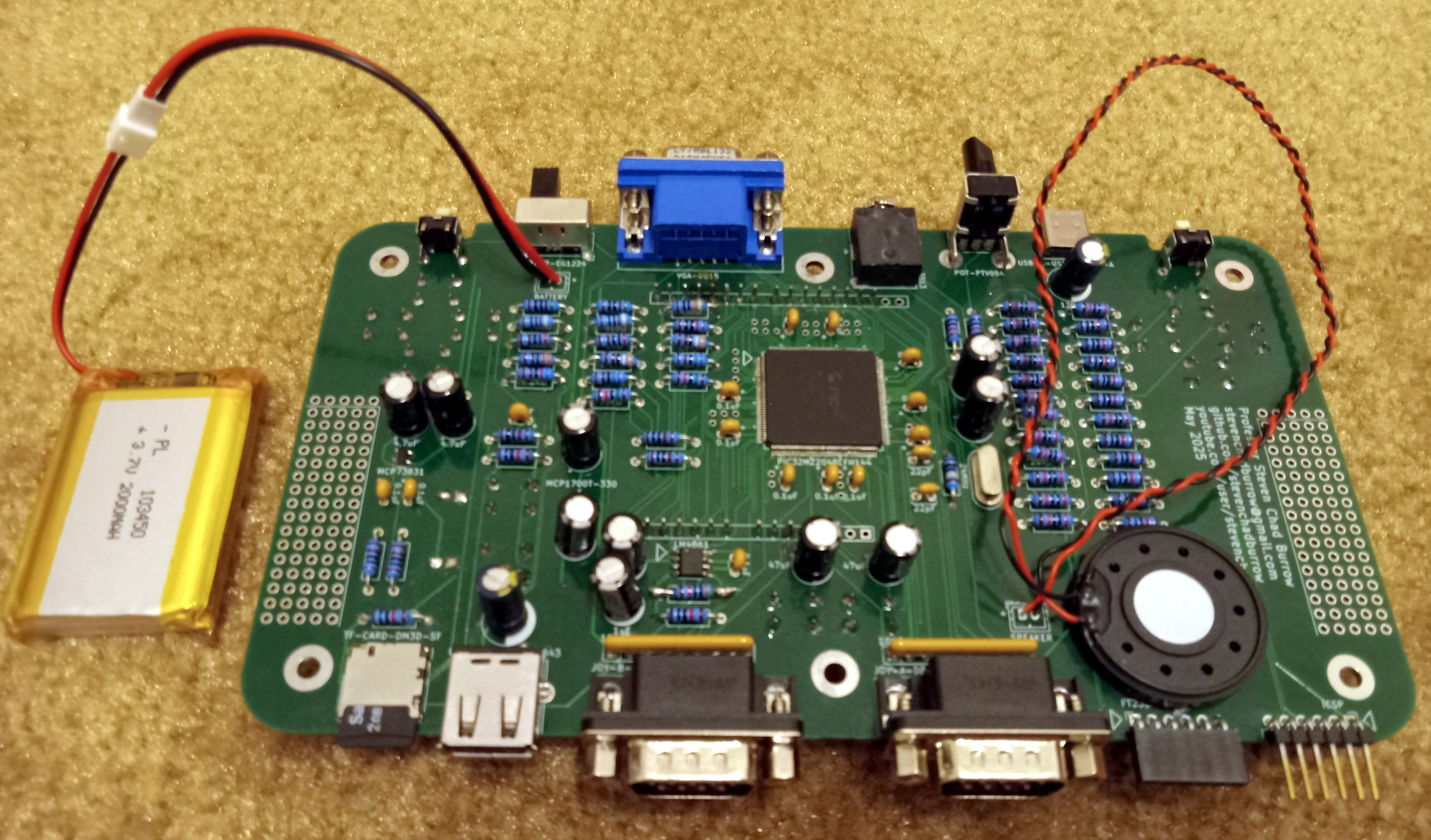
We like the design of the case, and particularly that of the buttons. Could it have been made smaller by forgoing some of the through-hole parts in favour of SMD ones? Quite likely, but though it’s chunky it’s certainly not outsized.
Portable Nintendo-inspired hardware is popular around here, as you can see with this previous handheld NES
Phishing, smishing e vishing le truffe bancarie più diffuse: cosa ci racconta la Relazione ABF 2024
@Informatica (Italy e non Italy 😁)
Azioni fraudolente a danno di clienti bancari, per il tramite di strumenti di pagamento e mirate al furto di credenziali e codici di accesso ai conti online costituiscono il 30% del
Informatica (Italy e non Italy 😁) reshared this.
Sfida ai droni iraniani Shahed. Ecco il nuovo sistema di Mbda
@Notizie dall'Italia e dal mondo
Semplici, economici ed efficaci, i droni della famiglia Shahed sviluppati dai tecnici della Repubblica Islamica dell’Iran sono da anni impiegati in modo estensivo nel conflitto in Ucraina, divenendone addirittura uno dei simboli. L’importanza di questi sistemi per lo sforzo bellico di Mosca è
Notizie dall'Italia e dal mondo reshared this.
Iran: gli Stati Uniti sono pronti ad attaccare
@Notizie dall'Italia e dal mondo
Continuano gli scontri tra Iran e Israele. Netanyahu preme su Washington per partecipare all'aggressione militare ma Trump vuole decidere all'ultimo minuto
L'articolo Iran: gli Stati Uniti sono pronti ad attaccare proviene da Pagine Esteri.
Notizie dall'Italia e dal mondo reshared this.
Carbon Budget in esaurimento veloce...
Da una valutazione recente, il Carbon Budget restante, per poter contenere entro +1,5°C il riscaldamento globale, è di circa 130 miliardi di tonnellate di CO2 e verrebbe, a ritmi attuali, emesso in soli 3 anni.
😢😭 😤😡
Allarme sicurezza Veeam! falla critica consente RCE sui server di backup
Gli sviluppatori di Veeam hanno rilasciato delle patch che risolvono diverse falle in Veeam Backup & Replication (VBR), tra cui una vulnerabilità critica legata all’esecuzione di codice remoto (RCE). Il problema, a cui è stato assegnato l’identificatore CVE-2025-23121 (9,9 punti sulla scala CVSS), è stato scoperto dagli esperti di watchTowr e CodeWhite e sembrerebbe che la vulnerabilità riguardi solo le installazioni aggiunte a un dominio.
Come spiegato da Veeam in un bollettino di sicurezza, la vulnerabilità potrebbe essere sfruttata dagli utenti autenticati del dominio per eseguire codice da remoto sul server di backup. Il bug riguarda Veeam Backup & Replication versione 12 e successive ed è stato risolto nella versione 12.3.2.3617. Sebbene CVE-2025-23121 riguardi solo le installazioni VBR aggiunte a un dominio, può essere sfruttato da qualsiasi utente di dominio, facilitandone l’abuso in tali casi.
Si è notato che molte aziende collegano i propri server di backup a un dominio Windows, ignorando le raccomandazioni di Veeam, nonostante l’azienda insista sempre nell’utilizzare una foresta di Active Directory separata e nel proteggere gli account amministrativi con l’autenticazione a due fattori.
È opportuno notare che a marzo 2025 gli specialisti di watchTowr Labs avevano già scoperto una vulnerabilità simile (CVE-2025-23120), che rappresentava un problema di deserializzazione nelle classi .NET Veeam.Backup.EsxManager.xmlFrameworkDs e Veeam.Backup.Core.BackupSummary.
Questa vulnerabilità, come altri bug precedenti, era correlata a BinaryFormatter, un componente legacy che, secondo Microsoft, non è affidabile per la deserializzazione dei dati e non può essere protetto in alcun modo. In altre parole, l’applicazione non gestiva correttamente i dati serializzati, il che consentiva l’introduzione di oggetti e gadget dannosi in grado di eseguire codice pericoloso.
La radice del nuovo problema CVE-2025-23121 risiede probabilmente nella stessa area. Pertanto, a marzo, lo specialista di watchTowr Anton Gostev ha scritto che finché BinaryFormatter non verrà rimosso da VBR, tali problemi di sicurezza si ripresenteranno inevitabilmente.
Si consiglia ora alle aziende che utilizzano Veeam Backup & Replication di eseguire l’aggiornamento alla versione 12.3.2.3617 il prima possibile.
L'articolo Allarme sicurezza Veeam! falla critica consente RCE sui server di backup proviene da il blog della sicurezza informatica.
Space-Based Datacenters Take The Cloud into Orbit

Where’s the best place for a datacenter? It’s an increasing problem as the AI buildup continues seemingly without pause. It’s not just a problem of NIMBYism; earthly power grids are having trouble coping, to say nothing of the demand for cooling water. Regulators and environmental groups alike are raising alarms about the impact that powering and cooling these massive AI datacenters will have on our planet.
While Sam Altman fantasizes about fusion power, one obvious response to those who say “think about the planet!” is to ask, “Well, what if we don’t put them on the planet?” Just as Gerald O’Niell asked over 50 years ago when our technology was merely industrial, the question remains:
“Is the surface of a planet really the right place for expanding technological civilization?”
O’Neill’s answer was a resounding “No.” The answer has not changed, even though our technology has. Generative AI is the latest and greatest technology on offer, but it turns out it may be the first one to make the productive jump to Earth Orbit. Indeed, it already has, but more on that later, because you’re probably scoffing at such a pie-in-the-sky idea.
There are three things needed for a datacenter: power, cooling, and connectivity. The people at companies like Starcloud, Inc, formally Lumen Orbit, make a good, solid case that all of these can be more easily met in orbit– one that includes hard numbers.
Sure, there’s also more radiation on orbit than here on earth, but our electronics turn out to be a lot more resilient than was once thought, as all the cell-phone cubesats have proven. Starcloud budgets only 1 kg of sheilding per kW of compute power in their whitepaper, as an example. If we can provide power, cooling, and connectivity, the radiation environment won’t be a showstopper.
Power
There’s a great big honkin’ fusion reactor already available for anyone to use to power their GPUs: the sun. Of course on Earth we have tricky things like weather, and the planet has an annoying habit of occluding the sun for half the day but there are no clouds in LEO. Depending on your choice of orbit, you do have that annoying 45 minutes of darkness– but a battery to run things for 45 minutes is not a big UPS, by professional standards. Besides, the sun-synchronous orbits are right there, just waiting for us to soak up that delicious, non-stop solar power.
Sun-synchronous orbits (SSOs) are polar orbits that precess around the Earth once every sidereal year, so that they always maintain the same angle to the sun. For example, you might have an SSO that crosses the equator 12 times a day, each time at local 15:00, or 10:43, any other time set by the orbital parameters. With SSOs, you don’t have to worry about ever losing solar power to some silly, primitive, planet-bound concept like nighttime.
Without the atmosphere in the way, solar panels are also considerably more effective per unit area, something the Space Solar Power people have been pointing out since O’Neill’s day. The problem with Space Solar Power has always been the efficiencies and regulatory hurdles of beaming the power back to Earth– but if you use the power to train an AI model, and send the data down, that’s no longer an issue. Given that the 120 kW array on ISS has been trouble-free for decades now, we can consider it a solved problem. Sure, solar panels degrade, but the rate is in fractions of a percent per year, and it happens on Earth too. By the time solar panel replacement is likely to be the rest of the hardware is likely to be totally obsolete.
Cooling
This is where skepticism creeps in. After all, cooling is the greatest challenge with high performance computing hardware here on earth, and heat rejection is the great constraint of space operations. The “icy blackness of space” you see in popular culture is as realistic as warp drive; space is a thermos, and shedding heat is no trivial issue. It is also, from an engineering perspective, not a complex issue. We’ve been cooling spacecraft and satellites using radiators to shed heat via infrared emission for decades now. It’s pretty easy to calculate that if you have X watts of heat to reject at Y degrees, you will need a radiator of area Z. The Stephan-Boltzmann Law isn’t exactly rocket science.
Even better, unlike on Earth where you have changeable things like seasons and heat waves, in a SSO you need only account for throttling– and if your data center is profitable, you won’t be doing much of that. So while you need a cooling system, it won’t be difficult to design. Liquid or two-phase cooling on server hardware? Not new. Plumbing cooling a loop to a radiator in the vacuum of space? That’s been part of satellite busses for years.
Aside from providing you with a stable thermal environment, the other advantage of an SSO is that if one chooses the dawn/dusk orbit along the terminator, while the solar panels always face the sun, the radiators can always face black space, letting them work to their optimal potential. This would also simplify the satellite bus, as no motion system would be required to keep the solar panels and radiators aligned into/out of the sun. Conceivably the whole thing could be stabilized by gravity gradient, minimizing the need to use reaction wheels.
Connectivity
One word: Starlink. That’s not to say that future data centers will necessarily be hooking into the Starlink network, but high-bandwidth operations on orbit are already proven, as long as you consider 100 gigabytes per second sufficient bandwidth. An advantage not often thought of for this sort of space-based communications is that the speed of light in a vacuum is about 31% faster than glass fibers, while the circumference of a low Earth orbit is much less than 31% greater than the circumference of the planet. That reduces ping times between elements of free-flying clusters or clusters and whatever communications satellite is overhead of the user. It is conceivable, but by no means a sure thing, that a user in the EU might have faster access to orbital data than they would to a data center in the US.
The Race
This hypothetical European might want to use European-owned servers. Well, the European Commission is on it; in the ASCEND study (Advanced Space Cloud for European Net zero Emission and Data sovereignty) you can tell from the title they put as much emphasis on keeping European data European as they do on the environmental aspects mentioned in the introduction. ASCEND imagines a 32-tonne, 800 kW data center lofted by a single super-heavy booster (sadly not Ariane 6), and proposes it could be ready by the 2030s. There’s no hint in this proposal that the ASCEND Consortium or the EC would be willing to stop at one, either. European efforts have already put AI in orbit, with missions like PhiSat2 using on-board AI image processing for Earth observation.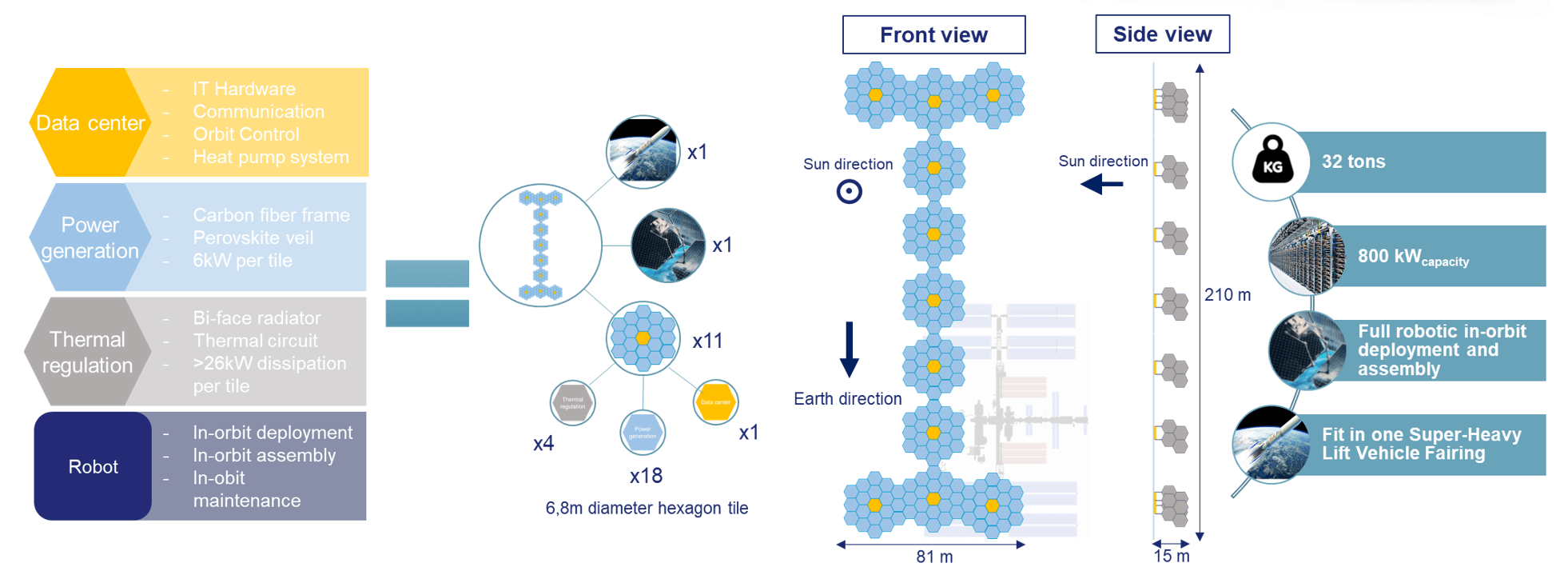

The Americans, of course, are leaving things to private enterprise. Axiom Space has leveraged their existing relationship with NASA to put hardware on ISS for testing purposes, staring with an AWS snowcone in 2022, which they claimed was the first flight-test of cloud computing. Axiom has also purchased space on the Kepler Relay Network satellites set to launch late 2025. Aside from the 2.5 Gb/s optical link from Kepler, exactly how much compute power is going into these is not clear. A standalone data center is expected to follow in 2027, but again, what hardware will be flying is not stated.
There are other American companies chasing venture capital for this purpose, like Google-founder-backed Relativity Space or the wonderfully-named Starcloud mentioned above. Starcloud’s whitepaper is incredibly ambitious, talking about building an up to 5 GW cluster whose double-sided solar/radiator array would be by far the largest object ever built in orbit at 4 km by 4 km. (Only a few orders of magnitude bigger than ISS. Not big deal.) At least it is a modular plan, that could be built up over time, and they are planning to start with a smaller standalone proof-of-concept, Starcloud-2, in 2026. 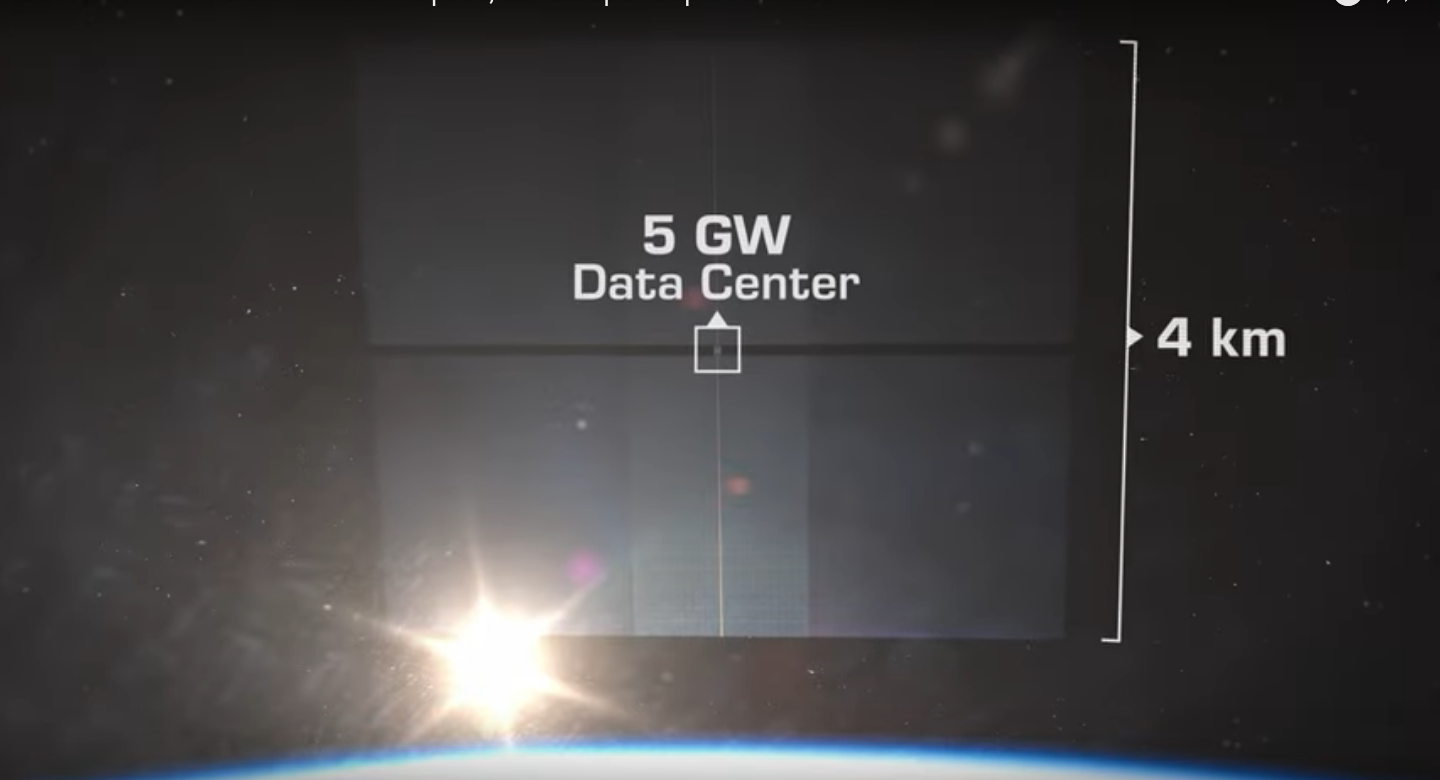
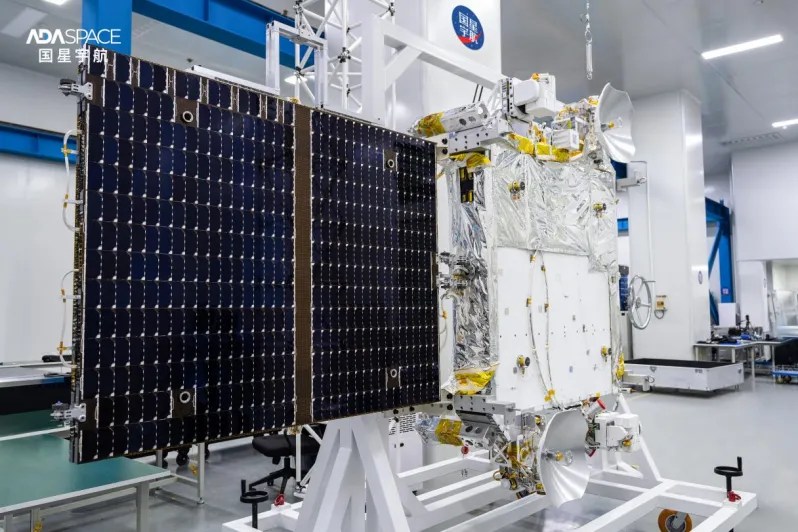
Once they get up there, the American and European AIs are are going to find someone else has already claimed the high ground, and that that someone else speaks Chinese. A startup called ADA Space launched 12 satellites in May 2025 to begin building out the world’s first orbital supercomputer, called the Three Body Computing Constellation. (You can’t help but love the poetry of Chinese naming conventions.)
Unlike the American startups, they aren’t shy about its capabilities: 100 Gb/s optical datalinks, with the most powerful satellite in the constellation capable of 744 trillion operations per second. (TOPS, not FLOPS. FLOPS specifically refers to floating point operations, whereas TOPS could be any operation but usually refers to operations on 8-bit integers.)
For comparison, Microsoft requires an “AI PC” like the copilot laptops to have 40 TOPS of AI-crunching capacity. The 12 satellites must not be identical, as the constellation together has a quoted capability of 5 POPS (peta-operations per second), and a storage capacity of 30 TB. That’s seems pretty reasonable for a proof-of-concept. You don’t get a sense of the ambition behind it until you hear that these 12 are just the first wave of a planned 2,800 satellites. Now that’s what I’d call a supercluster!
High-performance computing in space? It’s no AI hallucination, it’s already here. There is a network forming in the sky. A sky-net, if you will, and I for one welcome our future AI overlords. They already have the high ground, so there’s no point fighting now. Hopefully this datacenter build-out will just be the first step on the road Gerry O’Neill and his students envisioned all those years ago: a road that ends with Earth’s surface as parkland, and civilization growing onwards and upwards. Ad astra per AI? There are worse futures.
Gcap, droni e interoperabilità. L’Italia tra ambizioni autonome e scenari integrati
@Notizie dall'Italia e dal mondo
All’interno del programma Gcap la componente senza pilota resta ancora in una fase fluida, priva di un’integrazione strutturata all’interno della tabella di marcia ufficiale. Lo ha chiarito l’amministratore delegato di Leonardo, Roberto Cingolani, sottolineando come l’Italia stia valutando
Notizie dall'Italia e dal mondo reshared this.
#Maturità2025, sul sito del #MIM sono state pubblicate le tracce della seconda prova scritta.
Le trovate qui ▶️ mim.gov.it/web/guest/-/-maturi…

Ministero dell'Istruzione
#Maturità2025, sul sito del #MIM sono state pubblicate le tracce della seconda prova scritta. Le trovate qui ▶️ https://www.mim.gov.it/web/guest/-/-maturita2025-sul-sito-del-ministero-pubblicate-le-tracce-della-seconda-prova #MIMaturoTelegram
A Torino sono nati i Pirati della Cultura: creiamo una via alternativa e sostenibile alla distribuzione dei libri
quotidianopiemontese.it/2025/0…
Come evitare che la distribuzione si mangi tutto il margine e far risparmiare piccoli editori e lettori Scopri i Pirati della Cultura: libri di qualità dai piccoli editori ai lettori, senza costi di distribuzione e con sconti reali per tutti.

Un libro per l'estate
Vorrei leggere un libro sulla meccanica quantistica per capirci PER DAVVERO qualcosina ma per farlo bisogna che veda qualche equazione perché le spiegazioni qualitative non mi bastano più.
Quindi, mi servirebbe un libro che sia più dettagliato (anche più tecnico) di un libro divulgativo ma allo stesso tempo meno impegnativo di un testo universitario perché mi manca buona parte della matematica necessaria (sono ingegnere quindi arrivo fino ad Analisi II ma poi lì mi fermo).
Avete letto qualcosa che potrebbe fare al caso mio?
Ho visto che nella serie delle lezioni di Fisica di Feynman c'è un volume, il terzo, dedicato alla meccanica quantistica, l'avete letto? Può essere quello giusto?
("QED", di Feynman, l'ho già letto e ha cambiato il mio modo di guardare il mondo quando apro la finestra 😍)
#Fisica #fisicaDelleParticelle #meccanicaquantistica #scienza
Poliversity - Università ricerca e giornalismo reshared this.
Autonomia o irrilevanza. La sfida strategica dell’Europa nella nuova era nucleare secondo Preziosa
@Notizie dall'Italia e dal mondo
Il confronto tra Iran e Israele, sostenuto dalla proiezione tecnologica e strategica americana, non rappresenta solo un conflitto regionale: è il primo banco di prova concreto della nuova era nucleare e multipolare. Tuttavia, l’insegnamento che l’Europa deve trarne va ben
Notizie dall'Italia e dal mondo reshared this.
freezonemagazine.com/news/anto…
La Antone’s Records compie 50 anni quest’anno, e per celebrarne la ricorrenza questa pubblicazione appare un po come “l‘ultimo vero album di Texas Blues”. L’album presenta un sorprendente assortimento di artisti che coverizzano, suonano e reinterpretano un catalogo di canzoni classiche del blues. Registrato

Passare a Windows 11 è più semplice con Windows Migration. La fine di Windows 10 è già arrivata
Integrato in Windows Backup, consente di abbandonare l'edizione 10 e trasferire dati e impostazioni. (ZEUS News)ZEUS News
informapirata ⁂ reshared this.

#Maturità2025, la chiave ministeriale per aprire il plico telematico della seconda prova scritta, è disponibile sul sito del #MIM.
La trovate qui ▶️ mim.gov.it/web/guest/-/esami-d…

Ministero dell'Istruzione
#Maturità2025, la chiave ministeriale per aprire il plico telematico della seconda prova scritta, è disponibile sul sito del #MIM. La trovate qui ▶️ https://www.mim.gov.it/web/guest/-/esami-di-stato-seconda-prova-scritta #MIMaturoTelegram
#Iran, obiettivo BRICS

Iran, obiettivo BRICS
Donald Trump ha scaricato la consueta dose di minacce, promesse ed avvertenze all’indirizzo dell’Iran e dei suoi amici. Agli ayatollah ha chiesto una “resa incondizionata”, nemmeno fosse immerso in un film di cappa e spade.www.altrenotizie.org
Generosissimo, anche nel firmacopie.

Venezuela, a Urrutia il Premio Einaudi 2025. L’appello a Meloni della Fondazione Einaudi: “Riportiamo a casa Alberto Trentini”
@Politica interna, europea e internazionale
“Questo premio incarna i valori più profondi dell’Occidente, fondati sul principio della libertà individuale, ed è il riconoscimento della lotta instancabile
Politica interna, europea e internazionale reshared this.
La Gestapo del presidente

La Gestapo del presidente
All’elenco degli arresti di oppositori dell’amministrazione Trump si è aggiunto questa settimana un altro nome eccellente dopo i casi documentati nelle scorse settimane in varie parti degli Stati Uniti.www.altrenotizie.org
Maturità 2025: pubblicate le tracce della prima prova sul sito del Ministero
Sul sito del Ministero dell’Istruzione e del Merito sono state pubblicate le tracce della prima prova scritta dell’Esame di Stato del secondo ciclo di istruzione.
Scuola - Gruppo Forum reshared this.


Fortuna
Trump invece ha manie di grandezza, è convinto di poter fare tutto e che tutto gli sia dovuto, temo soffra un pochino di megalomania, ma si sa, gli americani fanno tutto in grande anche le stronzate.

Airlines selling detailed flight data to DHS; how AI scrapers are hammering open archives; and the casual surveillance relationship between ICE and local cops.#Podcast


Podcast: Airlines Sold Your Flight Data to DHS—And Covered It Up
This week we start with Joseph’s article about the U.S’s major airlines selling customers’ flight information to Customs and Border Protection and then telling the agency to not reveal where the data came from. After the break, Emanuel tells us how AI scraping bots are breaking open libraries, archives, and museums. In the subscribers-only section, Jason explains the casual surveillance relationship between ICE and local cops, according to emails he got.
playlist.megaphone.fm?e=TBIEA4…
Listen to the weekly podcast on Apple Podcasts,Spotify, or YouTube. Become a paid subscriber for access to this episode's bonus content and to power our journalism. If you become a paid subscriber, check your inbox for an email from our podcast host Transistor for a link to the subscribers-only version! You can also add that subscribers feed to your podcast app of choice and never miss an episode that way. The email should also contain the subscribers-only unlisted YouTube link for the extended video version too. It will also be in the show notes in your podcast player.
youtube.com/embed/Auc7NPD2ig4?…
- Airlines Don't Want You to Know They Sold Your Flight Data to DHS
- AI Scraping Bots Are Breaking Open Libraries, Archives, and Museums
- Emails Reveal the Casual Surveillance Alliance Between ICE and Local Police
Emails Reveal the Casual Surveillance Alliance Between ICE and Local Police
Police departments in Oregon created an "analyst group" where they casually offer each other assistance with surveillance tools.Jason Koebler (404 Media)

Povero futuro.
La povertà aumenta, in Italia, in Europa.
Ovunque.
Togliere la dignità alle persone sembra l'idea di molti Governi.
noblogo.org/transit/povero-fut…


Povero futuro.
(169)
Nota: questo sarà un post noioso, ma, a volte, le aride cifre fotografano nitidamente le situazioni, anche quelle molto grandi, anche quelle che dentro hanno milioni di persone. D’altro canto sono certo che chiunque vorrà leggere queste righe sa comprendere benissimo numeri e percentuali. Altrimenti sarebbe un guaio.
Nel corso del 2024, l’Italia ha registrato un aggravamento significativo sia della #povertà assoluta sia di quella relativa, alla luce di dati ufficiali e referti della società civile. Secondo l’ultimo rapporto ISTAT e della “Caritas”, la quota di persone in condizione di povertà assoluta ha raggiunto il 9,7 %, pari a circa 5,6–5,7 milioni di individui, corrispondente a circa 2,2 milioni di famiglie. Lo stesso rapporto segnala come la povertà assoluta, benché stabile tra il 2022 e il 2023, risulti al livello più elevato dell’ultimo decennio, con una progressione costante dal 2014 (dal 6,9 % al 9,7 %) per quanto riguarda le persone.
Sul versante della povertà relativa, si evidenzia un ulteriore peggioramento: nel 2023 le famiglie colpite dal fenomeno superavano i 2,8 milioni (10,6 %) e le persone in difficoltà ammontavano a 8,4 milioni (14,5 %). Parallelamente, l’Eurostat stima che nel 2024 il 23,1 % degli italiani – circa 13,5 milioni – viva in condizioni di rischio di povertà o esclusione sociale, con aumenti particolarmente allarmanti per quanto riguarda i minori e le persone over 60.
A questi numeri drammatici si accompagna la crescita del fenomeno dei “Working poor”: in Italia il 21 % dei lavoratori percepisce un reddito insufficiente per condurre una vita dignitosa, con una situazione che colpisce in modo particolarmente intenso le classi operaie (tra le quali la povertà assoluta ha superato il 16,5 %) e i 35-54enni, oltre il 30 % dei quali non riesce a evitare uno stato di indigenza.
Tale contesto si dispiega in un quadro di politiche pubbliche inadeguate: le misure statali di contrasto alla povertà — dal “reddito di inclusione” alla spesa sociale — risultano insufficienti e, in molti casi, inefficaci. Nonostante il “Reddito di cittadinanza” abbia avuto un impatto importante, ben il 56 % delle persone povere non lo ha percepito, per cause che vanno dai problemi di residenza alla burocrazia. Le politiche di welfare restano lacunose e non affrontano adeguatamente la questione del “lavoro povero”, né investono in una rete di protezione robusta per le famiglie vulnerabili.
Questa fragilità sociale si inserisce in un contesto europeo che appare sempre più orientato verso la militarizzazione. Il “ReArm Europe – Readiness 2030”, lanciato a marzo 2025 dalla Commissione UE, punta a mobilitare fino a 800 miliardi di euro in spese per la difesa, tra aumenti delle spese nazionali, fondi comuni e prestiti SAFE da 150 miliardi, con la possibilità di dirottare risorse dai fondi di coesione e sostenibilità. Secondo le ultime stime, per colmare il gap militare si dovrebbe arrivare a investire fino al 5 % del PIL, una cifra che in Francia, Regno Unito e in molti altri Paesi corrisponde all’intero ammontare delle loro politiche di welfare e di protezione sociale. Analisti economici sottolineano che una simile quantità di risorse sarà sottratta a capitoli cruciali per combattere la povertà, rafforzare l’istruzione, la sanità e l’inclusione sociale, aumentando di conseguenza le disuguaglianze e l’emarginazione delle fasce più deboli.
La convergenza tra crisi del reddito, insufficienza delle politiche sociali e spinta europea verso spese militari aggressive aggrava la condizione dei più deboli. Se non si rivedono le priorità — affiancando politiche attive per il lavoro, la dignità universale del reddito e un welfare veramente inclusivo — il rischio è quello di lasciare milioni di cittadini italiani ed europei in una situazione di esclusione sempre più profonda.
Ma, forse, è proprio questo lo scopo ultimo di tutta questa sequela di mancanze, di tutti i soldi che non andranno ad aiutare le persone, soprattutto quelle povere, emarginate, fastidiose: la loro eliminazione. Se non fisica (almeno lo spero), almeno dalla vita pubblica, dalla società. Relegare coloro che non possono più permettersi la dignità sarebbe un ottimo viatico alla dittatura totale del liberismo, dell’effimero, del domani concesso solo a chi i soldi li ha e non viene disturbato da Governi sempre più distanti da una minima idea di democrazia.Se il futuro deve ancora essere scritto, non può diventare così. Non dovrebbe permetterlo nessuno, mai.
#Blog #Italia #ReArmEurope #UE #Società #Povertà #Society #Poverty #Opinioni #Opinions
Mastodon: @alda7069@mastodon.unoTelegram: t.me/transitblogFriendica: @danmatt@poliverso.orgBio Site (tutto in un posto solo, diamine): bio.site/danielemattioli
Gli scritti sono tutelati da “Creative Commons” (qui)
Tutte le opinioni qui riportate sono da considerarsi personali. Per eventuali problemi riscontrati con i testi, si prega di scrivere a: corubomatt@gmail.com


🖊 Le tracce ufficiali della #Maturità2025 sono disponibili sul sito del #MIM.
Le trovate qui ▶ mim.gov.it/web/guest/-/-maturi…
Voi quale avreste scelto?

Ministero dell'Istruzione
🖊 Le tracce ufficiali della #Maturità2025 sono disponibili sul sito del #MIM. Le trovate qui ▶ https://www.mim.gov.it/web/guest/-/-maturita2025-sul-sito-del-ministero-pubblicate-le-tracce-della-prima-prova Voi quale avreste scelto?Telegram
reshared this
informapirata ⁂ reshared this.
Alessandra Maiorino (M5S) a TPI: “Quest’Europa è irriconoscibile: dimentica i diritti e spreca 800 miliardi in armi”
@Politica interna, europea e internazionale
Senatrice Alessandra Maiorino, oggi l’evento “UNITE”, promosso dal comitato Politiche di Genere e Diritti Civili del M5S, arriva alla sua seconda edizione: quali sono gli obiettivi? «Abbiamo dato vita al
Politica interna, europea e internazionale reshared this.
Max - Poliverso 🇪🇺🇮🇹
Unknown parent • •@romitaggio
È uno di quelli che avevo adocchiato...
Dici che vale eh?
Max - Poliverso 🇪🇺🇮🇹
Unknown parent • •@Comandante Virgola
È che io durante la settimana non riesco mai a liberarmi prima delle dieci di sera e a quell'ora anche una tabellina del tre può buttarti tra le braccia di Morfeo 😁
Max - Poliverso 🇪🇺🇮🇹
Unknown parent • •@romitaggio
Preso 😁