
Ben Eater Makes Computer Noises

When [Ben Eater] talks, hackers everywhere listen. In his latest video [Ben] shows us how to make computer noises using square waves and a 6502 microprocessor.
[Ben] uses the timer in the W65C22 Versatile Interface Adapter to generate the square waves which generate a tone. He then adds support for a new BEEP command into his MS BASIC interpreter. We covered [Ben Eater]’s MS BASIC here at Hackaday back in April, so definitely check that out if you missed it.
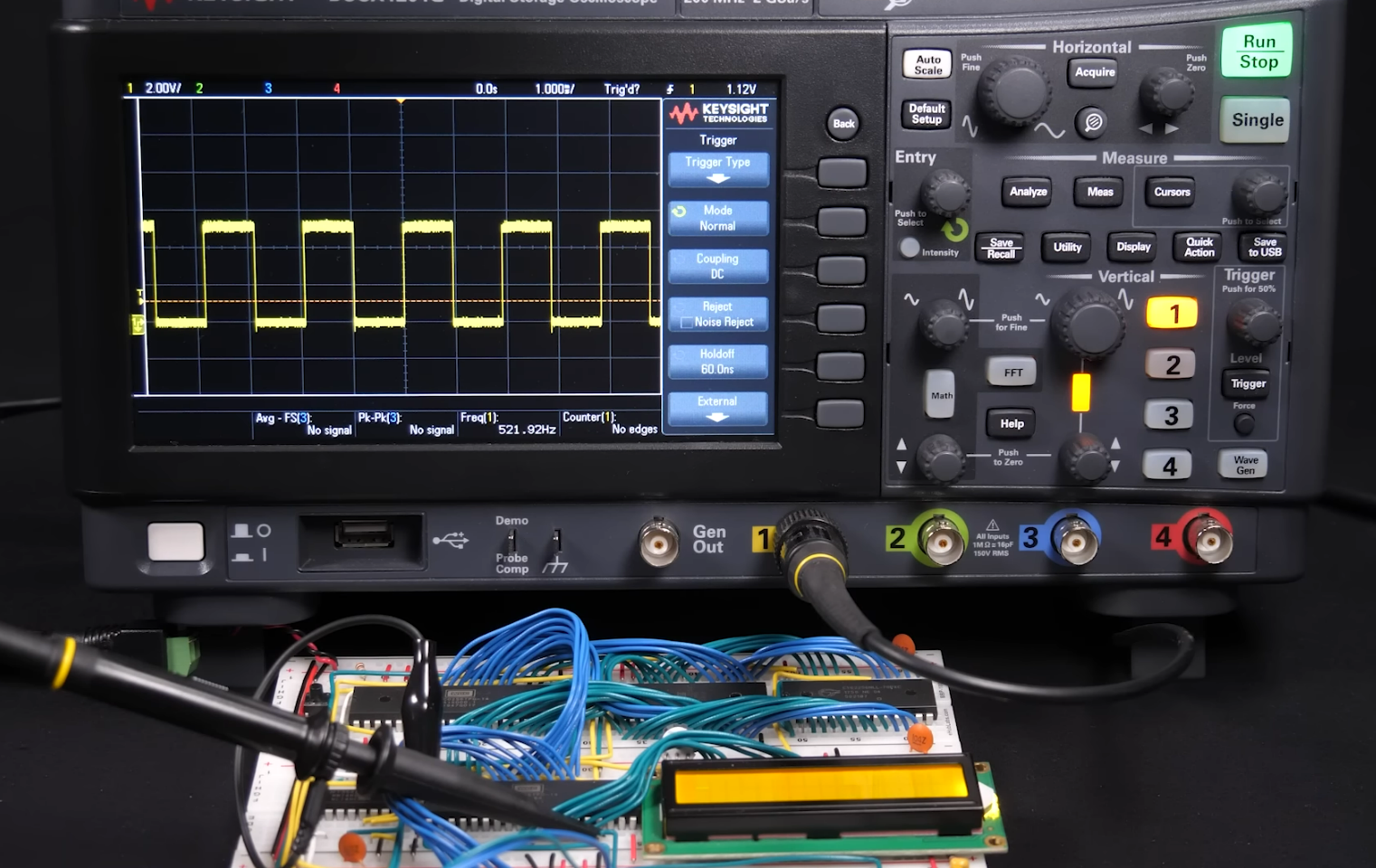
Thanks to [Mark Stevens] for writing in to let us know about this one. If you’re planning to play along at home a good place to start is to build your own 6502, like [Ben] did!
youtube.com/embed/tIOR7kRevPU?…
Build Your Own Telescope the Modern Way

When we were kids, it was a rite of passage to read the newly arrived Edmund catalog and dream of building our own telescope. One of our friends lived near a University, and they even had a summer program that would help you measure your mirrors and ensure you had a successful build. But most of us never ground mirrors from glass blanks and did all the other arcane steps required to make a working telescope. However, [La3emedimension] wants to tempt us again with a 3D-printable telescope kit.
Before you fire up the 3D printer, be aware that PLA is not recommended, and, of course, you are going to need some extra parts. There is supposed to be a README with a bill of parts, but we didn’t see it. However, there is a support page in French and a Discord server, so we have no doubt it can be found.
It is possible to steal the optics from another telescope or, of course, buy new. You probably don’t want to grind your own mirrors, although good on you if you do! You can even buy the entire kit if you don’t want to print it and gather all the parts yourself.
The scope is made to be ultra-portable, and it looks like it would be a great travel scope. Let us know if you build one or a derivative.
This telescope looks much different than other builds we’ve seen. If you want to do it all old school, we’ve seen a great guide.
#Iran, il dittatore va alla guerra

Iran, il dittatore va alla guerra
Praticamente tutto il mondo è in questi giorni con il fiato sospeso in attesa della decisione del presidente americano Trump se trascinare o meno gli Stati Uniti nella guerra di aggressione di Israele contro l’Iran.www.altrenotizie.org
Fission Simulator Melts Down RP2040

We’ve seen a lot of projects based on the Pi Pico, but a nuclear reactor simulation is a new one. This project was created by [Andrew Shim], [Tyler Wisniewski] and another group member for Cornell’s ECE 4760 class on embedded design (which should silence naysayers who think the Pi Pico can’t be a “serious” microcontroller), and simulates the infamous soviet RMBK reactor of Chernobyl fame.
The simulation uses a 4-bit color VGA model. The fission model includes uranium fuel, water, graphite moderator, control rods and neutrons. To simplify the math, all decayed materials are treated identically as non-fissile, so no xenon poisoning is going to show up, for example. You can, however, take manual control to both scram the reactor and set it up to melt down with the hardware controller.
The RP2040’s dual-core nature comes in handy here: one core runs the main simulation loop, and the main graphic on the top of the VGA output; the other core generates the plots on the bottom half of the screen, and the Geiger-counter sound effect, and polls the buttons and encoders for user input. This is an interesting spread compared to the more usual GPU/CPU split we see on projects that use the RP2040 with VGA output.
An interesting wrinkle that has been declared a feature, not a bug, by the students behind this project, is that the framebuffer cannot keep up with all the neutrons in a meltdown simulation. Apparently the flickering and stuttering of frame-rate issues is “befitting of the meltdown scenario”. The idea that ones microcontroller melts down along with the simulated reactor is rather fitting, we agree. Check it out in a full walkthrough in the video below, or enjoy the student’s full writeup at the link above.
This project comes to us via Cornell University’s ECE 4760 course, which we’ve mentioned before. Thanks to [Hunter Adams] for the tipoff. You may see more student projects in the coming weeks.
youtube.com/embed/SqB7Jm-Cdmk?…

Dual RGB Cameras Get Depth Sensing Powerup

It’s sometimes useful for a system to not just have a flat 2D camera view of things, but to have an understanding of the depth of a scene. Dual RGB cameras can be used to sense depth by contrasting the two slightly different views, in much the same way that our own eyes work. It’s considered an economical but limited method of depth sensing, or at least it was before FoundationStereo came along and blew previous results out of the water. That link has a load of interactive comparisons to play with and see for yourself, so check it out.
The FoundationStereo paper explains how researchers leveraged machine learning to create a system that can not only outperform existing dual RGB camera setups, but even active depth-sensing cameras such as the Intel RealSense.
FoundationStereo is specifically designed for strong zero-shot performance, meaning it delivers useful general results with no additional training needed to handle any particular scene or environment. The framework and models are available from the project’s GitHub repository.
Microsoft may have discontinued the Kinect and Intel similarly discontinued RealSense, but depth sensing remains an enabling technology that opens possibilities and gives rise to interesting projects, like a headset that allows one to see the world through the eyes of a depth sensor.
The ability to easily and quickly gain an understanding of the physical layout of a space is a powerful tool, and if a system like this one can deliver such fantastic results with nothing more than two RGB cameras, that’s a great sign. Watch it in action in the video below.
youtube.com/embed/R7RgHxEXB3o?…
Hacker Tactic: ESD Diodes

A hacker’s view on ESD protection can tell you a lot about them. I’ve seen a good few categories of hackers neglecting ESD protection – there’s the yet-inexperienced ones, ones with a devil-may-care attitude, or simply those of us lucky to live in a reasonably humid climate. But until we’re able to control the global weather, your best bet is to befriend some ESD diodes before you get stuck having to replace a microcontroller board firmly soldered into your PCB with help of 40 through-hole pin headers.
Humans are pretty good at generating electric shocks, and oftentimes, you’ll shock your hardware without even feeling the shock yourself. Your GPIOs will feel it, though, and it can propagate beyond just the input/output pins inside your chip. ESD events can be a cause of “weird malfunctions”, sudden hardware latchups, chips dying out of nowhere mid-work – nothing to wish for.
Worry not, though. Want to build hardware that survives? Take a look at ESD diodes, where and how to add them, where to avoid them, and the parameters you want to keep in mind. Oh and, I’ll also talk about all the fancy ways you can mis-use ESD diodes, for good and bad alike!
How It’s Made
The simplest ESD diode is just two diodes in series, with the protected signal connected at midpoint. The wiring is easy to remember – wire the diodes in a way that they don’t conduct from 3.3 V to GND, so, in reverse, same way you’d wire up a diode to shunt a relay coil. It’s only meant to conduct in unprecedented circumstances, not normally.
Say, you use a diode with 0.7 V forward voltage drop. Then, such a configuration will shunt voltages above – into your power rails and ground, both low-impedance with plenty of capacitance and inductance, enough to dissipate the shock energy. Lower than GND – 0.7 V, and higher than VCC + 0.7 V – ever seen that mentioned in datasheets, by the way?
The overwhelming majority of ICs come with ESD diodes built-in. CMOS logic, overwhelmingly prevalent these days, basically requires them – FETs are overwhelmingly sensitive to ESD events, especially their gates. Don’t believe me? Here’s a highly persuasive video we’ve covered, that shows a FET easily dying from an ESD event!
So, is your job done here? Can you just rely on IC-internal ESD diodes? No, sadly. IC-internal ESD diodes are nice and a must have, but not sufficient for a large portion of shock. Effectively, they’re there for lower-grade GPIO protection. If your GPIOs go, or could easily go, to the outside world, or maybe they’re near high-power rails, maybe you’re driving a speaker or some motors with part of your circuit, or if maybe you want to touch your board with your fingers sometimes – you will want to add your own ESD diodes into the mix.
Let’s Protect Some GPIOs
You can use two diodes in a pinch – two 1N4148’s are a valid form of ESD protection. Better yet, you can buy a two-diode component ready to go. Here’s a part number – BAV99; it’s two diodes in series, in SOT23, with midpoint being on pin 3. Top pin to VCC, bottom pin to GND, middle pin goes to your signal – what could be easier to route? BAV99 isn’t quite intended to be an ESD diode, but it will perform wonderfully. This is the most basic protection you can give a GPIO – throw in a low-value series resistor too, if you’re generous. If you’re doing, say, a RP2040 circuit, you will already have some 27R resistors in series – just sprinkle some more of those on your board, and you’re golden.


But Wait, There’s More
Is that all you can do with these? No, there’s more! Remember how you have to put a diode across a relay coil or a motor that you’re driving with a transistor? Here’s a fun relay for you – Omron G6SK-2. It’s a tiny relay for switching signals (think analog audio switching), and what’s cool about it, it’s latching. You know how you need to reverse the voltage polarity on a DC motor in order to reverse the direction it spins? This relay uses polarity reversal to switch, instead of a coil that requires constant power draw to keep one set of contacts connected.
So, a tiny relay for signals, that requires zero power to stay on. Now, how do you drive it? With motors, you drive them with a H-bridge – one transistor from VCC, one from GND, for each pole, and these four transistors are typically put inside a single IC. However, using a whole H-bridge IC on a tiny relay that barely needs any power to begin with? Feels quite wasteful!
A GPIO set to output is electrically equivalent to a H-bridge. Put the relay’s coil between two GPIOs instead, and you can effortlessly switch it. What about a back EMF protection diode? Can’t put it across the coil anymore, then you couldn’t switch polarity. Instead, just put a pair of ESD diodes on the GPIOs, and you’re good.
You can drive a fair bit of stuff this way – not just cool low-power relays, but also linear actuators like iPhone’s Taptic Engines, vibromotors, and tiny electromagnets. So, if you needed to stock up on BAV, this is your extra reason to do so.
Where would you commonly put these kinds of diodes? On external GPIOs, yes, but also buttons – even if they’re behind a thin layer of plastic!, – and keypads, user-touchable pogo pins, off-board connectors, headphone jacks, iButton pads, and so on. These are not the only diodes you’ll ever want, of course. Let’s talk about ESD diode capacitance and where it starts to matter.
High Speed, High Demands
Imagine a Pi Pico. On it, there are GPIOs worth protecting. What else? The USB port, for sure – and if you’re daring enough to wire Ethernet to a Pico, also those pins. However, if you do use BAV, you might experience signal degradation, or other unexpected side effects. Why? One major reason is ESD diode capacitance.

Using a SOT23-6 pack like this to protect USB lines? Watch out for how you’re supposed to wire it up. Some diode packs have internal connections and expect you to interrupt the signal under them, and other ones require you to pull wires under the package; some of them include inductors. Check the datasheet for an example schematic and compare with yours.
Another pitfall to mind. Remember how there’s one path to GND and one to VCC? Well… What if your GPIO is powered, but your VCC isn’t? Power will flow from the GPIO into VCC – you might remember this one from the cut-down ATTiny we’ve featured. This is also a problem you can stumble upon if you put chips with multiple power inputs and don’t think about it.
Where else could this situation appear? Why, USB-C. If you’re connecting ADC channels to CC pins, like you would if you want to check that you do get 3A at 5V, you’ll want to protect that. Or maybe you have a PD controller on your board – you’ll want to protect its CC pins, for sure. Now, remember how CC negotiation works? A PSU has a resistor from its VBUS to the CC pin(s), and it measures the CC voltages, expecting a 5.1K resistor. What if your VBUS isn’t powered and you use a VBUS-connected ESD diode on CC? Part of the CC pullup current flows into VBUS, voltage sags, CC voltage is lower than expected, and the PSU never ends up supplying VBUS.
No VBUS, No Problems
Bad? Bad. I’ve stumbled upon this one recently, in my own project, was quite a headscratcher. Thankfully, you don’t actually need a VBUS connection – really, all you need is to shunt voltage if it exceeds a certain threshold. We have diodes for that, too! They’re called TVS – it’s kind of like a Zener, but better. In fact, since SOT23-6 ESD diodes tend to contain a TVS, you might be able to disconnect VBUS from your SOT23-6 altogether. However, you should still know about yet another breed of ESD diodes – for a start, they’re probably the flattest ESD diodes you’ll work with.

DFN25-10 format diodes. Where have you seen them? A Raspberry Pi, for one – there, they’re right next to the HDMI connector(s), three of them at the very least! These diodes are great for general purpose protecting whatever you want, too – you can put them on USB, Ethernet, USB CC pins, keyboard matrix pins. My fave part number is TPAZ1043, but don’t hold onto that – just look up DFN2510 and you’ll find alternatives aplenty.
Any catches with these? The threshold voltage, for one. If you’re doing 3.3V GPIOs, you want to make sure your diode won’t start shunting them – and if you buy a diode aimed at protecting modern-day interfaces like USB3, its threshold might very well be 3.3V or a little below – borderline if not outright disqualifying if you want your GPIO (or a USB2 connection) to stay unaffected. It’s a wonderful diode, of course, just, the wrong application.
They’re the nicest to route, too. Put them inline with signals, put a via down to your GND (0.5/0.3 via will do wonders), and you’re set. The catch with that? You might relax a little too much when using them, gotta remember to keep on your toes.
A Key Element
Think we’re done? Not yet. Remember that they’re very flat? Now, where could you use some very flat diodes? How about… a handheld keyboard with NKRO? NKRO needs diodes on every key, but if you’re doing a even 50-key handheld keeb, you might not necessarily want to use 50 separate diodes. Not to worry – the to-ground diodes inside the DFN2510 ESD diode pack are still good to go. Able to connect four keys per diode pack, these are way easier to handle and pick-and-place than regular tiny-package SMD diodes, and they make sure your keyboard can do all sorts of key combos. You know, to compensate for the lower amount of keys.
The hacks are cool, of course, but above all, ESD diodes are meant to make sure that your hardware lasts. Whether you’re building a devboard, a captouch arts installation, a trusty pocket electronics multitool, a custom clock to gift to your kid, or the tiniest keyboard ever, ESD diodes are your friends. You should sprinkle them on your circuits, keep them in your stock, spread the word, and they will protect you in turn.
Liked this article? Check out one of the previous Hacker Tactic installments, where I’ve shown you how to detect internal ESD diodes with a multimeter, specifically, to probe wiring continuity and reverse-engineer circuits! You should know about it, too.
Verso il summit dell’Aia. La Nato semplifica la macchina interna
@Notizie dall'Italia e dal mondo
In vista del summit che si terrà all’Aia il 24 e 25 giugno, la Nato ha avviato una riorganizzazione interna che prevede la soppressione di alcune divisioni e la riduzione di posizioni nel quartier generale di Bruxelles. L’operazione è parte di un piano di razionalizzazione delle attività
Notizie dall'Italia e dal mondo reshared this.


Sfida ai droni iraniani Shahed. Ecco il nuovo sistema di Mbda
@Notizie dall'Italia e dal mondo
Semplici, economici ed efficaci, i droni della famiglia Shahed sviluppati dai tecnici della Repubblica Islamica dell’Iran sono da anni impiegati in modo estensivo nel conflitto in Ucraina, divenendone addirittura uno dei simboli. L’importanza di questi sistemi per lo sforzo bellico di Mosca è
Notizie dall'Italia e dal mondo reshared this.
Iran: gli Stati Uniti sono pronti ad attaccare
@Notizie dall'Italia e dal mondo
Continuano gli scontri tra Iran e Israele. Netanyahu preme su Washington per partecipare all'aggressione militare ma Trump vuole decidere all'ultimo minuto
L'articolo Iran: gli Stati Uniti sono pronti ad attaccare proviene da Pagine Esteri.
Notizie dall'Italia e dal mondo reshared this.
Carbon Budget in esaurimento veloce...
Da una valutazione recente, il Carbon Budget restante, per poter contenere entro +1,5°C il riscaldamento globale, è di circa 130 miliardi di tonnellate di CO2 e verrebbe, a ritmi attuali, emesso in soli 3 anni.
😢😭 😤😡
Gcap, droni e interoperabilità. L’Italia tra ambizioni autonome e scenari integrati
@Notizie dall'Italia e dal mondo
All’interno del programma Gcap la componente senza pilota resta ancora in una fase fluida, priva di un’integrazione strutturata all’interno della tabella di marcia ufficiale. Lo ha chiarito l’amministratore delegato di Leonardo, Roberto Cingolani, sottolineando come l’Italia stia valutando
Notizie dall'Italia e dal mondo reshared this.
#Maturità2025, sul sito del #MIM sono state pubblicate le tracce della seconda prova scritta.
Le trovate qui ▶️ mim.gov.it/web/guest/-/-maturi…

Ministero dell'Istruzione
#Maturità2025, sul sito del #MIM sono state pubblicate le tracce della seconda prova scritta. Le trovate qui ▶️ https://www.mim.gov.it/web/guest/-/-maturita2025-sul-sito-del-ministero-pubblicate-le-tracce-della-seconda-prova #MIMaturoTelegram
A Torino sono nati i Pirati della Cultura: creiamo una via alternativa e sostenibile alla distribuzione dei libri
quotidianopiemontese.it/2025/0…
Come evitare che la distribuzione si mangi tutto il margine e far risparmiare piccoli editori e lettori Scopri i Pirati della Cultura: libri di qualità dai piccoli editori ai lettori, senza costi di distribuzione e con sconti reali per tutti.

Un libro per l'estate
Vorrei leggere un libro sulla meccanica quantistica per capirci PER DAVVERO qualcosina ma per farlo bisogna che veda qualche equazione perché le spiegazioni qualitative non mi bastano più.
Quindi, mi servirebbe un libro che sia più dettagliato (anche più tecnico) di un libro divulgativo ma allo stesso tempo meno impegnativo di un testo universitario perché mi manca buona parte della matematica necessaria (sono ingegnere quindi arrivo fino ad Analisi II ma poi lì mi fermo).
Avete letto qualcosa che potrebbe fare al caso mio?
Ho visto che nella serie delle lezioni di Fisica di Feynman c'è un volume, il terzo, dedicato alla meccanica quantistica, l'avete letto? Può essere quello giusto?
("QED", di Feynman, l'ho già letto e ha cambiato il mio modo di guardare il mondo quando apro la finestra 😍)
#Fisica #fisicaDelleParticelle #meccanicaquantistica #scienza
Poliversity - Università ricerca e giornalismo reshared this.
Autonomia o irrilevanza. La sfida strategica dell’Europa nella nuova era nucleare secondo Preziosa
@Notizie dall'Italia e dal mondo
Il confronto tra Iran e Israele, sostenuto dalla proiezione tecnologica e strategica americana, non rappresenta solo un conflitto regionale: è il primo banco di prova concreto della nuova era nucleare e multipolare. Tuttavia, l’insegnamento che l’Europa deve trarne va ben
Notizie dall'Italia e dal mondo reshared this.
freezonemagazine.com/news/anto…
La Antone’s Records compie 50 anni quest’anno, e per celebrarne la ricorrenza questa pubblicazione appare un po come “l‘ultimo vero album di Texas Blues”. L’album presenta un sorprendente assortimento di artisti che coverizzano, suonano e reinterpretano un catalogo di canzoni classiche del blues. Registrato

Passare a Windows 11 è più semplice con Windows Migration. La fine di Windows 10 è già arrivata
Integrato in Windows Backup, consente di abbandonare l'edizione 10 e trasferire dati e impostazioni. (ZEUS News)ZEUS News
informapirata ⁂ reshared this.

#Maturità2025, la chiave ministeriale per aprire il plico telematico della seconda prova scritta, è disponibile sul sito del #MIM.
La trovate qui ▶️ mim.gov.it/web/guest/-/esami-d…

Ministero dell'Istruzione
#Maturità2025, la chiave ministeriale per aprire il plico telematico della seconda prova scritta, è disponibile sul sito del #MIM. La trovate qui ▶️ https://www.mim.gov.it/web/guest/-/esami-di-stato-seconda-prova-scritta #MIMaturoTelegram
#Iran, obiettivo BRICS

Iran, obiettivo BRICS
Donald Trump ha scaricato la consueta dose di minacce, promesse ed avvertenze all’indirizzo dell’Iran e dei suoi amici. Agli ayatollah ha chiesto una “resa incondizionata”, nemmeno fosse immerso in un film di cappa e spade.www.altrenotizie.org
Generosissimo, anche nel firmacopie.

Venezuela, a Urrutia il Premio Einaudi 2025. L’appello a Meloni della Fondazione Einaudi: “Riportiamo a casa Alberto Trentini”
@Politica interna, europea e internazionale
“Questo premio incarna i valori più profondi dell’Occidente, fondati sul principio della libertà individuale, ed è il riconoscimento della lotta instancabile
Politica interna, europea e internazionale reshared this.
La Gestapo del presidente

La Gestapo del presidente
All’elenco degli arresti di oppositori dell’amministrazione Trump si è aggiunto questa settimana un altro nome eccellente dopo i casi documentati nelle scorse settimane in varie parti degli Stati Uniti.www.altrenotizie.org
Maturità 2025: pubblicate le tracce della prima prova sul sito del Ministero
Sul sito del Ministero dell’Istruzione e del Merito sono state pubblicate le tracce della prima prova scritta dell’Esame di Stato del secondo ciclo di istruzione.
Scuola - Gruppo Forum reshared this.


Fortuna
Trump invece ha manie di grandezza, è convinto di poter fare tutto e che tutto gli sia dovuto, temo soffra un pochino di megalomania, ma si sa, gli americani fanno tutto in grande anche le stronzate.

Airlines selling detailed flight data to DHS; how AI scrapers are hammering open archives; and the casual surveillance relationship between ICE and local cops.#Podcast


Podcast: Airlines Sold Your Flight Data to DHS—And Covered It Up
This week we start with Joseph’s article about the U.S’s major airlines selling customers’ flight information to Customs and Border Protection and then telling the agency to not reveal where the data came from. After the break, Emanuel tells us how AI scraping bots are breaking open libraries, archives, and museums. In the subscribers-only section, Jason explains the casual surveillance relationship between ICE and local cops, according to emails he got.
playlist.megaphone.fm?e=TBIEA4…
Listen to the weekly podcast on Apple Podcasts,Spotify, or YouTube. Become a paid subscriber for access to this episode's bonus content and to power our journalism. If you become a paid subscriber, check your inbox for an email from our podcast host Transistor for a link to the subscribers-only version! You can also add that subscribers feed to your podcast app of choice and never miss an episode that way. The email should also contain the subscribers-only unlisted YouTube link for the extended video version too. It will also be in the show notes in your podcast player.
youtube.com/embed/Auc7NPD2ig4?…
- Airlines Don't Want You to Know They Sold Your Flight Data to DHS
- AI Scraping Bots Are Breaking Open Libraries, Archives, and Museums
- Emails Reveal the Casual Surveillance Alliance Between ICE and Local Police
Emails Reveal the Casual Surveillance Alliance Between ICE and Local Police
Police departments in Oregon created an "analyst group" where they casually offer each other assistance with surveillance tools.Jason Koebler (404 Media)

Povero futuro.
La povertà aumenta, in Italia, in Europa.
Ovunque.
Togliere la dignità alle persone sembra l'idea di molti Governi.
noblogo.org/transit/povero-fut…


Povero futuro.
(169)
Nota: questo sarà un post noioso, ma, a volte, le aride cifre fotografano nitidamente le situazioni, anche quelle molto grandi, anche quelle che dentro hanno milioni di persone. D’altro canto sono certo che chiunque vorrà leggere queste righe sa comprendere benissimo numeri e percentuali. Altrimenti sarebbe un guaio.
Nel corso del 2024, l’Italia ha registrato un aggravamento significativo sia della #povertà assoluta sia di quella relativa, alla luce di dati ufficiali e referti della società civile. Secondo l’ultimo rapporto ISTAT e della “Caritas”, la quota di persone in condizione di povertà assoluta ha raggiunto il 9,7 %, pari a circa 5,6–5,7 milioni di individui, corrispondente a circa 2,2 milioni di famiglie. Lo stesso rapporto segnala come la povertà assoluta, benché stabile tra il 2022 e il 2023, risulti al livello più elevato dell’ultimo decennio, con una progressione costante dal 2014 (dal 6,9 % al 9,7 %) per quanto riguarda le persone.
Sul versante della povertà relativa, si evidenzia un ulteriore peggioramento: nel 2023 le famiglie colpite dal fenomeno superavano i 2,8 milioni (10,6 %) e le persone in difficoltà ammontavano a 8,4 milioni (14,5 %). Parallelamente, l’Eurostat stima che nel 2024 il 23,1 % degli italiani – circa 13,5 milioni – viva in condizioni di rischio di povertà o esclusione sociale, con aumenti particolarmente allarmanti per quanto riguarda i minori e le persone over 60.
A questi numeri drammatici si accompagna la crescita del fenomeno dei “Working poor”: in Italia il 21 % dei lavoratori percepisce un reddito insufficiente per condurre una vita dignitosa, con una situazione che colpisce in modo particolarmente intenso le classi operaie (tra le quali la povertà assoluta ha superato il 16,5 %) e i 35-54enni, oltre il 30 % dei quali non riesce a evitare uno stato di indigenza.
Tale contesto si dispiega in un quadro di politiche pubbliche inadeguate: le misure statali di contrasto alla povertà — dal “reddito di inclusione” alla spesa sociale — risultano insufficienti e, in molti casi, inefficaci. Nonostante il “Reddito di cittadinanza” abbia avuto un impatto importante, ben il 56 % delle persone povere non lo ha percepito, per cause che vanno dai problemi di residenza alla burocrazia. Le politiche di welfare restano lacunose e non affrontano adeguatamente la questione del “lavoro povero”, né investono in una rete di protezione robusta per le famiglie vulnerabili.
Questa fragilità sociale si inserisce in un contesto europeo che appare sempre più orientato verso la militarizzazione. Il “ReArm Europe – Readiness 2030”, lanciato a marzo 2025 dalla Commissione UE, punta a mobilitare fino a 800 miliardi di euro in spese per la difesa, tra aumenti delle spese nazionali, fondi comuni e prestiti SAFE da 150 miliardi, con la possibilità di dirottare risorse dai fondi di coesione e sostenibilità. Secondo le ultime stime, per colmare il gap militare si dovrebbe arrivare a investire fino al 5 % del PIL, una cifra che in Francia, Regno Unito e in molti altri Paesi corrisponde all’intero ammontare delle loro politiche di welfare e di protezione sociale. Analisti economici sottolineano che una simile quantità di risorse sarà sottratta a capitoli cruciali per combattere la povertà, rafforzare l’istruzione, la sanità e l’inclusione sociale, aumentando di conseguenza le disuguaglianze e l’emarginazione delle fasce più deboli.
La convergenza tra crisi del reddito, insufficienza delle politiche sociali e spinta europea verso spese militari aggressive aggrava la condizione dei più deboli. Se non si rivedono le priorità — affiancando politiche attive per il lavoro, la dignità universale del reddito e un welfare veramente inclusivo — il rischio è quello di lasciare milioni di cittadini italiani ed europei in una situazione di esclusione sempre più profonda.
Ma, forse, è proprio questo lo scopo ultimo di tutta questa sequela di mancanze, di tutti i soldi che non andranno ad aiutare le persone, soprattutto quelle povere, emarginate, fastidiose: la loro eliminazione. Se non fisica (almeno lo spero), almeno dalla vita pubblica, dalla società. Relegare coloro che non possono più permettersi la dignità sarebbe un ottimo viatico alla dittatura totale del liberismo, dell’effimero, del domani concesso solo a chi i soldi li ha e non viene disturbato da Governi sempre più distanti da una minima idea di democrazia.Se il futuro deve ancora essere scritto, non può diventare così. Non dovrebbe permetterlo nessuno, mai.
#Blog #Italia #ReArmEurope #UE #Società #Povertà #Society #Poverty #Opinioni #Opinions
Mastodon: @alda7069@mastodon.unoTelegram: t.me/transitblogFriendica: @danmatt@poliverso.orgBio Site (tutto in un posto solo, diamine): bio.site/danielemattioli
Gli scritti sono tutelati da “Creative Commons” (qui)
Tutte le opinioni qui riportate sono da considerarsi personali. Per eventuali problemi riscontrati con i testi, si prega di scrivere a: corubomatt@gmail.com


Max - Poliverso 🇪🇺🇮🇹
Unknown parent • •@romitaggio
È uno di quelli che avevo adocchiato...
Dici che vale eh?
Max - Poliverso 🇪🇺🇮🇹
Unknown parent • •@Comandante Virgola
È che io durante la settimana non riesco mai a liberarmi prima delle dieci di sera e a quell'ora anche una tabellina del tre può buttarti tra le braccia di Morfeo 😁
Max - Poliverso 🇪🇺🇮🇹
Unknown parent • •@romitaggio
Preso 😁