Scientific calculators are an amazing invention that take pocket calculators from being merely basic arithmetic machines to being pocket computers that can handle everything from statistics to algebra. That said, there are a few layers of scientific calculators, starting with those aimed at students. This is where Casio is very popular, especially because it uses traditional algebraic notation (VPAM) that follows the written style, rather than the reverse-polish notation (RPN) of TI and others. However, much like retro Casio wristwatches, it appears that these Casio calculators are now being (poorly) faked, as explained by [Another Roof] on YouTube.
The advanced fx-991 models are updated every few years, with the letters following the model indicating the year, such as fx-991EX standing for the 2015-released model. This was the model that got purchased online and which turned out to be fake. While the fx-991CW is newer, it changes the entire interface and is rightfully scolded in the video. Arguably this makes it the worst Casio scientific calculator in history.
After this run-down of how we got to the current Casio fx-991 model, we question why we don’t just use smartphones with a ‘scientific calculator’ app. The answers are ‘exams’ and ‘less complexity’, along with the tactile experience and how this enables muscle memory. Yet due to the CW model’s issues and disdain for muscle memory, the EX model is recommended by teachers. This then opens the market for knockoffs as Casio wanted everyone to move on to the CW model, and parents are always looking for that bargain deal with school supplies.
These fake EX models suffer from a variety of issues, depending on the internals. Some are noticeably slower, have omissions and even outright errors in their firmware that make them unusable for a variety of calculations. This makes it rough for both teachers and parents to find a good Casio scientific calculator, even as Casio has already reverted some of the controversial changes in the CW model in an admission of the problems they have caused.
Here’s hoping that Casio fully reverts to the EX-style of UI in its next 991-series calculator and finds a way to curb the spread of bad clones of its currently last good scientific calculator.
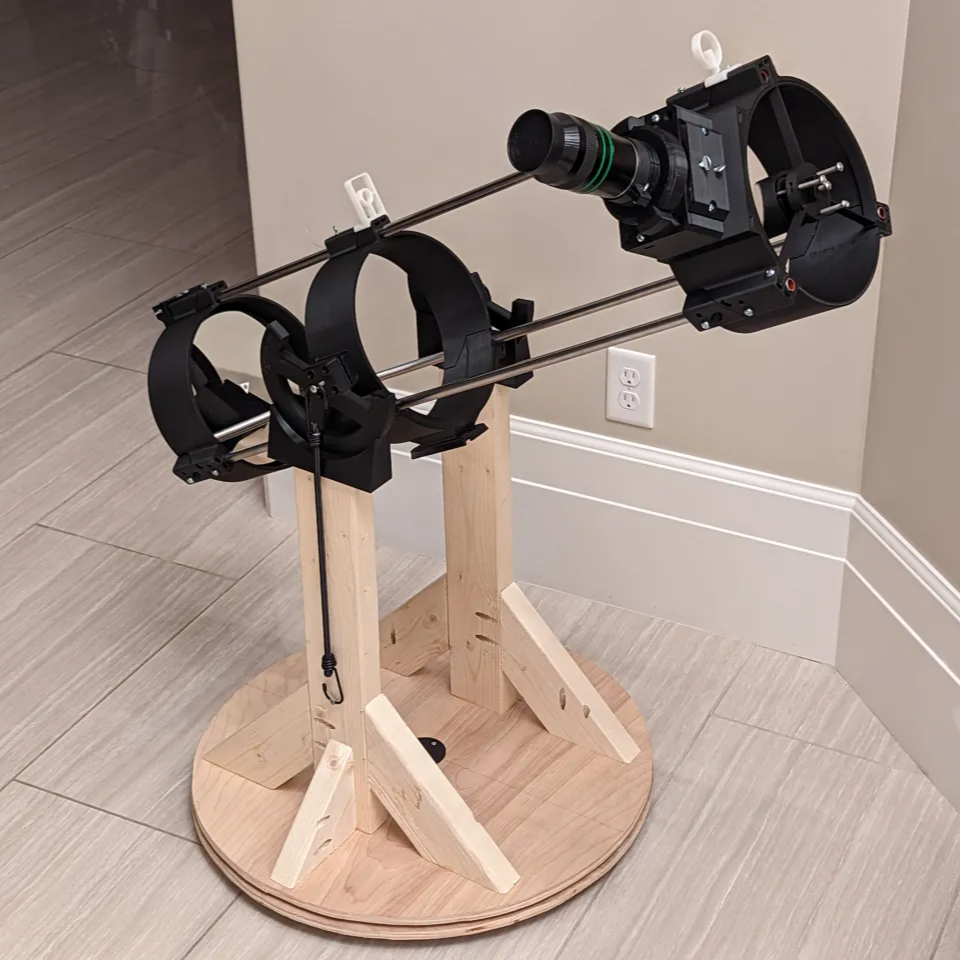
What can one expect from 3D printing an 8″ Newtonian telescope? [Molly Wakeling] shares her thoughts after doing exactly that. The performance was on par with any solid 8″ telescope, but in the end it wasn’t really any cheaper than purchasing a manufactured unit. Does that mean it wasn’t worth it? Not at all!
[Molly] makes the excellent observation that the process of printing and building one’s own telescope is highly educational and rewarding. Also, the end result is modular, user-serviceable, and customizable in a way that many commercial offerings can only dream of. It’s a great conversation starter with other enthusiasts, as well!
[Molly] printed the 203 Leavitt design (3d models available on Printables) which is an 8″ Newtonian telescope. This telescope design uses a concave parabolic mirror (a significant part of the expense) at the back of the tube to gather and focus light, and a small flat mirror near the front of the tube reflects this light to an eyepiece on the side. The wood stand makes things convenient, and we like the elastic tie-down used as a simple way to put tension on the mounts.
Do you find yourself intrigued but would prefer to start a little smaller and cheaper? Good news, because the same designer of the 203 Leavitt has a very similar design we happen to have featured before: the 114 Hadley. It features easily obtainable, lower-cost optics which perform well and can be easily ordered online, making it a great DIY starter telescope.
Respinta l’impugnazione “totale” contro la legge toscana. La Corte conferma il ruolo del Servizio sanitario e richiama il Parlamento alle proprie responsabilità
La Consulta ha chiarito che le Regioni possono intervenire per organizzare il Servizio sanitario e rendere effettivi i diritti già riconosciuti dalla sentenza n. 242 del 2019, anche in assenza di una legge nazionale sul fine vita, respingendo le censure rivolte contro l’intero impianto della legge toscana.
Scrivono i giudici della Corte costituzionale nella sentenza che “Conviene, in proposito, sgomberare subito il campo dalla censura mossa all’intera legge reg. Toscana n. 16 del 2025 di violazione della competenza legislativa statale esclusiva in materia di ordinamento penale. Tale censura è, in effetti, infondata. (cf. Considerato in diritto)” e, continuano, “la legge regionale impugnata, nel suo complesso, disciplina l’attività che il Servizio sanitario regionale è tenuto a svolgere secondo l’ordinamento vigente, così come conformato dai principi ordinamentali enunciati dalle suddette sentenze di questa Corte. Sotto questo profilo, essa non introduce dunque alcun nuovo livello essenziale di assistenza, né modifica la corrispondente disciplina statale (cfr. Considerato in diritto)”.
Le dichiarazioni di illegittimità riguardano solo singoli profili che non mettono in discussione né il perimetro dei diritti delle persone malatené l’obbligo delle strutture pubbliche di dare attuazione ai principi costituzionali già stabiliti.
In particolare, la Corte ha precisato che alcune disposizioni sono state dichiarate illegittime nella parte in cui fissavano per legge regionale scansioni temporali rigide, ritenendo che tali aspetti non possano essere cristallizzati in una fonte normativa regionale.
Si tratta tuttavia di rilievi di natura tecnica che non escludono né il dovere del Servizio sanitario di rispondere alle richieste delle persone, né la necessità che le amministrazioni sanitarie operino comunque in tempi certi, ragionevoli e compatibili con la tutela della dignità e della salute dei pazienti.
Filomena Gallo e Marco Cappato, Segretaria e Tesoriere dell’Associazione Luca Coscioni, promotrice di “Liberi Subito”:
“Il Governo ha tentato di bloccare tutto, ma la Corte costituzionale ha detto no. È stato confermato che i diritti sul fine vita non possono essere congelati dall’inerzia politica: le Regioni possono e devono organizzare il Servizio sanitario per renderli effettivi.
Questa sentenza smonta definitivamente la strategia del rinvio permanente. Con la decisione depositata oggi, la Consulta ha inoltre smentito in modo esplicito i Consigli regionali della Lombardia e del Piemonte, che avevano invocato una pregiudiziale di costituzionalità come alibi per non discutere la legge di iniziativa popolare “Liberi Subito”, una legge che in Toscana è stata invece discussa, emendata e approvata. Mentre il Parlamento discute testi che escludono il Servizio sanitario nazionale, la Corte ha ribadito con chiarezza che è proprio il Servizio sanitario nazionale il presidio indispensabile per garantire legalità, controllo e pari diritti, assicurando risposte concrete alle persone”.
Consigliere dell’Associazione Luca Coscioni ha trasformato la sua condizione di gravissima disabilità in strumento di lotta per diritti e libertà civili
È morto Severino Mingroni, attivista storico per i diritti delle persone con disabilità gravissima, consigliere e militante dell’Associazione Luca Coscioni. Aveva 65 anni. Dal 1995 viveva con la sindrome locked-in, conseguenza di una trombosi all’arteria basilare che lo aveva reso tetraplegico e muto, ma pienamente cosciente.
“Sono una persona, un essere umano, nonostante le apparenze. Dal 22 ottobre 1995 la mia vita è diventata un inferno, un incubo reale, ma grazie a Internet e agli ausili informatici posso ancora comunicare, scrivere e partecipare alla vita. Voglio vivere con dignità e autonomia, avere diritto alla Vita Indipendente, alla gestione della mia assistenza e ai bisogni affettivi, inclusa la dimensione sessuale, che non deve essere ignorata. La mia battaglia è per tutti i disabili gravi: essere riconosciuti, rispettati, liberi di scegliere e autodeterminare la propria vita. La scrittura è la mia voce, il mio mezzo per rivendicare diritti, libertà e dignità, affinché le persone non siano giudicate solo dalle loro apparenze.”
Grazie agli ausili informatici, in particolare all’headmouse, Severino aveva riconquistato la possibilità di comunicare e partecipare alla vita pubblica. La scrittura è diventata il suo strumento di libertà, relazione e impegno politico. “Sono una persona, un essere umano, nonostante le apparenze”, scriveva, rivendicando il diritto a essere riconosciuto come cittadino a pieno titolo.
Per oltre trent’anni Severino si è battuto per la Vita Indipendente, per il diritto all’autonomia delle persone con disabilità grave, all’assistenza personale autogestita e all’accesso agli ausili tecnologici necessari per comunicare e vivere. È stato una voce lucida e radicale contro ogni forma di assistenzialismo e infantilizzazione della disabilità.
Tra le sue battaglie più coraggiose e controcorrente vi è stata quella per il riconoscimento dell’assistenza sessuale come parte integrante del diritto alla salute e alla dignità della persona. Severino ha denunciato senza ipocrisie la negazione della dimensione affettiva e sessuale delle persone disabili, rompendo un tabù culturale profondo e chiedendo al legislatore di colmare un vuoto che produce solitudine, sofferenza e discriminazione.
Fondamentale è stato anche il suo impegno sul biotestamento. Severino ha contribuito in modo determinante alla battaglia per l’approvazione delle Disposizioni Anticipate di Trattamento, rivendicando il diritto di ogni persona a decidere in anticipo sui trattamenti sanitari che la riguardano. Per lui il rispetto della volontà individuale era il cuore di una medicina davvero rispettosa della persona.
Il ricordo di Mina Welby, Filomena Gallo e Marco Cappato co-presidente, Segretaria nazionale e Tesoriere dell’Associazione Luca Coscioni:
“Severino è stato capace di lottare e resistere decenni in condizioni nelle quali non molti avrebbero retto anche solo pochi mesi. La sua storia rappresenta una lotta esemplare per la vita, la libertà e l’autodeterminazione. Intellettualmente rigoroso, ironico e spesso spietatamente onesto, ha trasformato una condizione di estrema costrizione fisica in una battaglia lunga e coraggiosa. La sua voce, affidata alla tecnologia e alle parole, resta una testimonianza potente di diritti civili e dignità umana.“
Ricordano ancora Cappato, Welby e Gallo: “avevamo una chat su WhatsApp con cui comunicavamo e Severino partecipava attivamente ad iniziative per una effettiva vita indipendente affinché ogni ostacolo burocratico per cure, assistenza e partecipazione alla vita del paese fosse eliminato per persone che come lui vivevano con una condizione che impediva l’uso del corpo in ogni azione della sua giornata”.
I funerali si terranno a Casoli. Alla sorella Gianna, ai familiari e a tutte le persone che lo hanno assistito e accompagnato in questi anni, va un abbraccio affettuoso, Severino ci mancherà, tutte le iniziative con lui intraprese continueranno anche nel suo nome
#Scuola, il Ministro Giuseppe Valditara ha firmato un importante decreto che stanzia ulteriori 206,8 milioni di euro per l’adeguamento alla normativa antincendio e per interventi urgenti di messa in sicurezza degli edifici scolastici.
#Scuola, il Ministro Giuseppe Valditara ha firmato un importante decreto che stanzia ulteriori 206,8 milioni di euro per l’adeguamento alla normativa antincendio e per interventi urgenti di messa in sicurezza degli edifici scolastici.
Some synthesizer sounds are just catchy, but some of them are genre-defining. We think you could make that case for the Roland JP-8000 patch “Sandstorm”, which you’ve heard if you listened to any trance from the 90’s, but especially the song that was named after it.
“Sandstorm” is powered by the Roland Supersaw, and synth nerds have argued for a decade about how it’s made. The JP-8000 is a digital synthesizer, though, so it’s just code, run through custom DSP chips. If you could reverse engineer these chips, make a virtual machine, and send them the right program, you could get the sound 100% right. Think MAME but for synthesizers.
That brings us to [giulioz]’s talk at the 39th Chaos Communication Congress, where he dives deep into the custom DSP chip at the heart of the JP-8000. He and his crew had approached older digital synths by decapping and mapping out the logic, as you often do in video game emulation. Here, getting the connections right turned out to be simply too daunting, so he found a simpler device that had a test mode that, combined with knowledge of the chip architecture, helped him to figure out the undocumented DSP chip’s instruction set.
After essentially recreating the datasheet from first principles for a custom chip, [guiloz] and team could finally answer the burning question: “how does the Supersaw work”? The horrifying answer, after all this effort, is that it’s exactly what you’d expect — seven sawtooth waves, slightly detuned, and layered over each other. Just what it sounds like.
Sorting algorithms are a common exercise for new programmers, and for good reason: they introduce many programming fundamentals at once, including loops and conditionals, arrays and lists, comparisons, algorithmic complexity, and the tradeoff between correctness and performance. As a fun Christmas project, [Scripsi] set out to implement twelve different sorting algorithms over twelve days, using Christmas lights as the sorting medium.
The lights in use here are strings of WS2812 addressable LED strips, with the program set up to assign random hue values to each of the lights in the string. From there, an RP2040-based platform will step through the array of lights and implement the day’s sorting algorithm of choice. When operating on an element in the array the saturation is turned all the way up, helping to show exactly what it’s doing at any specific time. When the sorting algorithm has finished, the microcontroller randomizes the lights and starts the process all over again.
For each of the twelve days of Christmas [Scripsi] has chosen one of twelve of their favorite sorting algorithms. While there are a few oddballs like Bogosort which is a guess-and-check algorithm that might never sort the lights correctly before the next Christmas (although if you want to try to speed this up you can always try an FPGA), there are also a few favorites and some more esoteric ones as well. It’s a great way to get some visualization of how sorting algorithms work, learn a bit about programming fundamentals, and get in the holiday spirit as well.
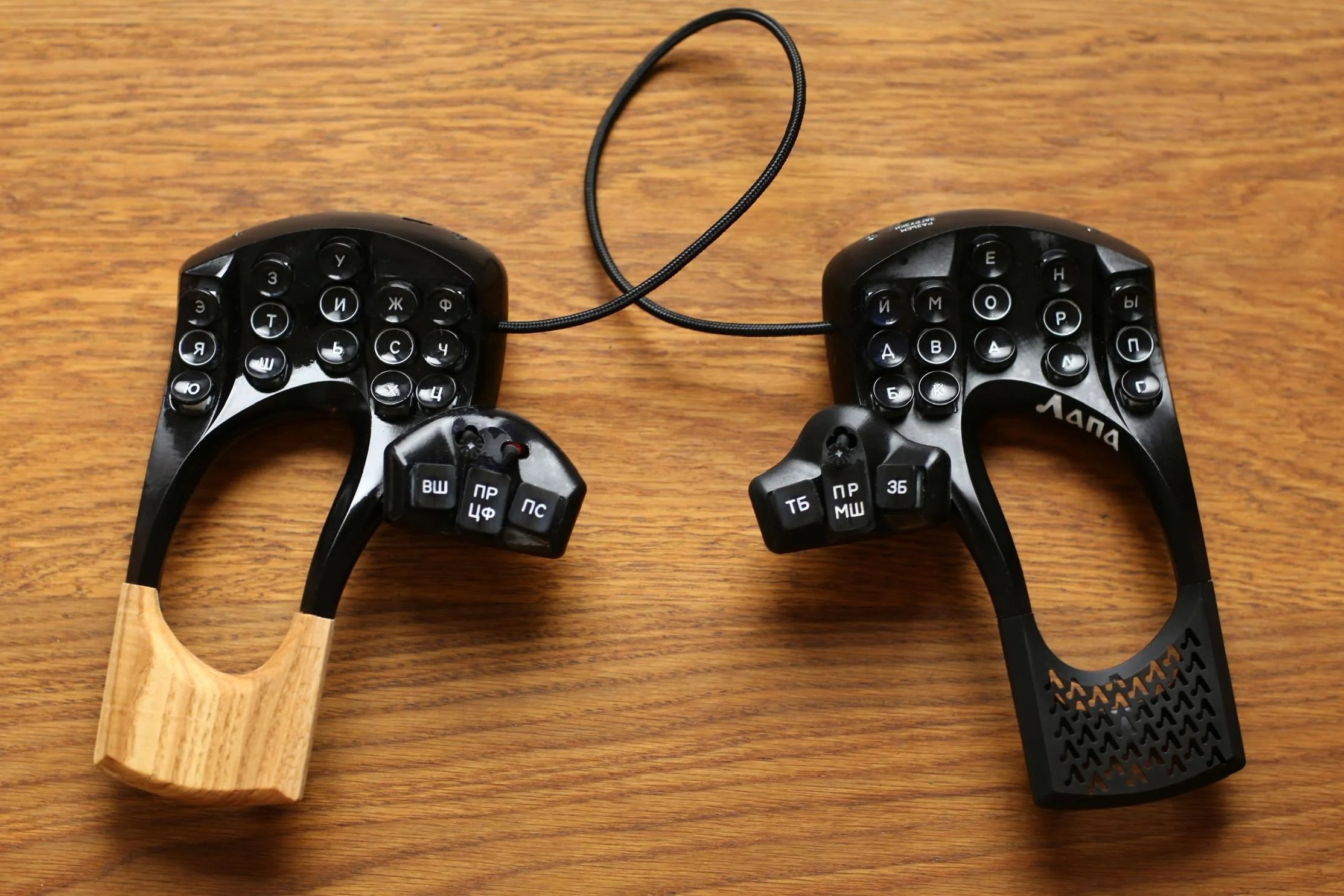
The astute among you may remember an earlier version of this Russian beauty, the Lapa, which I featured last year around this time. Creator [lemosbor] claims that the worry was less about visual beauty and more about ergonomics. Way more. Well then, let this serve rather nicely as a textbook definition of that old form-follows-function principle. The lovely Lapa. See, [lemosbor] believes that the keyboard must adapt to the hands and not the other way around. The main goals were to minimize hand and finger movement as well as the visual attention required of the keyboard itself. No, there were never going to be any screens or RGB, and there likely never will be.
But I refuse to sidestep the obvious beauty in this keyboard, which from the side resembles a stylish and expensive pair of slightly-heeled shoes that were tailored to the contours of the human hand. And let’s not forget those handmade, oval keycaps, which again are a product of form-follows-function.
Underneath those keycaps are extremely light, tactile switches — Kailh White V2s with 30g springs. Now check this out. Those DIY keycaps weren’t just for added fun, they are very lightweight on purpose. They allow [lemosbor] to type more easily and accurately than on square caps. But they created gaps which showed the switches, and the whole effect was evidently quite ugly. To solve this, [lemosbor] designed the case so that the switches are mounted on the bottom. They nestle completely into switch-shaped crevices, so they are held in place only by friction. See? Kitten heels. You might be wondering why the wrist wrests are totally different. I suppose I’ve buried the lede, which is that the right half of Lapa operates as a mouse. Like, you move it around the desk.
As you might imagine, this aspect wasn’t easy to design or execute such that the keyboard doesn’t move around like crazy while you’re trying to type. Basically, the right half is quite light by comparison. The cutouts of the honeycombed wrist wrest save on weight while also improving hand contact.
The thumbstick on the right side is used instead of the cursor keys, which [lemosbor] reports as being very convenient. The left side has a thumb toggle switch for choosing between Russian and English. There’s also a left thumbstick, which [lemosbor] uses to switch between tabs and programs.
But the coolest part might be the solenoid hidden under the left wrist rest. It knocks when switching layers, and does so a certain number of times corresponding to the layer so that [lemosbor] is never lost. Since [lemosbor] doesn’t type much English, the solenoid will constantly tap a little bit in English mode. Now I think that would be really fun to type along to, at least for a little while. Imagine what it could do for your flow state.
Claude Plods Along, Emanating From An Enabled Typewriter
As far as AIs go, I’ve personally only used ChatGPT, and I feel somewhat attached to its response style at this point. Honestly, Claude might be a shock to the system. But what wouldn’t be a shock at all is using a typewriter to interact with either one of them.
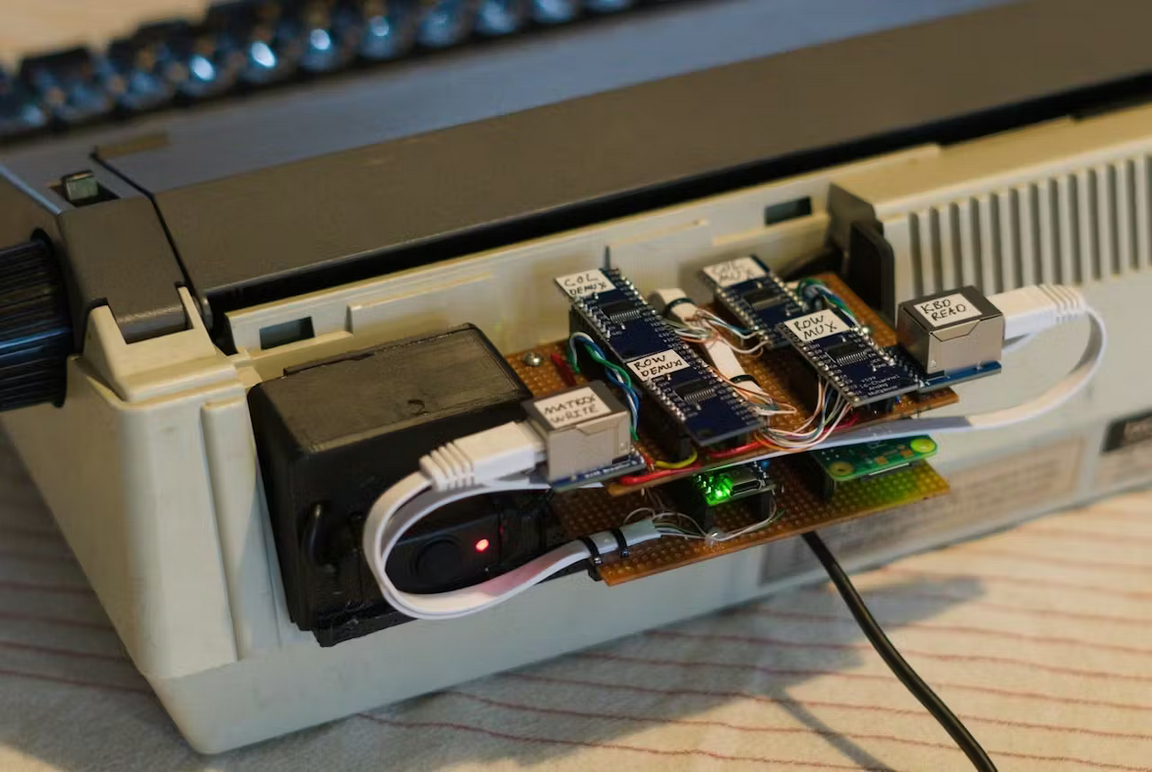
Hackaday’s own [Ben James] started with a electronic Brother AX-10, and that’s the important distinction here. This type of machine reads your keystrokes just like a computer keyboard, but it tells the daisy wheel print element how to spin, and the paper whether to go up or down.
Thanks to this operation, [Ben] was able to both intercept key presses and inject them. So you see where this is going. You and Claude take turns typing. If only the keys would phantom-depress, like a player piano.
For both processes, [Ben] used an Arduino Nano, which interfaces with the keyboard matrix through four multiplexers — columns, rows, input, and output. The Arduino is wired to a Raspberry Pi Zero W running a Python script that sends prompts to Claude’s API and gets answers in return. See Claude go in the video below.
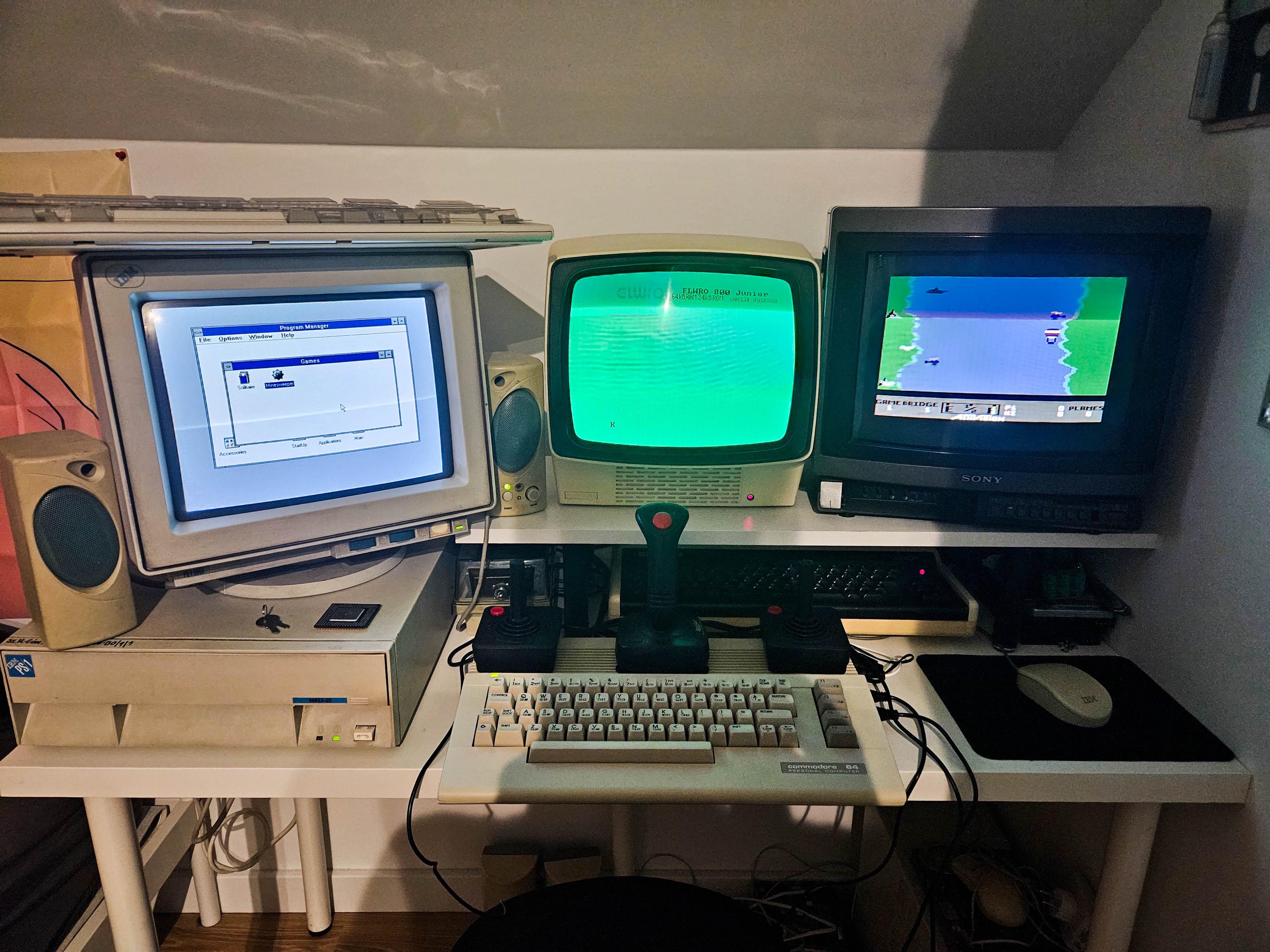
Believe it or not, these were mostly all pulled out of the e-waste pile just in time, kind of like Indy and the hat. In fact, rescuing stuff from electronics recycling is [ThisLifeSuckss]’ main hobby. Sounds like fun, if you have the space for all that you find. I myself do not.
Do you rock a sweet set of peripherals on a screamin’ desk pad? Send me a picture along with your handle and all the gory details, and you could be featured here!
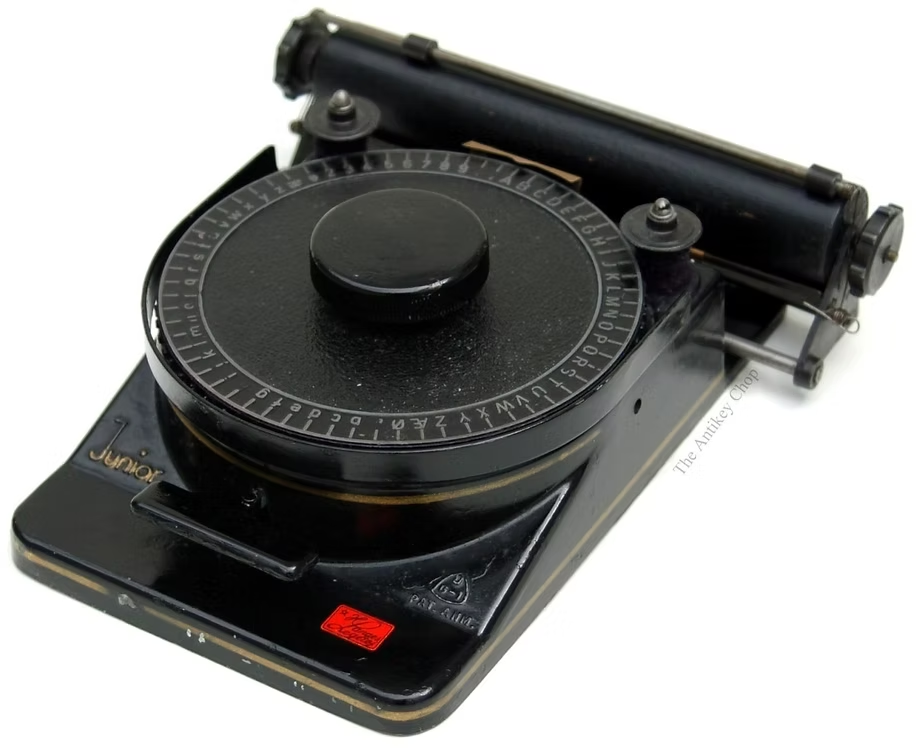
Historical Clackers: the (Danish) Junior
As the commonplace name suggests, the Junior is meant as a toy for children. But by the looks of it, this would be a fine machine to add to your late 1940s office lineup.
For one thing, it’s almost all metal except for the wooden platen, two ink rollers made of cotton, and a couple of plastic platen knobs. The Antikey Chop declared it incredibly well-built for a toy, though the design is quite simple, clocking in at just 31 total parts.
Because the Junior was assembled largely by pinning or pressing pieces together, it was completely un-serviceable as disassembly would likely cause irreparable damage.
What you could do was change out the typewheel, which was cast, index and type, from one metal piece. It’s unlikely that non-Danish versions were created, however.
In order to use the thing, you would just spin the wheel until the character you want is in the top dead center position, and push the Space bar. This action caused the entire carriage to pivot an inch forward, and would advance the spring-driven escapement by one increment when it came back to rest.
The Return function involves pivoting the carriage forward and pushing to the right. Aside from this functionality, there’s not much to this typewriter. There’s no bell, no lever for Return, and certainly no line space lever or tab stops. After all, it’s a toy. But it would make one hell of a label maker.
Finally, a Scented Mouse for Heated Gaming Sessions
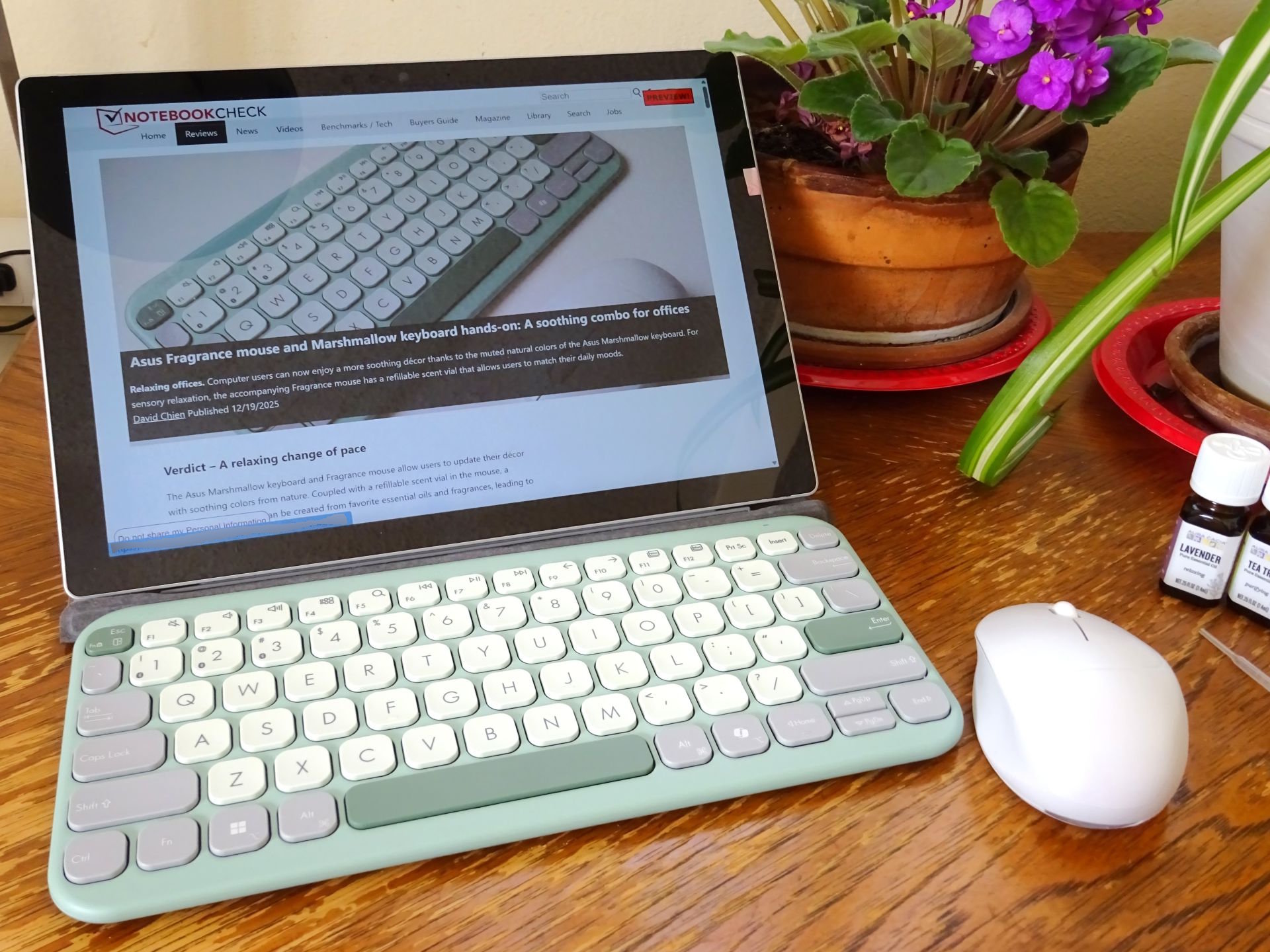
For some reason, the keyboard is called Marshmallow and not the fluffy white mouse, which is known on the streets as Fragrance Mouse. But I think marshmallow is exactly the scent I would want emanating from beneath my hand. Or maybe a nice, calming lavender, which it actually comes with.
The appeal of the keyboard is supposed to be in the muted, natural colors. Okay. That’s fair. Although it comes in three other colorways, I think this ‘green tea latte’ version takes the petit four.
And no matter which colorway you choose, the typography of the alphanumeric key legends is stunning and highly-readable. The white-on-gray of the modifiers and such is highly lacking in the legibility department, however.
As you might imagine, there’s a little tank inside Fragrance Mouse’s belly where you put the essential oils. But don’t worry about spilling, because there’s a porous insert that absorbs them.
Although they are sold separately, both peripherals are supposed to be office-quiet, with scissor keys on the Marshmallow and quiet switches in the mouse. Fragrance Mouse is weird, but I would go for it if it were a nice, comfortable trackball instead. But this thing isn’t even meant for left-handers. It should be hitting Microcenter soon, but you’ll have to buy the Marshmallow keyboard from ASUS directly.
Cascina Torchiera - Piazzale Cimitero Maggio 18, Milano (lunedì, 5 gennaio 19:00) Vi aspettiamo dalle 19, come ogni stramaledettissimo lunedì dell'anno con
il "Mercatork" di frutta, verdura e autoproduzioni
In questo spazio si pratica l’autogestione come espressione di responsabilità verso se stess* e tutto ciò che ci circonda. Come uno strumento di libertà e liberazione dai canoni del consumismo, come presa in carico del benessere collettivo e del pianeta
Quindi ricordati di lavare piatto e posate nell’area lavastoviglie
Riutilizza il bicchiere e quando hai finito di usarlo mettilo nei contenitori predisposti
Non buttare rifiuti per terra, utilizza i posacenere e bidoni della raccolta differenziata
Se hai dubbi CHIEDI: il tuo interessamento sarà apprezzato e ti sentirai parte di ciò che stai vivendo. Collabora alla buona riuscita dell’esperienza per tutt*, sii rispettos* e condividi la presa bene ❤
Lasciare pulito ciò che trovi pulito è Autogestione.
Lasciare pulito ciò che trovi sporco è Cura.
Lo spazio della Cascina è accessibile alle persone con difficoltà o disabilità motorie
Charla-debate: Impacto ecosocial de los Centros de Datos
CS La Cheli - Calle Iglesia 12 (sábado, 10 enero 18:00) ¿Cuánto cuesta la I.A.? 🤖La "nube" no flota: ocupa suelo y bebe agua. ¿Cómo podemos resistir contra Silicon Valley cuando lo digital amenaza el territorio y la vida? Acércate a esta charla-debate impartida por Aurora Gómez y Fanta del colectivo "Tu nube seca mi río" donde hablaremos del impacto ecosocial de los Centros de Datos y la famosa digitalización. 📈 España ha aumentado un 275% la potencia de centros de datos en los últimos 2 años y las grandes tecnológicas no buscan otra cosa que seguir creciendo. 💰💰💰Desde Rebelión o Extinción te invitamos a este evento para conocer mejor las amenazas del presente y poder organizarnos juntas hacia un futuro justo y deseable ❤️🔥⌛🗓️ Sábado 10 de enero a las 18h📍 CS La Cheli - C/Iglesia 12 - Marqués de Vadillo
Librería malaletra - Calle Sierra Alquife, 12 (lunes, 12 enero 19:00) ✨ya vienen ya vienen las actividades para el 2026 (!!!) empezamos el curso con las compiis de teknotejedoras (🌸) para leer juntas el libro de margarita padilla sobre inteligencia artificial,,,, dos fechas para leer y debatir en torno a preguntas como: ¿qué sería una inteligencia artificial radical? O mejor dicho, ¿cómo sería una relación radical con la inteligencia artificial? ¿es posible acaso volver a sentir la alegría hacker por la potencia de actuar, de subvertir, de crear? ¿cómo hacerlo?✨apúntate aquí: forms.gle/AuxnCVVTDKRxdCsH8
Ho già affrontato diversi lutti nella mia vita, e lo so che poi passa e ci si abitua all'assenza.. - ma porca miseria questa volta è davvero tanto difficile 💔
Intanto mi guardo Will Hunting, che so ancora a memoria, ..visto che né la brioche al pistacchio stamattina né Body Pump mi hanno aiutata a stare meglio.
The Shifting World of OSINT (with Craig Silverman)
Joseph speaks to Craig Silverman, one of the co-founders of Indicator. Indicator is a new, independent media company that Craig runs with Alexios Mantzarlis. For years Craig has covered the world of ad fraud and disinformation using all sorts of open source intelligence (OSINT) techniques. Definitely check out Indicator at Indicator.media. The site publishes its own investigations but also tips and tricks you can use yourself. playlist.megaphone.fm?e=TBIEA6… Listen to the weekly podcast on Apple Podcasts,Spotify, or YouTube. Become a paid subscriber for early access to these interview episodes and to power our journalism.If you become a paid subscriber, check your inbox for an email from our podcast host Transistor for a link to the subscribers-only version! You can also add that subscribers feed to your podcast app of choice and never miss an episode that way. The email should also contain the subscribers-only unlisted YouTube link for the extended video version too. It will also be in the show notes in your podcast player. youtube.com/embed/Lmj42F6HrPo?…
Tech News Podcast · Updated Weekly · Welcome to the podcast from 404 Media where Joseph, Sam, Emanuel, and Jason catch you up on the stories we published this week. 404 Media is a journalist-owned digital media company exploring the way …
Many of us have them, few of us really hack on them: well, here we’re talking about large home appliances. [Severin von Wnuck-Lipinski] and [Hajo Noerenberg] were both working on washing machines, found each other, and formed a glorious cooperation that ended in the unholy union of German super-brands Miele and B/S/H — a Miele washer remote controlled by Siemens’ web app.
About halfway through the talk, [Hajo] takes over, dissecting the internal D-Bus communication protocol. Here, you have to open up the box, but then you get easy access to everything about the internal state of the machine. And D-Bus seems to be used in a wide range of B/S/H/ home appliances, so this overview should give you footing for your own experimentation on coffee machines or dishwashers as well. Of course, he wires up an ESP32 to the bus, and connects everything, at the lowest level, to his home automation system, but he also went the extra mile and wrote up a software stack to support it.
It’s a great talk, with equal parts humor and heroic hacking. If you’re thinking about expanding out your own home automation setup, or are even just curious about what goes on inside those machines these days, you should absolutely give it a watch.
Editor Note: The “S” is Siemens, which is Hackaday’s parent company’s parent company. Needless to say, they had nothing to do with this work or our reporting on it.
NTP is one of the most interesting and important, but all too forgotten, protocols that makes the internet tick. Accurate clock synchronization is required for everything ranging from cryptography to business and science. NTP is closely tied around a handful of atomic clocks, some in orbit on GPS satellites, and some in laboratories. So the near-failure of one such atomic clock sparked a rather large, and nerdy, internet debate.
On December 17, 2025, the Colorado front range experience a massive wind storm. The National Center for Atmospheric Reassure in Boulder recorded gusts in excess of 100 mph (about 85 knots or 160 kph). This storm was a real doozy, but gusts this strong are not unheard of in Boulder either. That is no small reason the National Renewable Energy Laboratory (now the National Laboratory of the Rockies) has a wind turbine testing facility in the neighborhood.
High winds and dry weather make for a particularly bad time. Winds of this nature would not terribly interesting. However, the wind storm brought with it a particularly dangerous red flag warning outside of Boulder, a first for Colorado. Such high fire danger combined with damaged infrastructure prompted the local utility, Xcel Energy, to shut off power for hundreds of thousands of customers starting on December 17. Power was not regained until December 21 for many customers.
This outage came with all sorts of headaches to research institutions across Colorado. Not least of which was the National Institute of Science Technology’s (NIST) Boulder campus which houses a rather precise atomic clock. Due to predicted failure of NIST’s heat exchange, much of the normal monitoring equipment was unavailable to the scientists, further complicating the situation.
As was designed, once utility power failed, backup generators took over. But as the outage dragged on, indications came to the scientists in charge of the atomic clocks at NIST that one of the generators had failed. This prompted scientists to warn against relying on the Boulder NTP sources. The scientists running the clock feared complete failure of the hydrogen source clocks. Such failure would require a lengthy and complex re-start procedure once power was returned in the long term, and complete failure of a stratum one NTP source in the short term.
Further complicating the already bad situation was the fact that due to the dangers involved, the scientists could not reach the campus. So not only could they not confirm with certainty what issues the clocks may be experiencing, but they were unable to shut down the NTP servers. Fortunately, power was returned and the main source clock only drifted by a few microseconds. This is still far too much drift as would be preferred on a clock normally accurate in the range of nanoseconds, but perfectly usable for NTP which is only accurate to within a few milliseconds.
So this prompts the question, if such a key time source had failed, what would have happened? In short, not much. By nature of being so distributed, most servers have multiple NTP sources, often including GPS satellites. However, there would most certainly be any number of servers without multiple NTP sources configured. Websites hosted on such servers would be rendered inaccessible as HTTPS encryption handshakes require synchronized clocks. TOTP passkeys and FIDO hardware authenticators would likewise be unusable as both protocols rely on accurate time sources. So any two computers would be unable to properly execute protocols requiring synchronized time. Beyond the limited failures outlined above, its difficult to say what more the damage could be, but the effects are unlikely to be terribly dramatic.
In occasione della chiusura della Porta Santa a conclusione dell'anno giubilare, la Basilica Papale di Santa Maria Maggiore ha commissionato la realizzazione di una medaglia commemorativa, "riprendendo un'antica tradizione".
We elect our Pirate Council in February. Positions include Captain, First Officer, Quartermaster, PR/Media Director, Activism Director, Swarmwise Director, Web/Info Director, three Arbitrators and two representatives to the US Pirate Party.
Ballots will be sent out by February 13th and are due back by February 27th. We will use the same voting mechanism we used in our previous election. Voters will be emailed a randomly generated id that only the voter will know. Once the election is done, we will delete the ids. In this way, we can ensure that only supporters can vote, while also maintaining the secrecy of votes.
Diversi Processi Stessa Regia: Direzione Nazionale Antiterrorismo e Antimafia
Sede della Direzione Nazionale Antiterrorismo e Antimafia - Via Giulia, 52, 00186 Roma RM (venerdì, 9 gennaio 11:30) DIVERSI PROCESSI STESSA REGIA: Direzione Nazionale Antiterrorismo e Antimafia
La DNAA guidata dal sionista Melillo, magistrato in quota PD, sta orientando i processi contro i "Colpevoli di Palestina" in tutto il paese, trasformando i tribunali italiani in succursali dei tribunali delle forze di Occupazione israeliane in Palestina. 28 anni in totale richiesti dal pubblico ministero contro Anan, Alì e Mansour per "non aver commesso reati" contro lo Stato italiano. A questi si sono aggiunte le persecuzioni contro Hannoun, Shahin, Salem, Tarek e tanti altri colpevoli di solidarietà con la Palestina contro i Genocidi sionisti o semplicemente per essere arabo-palestinesi
LIBERTA' PER ANAN YAEESH E TUTTI GLI ALTRI PERSEGUITATI! CONTRO I TRIBUNALI AL SERVIZIO DELL'OCCUPAZIONE DELLA PALESTINA! CONTRO LA SIONISTIZZAZIONE DELLO STATO ITALIANO!
In vista dell'appuntamento nazionale a L'Aquila per l'ultima udienza del processo contro Anan, Alì e Mansour PRESIDIO DI PROTESTA VENERDI' 9 GENNAIO - ORE 11:30 DAVANTI LA SEDE DELLA DNAA (Via Giulia 52, Roma)
Diversi Processi Stessa Regia: Direzione Nazionale Antiterrorismo e Antimafia
Inizia:Venerdì Gennaio 09, 2026 @ 11:30 AM GMT+01:00 (Europe/Rome)
DIVERSI PROCESSI STESSA REGIA: Direzione Nazionale Antiterrorismo e Antimafia
La DNAA guidata dal sionista Melillo, magistrato in quota PD, sta orientando i processi contro i "Colpevoli di Palestina" in tutto il paese, trasformando i tribunali italiani in succursali dei tribunali delle forze di Occupazione israeliane in Palestina. 28 anni in totale richiesti dal pubblico ministero contro Anan, Alì e Mansour per "non aver commesso reati" contro lo Stato italiano. A questi si sono aggiunte le persecuzioni contro Hannoun, Shahin, Salem, Tarek e tanti altri colpevoli di solidarietà con la Palestina contro i Genocidi sionisti o semplicemente per essere arabo-palestinesi
LIBERTA' PER ANAN YAEESH E TUTTI GLI ALTRI PERSEGUITATI! CONTRO I TRIBUNALI AL SERVIZIO DELL'OCCUPAZIONE DELLA PALESTINA! CONTRO LA SIONISTIZZAZIONE DELLO STATO ITALIANO!
In vista dell'appuntamento nazionale a L'Aquila per l'ultima udienza del processo contro Anan, Alì e Mansour PRESIDIO DI PROTESTA VENERDI' 9 GENNAIO - ORE 11:30 DAVANTI LA SEDE DELLA DNAA (Via Giulia 52, Roma)
Pochi giorni dopo l'accordo col Fisco che vedrà l'e-commerce statunitense pagare all'erario italiano 511 milioni di euro per chiudere il contenzioso tributario su presunte condotte illecite legate al versamento dell'Iva, Amazon ha deciso di lasciare a terra i suoi droni
Carcere di Marassi - Piazzale Marassi 2 (lunedì, 29 dicembre 18:00) 🇵🇸 Presidio - La solidarietà con la Palestina non si arresta 📅 Lunedì 29 dicembre 2025 🕔 Ore 18:00 📍 Genova - Carcere Marassi
CONCERTO DI CAPODANNO "ALLA SCOPERTA DI GIOVANI TALENTI"
Magnano - Chiesa di Santa Marta - Magnano, Chiesa di Santa Marta (mercoledì, 31 dicembre 20:00) Il Festival Musica Antica a Magnano e il Ensemble Musica Antica Magnano invitano e presentato due giovane violiniste e una giovane flautista.
Piatto, Bielmonte - Al Maneggio Ristobar - Località Bielmonte 17, 13844 Piatto BI (mercoledì, 31 dicembre 22:30) Cena AL MANEGGIO E POI…. Si brinda al bar panoramica con dj set!!!
A BIELMONTE IN PIAZZETTA LA NOTTE DI CAPODANNO SI FESTEGGIA!!!!!
Biella - Galileo - Via Galileo Galilei, 1, 13900 Biella BI (mercoledì, 31 dicembre 23:30) 🥂A PARTIRE DALLE 23:30 VIENI A FESTEGGIARE IL CAPODANNO CON LA GALILEO FAMILY🥂
“This is so fucking stressful,” Jason said. On a group call, all four of us—Jason, Sam, Emanuel, and me—were bidding on something that had long eluded us. 404media.com. Not the .co domain we launched with two years ago because that’s all we could afford. But a fully-fledged .com.
That September day I was on holiday in an Airbnb. Sam was in San Diego to report on the sentencing of a high profile sex trafficker. Emanuel was home. Jason was also at home and eating a bagel. Ordinarily we wouldn’t be able to buy a .com for two main reasons: they are typically quite expensive, and when we created our company the domain was already in use by someone else.
Fortunately for us, that company had seemingly moved on to other things, and the domain was up for auction. I got some emails from our domain registrar about the auction a few days before, and some 404 Media readers contacted us about it too. This was our chance.
But an auction is a very different experience to just buying the domain outright. We would be trying to beat other people or bots. We thought that might include those kindly trying to buy the domain on our behalf, or others trying to take it from underneath us. And we had no idea how high the price might go.
I was in charge of placing the bids themselves. Soon we found I wasn’t able to place bids of a certain size because, we later learned, the account didn’t have the necessary level of verification to do so. We were leading with a bid of $1,207.
A few minutes into our group call, Jason started recording it.
“I think we should just get 202 Media if this doesn’t work,” he said.
“Okay, under one minute until the five minute extension is over,” I added.
Emanuel led a ten second countdown.
“Your bid won,” I read from the screen. Everyone cheered. Here is what we said immediately afterwards: A transcript of some of the group call. Right now, our .com domain just redirects to the .co one. Maybe we’ll put an Easter Egg or something else fun on it soon, but we also had practical reasons for buying it. The first is that we’re proud to say 404 Media is a well known publication at this point, and we don’t want anyone else parking and abusing the .com domain that many people may end up at by mistake. The second is that, understandably, many people mistakenly email us at the @404media.com domain rather than the @404media.co domain, so now we’ll be able to catch those lost emails and save us all a lot of heartache.
But our ability to buy the domain signifies something important: that we are able to grow, bit by bit, sustainably. When we launched 404 Media in August 2023, we each put $1,000 in. That was to pay for the domain, the content management system (CMS) and website host we use called Ghost, some other add-ons that automatically send people emails, and that’s about it. Buying a .com was a pipedream then, just like running a website and podcast years later was.
Since then we’ve built a fulltext RSS feed for our subscribers (something that didn’t exist with Ghost before); run multiple in-person events; and most recently produced a physical zine. All while reporting and writing cutting edge journalism on technology and AI and how they are really impacting humans every day.
Thank you to all of our paying subscribers who make it possible for us to write impactful journalism every day. And let us buy a new domain.
We paid for the development of full text RSS feeds for Ghost-based publishers. Now we can offer them to our paid subscribers, and other Ghost sites can use the service too.
Analisi e correlazioni costruite anche grazie alla piattaforma Recorded Future (Insikt Group), che in questi casi è utile per mettere ordine nel caos tra segnali, rumor e priorità operative.
C’è una tradizione natalizia che nessuno ha chiesto ma che puntualmente arriva: panettone, parenti… e un bug pre-auth che fa uscire pezzi di memoria dal server come se fossero caramelle. Questa volta il regalo avvelenato si chiama MongoBleed, ovvero CVE-2025-14847, e colpisce MongoDB Server.
Non è la classica vulnerabilità “rompo tutto e ti cifro i dati”. È peggio in un modo più subdolo: ti porto via i segreti. E con i segreti ci apro tutto il resto.
Cosa succede
Il difetto nasce nella gestione dei messaggi compressi via zlib: con campi di lunghezza incoerenti, il server può finire a restituire heap memory non inizializzata a un client remoto non autenticato. Il risultato è un leak di dati “di passaggio” in memoria, molto in stile Heartbleed vibes, ma nel mondo MongoDB.
Qui il punto chiave è uno: prima dell’autenticazione. Se l’istanza è raggiungibile da Internet, l’attaccante non deve “indovinare” nulla. Deve solo parlare col servizio.
Parliamo di possibili leak di credenziali, token di sessione, API key, chiavi cloud, PII, config e frammenti di log. È materiale perfetto per fare pivot, escalation, e trasformare un leak “passivo” in compromissione “attiva” (e monetizzabile).
E no, non ti salva l’idea rassicurante “ma tanto Mongo è dietro al firewall”: spesso non lo è. O peggio, lo è “sulla carta”.
Patch
Le versioni fixate riportate pubblicamente includono 8.2.3, 8.0.17, 7.0.28, 6.0.27, 5.0.32, 4.4.30; NVD conferma la finestra di impatto e i rami coinvolti (inclusi quelli legacy dove la parola “migrazione” non è più un consiglio ma una condanna rimandata).
MongoDB ha rilasciato le patch il 19 dicembre 2025 e, come sempre, il tempo tra “fix disponibile” e “abuso in massa” si misura in sbadigli.
“In the wild”
Diverse analisi riportano sfruttamento attivo e un’accelerazione dopo la pubblicazione di dettagli/PoC. In parallelo, Censys fotografa l’elefante nella stanza: circa 87.000 istanze MongoDB esposte (con i soliti Paesi ai vertici).
E qui la nota di colore amara: nel 2025 discutiamo ancora di database lasciati su Internet come se fossero una landing page. Poi ci stupiamo se qualcuno passa a “raccogliere”.
Detection
Una delle parti più fastidiose di MongoBleed è proprio questa: non è detto che lasci tracce “facili” nei soliti flussi SIEM. Diversi ricercatori stanno spingendo artefatti e logiche di hunting (Velociraptor, query dedicate), perché intercettare i pattern del PoC richiede visibilità sul posto, non solo in periferia.
In pratica: se non hai logging decente sul nodo MongoDB, rischi di scoprire l’incidente dai sintomi, non dalla diagnosi.
Ubisoft / Rainbow Six Siege
Circola l’ipotesi che MongoBleed sia stato usato come vettore di accesso iniziale in un caso mediatico legato a Ubisoft / Rainbow Six Siege. VX-Underground riporta claim espliciti, mentre altre fonti trattano la vicenda come breach reale ma con vettore ancora non dimostrato pubblicamente. Morale: teniamolo sul radar, ma senza trasformare X in un tribunale.
Ed è esattamente qui che Recorded Future/Insikt, lato intelligence, torna comodo: separare fatti, probabilità e propaganda.
Cosa mi aspetto che succeda nelle prossime settimane
Succede sempre la stessa cosa: ondata di scanning, exploitation opportunistica, poi selezione dei bersagli “buoni” (quelli da cui puoi estrarre segreti utili per entrare altrove). MongoBleed è perfetta per questo modello: rubare chiavi è spesso più efficiente che bucare un perimetro a testate.
E in Italia? Non serve fare patriottismo dell’incidente: MongoDB è ovunque in stack moderni, spesso in mano a team piccoli, spesso “temporaneamente esposto” (cioè per sempre), spesso con l’idea che “tanto non interessa a nessuno”. Spoiler: interessa eccome. Soprattutto quando quello che esce dalla memoria sono token e credenziali riutilizzabili.
Cosa fare adesso
Patchare. Subito. Se non puoi patchare immediatamente, ridurre la superficie: niente esposizione diretta su Internet e, dove previsto come mitigazione temporanea, valutare la disabilitazione della compressione zlib finché non aggiorni (è una stampella, non una guarigione). Poi ragionare da incident responder, non da sysadmin ottimista: se l’istanza era esposta e sospetti attività, considera la rotazione dei segreti potenzialmente in memoria (credenziali, API key, token, chiavi cloud) e fai hunting mirato.
Perché la domanda non è “mi hanno bucato?”. La domanda, con MongoBleed, è più cinica: “quali segreti potrebbero essere già usciti?”
Approderà oggi in Consiglio dei ministri il nuovo decreto armi per il sostegno all’Ucraina, l’atto normativo che permetterà all’Italia di proseguire i trasferimenti di materiali militari e il supporto logistico a favore di Kyiv anche nel 2026. Il testo, frutto di settimane di confronto serrato tra i ministeri competenti e la
L’anno che volge al termine è stato caratterizzato da tanti momenti rilevanti, non solo per la vita della Chiesa e la comunità dei fedeli. In uno scenario globale caratterizzato da conflitti, disuguaglianze e timori per il futuro della nostra casa comune, l’anno giubilare ha permesso di custodire e coltivare la speranza. Abbiamo dato l’ultimo saluto a papa Francesco, dopo 12 anni di un pontificato intenso e coraggioso, e accolto con emozione papa Leone XIV che, in continuità con il suo predecessore, ha chiesto alla nostra rivista di continuare a «cogliere lo sguardo di Cristo sul mondo, coltivarlo, comunicarlo, testimoniarlo». Accogliendo l’invito del Pontefice, vogliamo ripercorrere le riflessioni che ci hanno accompagnato lungo tutto l’anno santo, rileggendo con voi i 12 articoli più letti pubblicati nel 2025.
“Il povero non è soltanto qualcuno a cui si aiuta, ma la presenza sacramentale del Signore”. Papa Leone XIV lo ha affermato nell’udienza a un gruppo di pellegrini della parrocchia Santo Tomás de Villanueva di Alcalá de Henares, in Spagna, ricevuti qu…














A transcript of some of the group call.


Scimmia di Mare
in reply to aimee80 • • •aimee80 likes this.