Dozens of Bizarre Ancient Lifeforms Discovered in ‘Extraordinary’ Fossil Find
🌘 Subscribe to 404 Media to get The Abstract, our newsletter about the most exciting and mind-boggling science news and studies of the week.
Welcome back to the Abstract! Here are the studies this week that roamed a superocean, took to the skies, grabbed some grub, and watched alien auroras.
First, check out some 512-million-year-old guts, brains, and tentacles. Gnarly! Then, dig into the mega-importance of Microraptor, some entomological edibles, and more weird radio signals from outer space.
Paleontologists have discovered the remains of a vibrant ecosystem that existed more than half a billion years ago, revealing dozens of strange species that have never been seen in the fossil record before.
Found in the southern mountains of China’s Huayuan County, this fossilized snapshot offers an unprecedented glimpse of the creatures that were crawling (or swimming, or slithering, etc.) through the oceans 512 million years ago, during the Cambrian period, when complex life on Earth first went into overdrive.
Between 2021 and 2024, paleontologists unearthed thousands of specimens at this site, which yielded “remarkable taxonomic richness, comprising 153 animal species…among which 59 percent of species are new,” according to researchers co-led by Han Zeng and Qi Liu of the Chinese Academy of Sciences.
Many of the same animals have been found at other Cambrian sites—such as Canada’s famous Burgess Shale—suggesting that species dispersed widely through the vast superocean that existed at this time, traveling by ocean currents or even “floating rafts,” the team said.
Not only is this ecosystem notably diverse, but the fossils have remained unusually intact in the ancient mudstone, allowing for the preservation of soft tissues like tentacles, guts, and a nearly-complete nervous system found in one arthropod.
“The biota is comprised overwhelmingly of soft-bodied forms that include preserved cellular tissues” in a state of “extraordinary soft-tissue preservation,” the team said.
The middle Cambrian period famously featured an “explosion” of complex Earthlings that rapidly proliferated from about 538 to 518 million years ago. While 20 million years is a long time from a human perspective, this was a sudden and dramatic event for life on Earth as a whole, which had previously been confined to microbial form for billions of years. The newly-discovered Huayuan biota lived in the wake of the explosion and a subsequent collapse, a mass extinction called the Sinsk event.
There are way too many cool finds in this study to summarize in one humble newsletter, so I will close this up with one of my absolute favorite Cambrian weirdos: Herpetogaster, a phantasmagorical creature of tubes and tentacles depicted in the below illustration that I offer without comment. Herpetogaster doing whatever Herpetogaster does. Image: Marianne Collins - PLoS One “The enigmatic cambroernid Herpetogaster—an iconic taxon first described from the Burgess Shale—is represented by over 100 specimens in the Huayuan biota, making it the most abundant entirely soft-bodied species,” said the team.
Forget gold, oil, and diamonds. There is no richer vein to tap than the Herpetogaster mother lode.
Speaking of enchanting extinct animals, let’s glide forward in time to the early Cretaceous period, when the dinosaur Microraptor was on the wing—or more accurately, four wings. Unlike pterosaurs or birds, which sport just one pair of wings, Microraptor evolved feathered wings on both its fore and hind limbs, a body plan that has long fascinated paleontologists. Act casual when confronted by dinosaurian raptors of various scales (Microraptor is #1). Image: Fred Wierum To get a better handle on how Microraptor took to the sky, researchers led by Csaba Hefler of the Hong Kong University of Science and Technology modelled its possible flight dynamics and demonstrated “the potential for beneficial interactions between the forewing and hindwing” that helped this airborne predator attack its prey.
“The specialization of the hindwing to accommodate the downstream extended tip vortex for a wide range of angles of attack is to our knowledge unique among flying animals, including four-winged insects,” the team said. “Our results suggest that greater utilization of unsteady aerodynamic features was potentially a crucial milestone of early flight development.”
Respect to this deft handler of the downstream vortex. As its name implies, Microraptor was very small, but to its prey, it was a terrifying portent of death from on high.
Pass the beetle sausage and butter the larva bread, because it’s time to embrace your inner insectivore. Insects have been part of the human diet for ages—many are considered delicacies—but they have become taboo and reviled as a food source in many Western societies that view insects with disgust.
In a new study, scientists advise that we get over the ick factor, as insects could play an important part in maintaining food security in the coming decades.
“More than 2,000 insect species have been identified as safe for human consumption, offering a wide range of nutrients, including proteins, lipids, minerals, and vitamins at different life stages such as eggs, larvae, pupae, and adults,” said researchers led by Pamela Barroso de Oliveira of the Federal University of Minas Gerais in Brazil.
“In addition to their nutritional value, insect-based food production presents several environmental advantages, including lower water consumption, reduced greenhouse gas emissions, and higher feed conversion efficiency,” they add. Breads made with various insect flours. Image: Machado and Thys The study includes pictures of ground cricket, mealworm sausage, and breads made from various insect-enriched flours. Look, I’m not exactly craving crickets, but maybe we should take a lesson from Simba in The Lion King, who manages to avenge a murder and reclaim a throne on what is apparently an entirely grub-based diet. Bon appetit!
We’ll close, as all things should, with exciting radio signals from faraway planets.
Since the Sun spits out flares—sparking storms and brilliant auroras on Earth and other planets—scientists have wondered whether they might be able to detect the faint effects of analogous activity in other star systems. Now, one team thinks they have spotted these elusive signals.
“In the Solar System, low-frequency radio emission at frequencies ≲200 MHz is produced by acceleration processes in the Sun and in planetary magnetospheres,” said researchers led by Cyril Tasse of Sorbonne University. “Such emission has been actively searched for in other stellar systems, as it could potentially enable the study of the interactions between stars and the magnetospheres of their exoplanets.”
The team developed a new analysis method for analyzing archival data, which revealed events that are “fully compatible with radio emission generated by star–planet interactions, although an intrinsic stellar origin is still a possible explanation,” according to the study.
In other words, it will take more research to confirm the origin of this radio emission. But we may be getting a glimpse of the space weather beyond the interstellar horizon.
A narrative and visual exploration of humanity’s age-old search for and fixation with extraterrestrials.First Contact explores the ancient idea—and epic ...
404 Media is publishing a version of the user guide for ELITE, which lets ICE bring up dossiers on individual people and provides a “confidence score” of their address.#ICE #palantir
The tool lets ICE populate a map with potential deportation targets, bring up dossiers on each person, and view an address “confidence score” based on data sourced from the Department of Health and Human Services (HHS) and other government agencies. This is according to a user guide for ELITE 404 Media obtained.
404 Media is now publishing a version of that user guide so people can read it for themselves.
💡 Do you know anything else about ELITE? Do you work at Palantir, ICE, or CBP? I would love to hear from you. Using a non-work device, you can message me securely on Signal at joseph.404 or send me an email at joseph@404media.co.
This post is for subscribers only
Become a member to get access to all content Subscribe now
Erotic Parody 'Melania: Devourer of Men' Sales Surge on Amazon Amid Documentary Flop
The $75-million, Amazon-funded Melania Trump documentary is tanking at the box office, but a 2018 erotic thriller that depicts the First Lady as a sexual monster is rocketing up Amazon’s sales charts. Melania: Devourer of Men is currently an Amazon bestseller, sitting at number 3 in the “political thrillers & suspense” category in the Kindle store. A general search for "Melania" on Amazon returns a banner ad for the documentary, the First Lady's memoir, and the erotic thriller as the top results.
A Reddit-led campaign to disrupt the Amazon search results for “Melania” is behind the sudden spike in popularity of the eight year old book. “This weekend, Amazon is premiering its $75 million Melania Trump documentary. It already seems to be a flop,” a post in r/BoycottUnitedStates explained. “We're going to add insult to injury by messing up Melania's Amazon search results. Specifically, we're going to amplify the paranormal erotic thriller novel Melania: Devourer of Men so it ranks higher than her movie.” playlist.megaphone.fm?p=TBIEA2… Part of the success of the campaign is thanks to author J.D. Boehninger’s willingness to give the book away. “A redditor reached out to me last week and asked me if I would make the book free,” the pseudonymous Boehninger told 404 Media. “They explained their reasoning, basically said they were going to try to pull this off, and why my book was the right choice. I loved the idea, so I made the book free. But that was the only role I played here.”
Melania: Devourer of Men depicts the First Lady as a monster whose life is upended after her husband becomes President and she has to move from New York City to Washington DC. “Now, surrounded by young, strapping Secret Service agents and pursued by the cunning and handsome FBI director James Comey, Melania must work to keep everything from falling apart,” reads the book's description. “Because Melania has secrets of her own –– deadly secrets –– and no one yet knows how far she'll go to protect them.”
Boehninger said he wrote the book in 2018 as an experiment. “It was a test of the Kindle store algorithm,” he said. “My friend told me that three things did well back then: monster fiction, erotica, and stuff about Trump…so I figured I could write the book for the Kindle store: a combo monster fiction/ erotica/ Trump book. I thought it would blow up…but, sadly, it didn’t really perform back then. So glad to see people finding it now!”
The Melania documentary is a two hour long film / bribe directed by Brett Ratner and distributed by Amazon. The company paid $40 million for the rights to it during a bidding war. “This has to be the most expensive documentary ever made that didn’t involve music licensing,” Ted Hope, a former Amazon film executive, told The New York Times. The expense of the film and the advertising push around its release have some people believing Amazon’s support of the movie is a way for the company to get in good with the President.
In the runup to its release, the documentary has become a source of scorn from a public exhausted with all things Trump. Its wide theatrical distribution is something Amazon doesn’t do for most of its films, and certainly not its documentaries. Posting pictures of empty seats in ticket apps and defaced advertisements has become a popular pastime online. The film’s distributor in South Africa stopped its release in the country, citing “recent developments,” but would not go into specifics.
“I know blessedly little about that movie! I've seen headlines about empty theaters but I don't know much else,” Boehninger said. He thinks it’d be funny if the book sold better than the documentary, but he isn’t expecting to make a lot of money. “The ebook is free in the Kindle store, and I think that for a lot of people, giving Amazon money would probably defeat the point of this protest. That said, I've seen that some people are paying money for the paperback version and for my other book. I appreciate that!”
L'#Iran ha annunciato che considererà gli eserciti europei organizzazioni terroristiche. Ha concluso con un "cicca cicca".
Una cosa che neanche Harendt, grande studiosa dei totalitarismi, è mai riuscita a spiegare è come facciano le dittature ad avere un senso del ridicolo così poco sviluppato.
Another chilly evening in Western Europe, as Elliot Williams is joined this week by Jenny List to chew the fat over the week’s hacks.
It’s been an auspicious week for anniversaries, with the hundredth since the first demonstration of a working television system in a room above a London coffee shop. John Logie Baird’s mechanically-scanned TV may have ultimately been a dead-end superseded by the all-electronic systems we all know, but the importance of television for the later half of the 20th century and further is beyond question.
The standout hacks of the week include a very clever use of the ESP32’s WiFi API to detect people moving through a WiFi field, a promising open-source smartphone, another ESP32 project in a comms system for cyclists, more cycling on tensegrity spokes, a clever way to smooth plaster casts, and a light sculpture reflecting Wi-Fi traffic. Then there are a slew of hacks including 3D printed PCBs and gem-cut dichroic prisms, before we move to the can’t-miss articles. There we’re looking at document preservation, and a wallow in internet history with a look at the Netscape brand.
As usual all the links you need can be found below, so listen, and enjoy!
[Androxilogin] had a problem. An Xbox 360 Slim had shown up in the post, but failed to give much more than a beep when turned on. Disassembly revealed some missing components, but replacing them failed to breathe life into the beleaguered console. Deeper repair was needed, and that would require a special adapter which [Androxilogin] was able to whip up from scratch.
When it comes to the Corona models of the Xbox 360, it’s often necessary to use something called a “post-fix adapter” to do certain diagnostic and repair tasks. These adapters consist of a bracket which wraps around the CPU, and probes the solder ball for the POST_OUT signal which is otherwise difficult to access on the motherboard itself. Adapters are readily available online, and are usually manufactured as a PCB with a protruding contact to make a connection.
For [Androxilogin], though, time was short. Rather than wait for adapters to ship, it was quicker to whip up a custom piece to do the same job. This was achieved with a 3D print which was able to clamp around the CPU, while snugly holding a piece of tinned 30 AWG wire to poke the critical point beneath the chip. After a couple of attempts to get the sizing just right, [Androxilogin] was able to make the necessary connection which enabled installing Xell Loader on to the machine to bring it back to life.
These days, the conversation around climate change so often focuses on matters of soaring temperatures and extreme weather events. While they no longer dominate the discourse, rising sea levels will nonetheless still be a major issue to face as global average temperatures continue to rise.
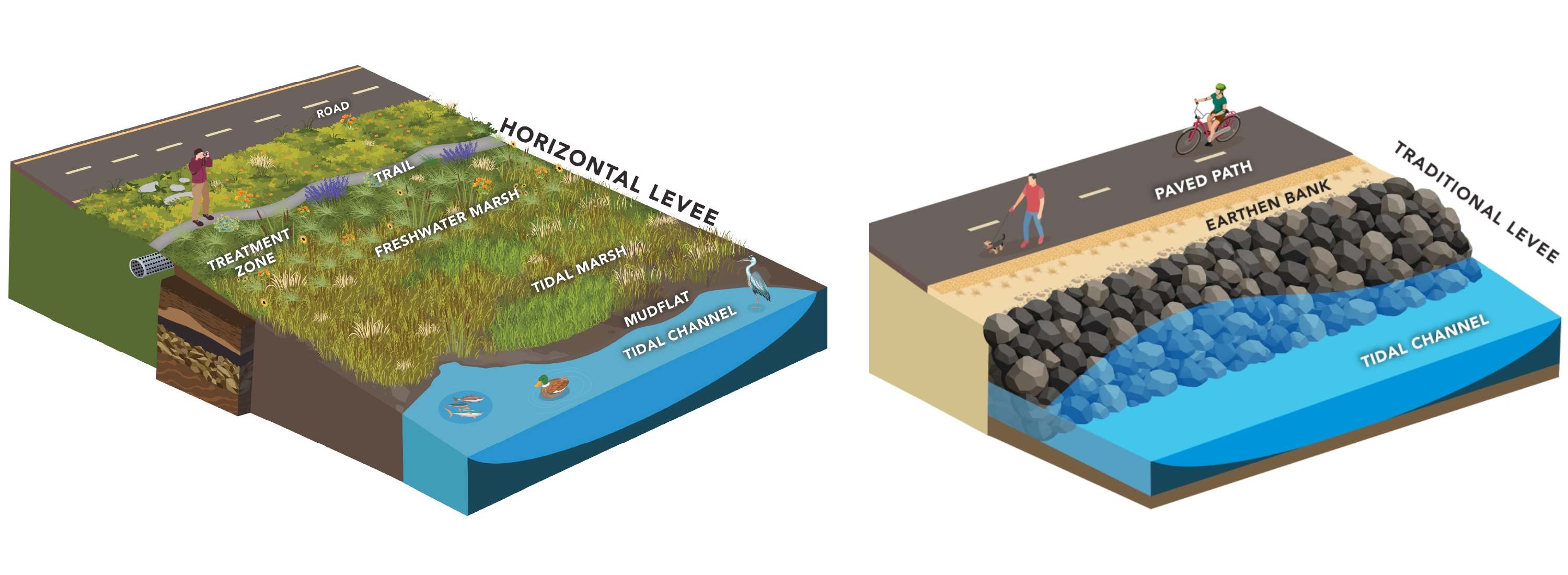
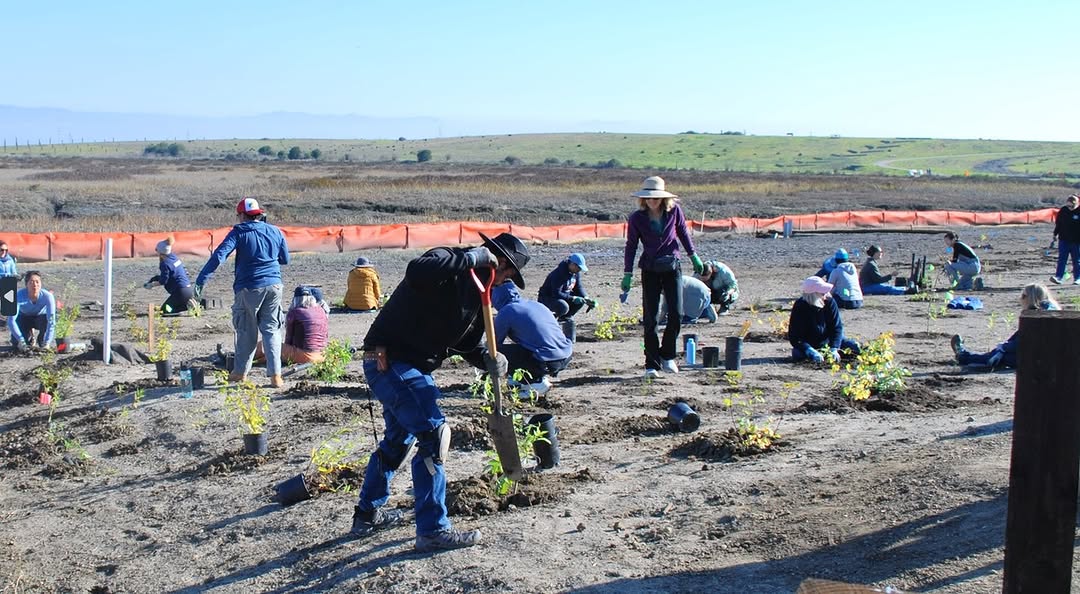
The traditional way to fight back against the sea is with seawalls. These typically consist of steep slopes constructed on the shoreline, which are designed to reflect wave energy back to the sea and stop it from eating away at the land. They are normally built using rocks, steel, or concrete walls to dissipate the energy of incoming waves. They are typically simple to design and construct, and prove relatively effective at staving off erosion. However, they can also be quite imposing and unsightly, and often do very little to support native fauna and flora. The horizontal levee design (left) compared to a traditional rock-based seawall (right). The latter is simpler and quicker to construct, but is far less visually appealing and does little to support the local ecosystem. Credit: City of Palo Alto The City of Palo Alto is taking an altogether different approach by building a horizontal levee to protect the shore of Harbor Marsh. It eschews the usual steeply sloped seawall concept entirely. Instead, the coast is to be given a gentle gradient constructed of earth, creating a so-called “ecotone slope”—a long, sloping habitat down to the water line. Where the tide meets the shore, native plantings will support a tidal marsh, transitioning to a freshwater marsh with different plants farther up the slope, with volunteers planting 35 species in all. It’s hoped that restoring these habitats in the area will provide support to species like the Ridgway’s rail and the salt marsh harvest mouse. Wastewater is used to support the growth of native plant species, helping to create the transition between the freshwater marsh and the tidal marsh along the “ecotone slope.” Credit: City of Palo Alto Furthermore, from the top of the horizontal levee, wastewater will be fed in to support the growth of native plants, which will work with the soil to filter out pollutants as it makes its way to the sea in a process referred to as “polishing treatment”. It’s not intended to remove heavy pollutants from the water; this work is handled at existing municipal water treatment facilities. What the levee can handle is soaking up some of the nitrogen and phosphorous content to support plants on the slope. This reduces the amount of these nutrients that gets released out into the bay, which can cause fish die-offs, algal blooms, and other undesirable consequences. Volunteers came together to plant native species on the horizontal levee. Construction is expected to be completed by summer this year. Credit: City of Palo Alto Due to its limited size, the horizontal levee will only handle 100,000 gallons of wastewater per day, which isn’t much against the 20 million gallons that currently flows out into the bay. Ultimately, that’s because the work at Harbor Marsh is a pilot project for the City of Palo Alto. Ideally, it will prove effective in both limiting coastal erosion as well as supporting native plants and animals. If it proves successful, it could become a strategy used elsewhere along the San Francisco coastline and beyond. The Bay Area as a whole needs to be protected against rising sea levels, as the name implies, so projects like this are a key focus as authorities plan for the future.
As it stands, large artificial seawalls probably aren’t going anywhere. It’s very straightforward to build massive concrete and steel structures to defend a piece of coastline. The engineering involved is well understood, and the construction process does not require particular finesse in the selection of plants or the maintenance of native habitats. However, in areas where it’s desirable to slow erosion in a greener fashion, horizontal levees could become popular. After all, it’s a lot nicer to stroll on a path alongside a burgeoning native marshland than it is to feel the sun bouncing off acres of harsh concrete. If the Harbor Marsh experiment works, expect to see similar projects take off in coastal areas around the world.
“Dio ci affida la responsabilità di condividere le nostre benedizioni per aiutare a preservare la vita e la dignità dei nostri fratelli e sorelle bisognosi”.
Play2000, la piattaforma streaming di Tv2000 e InBlu2000, sabato 31 gennaio alle ore 13, trasmette in diretta dai Giardini Vaticani l'inaugurazione del mosaico mariano e della statua di S. Rosa da Lima alla presenza di Papa Leone XIV.
Un dialogo istituzionale franco e orientato al bene comune ha caratterizzato la mattinata di lavori della Conferenza Episcopale Calabra, riunita oggi in sessione invernale presso il Seminario "Pio XI" di Reggio Calabria.
Viene presentato questa sera alla Lumsa (Sala Giubileo, Via di Porta Castello, 44 - Roma) il libro "Prossimità via alla pace. Pagine di vita" di Margaret Karram (Ed. Città Nuova) con prefazione del card. Pierbattista Pizzaballa (ore 18).
New York, Jan. 30, 2026 — Federal agents have arrested journalists Don Lemon and Georgia Fort on charges related to their news coverage of a protest at a church in St. Paul, Minnesota, on Jan. 18.
The Trump administration had previously tried to criminally charge Lemon, and it lost.
Freedom of the Press Foundation (FPF) Chief of Advocacy Seth Stern said:
“The government’s arrests of journalists Don Lemon and Georgia Fort are naked attacks on freedom of the press. Two federal courts flatly rejected prosecuting Lemon because the evidence for these vindictive and unconstitutional charges was insufficient, and Lemon has every right to document news and inform the public. Instead of accepting that humiliating defeat, the government has now doubled down.
“These arrests, under bogus legal theories for obviously constitutionally protected reporting, are clear warning shots aimed at other journalists. The unmistakable message is that journalists must tread cautiously because the government is looking for any way to target them. Fort’s arrest is meant to instill the same fear in local independent journalists as big names like Lemon.
“The answer to this outrageous attack is not fear or self-censorship. It’s an even stronger commitment to journalism, the truth, and the First Amendment. If the Trump administration thinks it can bully journalists into submission, it is wrong. We’ve recently seen that even in the Trump era, public pressure still can work. It’s time to do it again. News outlets across the political spectrum need to loudly defend Lemon’s and Fort’s rights. Journalists are not making themselves the story, Trump is.”
@Notizie dall'Italia e dal mondo Il premier, pensano non pochi analisti israeliani, spera che Hamas si astenga dal consegnare le sue armi in modo che Trump gli dia il "via libera" per una nuova offensiva militare L'articolo GAZA. Netanyahu riapre Rafah, ma l’obiettivo è la
L’eventualità che il Meccanismo europeo di stabilità possa essere utilizzato anche per sostenere la spesa per la difesa rimette al centro un’istituzione che per anni è rimasta associata quasi esclusivamente alla gestione delle crisi del debito sovrano. Pierre Gramegna, direttore generale del Mes, ha
Nel mondo linux sto notando una cosa che impedisce al sistema operativo di diffondersi su larga scala. E' l'atteggiamento da nerd. Quando qualcuno che magari si è appena affacciato al mondo linux fa una domanda si trova davanti a risposte tecniche di cose che magari ignora. Non ci rendiamo conto che alla gente normale interessa solo che funzioni. Faccio un esempio pratico. Tempo fa cercavo un programma che mi permettesse di trasmettere i video che ho nel computer sullo schermo della smart tv. Faccio la domanda su un forum e mi sento chiedere le cose più assurde, il chipset grafico, l'overclock, le caratteristiche tecniche del modem, le carattersitiche del televisore, log di qua log di là. Poi per caso scopro Jupii, un programma che fa esattamente quello che cercavo e talmente facile da usare che sarebbe capace anche un bambino. Ma ditemi subito quello che cerco, ditemi subito che c'è questo o quel programma è inutile chiedermi la radiografia di tutti gli apparecchi elettronici che ho in casa. La gente normale, e per normale intendo tutti coloro che non sono programmatori, sistemisti e via dicendo, non ne vuole sapere di cose tecniche, vuole soluzioni semplici, se poi è necessario entrare nello specifico allora li si accompagna passo dopo passo a cercare ciò che necessita. I nerd tecnici però non sono i peggiori, cercano di aiutarti, alla loro maniera ma almeno tentano di darti una soluzione. I peggiori in assoluto sono i nerd con la puzza sotto il naso, quelli che si sentono superiori e se non sei alla loro altezza ti trattano come un deficiente. Roba da mandarli a quel paese all'istante. Infine veniamo alla riga di comando, perchè anche questa può essere un ostacolo. Parlando con diverse persone mi sono accorto che sono letteralmente terrorizzate all'idea di aprire un terminale. Per chi usa linux da un po' di tempo non ci sono problemi, ma dobbiamo renderci conto che nella testa della gente là fuori, il terminale è una cosa che può farti esplodere il computer e convincerla che invece è un grande aiuto è molto difficile. Capisco che per chi è abituato ad usare linux tutti i giorni sia difficile da comprendere, però le cose stanno così. Dobbiamo imparare a dare risposte semplici, perchè chi si avvicina a linux, dopo aver passato una vita su windows, è come un bambino che muove i primi passi. Non puoi chiedergli di correre, bisogna essere consapevoli che è un successo se riesce a camminare per pochi metri. Solo in questo modo potremo avvicinare le persone a linux, rendendolo semplice.
Provando ad andare oltre le polemiche sulla task force Ice, ecco che il Viminale ha messo in campo una serie di misure per garantire la sicurezza alle Olimpiadi di Milano Cortina che prevede protocolli, scorte, cybersecurity, il tutto sotto la regia
La Carretteria Santa Libbirata - Via Galeazzo Alessi, 96, 00176 Roma RM (venerdì, 30 gennaio 18:30) Come possiamo sostenere un’agricoltura buona, giusta e locale… insieme?
Venerdì 39 gennaio alle ore 18.30 vi invitiamo alla presentazione della CSA Semi di Comunità di Roma, una Comunità a Supporto dell’Agricoltura che mette in relazione diretta chi coltiva la terra e chi se ne nutre.
🥕 Una CSA è molto più di una semplice distribuzione di verdure: è una scelta consapevole. Si semina insieme, si condivide il lavoro e il rischio agricolo, si sostiene un’agricoltura contadina, biologica e rispettosa dei cicli naturali. In cambio si ricevono cibo vivo, stagionale e un legame autentico con la terra e le persone che la curano 🌾
Durante l’incontro racconteremo come funziona la CSA Semi di Comunità, cosa significa farne parte e perché entrare in una comunità agricola può cambiare il nostro modo di mangiare e di stare al mondo 🤝
In un sistema tecnoeconomico sempre più pervasivo, affermarsi come soggettività alternative all’ordine egemonico è sempre più difficile, faticoso e frustrante. Ma cosa succede quando i linguaggi artistici riescono a mettere a nudo il paradigma e a demistificarlo?
Usare le tecnologie senza leggere il manuale, sperimentare in modo diretto e speculativo, praticare forme di hacking dadaista: questo è il Misuse. Ne parleremo con Valentina Tanni, autrice di Antimacchine.
Venite a cavalcare un Roomba perturbante e assetato di sangue, non mancate.
In un sistema tecnoeconomico sempre più pervasivo, affermarsi come soggettività alternative all’ordine egemonico è sempre più difficile, faticoso e frustrante. Ma cosa succede quando i linguaggi artistici riescono a mettere a nudo il paradigma e a demistificarlo?
Usare le tecnologie senza leggere il manuale, sperimentare in modo diretto e speculativo, praticare forme di hacking dadaista: questo è il Misuse. Ne parleremo con Valentina Tanni, autrice di Antimacchine.
Venite a cavalcare un Roomba perturbante e assetato di sangue, non mancate.
The Raspberry Pi has been a revolutionary computer in the maker space, providing a full Linux environment, GUI, and tons of GPIO and other interfacing protocols at a considerably low price. This wasn’t its original intended goal, though. Back in the early 2010s it was supposed to be an educational tool for students first, not necessarily a go-to for every electronics project imaginable. As such there are a few issues with the platform when being used this way, and [Vin] addresses his problems with its power management in his latest project.
[Vin]’s main issue is that, unlike a microcontroller, the Raspberry Pi doesn’t have a deep sleep function. That means that even when the operating system is shut down the computer is still drawing an appreciable amount of current, which will quickly drain some batteries. We’ve covered [Vin]’s farm and his use case for the Raspberry Pi in the past, but a quick summary is that these boards are being used in a very rugged environment where utility power isn’t as reliable as he would like.
In [Vin]’s post he not only outlines his design for the board but goes through his design process, starting by using discrete logic components and then trying out various microcontrollers until settling on an ATmega88. The microcontroller communicates with the Raspberry Pi over I2C where the Pi can request a power-down as well as a time for future power-on. A latching relay controlled by the microcontroller ensures the Pi doesn’t drain any battery while the ATmega can put itself into actual sleep in the meantime.
The build for this project goes into an impressive amount of detail, and not only are the designs and code available on the project’s GitHub page but [Vin] also wrote another blog post which uses this project to go over his design philosophy more broadly.
In Part I, you were asked to keep a simple question in mind: “is this really self-determination?”
You have sat through the history of the French-Indian War, Pontiac’s War, U.S. Independence, and have stewed on what it all truly meant in terms of “self-determination” for a day.
We now could take this in any direction to continue to see the devastating effects of “self-determination” when it is for an in-group and not for everybody. We could look at Australia, and how in May of 1787 (almost three years to the day after the Treaty of Paris was ratified) the “First Fleet” departed in New South Wales as their new penal colony, having lost their original penal colony in North America.
European settlers would not be on Australian land until 1788, themselves not under their own free will. Yet, by 1901, Australia had a “White Australia” policy that restricted Australia from non-European immigration.
Australia was considered “terra nullius”, meaning the land belonged to “no one”.
Aboriginal Australians already lived there.
But to Great Britain, Australia provided another opportunity to send settlers to expand their reach and empire. It mattered not who lived there before; the land was British and her settlers.
At least, that’s how Britain saw it.
To the Aboriginal Australians, they saw an invading force taking their land, flooding it with their own people and destroying their way of life without much in the way of stopping it or defending themselves. Australia was not empty, and yet Britain treated the Aboriginals as though they were not human.
There was not even the farce of signing and breaking treaties; the Aboriginal Australians were considered a conquered “people”, at best.
Is this really self-determination?
We could move onto South Africa, New Zealand, Rhodesia, or any other settler project in the English-speaking world that we might be able to better recognize.
Mind you, this is not an attack specifically on Great Britain; they are merely the European country of focus as the direct continuation of the history of the United States and thus the simplest to look at.
We could move onto Algeria and France, move onto Hawaii, or South American settler expansion in Argentina or Chile.
However, there is one example that cannot be ignored. While the rest of the examples pertain to historical wrongs and sins we can map to and say “this was wrong”, there is an example that one actively should be saying “this is wrong”.
Part I ended with this:
“So what happened? Great Britain allied with a native population to fight a war and immediately turned their backs on them and gave their land away to the settler colonial project without their knowledge, and which the settlers claimed is their God-ordained right to have, leading to apartheid and genocide.”
That brings us to our subject, properly.
On New Year’s Day 1882, Leon Pinsker, in response to pogroms against Jews in Russia, released Auto-Emancipation, advocating for a Jewish state.
Fast forward to 1897, the First Zionist Congress takes place in Basel, Switzerland, headed by Theodore Herzl, head of the now-named World Zionist Organization. The goal of the Zionist Organization was to create a “Jewish homeland”, in which Jewish settlers would come to Ottoman Palestine, specifically, but other ideas were discussed. Palestine was selected for being the “biblical homeland” of the Jewish people.
Waves of Aliyah, or Jewish settlers to the Levant, would follow; from 1881-1939 there would be five Aliyahs.
Then, an ally makes itself known.
During World War I, the Entente of Great Britain, France, Belgium, Russia, later the USA and others, sent young men to die fighting the young men sent to die from the Central Powers of Germany, Austria-Hungary, Bulgaria and, more pertinent to the story, the Ottoman Empire.
Britain and France, once again aiming to expand their empires, began to plan how they would split up the Ottoman Empire upon victory. First, to achieve victory, Britain would promise the Arabs of the Ottoman Empire their recognized independence and Arab state during the McMahon–Hussein correspondence.
Meanwhile, Britain would also promise Lord Rothschild, the most prominent British Zionist at the time, that Britain would support their fight for a Jewish homeland. This was announced in the Balfour Declaration.
After the successful Arab Revolt and the war won, the Ottoman Empire was partitioned according to Britain and France’s Sykes-Picot agreement, giving us what will become modern-day Middle Eastern borders, breaking their promise to the Arabs, and carving out what would be named “British Mandatory Palestine” as a Jewish National Homeland.
The Arabs who allied with Great Britain and the Entente found themselves subjects of the British and French, while Arabs living in the Levant would see the area slowly transformed into a Jewish state.
So what happened? Great Britain allied with a native population to fight a war and immediately turned their backs on them and gave their land away to the settler colonial project without their knowledge, and which the settlers claimed is their God-ordained right to have, leading to apartheid and genocide.
Germany would go on to blame Jews, among others, for the Central Powers defeat in WWI, directly leading to persecution and the rise of antisemitism in Germany, itself leading to the rise of the Nazis.
In 1933, Nazi Germany and Zionist organizations came to the Haavara Agreement, in which approximately 60,000 German Jews would take the opportunity to leave for Palestine. With WWII’s start in September 1939, Britain and Germany would be at war and Britain would cut off Jewish immigration to Palestine from Germany.
Six million Jews would go on to die in the Holocaust, a systematic genocide against the Jews of Europe.
By 1944, a year before the official end of WWII, Zionist extremists would grow angry with and violent against the British for their limiting of Jewish migration to Palestine. The Irgun, a Zionist terrorist organization, would bomb the King David Hotel in Jerusalem.
By 1947, the Jewish settlers would declare the Jewish state of Israel, Arab states would intervene and lose in 1948, and Palestinian Arab Muslims would be ethnically cleansed from their lands. Settlers claimed they were “promised this land.”
Is this really self-determination?
When looking at Zionism, we see what was essentially a nationalism of the oppressed. Jews were facing oppression, discrimination and persecution from European states, and the Zionist solution was for them to have a state themselves and “self-determination”.
Yet, in practice, the Israel settler colonial project, which is something prominent early Zionists like Theodore Herzl or Ze’ev Jabotinsky would not have denied, has led to the displacement of native populations and turned them into second-class citizens. Jewish settlers are granted the rights of first-class citizenry while Arab Muslim Palestinians live in apartheid conditions.
The following is a quote from Abdullah Öcalan in his book Democratic Confederalism:
“The Palestine conflict makes it clear that the nation-state paradigm is not helpful for a solution. There has been much bloodshed; what remains is the difficult legacy of seemingly irresolvable problems. The Israel-Palestine example shows the complete failure of the capitalist modernity and the nation-state.”
The nation-state with a preferred people or in-group will never be a just cause. Nationalism of the oppressed still ends in such a predicament in practice.
One must realize nationalism of the oppressed is still nationalism. The plight of the oppressed must be addressed and rectified, but to answer with “give them their own country” is not the solution one should seek.
Sikhs have historically oppressed and persecuted, and they call for the Sikh nation-state of “Khalistan”. The Kurds were spliced up in their homeland and left to be a minority in four nations without moving an inch and robbed of their own “Kurdistan”.
It’s hard not to feel sympathetic towards the Sikhs and Sikh self-determination, or the Kurds and Kurdish self-determination, and we in the US Pirate Party wholeheartedly do hold such sympathies, but if the answer is simply “give them a nation-state as well,” ask yourself the question of “is this really self-determination?”
It is not because they are undeserving of self-determination and liberty; all peoples are. But they say the definition of insanity is doing the same thing over and over and expecting different results. If we wish to truly stop the violence perpetrated by the nation-state, is answer is to create more, regardless of pure intention?
This is also not to compare the Khalistan or Kurdistan movements to explicitly settler movements like Manifest Destiny or Zionism; this is to say that the path to hell is paved in good intentions.
There are models to explore outside of the nation-state. It is not a sacred concept, and other methods of self-rule must be explored and implemented if we can ever hope for true peace and self-determination.
The Rojava project stands as an example better suited for a model of self-determination, but this does not serve as an explicit endorsement of said model. That is, self-determination does not need to come from the nation-state and the Kurds have already proven that.
The nation-state, one with a set in-group, as history has shown, can quickly devolve into a harborer of violence, no matter how just the cause.
“The history of the last two centuries is full of examples illustrating the violent attempts at creating a nation that corresponds to the imaginary reality of a true nation-state.” – Abdullah Öcalan, also from Democratic Confederalism
In the pursuit of having a “Jewish nation”, the historically oppressed Jews have turned into oppressive settlers in their own right. Israeli settlers did not just force Palestinians from their home at gunpoint historically; they are still actively forcing Palestinians from their home at gunpoint.
West Bank settlers/settlements should sound off alarms just as much as the genocide in Gaza; the displacement of native populations by settlers to create a new first-class citizenry has not been left behind in the 19th or 20th centuries.
That is ethnic cleansing, and it is actively happening today.
The world watches and, while many protest and boycott, the highest powers in the land continue to let sins of the past happen in the present.
So I ask, if it is self-determination only for the Jews, is this really self-determination? If the Palestinian way of life is irrevocably changed due to the influx of new settlers and violence allowed and often carried out by the state, is this really self-determination?
Even if one could argue the Zionist idea started with good intentions, if one granted the benefit of the doubt, it has, in practice, become an ideology of apartheid and genocide.
The United States continuously finds itself the strongest ally of Israel, and one has to wonder: Is that all ideological and geopolitical, or does addressing the wrongs committed by Israel towards Palestinians open the can of worms of how the United States treated, and still treats in many ways, Native Americans? Is the United States willing to address our own apartheid? Can we reckon with the idea that the most impoverished counties in the U.S. are all American Indian-populated counties and reservations?
How can there be justification in 2026 to still call Zionism a “self-determination” project? After witnessing the death and destruction it has caused, it becomes a detached-from-reality position to maintain.
For if self-determination doesn’t include everyone, is this really self-determination?
Regrettably, in the Pirate movement overseas, mainly in Europe, there are folks who take a pro-Israel stance and claim Zionism is Jewish self-determination.
To our “counterparts” in Germany and elsewhere in Europe, and to an international whose leader is intimately involved with the World Zionist Organization, you have lost the plot.
We are not members of Pirate Party International, and we do not stand with those who stand in defense of the bastardization of self-determination.
We are the United States Pirate Party, and in our platform, we advocate for the right to free association and self-determination. People living in a political entity should have the right to maintain, alter or conclude their relationship to larger entities, or join in union, if it is the will of the people.
The will of one cannot be the will of all. So long as the will of the people is ignored, so long as displacement, genocide and apartheid persists, and so long as one’s concept of self-determination fails to answer to true freedom for all individuals, we will never be truly free. You are free to move and live wherever you wish, a person moving from one place to another does not make you a settler, but your moving should not come at the expense or destruction of others.
Not if your end result is the apartheid and genocide of the Native peoples, like how Manifest Destiny led to the ongoing apartheid and genocide of American Indians, and like how Zionism has led to the ongoing apartheid and genocide of the Palestinian people.
Ask yourself, before defending any movement that claims it is: is this really self-determination?
@Informatica (Italy e non Italy 😁) I cyber criminali sfruttano i messaggi privati di LinkedIn per diffondere malware contenuti in finti documenti aziendali dai nomi pertinenti con le aziende e le attività professionali delle vittime designate. Cosa sapere, cosa fare e cosa non fare L'articolo Malware diffusi su LinkedIn. Cosa sapere e a cosa fare
@Giornalismo e disordine informativo articolo21.org/2026/01/giulio-… Con una sentenza depositata oggi, la Corte Costituzionale ha dichiarato l’illegittimità dell’articolo 225, comma 2, del codice di procedura penale per violazione dell’articolo 24 della Costituzione, nella parte in cui non prevede che l’onorario e le spese del
Radio Blackout 105.250 - Via Cecchi 21/a, Torino (sabato, 31 gennaio 10:00) 31/01/26 collegati a RBO Dalla mattina dirette e approfondimenti e segnalazioni live a cura della redazione di Blackout Sui 105.25 di RBO e in PONTE RADIO con radio indipendenti d’Italia.
il Rojava è sotto attacco, difendiamo la rivoluzione
Laboratorio Andrea Ballarò - Largo Rodrigo Pantaleone 9 - Palermo (venerdì, 30 gennaio 17:30) giornata in sostegno del Rojava (Kurdistan siriano) attualmente sotto attacco jihadista.
nel pomeriggio sera saranno proiettati filmati, sarà data l'informazione sugli avvenimenti in Siria, seguirà il dibattito
la serata continuerà con musica e una cena sociale
sottoscrizione per la Mezzaluna Rossa Kurda
in ricordo di Nando Grassi, attivista internazionalista
Boxe contro l’assedio: il racconto dell'ultimo viaggio in Palestina
ExKarcere - Via San Basilio 17 - Palermo (venerdì, 30 gennaio 18:00) 🗓Venerdì 30 Gennaio dalle h 18.00 📍Exkarcere Palermo (via San Basilio 17)
🇵🇸🥊 Intervengono Giulio Bartolini della Palestra Popolare Valerio Verbano (Roma) e Amal Kjakal, responsabile del CISS per la Striscia di Gaza
Dibattito, proiezione e aperitivo di raccolta fondi per il progetto Shamrock & Olive Tree for Palestine
Sostieni lo sport che resiste, costruisce legami e rompe l’isolamento.
Boxe contro l’assedio è un progetto di scambio, formazione e solidarietà tra pugili palestinesi e italiani, nato nel 2018 grazie alla collaborazione tra CISS, Palestra Popolare Palermo, Valerio Verbano e Quarticciolo di Roma, insieme alla Federazione di Boxe Palestinese di Gaza e alla palestra El Barrio di Ramallah. Da allora, allenatori e atleti italiani e palestinesi hanno costruito un percorso comune fatto di allenamenti condivisi, corsi gratuiti per bambine, bambini, ragazzi e ragazze e della creazione di una palestra popolare. Un impegno che ha portato anche al sostegno di Gaza Boxing Women, il primo team femminile di pugilato della Striscia di Gaza. Nei primi mesi del genocidio, comunicare con Gaza è stato spesso impossibile. Eppure il coach Osama non ha mai smesso di allenare le ragazze. E noi abbiamo continuato a sostenere il team con l’invio o l’acquisto di cibo e vestiti ma anche di attrezzature sportive per continuare l’allenamento. In Italia e in altri Paesi, le palestre popolari e la rete internazionale Sport Beat Borders hanno risposto al nostro appello organizzando raccolte fondi, giornate di solidarietà e testimonianza. Perché sappiamo che l’aiuto materiale è fondamentale, ma deve andare di pari passo con un impegno politico per l’autodeterminazione del popolo palestinese e la fine dell’occupazione. Ad agosto 2025 siamo stati in Irlanda, ospiti del progetto The Shamrock & Olive Tree, un’iniziativa di scambio culturale nata da pugili irlandesi per sostenere lo sviluppo della boxe in Irlanda e in Palestina.
A gennaio 2026 siamo stati in Palestina, a Ramallah, presso la palestra El Barrio, e al Lajee Center nel campo profughi di Aida. Proprio in queste occasioni è maturata l’idea di dar vita a un evento che coinvolga Italia, Irlanda e Palestina, rafforzando il dialogo sportivo e culturale tra i tre Paesi. Oggi lanciamo una nuova sfida. Insieme alla palestra El Barrio di Ramallah e al progetto irlandese The Shamrock & Olive Tree, stiamo preparando il “Triangolare internazionale solidale di boxe tra Italia, Irlanda e Palestina” che avrà luogo a Roma il prossimo 23 Maggio. Un evento sportivo e culturale che vuole essere una giornata di sport popolare, incontro e solidarietà, interamente dedicata alla Palestina scandita da momenti di dibattito, spazi musicali e da incontri di boxe che vedranno salire sul ring pugili provenienti da Italia, Irlanda e Palestina e da un confronto tra le realtà di sport popolare legate a `sport beats borders, rete internazionale di supporto allo sport in Palestina.
Invitiamo tutti e tutte a sostenere il progetto tramite il crowdfunding gofund.me/2a3c0ffa3
@Notizie dall'Italia e dal mondo Urne il 1° febbraio per presidenziali e Parlamento: Laura Fernández favorita nei sondaggi mentre cresce il numero degli indecisi e il Paese scivola tra privatizzazioni, sicurezza repressiva e riduzione dello Stato sociale. L'articolo Costa Rica al voto, tra astensionismo e
Torna Marc Valentine con un nuovo singolo appena pubblicato freezonemagazine.com/news/torn… Anno nuovo, singolo nuovo, New York… Sulla scia del successo di You Are the Jet, il cantautore britannico Marc Valentine torna con un nuovo singolo, NY UAP, pubblicato lo scorso 23 gennaio per l’etichetta Wicked Cool di Little Steven e prodotto da Dave Draper (Michael Monroe, Professionals). Tratto dal prossimo album Uncommon Side Effects,
@ilPost nel mentre, forniscono all'ucraina informazioni utili a far saltare i depositi in territorio russo. così, tanto per non far crollare il prezzo al barile.
Dal 6 gennaio, l’Amministrazione Autonoma Democratica del Nord -Est della Siria (Daanes), in Rojava, è attaccata dalle forze militari di Damasco che hanno come obiettivo quello di colpire il popolo kurdo e l’esperienza del confederalismo democratico. II Presidente ad interim della Siria, al-Shaara (al-Julani), è un ex jihadista, oggi alleato dei Paesi occidentali ed arabi, in primo luogo della Turchia di Erdogan.
In questo mese di conflitto, la Daanes ha perso più di due terzi del proprio territorio e le milizie di Damasco stanno assediando Kobane – la città martire nella lotta contro Isis – e il Rojava. Tra otto giorni scadrà la tregua e se la Daanes non accetterà le condizioni capestro di Damasco ponendo fine all’esperienza dell’Amministrazione Autonoma, il conflitto riprenderà con il solito sostegno della Turchia e il silenzio complice dei governi occidentali che si sono affrettati a riconoscere la legittimità del governo insediato a Damasco, cappeggiato dal tagliagole al-Jiulani portando addirittura in dote 620 milioni di euro di “aiuti” per la ricostruzione!
Cosa succederà del processo di pace in corso in Turchia e della questione kurda? Cosa accadrà a Shengal, la terra degli ezidi, dove un’analoga esperienza politica e sociale si sta realizzando dopo il genocidio compiuto dall’Isis nel 2014?
La guerra fa l’interesse dei potenti, la pace fa l’interesse dei popoli.
Restiamo al fianco del popolo kurdo e del popolo ezida e mobilitiamoci per far sentire la
loro voce!
“Vi invitiamo, ovunque siate, a schierarvi dalla parte del Rojava. Alzate la voce, organizzatevi nelle vostre comunità, nei posti di lavoro, nei sindacati. Usate le vostre posizioni per spingere all’azione, per chiedere conto e rifiutare il silenzio.
Sostenete la Resistenza, gli obiettivi di libertà, di liberazione delle donne, di vita ecologica e di democrazia dal basso. La solidarietà dei popoli fa parte dell’autodifesa e può prevenire un altro genocidio nella regione di Shengal” (Università del Rojava)
PER QUESTO AVVIAMO UNA CAMPAGNA STRAORDINARIA DI AIUTI E DI RACCOLTA FONDI CONTRO L’ASSEDIO DI KOBANE, DEL ROJAVA E PER LA REGIONE DI SHENGAL,
Associazione Verso il Kurdistan IBAN: IT17 Q030 6909 6061 0000 0111 185 Causale: Campagna straordinaria a sostegno delle popolazioni del Rojava e di Shengal.
Mentre il Sindaco Gualtieri "celebra" l'impianto di Copenaghen, noi riportiamo i piedi per terra.
In questi video, Alessandro Lepidini (Portavoce dell' Unione dei Comitati contro l'inceneritore ) replica alla " Sviolinata " di Gualtieri sul termovalorizzatore di Copenaghen.
Alla narrazione unilaterale attendiamo ancora Confronti Reali.
Video realizzato dal Comitato No Inceneritore a Santa Palomba.
👇 Condividi per informare i cittadini.
Rimaniamo uniti per difendere il nostro territorio. Segui la pagina Unione dei Comitati contro l'inceneritore per ricevere tutti gli aggiornamenti sulle nostre iniziative e sostenerci.
Pirate Parties International continuously aims to protect basic human freedoms globally. Too often we gaze at the countries where Pirate parties exist, mostly in the developed world. However, we strongly believe that Pirates have a duty to examine problems around the world and attempt to garner international concern. Hopefully we can make a difference! The issue we want to share with you regards the Taliban’s new Criminal Procedure Code in Afghanistan. A full copy of the 59 page law has been released.
The Taliban’s new Criminal Procedure Code legitimizes slavery and entrenches oppression!
We encourage the international community to read it for themselves (link to the full text on the Rawadari Website) and highlight further its outlandish claims on righteous conduct. From what we have learned already it justifies violence against women and children.
Of course, this region has suffered from decades of destabilizing conflicts and human rights abuses, but the current atrocity particularly bothers us. This code categorizes Afghan society into four classes: scholars, nobles, middle, and lower. Each class will face different punishments for crimes (including many normal acceptable behaviors in developed countries) based on their social status.
This hierarchical class system is discriminatory against minorities. It creates a monolithic definintion of who is a Muslim (a Hanafi) and how he should behave, while also punitively discriminating against women and non-binary individuals in unfathomable ways. It isolates all marginalized groups, such as Shia Muslims and other non-Hanafi sects. As highlighted by the Afghan human rights organization NGO Rawadari this measure exacerbates the humanitarian crisis in Afghanistan, including everything from education to employment to public life.
We suggest two basic frameworks for international collaboration to end the Taliban.
Immediate international action by nation states to impose targeted sanctions on Taliban officials. We further advocate for formal recognition of the Taliban’s actions as crimes against humanity by the International Criminal Court.
Solidarity with Afghan resistance, minorities, and diaspora communities. We must support Afghan human rights defenders who resist this repressive regime. We encourage our member parties to amplify voices like those of Nilofar Ayoubi and Rawadari, who document these abuses. We also encourage the promotion of secure digital tools for communication and censorship circumvention. Finally we advocate support for a strong democratic system with a Pirate party in Afghanistan.
The Taliban’s penal code is a stark reminder that even slavery continues to exist on this planet. If we do not stand up against it, then it could return anywhere. Afghanistan was once a relatively liberal country until the 1970s where western people came to travel and have fun. We hope that we can one day return there, and that all people living in Afghanistan will one day be able to enjoy the basic human freedoms that most of us enjoy.
The following message was prepared by PPI board members. It does not necessarily reflect the views of all of our members, but we hope it does. If any of our members though have competing ideas about this issue or any other issue that they would like us to broadcast, please share them with us. We are happy to broadcast a variety of ideological opinions and diverse issues. Our goal is to create positive communication to solve problems.
Senators Mark Warner and Tim Kaine asked the inspector general of the DHS about a host of surveillance technologies, including Flock, mobile phone spyware, and location data.#Impact
Senators Push for Answers on ICE's Surveillance Shopping Spree
Senators Mark Warner and Tim Kaine formally asked the inspector general of the Department of Homeland Security (DHS) to investigate and provide details on many of the surveillance technologies being used by Customs and Border Protection (CBP) and Immigration and Customs Enforcement (ICE), according to a copy of the letter shared with 404 Media.
“We are deeply concerned that ICE’s surge in brutality against American communities is being facilitated by the inappropriate and unsupervised use of surveillance technology,” the senators wrote. “As such, we formally request an investigation by your office into the methods that DHS uses to collect, retain, analyze, and use data about the communities where it operates in conjunction with the companies mentioned above, and any companies DHS is seeking to conduct business with–for similar purposes—in the future.”
The letter then demands that Joseph Cuffari, the Inspector General for DHS, provide information about how DHS obtains, processes, and stores people’s sensitive data, whether it keeps track of false positive and incorrect identities returned with its biometric surveillance tools, whether it keeps track of times its surveillance tools are used against U.S. citizens, how it shares information with private companies, and how it obtains information from other federal agencies. It also seeks information about DHS’s relationships with data brokers, whether it allows people to opt out of surveillance, and any privacy protections around some of the data it obtains. playlist.megaphone.fm?p=TBIEA2… While the letter itself seems unlikely to change anything about how ICE is operating in the field, these types of information gathering exercises from lawmakers often result in new details about the inner workings of surveillance programs and tools and can eventually lead to reform.
“In addition to egregious practices we have seen in public reporting, it’s important that your office shine light on activities that undergird ICE’s enforcement actions including a muddled patchwork of technology procurements that have significantly expanded DHS’ ability to collect, retain, and analyze information about Americans,” they wrote. “Together, ICE’s new information collection tools potentially enable DHS to circumvent the constitutional protections provided by the Fourth Amendment—protections guaranteed to all Americans and all persons within our borders.”
The Trump administration has sought to undercut inspectors general across the federal government; soon after he was inaugurated, Trump fired at least 17 inspectors general. Cuffari, who was appointed during Trump’s first term and served under Joe Biden as well, was one of the few inspectors general who was left in his post. In 2024, an independent panel found that Cuffari had violated ethics rules during this confirmation process and recommended that he be replaced, but Biden left him in his role.
Flock's automatic license plate reader (ALPR) cameras are in more than 5,000 communities around the U.S. Local police are doing lookups in the nationwide system for ICE.
si va allegramente verso la distruzione per l'unico motivo che nessuno ascolta nessuno (ma tutti parlano a se stessi fondamentalmente, per sentir il suono della propria voce e nutrire il proprio ego)


Herpetogaster doing whatever Herpetogaster does. Image: Marianne Collins - PLoS One
Act casual when confronted by dinosaurian raptors of various scales (Microraptor is #1). Image: Fred Wierum
Breads made with various insect flours. Image: Machado and Thys





simone
in reply to Max - Poliverso 🇪🇺🇮🇹 • • •Nel 1400 si sarebbe chiamata Pirateria.
@ilPost
quello che perde i pezzi
in reply to Max - Poliverso 🇪🇺🇮🇹 • • •nel mentre, forniscono all'ucraina informazioni utili a far saltare i depositi in territorio russo. così, tanto per non far crollare il prezzo al barile.