
New Drug Hopes To Treat Sleep Apnea Without Masks

Sleep apnea is a debilitating disease that many sufferers don’t even realize they have. Those afflicted with the condition will regularly stop breathing during sleep as the muscles in their throat relax, sometimes hundreds of times a night. Breathing eventually resumes when the individual’s oxygen supply gets critically low, and the body semi-wakes to restore proper respiration. The disruption to sleep causes serious fatigue and a wide range of other deleterious health effects.
Treatment for sleep apnea has traditionally involved pressurized respiration aids, mechanical devices, or invasive surgeries. However, researchers are now attempting to develop a new drug combination that could solve the problem with pharmaceuticals alone.
Breathe Into Me
There are a variety of conditions that fall under the sleep apnea umbrella, with various causes and a range of imperfect treatments. Perhaps the most visible is obstructive sleep apnea (OSA), in which the muscles in the throat relax during sleep. Under certain conditions, and depending on anatomy, this can lead the airway to become blocked, causing a cessation of breathing that requires the sufferer to wake to a certain degree to restore proper respiration. Since the 1980s, OSA has routinely been treated with the use of Continuous Positive Airway Pressure (CPAP) machines, which supply pressurized air to the face and throat to forcibly keep the airway open. These are effective, except for one major problem—a great deal of patients hate them, and compliance with treatment is remarkably poor. Some studies have shown up to 50% of patients give up on CPAP treatment within a year due to discomfort around sleeping with a pressurized air mask.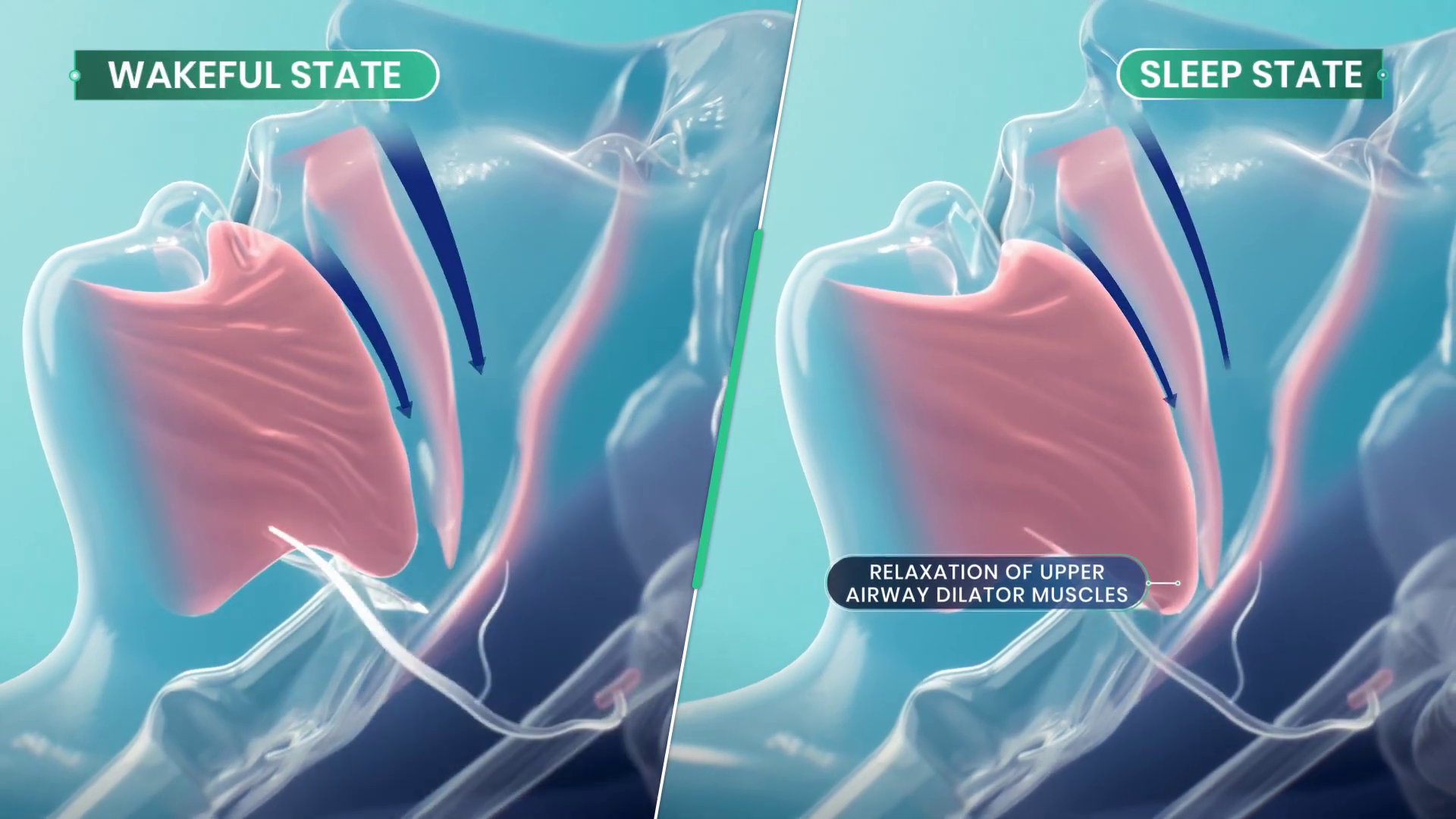
Against this backdrop, a simple pill-based treatment for sleep apnea is a remarkably attractive proposition. It would allow the treatment of the condition without the need for expensive, high-maintenance CPAP machines which a huge proportion of patients hate using in the first place. Such a treatment is now close to being a reality, under the name AD109.
The treatment aims to directly target the actual cause of obstructive sleep apnea. OSA is a neuromuscular condition, and one that only occurs during sleep—as those afflicted with the disease don’t suffer random airway blockages while awake. When sleep occurs, neurotransmitter levels like norepinephrine tend to decrease. This can can cause the upper airway muscles to excessively relax in sleep apnea sufferers, to the point that the airway blocks itself shut. AD109 tackles this issue with a combination of drugs—an antimuscarinic called aroxybutynin, and a norepinephrine reuptake inhibitor called atomoxetine. In simple terms, the aroxybutynin blocks so-called muscarinic receptors which decrease muscle tone in the upper airway. Meanwhile, the atomoxetine is believed to simultaneously improve muscle tone in the upper airway by maintaining higher activity in the hyperglossal motor neurons that control muscles in this area.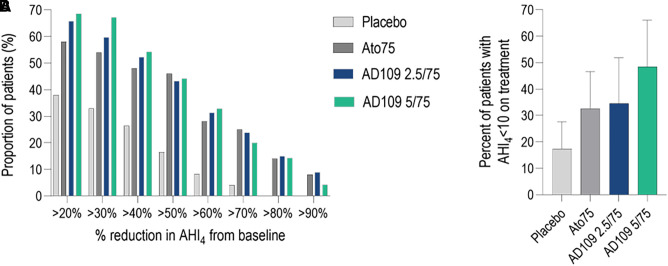
Thus far, clinical testing has been positive, suggesting the synergistic combination of drugs may be able to improve airflow for sleep apnea patients. Phase 1 and Phase 2 clinical trials have been conducted to verify the safety of the treatment, as well as its efficacy at treating the condition. Success in the trials was measured with the Apnea-Hypopnea Index (AHI), which records the number of airway disruptions an individual has per hour. AHI events were reduced by 45% in those taking AD109 when compared to the placebo group in a phase 2 trial featuring 211 participants. It achieved this while proving generally safe in early testing without causing detectable detriments to attention or memory. However, some side effects were noted with the drug—most specifically dry mouth, urinary hesitancy, and a level of insomina. The latter being particularly of note given the drug’s intention to improve sleep.
Testing on AD109 continues, with randomized Phase 3 trials measuring its performance in treating mild, moderate, and severe obstructive sleep apnea. For now, commercialization remains a ways down the road. And yet, for the first time, it appears promising that modern medicine will develop a simple drug-based treatment for a disease that leaves millions fatigued and exhausted every day. If it proves viable, expect it to become a major pharmaceutical success story and the hottest new drug on the market.
Cybersecurity Act 2: la revisione 2026 è un’evoluzione matura della resilienza digitale UE
@Informatica (Italy e non Italy 😁)
La Commissione UE presenta il Cybersecurity Act 2 puntando su certificazione più ampia (anche servizi gestiti e postura delle organizzazioni) e su misure per ridurre i rischi di filiera, inclusi “key ICT assets” e fornitori ad
Informatica (Italy e non Italy 😁) reshared this.
Manifestazione a Torino a sostegno dei curdi del Rojava
Sabato 24 gennaio manifestazione a Torino a sostegno dei kurdi del Rojava: ore 15.00 piazza Vittorio Veneto. Gli islamisti eredi dell’isis stanno compiendo massacri e pulizia etnica in Rojava con la complicita’ dell’occidente. Fermiamoli, prima che sia troppo tardi.
Verso il Kurdistan
L'articolo Manifestazione a Torino a sostegno dei curdi del Rojava proviene da Retekurdistan.it.
Landini, il Tar ci dà ragione, Salvini ha violato diritto di sciopero
“La sentenza odierna del Tar sconfessa il Ministro dei Trasporti: è illegittima la precettazione contro lo sciopero generale del 17 novembre 2023, il diritto di sciopero è stato quindi violato. Il Tribunale ha infatti accertato l’illegittimità dell’ordinanza con cui il Ministero delle Infrastrutture e dei Trasporti aveva ridotto autoritariamente lo sciopero generale”
🎊 🎉
Poliversity - Università ricerca e giornalismo reshared this.

Il nuovo video di Pasta Grannies: youtube.com/shorts/yWSTBgs0d_A
@Cucina e ricette
(HASHTAG)
Cucina e ricette reshared this.
Export control, industria e sicurezza. Il Forum alla Farnesina ridisegna le priorità italiane
@Notizie dall'Italia e dal mondo
Il controllo delle esportazioni si conferma uno snodo centrale delle politiche industriali e di sicurezza. È il messaggio che emerge dal 3° Forum italiano sul controllo delle esportazioni, ospitato alla Farnesina, dove istituzioni,
Notizie dall'Italia e dal mondo reshared this.
VIDEO. L’assedio israeliano alla città palestinese di Hebron
@Notizie dall'Italia e dal mondo
Centinaia di soldati e blindati paralizzano la città occupata nella Cisgiordania meridionale, con arresti, blocchi e nuovo muro di controllo, mentre l’operazione è destinata a durare giorni. Da Hebron, il servizio video di Michele Giorgio
L'articolo VIDEO. L’assedio israeliano alla
Notizie dall'Italia e dal mondo reshared this.
“Giulio continua a fare cose…” inaugurata la mostra: Il Popolo giallo: una storia collettiva
@Giornalismo e disordine informativo
articolo21.org/2026/01/giulio-…
Domenica 18 gennaio è stata inaugurata presso la Sala Consiliare del Municipio (Via Gramsci 8), la mostra
Giornalismo e disordine informativo reshared this.
Come hanno rubato l’account ad Andrea Galeazzi: il phishing Oauth
@Informatica (Italy e non Italy 😁)
L’account Google di Andrea Galeazzi è stato rubato con la tecnica del phishing OAuth: e-mail perfetta generata da IA, link credibile, autorizzazione apparentemente legittima. In 15 secondi si perdono password, e-mail di recupero e controllo totale. E la 2FA non basta contro
Informatica (Italy e non Italy 😁) reshared this.
DDL 1715: non possiamo cancellare la parola “consenso”
Parlare di violenza sessuale significa confrontarsi con una realtà drammatica e pervasiva, che colpisce milioni di persone ogni anno, violando diritti umani fondamentali. Secondo l’Organizzazione Mondiale della Sanità e l’ONU, quasi una donna su tre ha subito violenza fisica o sessuale nella vita, e centinaia di milioni di ragazze sono state vittime di abusi prima dei 18 anni. Non sono numeri astratti: sono vite spezzate, traumi psicologici, sociali e fisici che accompagnano le persone per anni, storie che chiedono giustizia, riconoscimento e protezione.

Il ddl 1715, attualmente all’esame del Senato, rappresenta una grande opportunità per cambiare finalmente il paradigma: non più la violenza sessuale misurata solo attraverso la forza fisica o la minaccia, ma centrata sul consenso libero, consapevole e revocabile della persona coinvolta. Questo principio significa che qualsiasi atto sessuale senza un sì chiaro e consapevole è reato, e sposta completamente il peso della responsabilità sull’autore della violenza. Non si tratta di un dettaglio tecnico: è la differenza tra giustizia reale e una finta tutela che colpevolizza la vittima.
“Il consenso è tutto quando si tratta di sesso. L’essere in silenzio o il non dire esplicitamente ‘no’ non equivale a dare consenso.” — #IoLoChiedo, Amnesty International

E’ assurda, quindi, la proposta della senatrice Bongiorno di sostituire il concetto di consenso con quello di dissenso che rischia di invertire tutto il lavoro fatto negli ultimi anni, e negli ultimi mesi con questo ddl. Non si tratta di un mero cambio lessicale, ma della volontà politica di ribaltare, di nuovo, il paradigma: nel modello del dissenso, infatti, è chi subisce violenza deve dimostrare di essersi opposto, di aver detto “no” chiaramente e abbastanza. È una logica che riporta indietro la legge e la cultura, facendo tornare sulle vittime il peso della responsabilità e aumentando la discrezionalità dei giudici. Spesso chi subisce violenza si blocca, non reagisce fisicamente o non sa come manifestare opposizione in quel momento, e pretendere da queste persone di “difendersi abbastanza” è semplicemente ingiusto.
Il consenso, al contrario, è un principio universale e positivo, riconosciuto anche dalla Convenzione di Istanbul, secondo cui la volontà della persona deve essere libera e valutata nel contesto reale in cui l’atto avviene. Significa dire chiaramente che chi subisce violenza non è responsabile, che la sua immobilità, il silenzio o la paura non possono mai essere interpretati come consenso.
“In caso di dubbio sul consenso, chiedilo espressamente.” — #IoLoChiedo, Amnesty International

I dati globali sono impietosi: centinaia di milioni di donne e ragazze hanno subito violenze, e solo una minima parte denuncia, perché il sistema giudiziario richiede criteri difficili da dimostrare e spesso invisibili. La legge sul consenso non è un dettaglio ideologico, ma una risposta concreta a un problema reale, capace di proteggere chi subisce violenza e di creare strumenti chiari per perseguire chi la commette.
Proprio per questo il ddl 1715 non è solo una legge penale: è un messaggio culturale. Significa che la libertà sessuale è un diritto inviolabile, che il corpo di ciascuna e ciascuno è intoccabile e che nessuno può essere giudicato per le proprie reazioni o per il proprio comportamento. Sostituire il consenso con il dissenso non è aggiornare la legge: è riportare indietro la cultura e legittimare vecchi stereotipi che ancora oggi affiorano nei tribunali.
Secondo l’OMS, circa 840 milioni di donne e ragazze hanno affrontato violenza da partner o da altre persone, e centinaia di milioni di questi atti non sono denunciati. Questi numeri mostrano quanto sia urgente una legge chiara sul consenso.
Difendere il consenso significa anche lottare per l’educazione e la trasformazione culturale. Campagne come #IoLoChiedo educano, informano e invitano a creare relazioni basate sul rispetto e sulla libertà, perché il cambiamento giuridico deve andare di pari passo con quello culturale. Significa insegnare che il consenso non è negoziabile, che le relazioni sessuali e affettive devono essere basate sulla volontà chiara e condivisa, e che il rispetto del corpo e della libertà di ciascuno è il fondamento della democrazia. E per farlo servono necessariamente anche percorsi obbligatori e in orario curricolare per un’educazione sessuale e affettiva inclusiva, nelle scuole di ogni ordine e grado.
Non smetteremo mai di dirlo e di lottare affinché si possa discutere anche di questo, esprimendo tutta la nostra contrarietà verso le scelte reazionarie portate avanti dal Ministro Valditara e da tutto il Governo su questo tema.

Come Possibile siamo sempre statɜ al fianco delle campagne internazionali per il consenso e per l’educazione sessuale e affettiva, convintɜ che una società che non riconosce e tutela la libertà sessuale non possa definirsi libera, giusta o civile. Proprio per questo, la proposta Bongiorno, sostituendo il consenso con il dissenso, rischia di minare questa tutela, depotenziare la legge e riportare indietro anni di battaglie civili e femministe.
Chiedere che il ddl 1715 non venga modificato significa affermare la necessità di una legge chiara, una cultura chiara e un principio chiaro: il consenso non si negozia.
È un impegno verso chi ha subito violenza, verso chi non ha ancora denunciato per paura, verso tutte e tutti noi che vogliamo vivere in una società più giusta, più rispettosa, più libera.
Solo un sì libero e consapevole rende un atto sessuale lecito.
Solo sì è sì.
Sempre.
Gianmarco Capogna
Coordinatore Comitato Scientifico Possibile
L'articolo DDL 1715: non possiamo cancellare la parola “consenso” proviene da Possibile.
STL Editing with FreeCAD

[Kevin] admits that FreeCAD may not be the ideal tool for editing STL files. But it is possible, and he shares some practical advice in the video below. If you want to get the most out of your 3D printer, it pays to be able to create new parts, and FreeCAD is a fine option for that. However, sometimes you download an STL from the Internet, and it just isn’t quite what you need.
Unlike native CAD formats, STLs are meshes of triangles, so you get very large numbers of items, which can be unwieldy. The first trick is to get the object exactly centered. That’s easy if you know how, but not easy if you are just eyeballing it.
If you use the correct workbench, FreeCAD can analyze and fix mesh problems like non-manifold parts, flipped normals, and other issues. The example is a wheel with just over 6,000 faces, which is manageable. But complex objects may make FreeCAD slow. [Kevin] says you should be fine until the number of faces goes above 100,000. In that case, you can decimate the number of faces with, of course, a corresponding loss in resolution.
Once you are satisfied with the mesh, you can create a real FreeCAD shape from the mesh. The resulting object will be hollow, so the next step will be to convert the shape to a solid.
That still leaves many triangles when you really want flat surfaces to be, well, flat. The trick is to make a copy and use the “refine shape” option for the copy. Once you have a FreeCAD solid, you can do anything you can do in FreeCAD.
We’ve run our share of FreeCAD tips if you want more. There are other ways to tweak STLs, too.
youtube.com/embed/bdt53O5_rsw?…

Associazione Peacelink reshared this.
Digital Networks Act: So will die EU-Kommission den Sprung ins Glasfaserzeitalter schaffen
netzpolitik.org/2026/digital-n…

Supreme Court could greenlight geofence warrants
When federal agents raided Washington Post reporter Hannah Nantanson’s home earlier this month, it reignited discussions about how reporters can protect confidential sources and sensitive information.
“Having reported from dozens of countries with various levels of surveillance, I’ve found that the safest method for interacting with sources who would face the most jeopardy if exposed is to meet in person and cover your tracks,” said Steve Herman, executive director of the Jordan Center for Journalism Advocacy and Innovation, in a recent statement by the National Press Club Journalism Institute.
That’s good advice. But “covering your tracks” when meeting sources isn’t always easy. And a new Supreme Court case, Chatrie v. United States, could make it harder.
The dangers of geofence warrants
At the heart of the Chatrie case are legal orders known as geofence warrants. This controversial tool allows police to demand location data from tech companies (usually Google) to see every device in a specific area at a specific time. Imagine drawing a digital fence around a crime scene and demanding a list of every phone that crossed into it.
These demands can reveal precise details about people’s movements and locations. Authorities can pinpoint where someone stood within a couple of yards and whether they were on the first or second floor of a building.
But geofence warrants are also imprecise: They sweep up the movements not just of suspects but also of innocent people who happen to be within the digital fence. Demanding location data for a 150-yard radius of a bank in the hour before it was robbed, for example, may show the movements of people who worked at the bank, visited the psychiatrist’s office next door, worshipped at the church on the neighboring block, or dropped into the nearby strip club.
Lower courts disagree about whether these demands violate the Fourth Amendment’s protection against unreasonable searches and seizures. Some have held that they’re categorically unconstitutional. Others, like the appeals court that made the initial decision in Chatrie, have held that geofences are not a “search” under the Fourth Amendment and would be perfectly constitutional even without a warrant.
Now, the Supreme Court will decide. If the court holds that the Fourth Amendment’s warrant requirement does not apply to the use of geofences to obtain location data, it could greenlight mass surveillance on an enormous scale. The government could require tech companies to turn over location data, enabling it to surveil protesters, members of dissenting groups, and even the press.
A direct threat to journalists and sources
For journalists, the threat of their location data landing in the government’s hands is real. As our digital security training team at Freedom of the Press Foundation (FPF) explains:
“Consider a sensitive story in which you are meeting a high-risk, anonymous source in person. Your adversaries could use location data to determine that you and the source were in the same spot at the same time, leading to the possible exposure of the source’s identity.“Or perhaps you need to visit a particular location (e.g., a government building) that could put a given department or agency on notice that you are investigating them, in turn making the reporting process more challenging.”
Geofence warrants could easily expose confidential sources or tip off powerful government institutions that a reporter is investigating them. A single geofence warrant centered on a newsroom, for instance, could reveal everyone who’s visited, from whistleblowers to workers.
Even reporters who take precautions, like meeting sources in neutral locations, might not be safe. A geofence warrant could place them within yards of each other in the same parking garage or cafe, revealing their connection.
Holding that the Fourth Amendment applies to geofence warrants would prevent some of these abuses. Under the Fourth Amendment, courts must only approve warrants if there’s probable cause, which is unlikely to exist in fishing expeditions targeting journalists to uncover their confidential sources.
Why this matters, even after Google’s changes
Google took an important step in 2023 by changing how it stores user location data and for how long, making it harder for the government to use geofence warrants. But these protections aren’t foolproof. Other location data collected by Google or other companies could be vulnerable to geofence warrants.
As a result, the court’s decision in Chatrie still matters, and journalists may still want to take steps to limit exposure of their location data.
The outcome of Chatrie also touches on a deeper Fourth Amendment issue that could reverberate beyond geofence warrants: the “third-party doctrine.” This decades-old legal rule says that people lose their reasonable expectation of privacy once they share information voluntarily with third parties, like a phone company or a bank.
The court has limited the third-party doctrine in recent years, most famously in its decision in Carpenter v. United States. But its ruling in Chatrie has the potential to swing the pendulum back toward less privacy. That could impact Fourth Amendment protections for all kinds of data shared with third parties, such as information stored in the cloud or sensitive searches.
Every journalist, source, and citizen should be paying attention and demanding greater privacy protections from the courts and from Congress. If privacy is restricted in this case, our First Amendment rights are too. The free press can’t exist in a surveillance state.
Per domani in Minnesota i sindacati hanno indetto uno sciopero generale contro le violenze e gli abusi dell'ICE.
Sono vicino alle compagne e ai compagni che parteciperanno alla lotta ✊


reshared this
[2026-01-29] Laboratorio Aperto @ Matrici Aperte
Laboratorio Aperto
Matrici Aperte - Via Elia Capriolo 41C, Brescia
(giovedì, 29 gennaio 15:00)
LABORATORIO APERTO

Tutti i Martedì (14:00-23:00) e i Giovedì (14:00-21:00) Matrici apre il laboratorio per chi ha bisogno di stampare ma anche per chi vuole solo bere un bicchiere in compagnia!
Potete venire a fare serigrafia, incisione calcografica, xilografia e tecniche grafiche sperimentali.
Per l'utilizzo del laboratorio chiediamo un contributo libero a supporto del progetto. Portate carta e matrici da casa, noi mettiamo a disposizione strumenti e spazio per i vostri lavori.
Ci sono due postazioni serigrafiche, due torchi calcografici, sala acidi e piani da inchiostrazione.
Dalle 18.00 (ma anche dalle 14.00 per lx ubriaconx) apre il baretto con vino, birre, pirli e gin tonic di pessima qualità! -c'è pure il pinkanello!-Chi suona strumenti è ben accettx.
Sarà aperto e consultabile anche l'archivio con libri serigrafici, fanzine e distro a supporto di movimenti e collettivi!
[2026-01-29] Diagnosi: tra patologizzazione e riappropriazione @ Radio Blackout 105.250
Diagnosi: tra patologizzazione e riappropriazione
Radio Blackout 105.250 - Via Cecchi 21/a, Torino
(giovedì, 29 gennaio 18:00)
DIAGNOSI: TRA PATOLOGIZZAZIONE E RIAPPROPRIAZIONE
Chiacchere in Radio - giovedì 29 gennaio h.18.00

Sindrome da Stress Post-Traumatico, Narcisismo overt e covert, Autismo, Depressione maggiore e minore, Fobie: le diagnosi sono tante, milioni di milioni. Alcune sono uguali da sempre, altre cambiano continuamente. Alcune sono precise come pallottole, altre si adagiano su un ampio spettro. Alcune diagnosi ce le fa il medico per prescriverci la pillola, altre ce le facciamo da solx per tranquillizzarci, altre ce le fanno le amiche per aiutarci, altre ancora ce le fanno gli haters per ferirci! Cos'è dunque questo strano oggetto che chiamiamo diagnosi? E come la percepiamo socialmente? è uno strumento di emancipazione? è causa di stigma? è una cosa di cui ci si può riappropriare in chiave rivoluzionaria? o no?
h.18.00 pip-pony
h. 21.00 musichette by ciscqo e ciacole aleatorie
E a letto presto!
Banchetto con tante sorprese + distro + tisane....
No machi no fasci blabla e no pazzofobici!
[2026-01-27] CORSO DI SCACCHI @ Che Guevara Roma
CORSO DI SCACCHI
Che Guevara Roma - Via Fontanellato 69
(martedì, 27 gennaio 18:00)
Corso di scacchi gratuito multilivello.

[2026-01-28] Voci contro gli abusi in divisa @ Circolo Anarchico Berneri
Voci contro gli abusi in divisa
Circolo Anarchico Berneri - Piazza di Porta Santo Stefano 1
(mercoledì, 28 gennaio 19:00)
Una serata in cui approfondire due percorsi che denunciano gli abusi in divisa: la campagna di Lince - occhi sugli abusi e il comitato per l’abolizione della pistola taser.

Dibattito con:
Associazione di Mutuo Soccorso per il Diritto di Espressione
Vito Totire – campagna per l’abolizione della pistola-taser
Lince – Occhi sugli abusi
[2026-01-28] Officine Naturali. Autoproduzione Erboristica @ CSOA Forte Prenestino
Officine Naturali. Autoproduzione Erboristica
CSOA Forte Prenestino - via Federico delpino, Roma, Italy
(mercoledì, 28 gennaio 19:00)
li appuntamenti sono previsti a partire dal 22 Ottobre 2025, il Mercoledì pomeriggio, dalle ore 19:00 alle ore 21:00.

INFO COMPLETE NEL LEGGI TUTTO!
Anche quest’anno vorremmo realizzare una formazione di autoproduzione di base Erboristica e Fitocosmetica.
Durante le formazioni completeremo il percorso intrapreso lo scorso anno ed impareremo insieme a utilizzare le erbe per la formulazione di tisane ad azione specifica per lavorare in maniera mirata sui singoli apparati (nervoso, osteoarticolare, genitale, respiratorio, etc.), a realizzare tantissime formulazioni (idrolati, paste, burri labbra, spray per la gola etc.) e introdurremo importanti discipline parallele e complementari all’Erboristeria come Apiterapia (con uscite di approfondimento su campo), Idroterapia e Argilloterapia.
*La partecipazione agli incontri è libera, a sottoscrizione, ed è possibile per chi lo desidera seguire tutta l’esperienza formativa o anche solo singole giornate.
*Gli incontri si terranno nel nostro laboratorio (p.zza d'armi a destra), gli incontri con ospiti invece nella sala cinema.
*Per maggiori info passate a trovarci o scrivete sulla pagina FB (Officine Naturali).
PERCORSO FORMATIVO:
-12 NOVEMBRE 2025 Impacchi e compresse e cataplasmi di erbe.
Preparazione di compresse calde, fredde e derivate. Applicazioni cutanee a base di idroliti. Differenze tra impacchi e cataplasmi. Preparazione e usi del cataplasma di semi di lino.
-19 NOVEMBRE 2025 Incontro sulla coltivazione raccolta e usi dello Zafferano con Alex Tombolillo.
- 26 NOVEMBRE 2025 Pomate: Paste Galeniche
Preparazione ed uso delle paste galeniche. Formulazione del linimento noto come “Pasta di Hoffman”. Pomate galeniche a uso specifico per: dermatiti, varici, ustioni, etc.
-3 DICEMBRE 2025 Incontro sulla Medicina Tradizionale Latinoamericana con Carmen Tersa Vazquez.
-10 DICEMBRE 2025 Idroterapia
Bagni, semicupi ed altri usi del solvente acqua. Introduzione all’Idroterapia: i bagni aromatici e i semicupi Metodo Kneipp e dei semicupi con frizione, noti come “bagni derivativi”.
-14 GENNAIO 2026 Argilloterapia
Argilla da bere (legislazione relativa) e cataplasmi d’argilla. Argille: tipologie, impieghi e proprietà. Tecniche per depurare l’organismo con le argille. Latte d’argilla ed acque d’argilla.
-21 GENNAIO 2026 PH e Conservazione Naturale
Tecniche di misurazione e regolazione del pH nelle preparazioni. Conservanti naturali ad uso alimentare: formulazioni, dosaggi e norme d’uso.
-28 GENNAIO 2026 Incontro sulla Medicina Tradizionale Cinese con Raniero Iacobucci.
-4 FEBBRAIO 2026 Colliri e Riabilitazione Visiva
Formulazione dei colliri e trattamento delle infiammazioni oculari. La riabilitazione visiva: tecniche ed esercizi per una corretta funzionalità della vista. Formulazione di colliri e preparazioni oculari
-11 FEBBRAIO 2026 Trattamenti Nasali e Auricolari
. Tecniche di pulizia e di purificazione nasale e auricolare. Irrigazioni e lavaggi nasali. Formulazione e applicazione di gocce e rimedi auricolari. Buone norme igieniche e tecniche sconsigliate.
-18 FEBBRAIO 2026 Collutori, Trattamenti Buccali e Spray per la Gola
Igiene orale e disinfezione: preparazione e impiego dei collutori Trattamenti per il mal di gola. Spray orali ad azione specifica: formulazione e posologia.
-25 FEBBRAIO 2026 Incontro sulla Medicina Tradizionale Ayurvedica con Luca D’Alessandro.
-4 MARZO 2026 Capsule e Integratori
Erbe in polvere per la realizzazione di integratori naturali. Introduzione agli integratori norme, impiego preparazione, confezionamento e posologia delle capsule.
-25 MARZO 2026 Incontro sulla Medicina Tradizionale Mediterranea con Paolo Ospici.
-15 APRILE 2026 Apiterapia: Miele, Propolis, Pappa Reale e Polline.
La vita dell’alveare e le risorse dell’Apiterapia: miele, polline, propolis e pappa reale. Formulazione della tintura madre di propolis e applicazione dell’apiterapia in erboristica.
-22 APRILE 2026 Incontro sul riconoscimento, raccolta e usi delle erbe spontanee con Marco Sarandrea.
-6 MAGGIO 2026 Oli essenziali
Introduzione agli oli essenziali, caratteristiche, indicazioni e controindicazioni. Essenze in relazione ai vettori, somministrazione a uso interno e bagni aromaterapeutici.
-13 MAGGIO 2025 Incontro con lo Sportello di Ascolto Nutrizionale: focus su prevenzione e salute donna a cura di Foodopia e Rock the food.
“Ethical dilemmas about AI aside, the posts are completely disconnected with ManyVids as a site,” one ManyVids content creator told 404 Media.#AIPorn #porn #manyvids


Aliens and Angel Numbers: Creators Worry Porn Platform ManyVids Is Falling Into ‘AI Psychosis’
In posts on ManyVids, the porn platform’s official account holds imaginary conversations with aliens, alongside AI-generated videos of UFOs, fractal images, “angel numbers,” and a video of its founder and CEO Bella French in a space suit shooting lasers from her eyes.French launched the site in 2014 as a former cam model herself, and the platform has millions of members and tens of thousands of creators. Adult content creators use it to sell custom videos and subscriptions, and perform live on camera. French recently changed her personal website to state her new goal is to “transition one million people out of the adult industry and do everything we can to ensure no one new enters it.” The statement follows posts on X’s ManyVids account about new strategies to pivot the site toward safe-for-work, non-sexual content.
This sudden shift away from years of messaging about being a compatriot with sex workers, combined with bizarre AI-generated text and images about talking to aliens and numerology on social media, has made some creators worry for their livelihoods, and caused others to leave the site completely.
For years, the official ManyVids social media accounts made mostly normal posts that promoted the site and its creators. But in mid-2025, the posts from the ManyVids X account changed. Instead of promotions of top creators, announcements of contests, and tips for using the platform, the account shifted its focus to existential and metaphysical musings. Around August, it started posting cryptic quotes, phrases, and images, many seemingly generated by or about AI.
The account also started replying to engagement-farming posts from influencers, writing things like “Our purpose: to protect the feminine energy — so that balance may return,” and posting borderline-nonsensical bullet-point lists about “the boldness scale” and how ManyVids leadership is “all connected.”
“The impact strength of a positive leader ⚡ Effectiveness ⚡ Execution ⚡ Discipline ⚡ Accountability,” one post in August said. On August 20, @ManyVids posted an image on X of a flow chart alongside a screenshot of a ChatGPT conversation, seemingly illustrating how the platform would bring in users through a “safe-for-work” zone, then allow them to access NSFW content after verifying their identifications. “Our vision: Adult Industry 2.0 isn’t about more revenue. It’s about evolution,” the post said.
The replies to these posts show ManyVids creators expressing anger, concern, and bafflement. The account stopped posting on X in September. But on the ManyVids platform itself, which has a “news” feed that functions similarly to a microblogging platform but is just for official platform posts, the odd entries continue.💡
Do you know anything else about what's happening at ManyVids, or do you have a tip about porn platforms and online sex work generally? I would love to hear from you. Using a non-work device, you can message me securely on Signal at sam.404. Otherwise, send me an email at sam@404media.co.“Social API for the AI Age. Phase 1 — Pride Engine,” one post from January 16 says:
“The High Universal Income (HUI) Engine is the distribution hub of the new economy, built for a world where AI does the work humans never wanted to do. AI generates surplus wealth, but humans need surplus purpose. Human meaning becomes the rarest and most valuable resource on Earth. Instead of opaque taxes, AI companies fund a Social License through platforms like ManyVids, converting AI efficiency into merit-based bonuses for human contribution. For every dollar earned through passion, creation, care, or learning, HUI adds 10%. This is not charity. It is a Pride Engine. We shift the foundation of human value.”
The post ends with a six-second AI generated video that includes the phrase “the ultimate guide to rebuilding civilization.” Most posts in recent weeks are like this: clearly AI generated text alongside six-second AI generated clips showing angels, chakras, or spiritual phrases. “The Simulation of Integrity. If we don’t fully understand the ultimate nature of reality, what should guide how we live inside it?” one recent post says. “If the nature of the ‘game’ is unknown, then how you treat others — and yourself — becomes the most meaningful data point.”
And in a post right after the new year: “Hey everyone! Back-to-the-office Monday vibe. How were your holidays? Did you travel anywhere? I did... 🕳️Next time, I’ll bring sunglasses. I came back with a few new ideas and fresh thoughts ✨Let’s get to work. Let’s go, 2026! 🚀” Below the text: a video of French in a space suit, black hole in the background, shooting laser-lightning out of her eyes.
0:00
/0:11
1×Screengrab via ManyVids
A lot of people who rely on ManyVids for income have noticed this odd behavior and are disturbed by it.
“Ethical dilemmas about AI aside, the posts are completely disconnected with ManyVids as a site,” one ManyVids content creator told 404 Media, on the condition of anonymity. “Their customers and their creators are not served in any way by these. When faced with backlash, MV removed the ability to comment on posts. To anyone looking at them they appear to be ramblings and images generated by a person in active psychosis.”
0:00
/0:06
1×Screengrab via ManyVids
Almost every ManyVids creator 404 Media spoke to for this story brought up “AI psychosis” unprompted, when asked if they’d seen the ManyVids posts.
“I have seen them and I find them really insulting,” Sydney Screams said. “The way I perceive the posts is that Bella and the MV team doesn't respect their creators enough to spend time making their own content, instead taking the easy way out and using bizarre AI that doesn't even relate. Why do we need Bella shooting laser beams out of her eyes to make an announcement? It's infuriating because it's like she doesn't take us seriously, doesn't take her own platform seriously, and we're supposed to just be grateful for the crumbs she's giving us. We deserve better,” she said. “We deserve to be treated with respect, talked to like we're adults, and listened to like our voices matter. Instead we get AI slop and posts that promise big things without any sort of follow through.”
Harlan Paramore, a ManyVids creator who also helps other creators onboard and manage their selling sites, said he’s noticed “bizarre posts about AI, angel numbers, christopaganism, cyberpaganism.”
“I don't have anything against any of those beliefs, but they seem wildly out of place for an official site blog. They are also heavily loaded with AI-like language and structure, and decorated with AI images,” Paramore said. “I'm also a professional artist, and as both an artist and sex worker I'm frustrated and confused. Some of it kind of sounds like AI psychosis, too, which has me concerned for whoever is running that blog.”
“I'm not a mental health professional, but whatever Bella is going through doesn't seem normal. It doesn't seem healthy,” Screams said. “From where I'm sitting, if I were close to Bella, I'd be reaching out to her other friends and family members to stage an intervention and try to get her serious mental health care.”
All of this is coinciding with an apparent massive change in French’s ideology toward sex work. On her personal website, French says the goal of ManyVids is changing to “transition one million people out of the adult industry.” She calls sex work “exploitative.” Her bio quotes her as saying: “I had two choices: surrender to an exploitative industry or dismantle it. I chose to build its replacement... ManyVids was the result—the most efficient revenue-distribution engine for the AI-displaced workforce. Guided by first principles and core value thinking, Bella is leading MV’s next evolution: a Fintech/Social-Impact hybrid that turns digital presence into economic creation. By utilizing AI-integrated workflows and layered access, ManyVids is migrating creators from adult content into a diversified creative economy,” her bio says. “Our goal is to transition one million people out of the adult industry and do everything we can to ensure no one new enters it. We are working to transform an industry we don’t believe should exist—but we recognize that simple elimination creates deeper shadows. The solution is elevation through meaningful alternatives.”
This is a recent addition to her website. According to archived versions of the site, the section about transitioning people out of the sex industry wasn’t there in November 2025.
“ManyVids is now becoming a regulated e-social ecosystem — a digital space that sensitizes, elevates, and restricts adult content through layered brackets of access,” French’s bio says now. “This ensures that sacred sexual expression is never free, never exploited, and never divorced from its core human depth.” The “layered brackets” seem to be a reference to the ChatGPT screenshots from August 20.
This is an extreme departure in tone from what French has said was her mission with ManyVids in the past. In 2019, I met French for an on-background hotel room meeting during the porn industry’s biggest award show and conference, AVN, where she told me she created ManyVids out of a passion to create a platform where other sex workers—having been an adult content creator herself—would be treated fairly and would be listened to by the platform’s owners. French is a former cam model herself, and has always been open publicly about wanting to create better platforms for other sex workers.
“Their customers and their creators are not served in any way by these."
“We try to offer sex workers the tools to be more successful as independent entrepreneurs without being judged,” French told the Daily Beast in 2019. “What was really important for me was to educate the world and make them realize that porn stars are not stupid.”Shortly after she and I met in 2019, French agreed to a written interview as part of a VICE story about authenticity in cam work. In that email, she called camming the “biggest gift” she’d ever received. “Being a camgirl not only has a huge influence on my approach to taking business decisions but has changed the way I view people and life in general,” French wrote at the time. “Every single decision we take at ManyVids must answer 1 simple question, ‘Will this help the content creators, our MV Stars?’ That’s it,” French wrote in 2019. “If the answer is yes then we proceed, regardless if there is any financial advantage or potential for profit, that is irrelevant.”
Platforms have long profited off of sex workers and pornography to establish popularity and rake in revenue before eventually doing a heel-turn on the creators who made them successful. We’ve seen it happen with mainstream social media platforms like Tumblr, Instagram, and Twitter, and also on sites ostensibly made for sex workers, like OnlyFans, which nearly changed its policies to ban explicit material after making billions of dollars off their content.
I asked ManyVids and French if the platform is changing to reflect these social media posts and her statements on her bio, who is making the AI-generated posts mentioned above, how French plans to “transition one million people” out of sex work, and if any of this will affect creators and fans who use ManyVids. The ManyVids support team did not answer these questions specifically, but sent the following response (emphasis theirs):
"Hello, thanks for reaching out. Respect for Online Sex Workers. Sex work is real work. No more living in the shadows, no more being misunderstood.
No more being afraid, shadowbanned, or persecuted by systems and institutions. Not on our watch. We are not victims — and we are taking action now.This generation of online sex workers is about to change the game forever —and transform the oldest profession in the world in the right direction, for good. Respect the creators. Respect the work. Respect what you watch. We stand for safety, dignity, and opportunity for all creators."Screenshot of the emailed response from ManyVids support
I asked ManyVids to explain in specific terms what "we are taking action now" means. They replied: "A post will be published to our ManyVids News feed this Saturday, January 24th. It will provide additional clarification and go into a bit more detail on this," with a link to the feed.“It concerns me that access to my earnings, and more importantly my personal information, is in the hands of someone seemingly out of touch with reality.”
In the meantime, creators have been confused and worried for weeks. Nothing has changed about the way the site operates publicly or creators’ payouts as of writing, but this is a series of events that many adult content creators are concerned represents a potential threat to their livelihood.“If something were to happen to MV (or to my account there) due to what can only be described as AI psychosis, I would lose upwards of 14k per year—a not insignificant amount of income,” another adult creator on ManyVids told 404 Media. “It concerns me that access to my earnings, and more importantly my personal information, is in the hands of someone seemingly out of touch with reality.”
ManyVids takes a larger-than-most cut from creators' profits, depending on the type of content: For videos and contest earnings (which are similar to tips), the platform takes 40 percent. On tips and custom video sales, it takes 20 percent, which is more in line with other adult platforms. This has been a source of complaint from creators for a long time, combined with unpredictable algorithms that creators say change how they’re discovered on the platform and what content performs best, impacting their earnings. Users have expressed dissatisfaction with these aspects of the platform, and how French runs it, for years. But the recent turn to AI and French’s statements about the industry are making some wonder if it’s time to leave.
“I will still be using ManyVids for NSFW content for as long as they allow it,” adult content creator August told 404 Media. “But part of me thinks that they will try to do what OnlyFans did years ago and try to ban NSFW content which would be an absolute disaster for sex workers whose income depends on platforms like ManyVids.”
Luna Sapphire, a creator who has been using the platform since 2015, said she finds French’s statements on her website “harmful and insulting” to those who’ve helped popularize the site from the start. “Most of us are not looking for a path out of the adult industry; we simply want to do our jobs with as little interference and censorship as possible,” Sapphire said. “Bella used to be very pro-sex worker and it is disappointing to see her change her tune.”
Several adult platforms have embraced, or at least allowed, AI-generated content and “models” on their sites alongside human creators in the last few years. On OnlyFans, AI-generated is allowed, but must comply with the site’s terms of service and and “must be clearly and conspicuously captioned as AI Generated Content with a signifier such as #ai, or #AIGenerated,” Onlyfans says in its terms. Fansly, another adult platform for independent creators, forbids “photorealistic AI-generated content” but allows non-photorealistic “virtual entities” (like V-tubers) if they’re registered using the uploader’s real legal information for verification purposes. JustForFans requires that “consent, identity, and proof of age must be established if the AI images are based on a real person's likeness,” and allows deepfakes if consent has been established. “For example, you can use your own face to create images of yourself or a model who has granted consent to use their face,” the platform’s terms say. IWantClips, another site for selling custom content, also requires users making AI-generated models to verify their identities, but explicitly doesn’t allow deepfakes.
In 2024, IWantClips awarded an AI-generated model $1,000 as the winner of a Valentine’s Day-themed contest. “Adora” competed in the contest alongside human sex workers. On most of these sites, engagement and attention are currency, and on ManyVids, AI generated models sell content alongside humans. The platform prohibits “AI-generated or deepfake content that misrepresents real individuals without consent,” as part of its terms that forbid “content that violates any third party's intellectual property rights or another individual's privacy.”
“The AI/intense spirituality path has been so strange to witness, and I can’t imagine what it’s leaving the fans to think,” Elizabeth Fields, an adult content creator who’s used ManyVids for six years, told 404 Media. “I don’t understand what they are trying to do by taking this direction, nor do I understand how it’s fair of a sexwork built site to assume all of us don’t want to do NSFW content–and to try and funnel us into this box of ‘not enjoying the work we do. To an extent it feels degrading honestly—just because Bella’s experience in sex work was survival based and to make ends meet—a lot of us thoroughly enjoy our jobs, the path we took, and want to continue doing this.”
Many sex workers are disabled, neurodivergent, mentally ill, chronically ill, or “all of the above,” Fields noted, and rely on online sex work to pay the bills. “It feels absolutely unfair to feel like we could be pushed off of a site that became popular off OUR NSFW content—because they want to make it more SFW, and implement all these new AI features that will quite frankly just turn clients off.”
Despite all of this, Fields said she won’t be leaving the site. “To the point that as much as I'm extremely disappointed with many of the recent changes occurring, I won’t be deleting my account as to not lose that income and disappoint my ManyVids fans.”
Others are done. Sydney Screams said she’s no longer uploading to ManyVids and made the decision to slowly start removing content from her stores there. “Platforms that allow for online sex work should be working FOR us, not against us. Sex workers use platforms like MV to earn our own living, to enable ourselves to have better lives, to keep ourselves housed and fed, to pay for medical bills, etc. Many of us choose this life and choose to make this our career, though there are far too many who are survival sex workers,” Screams said. “We aren't looking for a pathway out of the adult industry, especially on a platform that is a porn platform!!! Unless MV is going to start funding the educations & trainings of those trying to leave the industry for work elsewhere, I do not see how a porn platform is going to create a path out of the industry.”
Emanuel Maiberg contributed reporting to this story.
AI-Generated Grandma Porn Is Flooding the Internet
Hundreds of AI GILF erotica are flooding Xvideos and Manyvids.Emanuel Maiberg (404 Media)


Skimming Satellites: On the Edge of the Atmosphere

There’s little about building spacecraft that anyone would call simple. But there’s at least one element of designing a vehicle that will operate outside the Earth’s atmosphere that’s fairly easier to handle: aerodynamics. That’s because, at the altitude that most satellites operate at, drag can essentially be ignored. Which is why most satellites look like refrigerators with solar panels and high-gain antennas attached jutting out at odd angles.
But for all the advantages that the lack of meaningful drag on a vehicle has, there’s at least one big potential downside. If a spacecraft is orbiting high enough over the Earth that the impact of atmospheric drag is negligible, then the only way that vehicle is coming back down in a reasonable amount of time is if it has the means to reduce its own velocity. Otherwise, it could be stuck in orbit for decades. At a high enough orbit, it could essentially stay up forever.
There was a time when that kind of thing wasn’t a problem. It was just enough to get into space in the first place, and little thought was given to what was going to happen in five or ten years down the road. But today, low Earth orbit is getting crowded. As the cost of launching something into space continues to drop, multiple companies are either planning or actively building their own satellite constellations comprised of thousands of individual spacecraft.
Fortunately, there may be a simple solution to this problem. By putting a satellite into what’s known as a very low Earth orbit (VLEO), a spacecraft will experience enough drag that maintaining its velocity requires constantly firing its thrusters. Naturally this presents its own technical challenges, but the upside is that such an orbit is essentially self-cleaning — should the craft’s propulsion fail, it would fall out of orbit and burn up in months or even weeks. As an added bonus, operating at a lower altitude has other practical advantages, such as allowing for lower latency communication.
VLEO satellites hold considerable promise, but successfully operating in this unique environment requires certain design considerations. The result are vehicles that look less like the flying refrigerators we’re used to, with a hybrid design that features the sort of aerodynamic considerations more commonly found on aircraft.
ESA’s Pioneering Work
This might sound like science fiction, but such craft have already been developed and successfully operated in VLEO. The best example so far is the Gravity Field and Steady-State Ocean Circulation Explorer (GOCE), launched by the European Space Agency (ESA) back in 2009.
To make its observations, GOCE operated at an altitude of 255 kilometers (158 miles), and dropped as low as just 229 km (142 mi) in the final phases of the mission. For reference the International Space Station flies at around 400 km (250 mi), and the innermost “shell” of SpaceX’s Starlink satellites are currently being moved to 480 km (298 mi).

Even with its streamlined design, maintaining such a low orbit required GOCE to continually fire its high-efficiency ion engine for the duration of its mission, which ended up being four and a half years.
In the case of GOCE, the end of the mission was dictated by how much propellant it carried. Once it had burned through the 40 kg (88 lb) of xenon onboard, the vehicle would begin to rapidly decelerate, and ground controllers estimated it would re-enter the atmosphere in a matter of weeks. Ultimately the engine officially shutdown on October 21st, and by November 9th, it’s orbit had already decayed to 155 km (96 mi). Two days later, the craft burned up in the atmosphere.
JAXA Lowers the Bar
While GOCE may be the most significant VLEO mission so far from a scientific and engineering standpoint, the current record for the spacecraft with the lowest operational orbit is actually held by the Japan Aerospace Exploration Agency (JAXA).
In December 2017 JAXA launched the Super Low Altitude Test Satellite (SLATS) into an initial orbit of 630 km (390 mi), which was steadily lowered in phases over the next several weeks until it reached 167.4 km (104 mi). Like GOCE, SLATS used a continuously operating ion engine to maintain velocity, although at the lowest altitudes, it also used chemical reaction control system (RCS) thrusters to counteract the higher drag.

SLATS was a much smaller vehicle than GOCE, coming in at roughly half the mass. It also carried just 12 kg (26 lb) of xenon propellant, which limited its operational life. It also utilized a far more conventional design than GOCE, although its rectangular shape was somewhat streamlined when compared to a traditional satellite. Its solar arrays were also mounted in parallel to the main body of the craft, giving it an airplane-like appearance.
The combination of lower altitude and higher frontal drag meant that SLATS had an even harder time maintaining velocity than GOCE. Once its propulsion system was finally switched off in October 2019, the craft re-entered the atmosphere and burned up within 24 hours. The mission has since been recognized by Guinness World Records for the lowest altitude maintained by an Earth observation satellite.
A New Breed of Satellite
As impressive as GOCE and SLATS were, their success was based more on careful planning than any particular technological breakthrough. After all, ion propulsion for satellites is not new, nor is the field of aerodynamics. The concepts were simply applied in a novel way.

Both the Defense Advanced Research Projects Agency (DARPA) in the United States and the ESA are currently funding several studies of ABEP vehicles, such as Redwire’s SabreSat, which have numerous military and civilian applications. Test flights are still years away, but should VLEO satellites powered by ABEP become common platforms for constellation applications, they may help alleviate orbital congestion before it becomes a serious enough problem to impact our utilization of space.
Diego Silvestri e Claudia Moretti parteciperanno al Convegno “Il diritto alla salute mentale”.
Claudia Moretti, avvocata e membro del Consiglio Generale dell’Associazione Luca Coscioni e Diego Silvestri, psichiatra e Consigliere Generale dell’Associazione Luca Coscioni, interverranno il 17 febbraio al Convegno “Il diritto alla salute mentale” organizzato dalla Fondazione per la Formazione Forense dell’Ordine degli Avvocati di Firenze, presso l’Auditorium “A. Zoli” e in modalità webinar per gli iscritti fuori Foro.
Martedì 17 febbraio 2026
Dalle ore 15 alle 18
Auditorium “A. Zoli”, Viale Guidoni 61 – Firenze e via webinar previa registrazione
Il Convegno, con partecipazione gratuita, avrà luogo il 10 e il 17 febbraio. Verranno accettate esclusivamente le richieste ricevute telematicamente attraverso l’area riservata Sfera alla quale si potrà accedere dal link presente sulla pagina dell’evento pubblicato sul sito www.fondazioneforensefirenze.it
Per maggiori informazioni qui la locandina completa
L'articolo Diego Silvestri e Claudia Moretti parteciperanno al Convegno “Il diritto alla salute mentale”. proviene da Associazione Luca Coscioni.
Marco Cappato ospite al Festival del Sapere – “La mia storia e il fine vita”
Marco Cappato tesoriere dell’Associazione Luca Coscioni,parteciperà alla quarta edizione del Festival del Sapere con un incontro pubblico dal titolo “La mia storia e il fine vita”, un dialogo aperto con Ezio Pederiva incentrato sul suo impegno civile e politico per il riconoscimento dei diritti individuali.
Giovedì 29 gennaio 2026
Dalle ore 20:30
Sala Consiliare, Piazza Martiri della Libertà 1, Sernaglia della Battaglia (TV)
Ingresso libero fino ad esaurimento posti. Info: 0438 965573 – biblioteca@comune.sernagliatv.it
L'articolo Marco Cappato ospite al Festival del Sapere – “La mia storia e il fine vita” proviene da Associazione Luca Coscioni.
ilfattoquotidiano.it/2026/01/2…

FREE ASSANGE Italia
"A Gaza uccisi tre giornalisti palestinesi: colpita jeep umanitaria" https://www.ilfattoquotidiano.it/2026/01/21/raid-israeliano-gaza-giornalisti-palestinesi-uccisi-news/8264107/Telegram

reshared this
Il sovranismo all'italiana: maschia difesa delle frontiere dall'invasione di quattro poveracci (che secondo l'INPS ci farebbero pure comodo) e servile genuflessione al potente di turno (per evitare ripercussioni sull'export di formaggi, salsicce e vestiti fighetti).
Vorrei poter pagare una parte almeno delle mie tasse alla Francia, tanto per sentirmi rappresentato da qualcuno un po' meno servile.
reshared this
La Cellula Coscioni di Treviso organizza lo sportello sul testamento biologico
Libreria San Leonardo, Piazza Santa Maria dei Battuti 16 – Treviso
Sabato 31 gennaio 2026
Dalle 10:00 alle 12:00 (4 appuntamenti individuali di circa 30 minuti)
Una mattinata di colloqui individuali e riservati su temi fondamentali di fine vita, organizzati dalla Cellula Coscioni di Treviso presso la Libreria San Leonardo. Lo sportello è coordinato da un volontario esperto e si svolgerà con la presenza del
Dott. Antonio Orlando, oncologo palliativista, già responsabile sanitario dell’Hospice Casa dei Gelsi. Durante gli incontri si potranno ricevere informazioni e chiarimenti su: D.A.T. (Disposizioni Anticipate di Trattamento – Testamento Biologico), pianificazione condivisa delle cure, consenso informato, rifiuto di trattamenti sanitari, Cure palliative e sedazione palliativa profonda, Morte volontaria medicalmente assistita.
La partecipazione è gratuita ma su prenotazione, fino ad esaurimento disponibilità al:
+39 328 69 66 553 o cellulatreviso@associazionelucacoscioni.it
L'articolo La Cellula Coscioni di Treviso organizza lo sportello sul testamento biologico proviene da Associazione Luca Coscioni.
Claudia Moretti e Piero Cipriano e parteciperanno al Convegno “Il diritto alla salute mentale.”
Claudia Moretti e Piero Cipriano parteciperanno al Convegno “Il diritto alla salute mentale.”
Claudia Moretti, Avvocata e membro del Consiglio Generale dell’Associazione Luca Coscioni e Piero Cipriano, psichiatra, psicoterapeuta e autore interverranno il 10 febbraio al Convegno “Il diritto alla salute mentale” organizzato dalla Fondazione per la Formazione Forense dell’Ordine degli Avvocati di Firenze, presso l’Auditorium “A. Zoli” e in modalità webinar per gli iscritti fuori Foro.
Martedì 10 febbraio 2026
Dalle ore 15 alle 18
Auditorium “A. Zoli”, Viale Guidoni 61 – Firenze e via webinar previa registrazione
Il Convegno, con partecipazione gratuita, avrà luogo il 10 e il 17 febbraio. Verranno accettate esclusivamente le richieste ricevute telematicamente attraverso l’area riservata Sfera alla quale si potrà accedere dal link presente sulla pagina dell’evento pubblicato sul sito www.fondazioneforensefirenze.it
Per maggiori informazioni qui la locandina completa
L'articolo Claudia Moretti e Piero Cipriano e parteciperanno al Convegno “Il diritto alla salute mentale.” proviene da Associazione Luca Coscioni.

Ministero dell'Istruzione
Oggi al #MIM, il Ministro Giuseppe Valditara presenterà il Piano di iniziative per le studentesse e gli studenti provenienti da Gaza, con progetti dedicati a integrazione, inclusione, diritto allo studio e continuità didattica.Telegram

Judge blocks government from searching reporter’s data after raid
FOR IMMEDIATE RELEASE:
Washington, D.C., Jan. 21, 2026 — A judge today blocked the government from searching data it seized during the outrageous raid on Washington Post reporter Hannah Natanson’s home last week.
The following statement can be attributed to Seth Stern, chief of advocacy at Freedom of the Press Foundation (FPF):
“The search and seizure of Washington Post reporter Hannah Natanson’s records is unconstitutional and illegal in its entirety. But even the Trump administration’s policies require searches of journalists’ materials to be narrow and targeted and that authorities use filter teams and other measures to avoid searching protected records. That the administration wouldn’t follow its own guidelines shows that the raid on Natanson’s home wasn’t about any criminal investigation, and certainly wasn’t about national security. It was a fishing expedition intended to intimidate and retaliate against a journalist who had managed to cultivate sources all over the government. The judge was right to block it until a full hearing at which time he should block it permanently.”
Please contact us if you would like further comment.
reshared this
STRAGE DI USTICA: LE PROVE CHE INCHIODANO GLI USA
45 anni dopo, la strage di Ustica rimane una ferita aperta nella storia italiana non solo per la sua drammaticità, ma per il muro di omertà e depistaggi per nascondere la verità. Il racconto emerso dall’inchiesta dell’Espresso e dall’intervista al giornalista Paolo Biondani delinea uno scenario agghiacciante: il DC9 dell’Itavia non fu vittima di un cedimento strutturale, né di una bomba.
Fu abbattuto in un “scenario di guerra nei cieli”, dove aerei militari NATO – in particolare statunitensi – erano coinvolti in un’operazione segreta. E mentre le famiglie delle 81 vittime continuano a chiedere giustizia, le prove che potrebbero identificare i colpevoli sono state sistematicamente occultate.
Quali sono queste prove?
👉 Tra i resti del DC9 recuperati dal fondale marino è emerso un serbatoio di carburante appartenente a un caccia militare americano Corsair. Questo serbatoio era montato solo su quel tipo di velivolo, e proveniva quasi certamente dalla portaerei USA Saratoga, ancorata quella notte nel Golfo di Napoli. Il serbatoio non era stato sganciato volontariamente, ma tranciato in seguito a un danneggiamento, probabilmente durante una collisione. Questa prova fisica, schiacciante, è però sparita dai depositi giudiziari mentre era sotto sequestro. Restano solo le foto.
👉 Le deformazioni e le striature sull’ala destra del DC9: Mentre l’ala sinistra del relitto è quasi intatta, la punta dell’ala destra presenta schiacciamenti, graffi e striature orientati verso la prua – direzione incompatibile con un impatto in mare (avvenuto di punta). Il prof. Donato Firrao, già nel 1993, segnalò che queste deformazioni erano tipiche di un impatto meccanico violentissimo, come una collisione. Inoltre, sui danni è stata rilevata una strisciata di vernice bianca di tonalità diversa da quella del DC9, ma corrispondente a quella utilizzata sui Corsair americani. Anche qui, una perizia sul pigmento sarebbe stata decisiva, ma il serbatoio – necessario per il confronto – è sparito.
👉 Il danneggiamento “a martellata” del carrello destro: Un pezzo del carrello di atterraggio destro si staccò con una violenza tale da essere scagliato dentro la fusoliera, conficcandosi nel polpaccio di una passeggera. Ciò dimostra che il danneggiamento avvenne in volo, prima dell’impatto in mare, ed è coerente con l’urto contro un altro velivolo.
👉 Il casco del pilota USA e il salvagente della Saratoga: Pochi giorni dopo la strage, su una spiaggia siciliana vennero rinvenuti un casco da pilota con scritto “John Drake” e un salvagente della portaerei Saratoga. Ma le autorità USA negarono la presenza di un pilota con quel nome nel Mediterraneo. Anche questi reperti, sebbene sotto sequestro, sono misteriosamente spariti.
Le prove materiali sono solo una parte della storia. Quello che colpisce è la sistematica opera di occultamento attuata a più livelli:
👉 Sparizione delle registrazioni radar e dei documenti militari: Il giudice Rosario Priore, durante le indagini, chiese più volte le registrazioni radar della notte del 27 giugno 1980. La risposta fu che non esistevano. Allo stesso modo, i documenti di volo della base NATO di Decimomannu (Sardegna), da cui sarebbero decollati i caccia, risultarono “persi”. La NATO, però, confermò che quella notte i cieli erano pieni di aerei militari.
👉 Il fondale “arato” prima del recupero del DC9: Quando una società francese fu incaricata di recuperare il relitto da oltre 3500 metri di profondità, trovò il fondale già incavato da lunghi solchi, come se qualcuno avesse “trascinato via” qualcosa di voluminoso. È plausibile che si trattasse del caccia danneggiato, rimosso per eliminare le prove.
👉 Le menzogne ufficiali sull’operazione: La versione ufficiale dell’Aeronautica Militare Italiana e della NATO negò qualsiasi operazione in corso quella notte. In realtà, testimonianze (anche fotografiche) di militari italiani confermarono la presenza della portaerei Saratoga e di una portaerei francese, impegnate in esercitazioni con lancio di missili. Un militare italiano a bordo dell’incrociatore Vittorio Veneto scattò foto inequivocabili.
👉 Il silenzio degli alleati e il segreto di Stato: Belgio, Francia e USA si rifiutarono di collaborare con la magistratura italiana, invocando il segreto di Stato. Una scelta inaccettabile per un reato di strage, che di per sé costituisce un’ammissione di coinvolgimento.
Perché tanta ostinazione nel nascondere la verità? Il contesto storico spiega molto: eravamo in piena Guerra Fredda. Un aereo della NATO che, durante un’operazione segreta, abbatte per errore un volo civile italiano, provocando 81 morti, sarebbe stato uno scandalo politico di proporzioni internazionali. In Italia, la sinistra (all’epoca forte con il PCI di Berlinguer) contestava la presenza delle basi NATO. Ammettere la responsabilità alleata avrebbe scosso gli equilibri politici e militari. Meglio, quindi, insabbiare, negare, depistare.
Nel 2013 la Cassazione riconobbe che lo “scenario di guerra nei cieli” era “abbondantemente motivato”, aprendo ai risarcimenti. Ma i colpevoli materiali non sono mai stati identificati, e nel 2024 la Procura di Roma ha chiesto l’archiviazione. La speranza di verità giudiziaria è affidata a eventuali nuove testimonianze o a fughe di notizie da archivi stranieri (tramite leggi come il Freedom of Information Act americano).
Nel Museo per la Memoria di Ustica a Bologna, il relitto ricostruito del DC9 e l’installazione di Christian Boltanski (81 specchi neri, 81 lampadine perpetue) ci ricordano che la battaglia per la verità non è finita. Come dice Daria Bonfietti, presidente dell’Associazione Parenti delle Vittime: “Se dei cittadini quali siamo stati noi hanno fatto sì che si tirasse fuori tutto, vuol dire che si può fare”. La lezione di Ustica è che la verità può essere nascosta, ma non cancellata. Sta a noi, soprattutto alle nuove generazioni, non dimenticare e continuare a chiedere conto a chi, ancora oggi, preferisce il silenzio alla giustizia.
Fonte: volare.space

La Giornata della Memoria 2026 a Zugliano (Udine)
@Giornalismo e disordine informativo
articolo21.org/2026/01/la-gior…
In occasione della Giornata della Memoria, unitamente al Comune di Pozzuolo del Friuli e in collaborazione con Articolo 21, le sezioni friulane di ANPI e ANED, e Dipartimento di Studi Umanistici dell’Università di Trieste, verrà
Giornalismo e disordine informativo reshared this.
Bruxelles scommette sulle “Trusted European Platforms”. La risposta europea alle big tech
@Giornalismo e disordine informativo
articolo21.org/2026/01/bruxell…
L’Unione europea accelera sul dossier delle “Trusted European Platforms” (TEP), piattaforme digitali
reshared this
Per Trump ce ne vuole uno bravo
@Giornalismo e disordine informativo
articolo21.org/2026/01/con-tru…
Con Trump, entra in scena un altro strumento di analisi: la psico-politica. Le Cancellerie europee – oltre ai vari Consiglieri economici, diplomatici e di altri settori – si dovranno presto dotare di un Consigliere Psico-politico per capire come comportarsi con Trump,
Giornalismo e disordine informativo reshared this.
Bertoni e Vita presentano il saggio “L’occupazione”. Lucca, 23 gennaio
@Giornalismo e disordine informativo
articolo21.org/2026/01/bertoni…
Venerdì 23 gennaio, alle ore 17, presso la Sala della Rappresentanza del Palazzo Ducale di Lucca, Roberto Bertoni e Vincenzo Vita presenteranno il loro saggio
Giornalismo e disordine informativo reshared this.
Luca Alloatti
in reply to Max - Poliverso 🇪🇺🇮🇹 • • •Max - Poliverso 🇪🇺🇮🇹
in reply to Luca Alloatti • •@Luca Alloatti
Vabbè ai tempi non c'era tutta questa dipendenza, va bene, però le ingerenze USA nella vita politica italiana erano molto più forti di ora.
È che al di là di tutto, prima c'erano anche politici con gli attributi, adesso... insomma... sì forse qualcuno sì ma così su due piedi non mi viene in mente neanche un nome.