

Gli agenti AI sono realmente intelligenti?
L'articolo proviene da #StartMag e viene ricondiviso sulla comunità Lemmy @Informatica (Italy e non Italy 😁)
Anche una semplice operazione come prenotare un pranzo o una cena al ristorante rischia di mandare in tilt gli agenti AI sviluppati per affiancarci (sostituirci?) nella maggior parte dei compiti. Sono risultati di un test che dovrebbero far
reshared this

- pasta e sugo 16 euro
- pasta e sugo con foglia di basilico 16 euro
- pasta con il sugo 15 euro
- pasta con passata di pomodoro 30
E così via.
Immagini l'agente ia che sbarella a chiedere una pasta e sugo 🤣
Informatica (Italy e non Italy 😁) reshared this.
Trump, Hong Kong e la corsa globale a regolamentare le criptovalute
Nel corso del 2024 sono arrivati diversi segnali di un cambio di passo nel rapporto tra istituzioni e criptovalute. Il 6 marzo, il presidente Donald Trump ha firmato un ordine esecutivo che introduce una “riserva strategica di Bitcoin”, impegnando il governo statunitense a non vendere i circa 200.000 BTC già in suo possesso e ad aumentare le scorte senza incidere sul bilancio federale.
Il 18 luglio è stato poi approvato il Genius Act, che definisce un quadro normativo per le stablecoin ancorate al dollaro. Pochi giorni dopo, il 1° agosto, Hong Kong ha reso operativa la sua nuova regolamentazione sulle stablecoin, con un sistema di licenze e requisiti sulle riserve a tutela del rimborso.
Dopo sedici anni di sviluppo in un contesto di sostanziale assenza di controlli pubblici, un settore nato come terreno anarchico e decentralizzato supera oggi i 3,5 trilioni di dollari di capitalizzazione. Le recenti iniziative legislative mostrano come le criptovalute si stiano progressivamente inserendo nell’architettura finanziaria globale.
Due tradizioni intellettuali hanno influenzato questo ecosistema: da un lato la corrente “cypherpunk” degli anni ’90, che vedeva nella crittografia uno strumento per difendere privacy e libertà individuale; dall’altro la riflessione economica ispirata al saggio di Friedrich Hayek del 1976, La denazionalizzazione della moneta. Ripercorrere le teorie di Hayek consente di ricostruire l’evoluzione del denaro, l’origine del monopolio statale sulla coniazione e i tentativi di introdurre forme di valuta privata, oggi replicati nel cyberspazio.
Le prime forme di scambio non nacquero come invenzione governativa, ma come risultato spontaneo delle interazioni tra gruppi umani. Prima del 4000 a.C., comunità di poche centinaia di persone barattavano beni tramite “valute naturali” come bestiame, sale, conchiglie o cereali. Questi mezzi consentivano di conservare valore e facilitare le transazioni, pur presentando limiti legati alla scarsa portabilità e divisibilità.
Con il progresso della metallurgia e la crescita delle città-stato, metalli come oro, argento e rame iniziarono a circolare per le loro caratteristiche fisiche più adatte agli scambi. Le transazioni si basavano sul peso e sulla purezza del metallo, un sistema noto come “moneta a pesatura”.
Il passaggio decisivo avvenne nel VI secolo a.C., quando il Regno di Lidia, nell’odierna Anatolia occidentale, emise le prime monete metalliche standardizzate. La posizione geografica, al centro di importanti rotte commerciali, e la disponibilità del prezioso elettro – una lega naturale di oro e argento presente nei depositi del fiume Paktoros – favorirono questo sviluppo. Le monete recavano il simbolo della dinastia, la testa di un leone, e avevano peso e purezza certificati, riducendo i tempi di valutazione e rendendo più agevoli gli scambi.
Dalla seconda metà del VII secolo a.C., la pratica si diffuse rapidamente alle città-stato dell’Egeo e all’Impero persiano, imponendosi nell’arco di un secolo come modello monetario. Nel V secolo a.C., Grecia, Persia e gran parte del Mediterraneo avevano adottato sistemi di coniazione centralizzati.
Un’evoluzione analoga caratterizza la storia della carta moneta, inizialmente frutto di iniziative private e solo in seguito oggetto di monopolio statale.
L'articolo Trump, Hong Kong e la corsa globale a regolamentare le criptovalute proviene da Red Hot Cyber.
Lo stress degli algoritmo dei social network genera burnaout nei creators
Un nuovo progetto di ricerca ha dimostrato che l’industria dei contenuti online, che ha offerto alle persone migliaia di nuovi modi per guadagnare denaro, sta anche sottoponendo a un notevole stress mentale chi la realizza.
Creatori di video, blogger, streamer e creatori di cortometraggi stanno affrontando sempre più crisi emotive e l’instabilità di questo lavoro rimane una delle principali fonti di stress.
Lo studio è stato condotto dall’iniziativa Creators 4 Mental Health in collaborazione con il gruppo di analisi Lupiani Insights and Strategies. Inizialmente sono state condotte interviste approfondite con 14 autori provenienti da Stati Uniti e Canada, per poi sottoporre a un sondaggio online oltre 540 persone. I risultati sono stati allarmanti: molti partecipanti hanno riportato un grave disagio psicologico e uno su dieci ha ammesso di aver avuto pensieri suicidi.
I creatori di contenuti hanno indicato l’instabilità finanziaria come causa principale del burnout. La maggior parte ha affermato di essere stressata dall’imprevedibilità del proprio reddito. Attribuiscono questo problema alla dipendenza dagli algoritmi : un partecipante ha spiegato che a un certo punto la portata può diminuire dell’80% senza una ragione apparente, lasciando la persona a chiedersi cosa abbia sbagliato. Quando il reddito dipende direttamente dalle statistiche, qualsiasi calo delle visualizzazioni diventa un duro colpo emotivo.
Il monitoraggio ossessivo delle metriche non crea minore pressione. Il 65% degli intervistati ha ammesso di controllare costantemente le statistiche e ritiene che questa abitudine peggiori il proprio benessere. La stanchezza cronica è al terzo posto, con il 62% dei partecipanti che afferma di essersi spinto fino a uno stato che potrebbe essere descritto come burnout.
Tuttavia, solo una minoranza ha accesso al supporto psicologico. Nove intervistati su 10 hanno dichiarato di non riuscire a ottenere supporto professionale, anche se ne avessero bisogno. Per i creativi autonomi, la situazione è ancora più difficile: la mancanza di colleghi professionisti rende le esperienze più isolanti e le opportunità di condivisione sono praticamente inesistenti. Tra il 61% e il 66% dei partecipanti ha ammesso di non aver mai fatto parte di alcuna comunità professionale o di non aver mai partecipato a eventi per creativi.
Anche la fiducia nelle piattaforme su cui gli autori pubblicano i loro lavori è bassa. Un intervistato su cinque ha dichiarato di sentirsi sicuro del social network scelto. I continui cambiamenti degli algoritmi alimentano la paura per il futuro: gli autori non sanno mai come il prossimo aggiornamento influirà sui loro guadagni e sul loro pubblico.
In questo contesto, molti si stanno rivolgendo a strumenti basati sull’intelligenza artificiale. Due terzi degli intervistati utilizzano già l’IA e la trovano utile. Tuttavia, gli atteggiamenti verso le nuove tecnologie sono contrastanti: i partecipanti le considerano utili, ma temono anche potenziali problemi di copyright, accuratezza della rappresentazione e correttezza algoritmica. Queste preoccupazioni erano particolarmente comuni tra coloro che avevano già incontrato gravi difficoltà emotive.
I ricercatori sottolineano che il settore, che ha ispirato milioni di persone per dieci anni, è diventato una fonte di gravi rischi per chi vi lavora quotidianamente. E senza strumenti di supporto, community e regole chiare per la piattaforma, la situazione non potrà che peggiorare.
L'articolo Lo stress degli algoritmo dei social network genera burnaout nei creators proviene da Red Hot Cyber.
Oggi, 16 novembre, nel 1922, il discorso di Mussolini alla Camera: "Potevo fare di questa aula sorda e grigia un bivacco di manipoli"

La mattina del 28 ottobre, migliaia di squadristi fascisti, calcolati in circa 26.000, provenienti per lo più dalla Toscana e dall'Italia centro-settentrionale, si radunarono nei pressi di Roma, pronti a marciare sulla Capitale.
Vestiti con camicie nere e scarsamente armati ed equipaggiati, erano convinti di essere protagonisti di un'epopea nazionale destinata a rovesciare il governo e a instaurare un nuovo ordine politico. In realtà la "marcia su Roma" non era intesa da Mussolini che l'aveva promossa come una battaglia, ma come una dimostrazione di potenza.
Il 16 novembre Benito Mussolini tenne un discorso alla Camera dei Deputati, il suo primo discorso da Primo Ministro.
Dopo essere stato incaricato di formare un nuovo governo, prese la parola per presentare i suoi ministri. Si mostrò arrogante e affermò che avrebbe potuto chiudere il Parlamento e formare un governo composto solo da fascisti. Ma aveva deciso di non farlo, almeno non subito.
Affermò inoltre che la "rivoluzione delle camicie nere" era sua, da proteggere e ampliare. Una frase celebre del suo discorso fu: "Avrei potuto trasformare questa stanza silenziosa e grigia in un bivacco di squadristi" (leggi il discorso qui:it.wikisource.org/wiki/Italia_… )
Il suo atteggiamento e il suo modo di parlare mostravano una mancanza di rispetto per il Parlamento.
Dopo il suo discorso, il leader socialista Filippo Turati rispose con un testo intitolato "Il Parlamento è morto", criticando Mussolini e la sua visione per l'Italia.
Nicola Pizzamiglio likes this.
Storia reshared this.
Un'immagine in bianco e nero mostra un ampio interno con diverse file di uomini seduti a tavoli. In primo piano e nelle file successive, si vedono uomini vestiti con abiti scuri, la maggior parte con gilet e cravatte. In alcune file, gli uomini guardano in avanti. A una distanza maggiore, c'è una fila di uomini che guardano in avanti. Sul tavolo più vicino, sono posizionati molti oggetti che sembrano essere vasi o trofei. Sul tavolo più lontano sono posizionati alcuni documenti.
Alt-text: L'immagine in bianco e nero mostra un ampio interno con diversi file di uomini seduti a tavoli. Gli uomini sono vestiti con abiti scuri. Molti oggetti sembrano essere vasi o trofei sul tavolo più vicino, mentre alcuni documenti sono sul tavolo più lontano. Gli uomini appaiono impegnati in una discussione o riunione formale.
Fornito da @altbot, generato localmente e privatamente utilizzando Gemma3:27b
🌱 Energia utilizzata: 0.132 Wh
The Fastest (68k) Macintosh Might Not Be an Amiga Anymore

Amiga and Atari fans used to lord over their Apple-eating brethren the fact that Cupertino never moved to the most advanced 68k processors — so for a while, thanks to 68060 accelerator cards, the fastest thing running Macintosh software was an Amiga (or Atari). After all these years, the Macintosh community is finally getting the last laugh, as [zigzagjoe] demonstrates an actual Macintosh booting with a 68060 CPU for the first time in a thread on 68KMLA. Video or it didn’t happen? Check it out below.
The Mac in question is a Quadra 650, which is a good choice since it was about the last thing Apple sold before switching to PowerPC, and ran the 68040 processor. [Reinauer] had already produced a 68040-to-68060 socket adapter (the two chips not being pinout compatible), so the hardware part of the battle was already set. Software, however? That was a different story, and where [zigzagjoe] put in the effort.
We’re spoiled by decades of backwards compatibility in the x86 instruction set; Motorola wasn’t as kind back in the day, and the 68060 isn’t fully compatible with the earlier 68040’s instruction set. They did provide a translation that [zigzagjoe] was able to build into his custom ROM, though, which is how he’s able to get the Mac to boot and install System 7.1, the newest version that would boot.
Alas, the full 66 MHz clock speed [zigzagjoe] proved unstable. To make branch prediction work, he had to clock down to 50 MHz. Considering the ‘040 clocked at 25 MHz in the Quadra 650, that’s still a considerable improvement in clock speed.
At 66 MHz and giving up branch prediction, DOOM runs at 16.4 FPS. It slowed down (14.3 FPS) at 50 MHz, and branch prediction. We expected branching to have a greater impact, but apparently not. While DOOM is perhaps not the best benchmark on this hardware, it does answer the most important question you can ask of any bit of kit: yes, it does run DOOM!
While Apple has long since abandoned the 68k in favour of PPC, x86, and finally their own implementation of ARM, there are always enterprising upgraders.
youtube.com/embed/KXSWiKu-ASA?…
Hyundai Paywalls Brake Pad Changes

Changing the pads on your car’s brakes is a pretty straightforward and inexpensive process on most vehicles. However, many modern vehicles having electronic parking brakes giving manufacturers a new avenue to paywall simple DIY repairs.
Most EVs will rarely, if ever, need to replace their mechanical brake pads as in most driving situations the car will be predominantly relying on regenerative braking to slow down. A hot hatch like the Ioniq 5N, however, might go through brakes a lot faster if it spends a lot of time at the track, which is what happened with Reddit user [SoultronicPear].
Much to their chagrin, despite buying the required $60/wk subscription to the National Automotive Service Task Force (NASTF) and the $2,000 interface tool, [SoultronicPear]’s account was suspended because it was not intended for use for anyone but “service professionals.” Not exactly a Right-to-Repair friendly move on Hyundai’s part. After trying a number of different third party tools, they finally found a Harbor Freight T7 bidirectional scan tool was able to issue the parking brake retract command to perform the pad swap, albeit not without throwing some error codes in the process.
Electrification of vehicles should simplify repairs, but manufacturers are using it to do the opposite. Perhaps they should read our Minimal Motoring Manifesto? There is a glimmer of hope in the promises of Slate and Telo, but we’ll have to see if they make it to production first.
(Neural) Networking with a Business Card

A PCB business card is a great way for electrical engineers to impress employers with their design skills, but the software they run can be just as impressive as the card itself. As a programmer with an interest in embedded machine learning, [Dave McKinnon] wanted a card that showcased his skills, so he designed one that runs voice recognition.
[Dave] specifically wanted to run a neural network on his card, but needed to make it small enough to run on a microcontroller. Voice recognition looked like a good fit for this, since audio can be represented with relatively little data, a microphone is cheap and easy to add to a circuit board, and there was already an example of someone running such a voice recognition network on an Arduino. To fit the neural network into 46 kB, it only distinguishes the words “one” through “nine,” and displays its guess on an LED seven-segment display. [Dave] first prototyped the system with an Arduino, then designed the circuit board around an RP2040.
The switch from Arduino to the RP2040 brought with it a mysterious change: it would usually recognize the word “eight,” but none of the other numbers. After much investigation, it turned out that the new circuit was presenting samples at a much higher rate than the older one had, which was throwing the network off. [Dave] increased the sampling period and had the user speak the numbers slowly, which solved the issue.
The microcontroller was well chosen; the RP2040 is good enough for machine learning that there are dev boards explicitly designed for it, and even comparatively less powerful Arduino boards can do surprisingly good voice recognition. On the hardware side, [Dave] cited some of the Linux business cards we’ve seen as inspiration.

Servizi pubblici, tutte le sinergie fra PagoPa e comuni
L'articolo proviene da #StartMag e viene ricondiviso sulla comunità Lemmy @Informatica (Italy e non Italy 😁)
Che cosa è emerso durante il workshop “Innovazioni e sviluppi nell’ecosistema PagoPA. Dal welfare alle notifiche: sfide e soluzioni startmag.it/innovazione/serviz…
Informatica (Italy e non Italy 😁) reshared this.
Using the Pyroelectric Effect to Identify Broken MLCC Capacitors

Vintage computer hardware can fail in a variety of fascinating ways, with [Bits und Bolts] dealing with an interesting failure mode, in the form of degraded MLCC capacitors on Voodoo 2 graphics cards. These little marvels of miniaturized surface-mount technology enable the placement of ceramic capacitors with very little space required, but as they degrade over time or due to physical damage, they can cause big issues in a circuit.
In the case of the two Voodoo 2 GPUs that [Bits und Bolts] was trying to fix, the clue that something was wrong was graphical glitches, which seemed to be related to something dragging down the 5V rail. Using the standard ‘inject voltage and see what gets hot’ method, he discovered a couple of dead MLCCs and replaced them. But something was still dragging the rail down. Unfortunately, whatever it was wasn’t enough to heat up the part in question, and no sane person wants to desolder hundreds or even thousands of MLCCs on a PCB and see whether it makes a difference.
Ultimately, the pyroelectric effect was used to hunt down the culprit, saving countless hours of work. This is a property of certain naturally electrically polarized crystals, in which the material generates a voltage when heated or cooled. Materials like that used in MLCCs, for example.
With a hot air gun set to 200 °C and aimed at a specific MLCC, it was possible to measure changes not only in resistivity but also in voltage between the 5V rail and ground. The voltage spike was relatively minor for the smaller MLCCs, but the larger ones showed a significant voltage swing of around 2.5mV.
The culprit turned out to be a large MLCC, which showed only a weak pyroelectric effect and a resistivity that didn’t drop as quickly as that of similar MLCCs on the same board. After replacement, the faulty MLCC did indeed measure as faulty, and the card’s 5V rail now showed a healthy resistance level to ground.
In addition to knowing what kind of resistivity you should measure on a PCB’s voltage rails relative to ground, this method provides a fairly painless way to quickly find a dodgy MLCC. Just make sure not to try this method on electrolytic or tantalum. Heating those up won’t go well.
We often treat decoupling capacitors as more art than science, but of course, we shouldn’t. MLCCs can even exhibit the piezoelectric effect, too.
youtube.com/embed/4oZlt9Dl43I?…
Il bollettino di guerra quotidiano delle morti sul lavoro
@Giornalismo e disordine informativo
articolo21.org/2025/11/il-boll…
La strage nell’indifferenza, quella di cui nessuno parla (tranne raramente) e nessuno vuole vedere. Un bollettino di guerra sul lavoro che fa paura. Non fredde statistiche, non freddi numeri, ma
reshared this

The Engineering Behind Valve’s new VR Headset

Valve’s new Steam Frame is what all the well-connected YouTubers are talking about, but most of them are talking about what it’s like to game on it. That’s great content if you’re into it, but not exactly fodder for Hackaday — with one exception. [Gamers Nexus] gives us a half hour of relatively-unedited footage of them just chatting with the engineers behind the hardware.
It’s great stuff right from the get-go: they start with how thermal management drove the PCB design, and put the SoC on the “back” of the chip, sandwiched betwixt heat pipes. We don’t usually think of taking heat through the PCB when building a board, so it’s a neat detail to learn about before these things get into the hands of the usual suspects who will doubtless give us teardown videos in a few months.
From there wanders to power delivery — getting the voltage regulators packaged properly was a challenge, since impedance requirements meant a very tight layout. Anyone who has worked on this kind of SBC might be familiar with that issue, but for those looking in from the outside, it’s a fascinating glimpse at electrical sausage being made. That’s just the first half.
The heat-regulation conversation is partially repeated the next conversation (which seems to have happened first) where they get into the cooling requirements of the LCD screens. This requires less than you might think, as they like to run warm for fast refresh. It’s really more about keeping your face cool. They also they discuss acoustic vibration — you don’t want your integrated audio shaking your IMUs apart — and why the prototype was being blasted with freakin’ laser beams to monitor it.
If you haven’t seen or read any other coverage on the Steam Frame, you’re going to miss some context here, but if you’ve not hid under a rock for that announcement, this is amazing detail to have. We’re hugely impressed that Valve let their engineers out of their cubicle-cave to talk to media.
Sure, it’s not an open-source VR headset, but compared to the deafening silence coming from the likes of Meta, this level of information is still awesome to have.
youtube.com/embed/3NSjvJDe6Ic?…
Ho scoperto che #AIMP ha un tag editor che ti permette di caricare anche un'immagine.
Adesso la mia vita non avrà più senso finché non avrò messo le copertine degli album di provenienza a tutti i miei mp3.
😍
Poliversity - Università ricerca e giornalismo reshared this.
La legge di Onan
@Politica interna, europea e internazionale
L'articolo La legge di Onan proviene da Fondazione Luigi Einaudi.
Politica interna, europea e internazionale reshared this.
Does anybody know how to change the mp3 tags that are displayed by AIMP?
In the image below I'd like to see the "date" tag ("1982") instead of the "album" tag ("Collezione").
#AIMP

Poliversity - Università ricerca e giornalismo reshared this.

The newly sequenced RNA is 25,000 years older than the previous record-holder, opening a new window into genetic evolution and revealing a surprise about a famous mammoth mummy.#TheAbstract


Scientists Make Genetic Breakthrough with 39,000-Year-Old Mammoth RNA
Welcome back to the Abstract! These are the studies this week that reached back through time, flooded the zone, counted the stars, scored science goals, and topped it all off with a ten-course meal.First, scientists make a major breakthrough thanks to a very cute mammoth mummy. Then: the climate case for busy beavers; how to reconnect with 3,000 estranged siblings; this is your brain on football; and last, what Queen Elizabeth II had for lunch on February 20, 1957.
As always, for more of my work, check out my book First Contact: The Story of Our Obsession with Aliens, or subscribe to my personal newsletter the BeX Files.
The long afterlife of Yuka the mammoth
Scientists have sequenced RNA—a key ingredient of life as we know it—from the remains of a mammoth that lived 39,000 years ago during the Pleistocene “Ice Age” period, making it by far the oldest RNA on record.
The previous record holder for oldest RNA was sourced from a puppy that lived in Siberia 14,300 years ago. The new study has now pushed that timeline back by an extraordinary 25,000 years, opening a new window into ancient genetics and revealing a surprise about a famous mammoth mummy called Yuka.
“Ancient DNA has revolutionized the study of extinct and extant organisms that lived up to 2 million years ago, enabling the reconstruction of genomes from multiple extinct species, as well as the ecosystems where they once thrived,” said researchers led by Emilio Mármol Sánchez of the Globe Institute in Copenhagen, who completed the study while at Stockholm University.
“However, current DNA sequencing techniques alone cannot directly provide insights into tissue identity, gene expression dynamics, or transcriptional regulation, as these are encoded in the RNA fraction.”
“Here, we report transcriptional profiles from 10 late Pleistocene woolly mammoths,” the team continued. “One of these, dated to be ∼39,000 years old, yielded sufficient detail to recover…the oldest ancient RNA sequences recorded to date.”
DNA, the double-stranded “blueprint” molecule that stores genetic information, is far sturdier than RNA, which is why it can be traced back for millions of years instead of thousands. Single-stranded RNA, a “messenger” molecule that carries out the orders of DNA, is more fragile and rare in the paleontological record.
In addition to proving that RNA can survive much longer than previously known, the team discovered that Yuka—the mammoth that died 39,000 years ago—has been misgendered for years (yes, I realize gender is a social construct that does not apply to extremely dead mammoths, but mis-sexed just doesn’t have the same ring).
Yuka was originally deemed female according to a 2021 study that observed the “presence of skin folds in the genital area compatible with labia vulvae structures in modern elephants and the absence of male-specific muscle structures.” Mármol Sánchez and his colleagues have now overturned this anatomical judgement by probing the genetic remnants of Yuka’s Y chromosome.
In fact, as I write this on Thursday, November 13—a day before the embargo on this study lifts on Friday—Yuka is still listed as female on Wikipedia.
Just a day until you can live your truth, buddy.In other news…
Leave it to beavers
Every era has a champion; in our warming world, eager beavers may rise to claim this lofty title.
These enterprising rodents are textbook “ecosystem engineers” that reshape environments with sturdy dams that create biodiverse havens that are resistant to climate change. To better assess the role of beavers in the climate crisis, researchers reviewed the reported behavioral beaver-related restoration (BRR) projects across North America.
“Climate change is projected to impact streamflow patterns in western North America, reducing aquatic habitat quantity and quality and harming native species, but BRR has the potential to ameliorate some of these impacts,” said researchers led by Jesse A. S. Burgher of Washington State University.
The team reports “substantial evidence that BRR increases climate resiliency…by reducing summer water temperatures, increasing water storage, and enhancing floodplain connectivity” while also creating “fire-resistant habitat patches.”
So go forth and get busy, beavers! May we survive this crisis in part through the skin of your teeth.
One big happy stellar family
Visible from both the Northern and Southern Hemispheres, the Pleiades is the most widely recognized and culturally significant star cluster in the night sky. While this asterism is defined by a handful of especially radiant stars, known as the Seven Sisters, scientists have now tracked down thousands of other stellar siblings born from the same clutch scattered across some 2,000 light years.
Wide-field shot of Pleiades. Image Antonio Ferretti & Attilio Bruzzone
“We find that the Pleiades constitutes the bound core of a much larger, coeval structure” and “we refer to this structure as the Greater Pleiades Complex,” said researchers led by Andrew W. Boyle of the University of North Carolina at Chapel Hill. “On the basis of uniform ages, coherent space velocities, detailed elemental abundances, and traceback histories, we conclude that most stars in this complex originated from the same giant molecular cloud.”The work “further cements the Pleiades as a cornerstone of stellar astrophysics” and adds new allure to a cluster that first exploded into the skies during the Cretaceous age. (For more on the Pleiades, check out this piece I wrote earlier this year about the deep roots of its lore).
Getting inside your head(er)
Scientists have peered into a place I would never dare to visit—the minds of football fans during high-stakes plays. To tap into the neural side of fanaticism, researchers enlisted 60 healthy male fans from the ages of 20 to 45 to witness dozens of goal sequences from matches involving their favorite teams, rival teams, and “neutral” teams while their brains were scanned by an fMRI machine.
The participants were rated according to a “Football Supporters Fanaticism Scale (FSFS)” with criteria like “violent thought and/or action tendencies” and “institutional belonging and/or identification.” The scale divided the group up into 38 casual spectators, 19 committed fans, and four deranged fanatics (adjectives are mine for flourish).
Rendering of the negative effect of significant defeat. Image: Radiological Society of North America (RSNA)
“Our key findings revealed that scoring against rivals activated the reward system…while conceding to rivals triggered the mentalization network and inhibited the dorsal anterior cingulate cortex (dACC)”—a region responsible for cognitive control and decision-making—said researchers led by Francisco Zamorano of the Universidad San Sebastián in Chile. “Higher Football Supporters Fanaticism Scale scores correlated with reduced dACC activation during defeats, suggesting impaired emotional regulation in highly engaged fans.”In other words, it is now scientifically confirmed that football fanatics are Messi bitches who love drama.
Diplomacy served up fresh
We’ll close, as all things should, with a century of fine Portuguese dining. In yet another edition of “yes, this can be a job,” researchers collected 457 menus served at various diplomatic meals in Portugal from 1910 to 2023 to probe “how Portuguese gastronomic culture has been leveraged as a culinary diplomacy and geopolitical rapprochement strategy.”
As a lover of both food and geopolitical bureaucracy, this study really hit the spot. Highlights include a 1957 “regional lunch” for Queen Elizabeth II that aimed to channel “Portugality” through dishes like lobster and fruit tarts from the cities of Peniche and Alcobaça. The study is also filled with amazing asides like “the inclusion of imperial ice cream in the European Free Trade Association official luncheon (ID45, 1960) seems to transmit a sense of geopolitical greatness and vast governing capacity.” Ice cream just tastes so much better when it’s a symbol of international power.
Menu of the “Luncheon in honour of her Majesty Queen Elizabeth II and his Royal Highness the Duke of Edinburgh” held in Alcobaça (Portugal) on February 20th, 1957. Image: Cabral et al., 2025.
The team also unearthed a possible faux pas: Indian president Ramaswamy Venkataraman, a vegetarian who was raised Hindu, was served roast beef in 1990. In a footnote, Cabral and his colleagues concluded that “further investigation is deemed necessary to understand the context of ‘roast beef’ service to the Indian President in 1990.” Talk about juicy gossip!Thanks for reading! See you next week.
Power for dinner. Culinary diplomacy and geopolitical aspects in Portuguese diplomatic tables (1910-2023)
IntroductionThis paper examines how diplomatic meals in Portugal (1910–2023) have been shaped by Portuguese foreign policy and geopolitical contexts, and con...Óscar Cabral (Frontiers)

Tutti gli errori che oscurano il caso Trentini
@Giornalismo e disordine informativo
articolo21.org/2025/11/tutti-g…
E’ passato esattamente un anno da quando il cooperante veneziano Alberto Trentini si trova nelle carceri del Venezuela. Accusato di cosa? Nessuno lo sa perché le autorità hanno ritenuto di non comunicarlo né alla famiglia, né alla
Giornalismo e disordine informativo reshared this.
The Value of a Worked Example

I was looking over the week’s posts on Hackaday – it’s part of my job after all – and this gem caught my eye: a post about how to make your own RP2040 development board from scratch. And I’ll admit that my first thought was “why would you ever want to do that?” (Not a very Hackaday-appropriate question, honestly.) The end result will certainly cost more than just buying a Pi Pico off the shelf!
Then it hit me: this isn’t a project per se, but rather [Kai] was using it as an test run to learn the PCB-production toolchain. And for that, replicating a Pico board is perfect, because the schematics are easily available. While I definitely think that a project like this is a bit complicated for a first PCB project – I’d recommend making something fun like an SAO – the advantage of making something slightly more involved is that you run into all of the accompanying problems learning experiences. What a marvelous post-complete-beginner finger exercise!
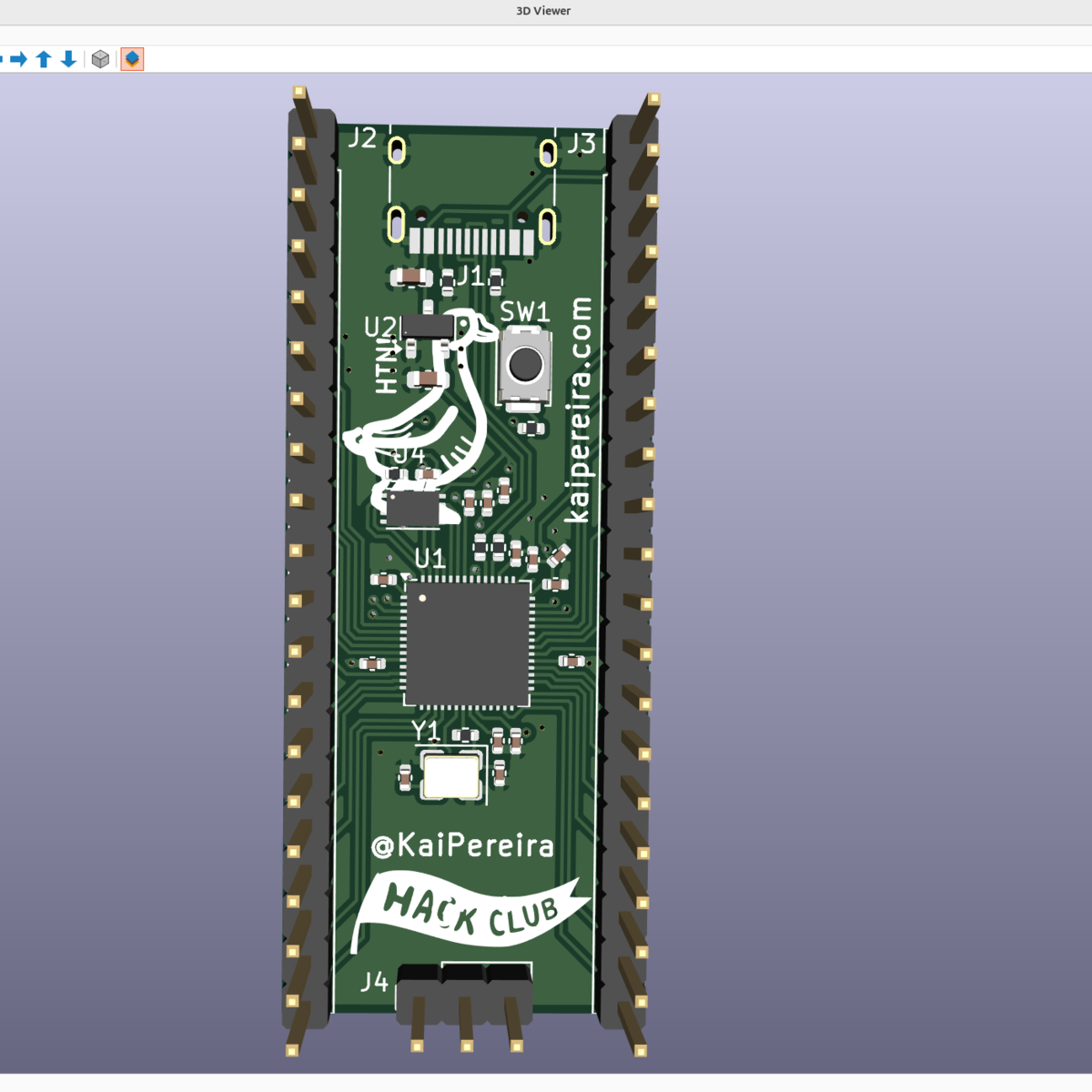
In the end, this was a perfect Hackaday project. Yes, it was “too simple” for those who have made their 30th PCB design. (Although I’d bet you could still pick up a KiCAD tip or two.) And yes, it doesn’t make economic sense to replicate mass-market devices in one-off. And of course, it doesn’t need that fun art on the board either. But wrap all these up together, and you get a superbly documented guide to a useful project that would walk you through 95% of what you’ll need to make more elaborate projects later on. Superb!
Surely you do “finger exercises” too. Why not write them up, and share the learning? And send them our way – we know just the audience who will want to read it.
This article is part of the Hackaday.com newsletter, delivered every seven days for each of the last 200+ weeks. It also includes our favorite articles from the last seven days that you can see on the web version of the newsletter. Want this type of article to hit your inbox every Friday morning? You should sign up!
Trentini da un anno in carcere in Venezuela senza accuse. La mamma: “Governo si è speso troppo poco”
@Giornalismo e disordine informativo
articolo21.org/2025/11/trentin…
Il cooperante di Venezia si trova nel carcere El Rodeo I. I rapporti di Amnesty
Giornalismo e disordine informativo reshared this.
Il Master in Giornalismo della Lumsa premiato all’EIT Food Italy 2025
BOLOGNA – Martedì 11 novembre 2025 si è tenuta la Cerimonia della VI Edizione del Premio di Giornalismo Agroalimentare promosso da EIT Food e organizzato in Italia dal Future Food…
L'articolo Il Master in Giornalismo della Lumsa premiato all’EIT Food Italy 2025 su Lumsanews.
Arriva Kraken: il nuovo ransomware che valuta l’ambiente per infliggere il massimo danno
I ricercatori di Cisco Talos hanno rilevato un’ondata attiva di attacchi che utilizzano un nuovo ransomware chiamato Kraken. Il gruppo ha iniziato a operare nel febbraio 2025 e utilizza metodi di doppia estorsione , senza prendere di mira settori specifici. Tra le vittime figurano aziende di Stati Uniti, Regno Unito, Canada, Danimarca, Panama e Kuwait.
Kraken infetta i sistemi Windows, Linux e VMware ESXi , distribuendo versioni separate del ransomware per ciascun sistema. Il programma utilizza l’estensione .zpsc e lascia una nota, “readme_you_ws_hacked.txt“, minacciando di pubblicare i dati sul suo sito di fuga di notizie. In un caso, gli aggressori hanno chiesto un riscatto di circa 1 milione di dollari in Bitcoin.
In un attacco, gli aggressori hanno sfruttato una vulnerabilità SMB per ottenere l’accesso iniziale, quindi hanno preso piede nel sistema utilizzando lo strumento di tunneling di Cloudflare e hanno utilizzato l’utility SSHFS per rubare dati. Dopo aver ottenuto i privilegi, si sono spostati sulla rete tramite RDP e hanno distribuito ransomware su altre macchine.
Kraken funziona con una varietà di parametri, tra cui crittografia completa o parziale, selezione della dimensione dei blocchi, ritardo di esecuzione e test delle prestazioni. Prima della crittografia, il programma valuta la potenza del sistema e seleziona la modalità più efficiente, aiutando a infliggere il massimo danno senza causare sovraccarico o sospetti.
Su Windows, Kraken è implementato come un’applicazione C++ a 32 bit, possibilmente impacchettata in Go. Disattiva i reindirizzamenti del file system di WoW64, ottiene privilegi di debug, interrompe i servizi di backup, elimina i punti di ripristino e svuota il Cestino. Rimangono accessibili solo le directory che consentono alla vittima di contattare l’operatore.
Il ransomware attacca simultaneamente database SQL, unità locali, condivisioni di rete e macchine virtuali Hyper-V, utilizzando comandi PowerShell per arrestare le VM e ottenere i percorsi al loro storage. Evita le cartelle di sistema e i file eseguibili per preservare la funzionalità del sistema operativo.
La versione Linux/ESXi è scritta in C++ e utilizza crosstool-NG. Il programma rileva innanzitutto il tipo di sistema, adattando il suo comportamento a ESXi, Nutanix, Ubuntu o Synology. Negli ambienti ESXi, arresta le macchine virtuali prima della crittografia. Utilizza inoltre meccanismi di analisi di bypass: modalità demone, ignorando i segnali SIGCHLD e SIGHUP e, al termine della crittografia, esegue uno script di pulizia che elimina i log, la cronologia della shell e il binario stesso.
Kraken è attivo sul darkweb. Sul suo sito web, il gruppo ha annunciato la creazione di un forum underground, “The Last Haven Board“, che si propone come piattaforma anonima per la comunità dei criminali informatici. Secondo i moderatori, ex membri di HelloKitty e il gruppo WeaCorp, specializzato nell’acquisto di exploit, hanno aderito al progetto. Secondo Talos, HelloKitty è stata fonte di ispirazione per Kraken: entrambi i gruppi utilizzano nomi identici per le richieste di riscatto e immagini del blog.
Kraken è uno dei programmi ransomware tecnologicamente più avanzati oggi disponibili, in grado di valutare le prestazioni del sistema prima di attaccare, di adattarsi a diverse piattaforme e di impiegare sofisticate tecniche di occultamento. Oltre alla sofisticata architettura del ransomware, il gruppo è attivo sul darkweb, promuovendo la sua piattaforma e ricevendo il supporto di noti criminali informatici. Data la sua portata e velocità di sviluppo, Kraken potrebbe diventare una delle principali minacce per le infrastrutture aziendali nel prossimo futuro.
L'articolo Arriva Kraken: il nuovo ransomware che valuta l’ambiente per infliggere il massimo danno proviene da Red Hot Cyber.
Gazzetta del Cadavere reshared this.
eVTOL for Everyone

While most of the world’s venture capital is off chasing anything with “AI” in the name in what many think looks increasingly like an inflated spherical film of soap molecules, in aviation all the hot money is betting on eVTOL: electric vertical take off and landing.
What if you want to get in on the eVTOL game but don’t have (or want) billionaire backing? Long-time contributor [spiritplumber] demonstrates how to do it on the cheap, with a low-cost quadcopter and a foam wing called Lift5.
Most eVTOL isn’t just quadcopters, after all — multirotors are great for playing with in the back yard, but their thrust-based lift makes for short range, and the engine-out options are all bad. Add a wing, and you can get that sweet, sweet dynamic lift. Add an extra, forward facing motor, and you can get thrust in the direction you need it most. That’s what [spiritplumber] is doing here: strapping a foam wing to a cheap quadcopter. Specifically, his custom frame for an Eiele F120 drone kit.You can see it in action in the demo video embedded below.
The wing and its forward thrust motor are equipped with its own speed controller, so the concept should be adaptable to just about any little drone. Quadcopter flight computers are mostly going to be able to compensate for the added lift and thrust automatically, which is neat, considering that these forces would require some bizarre headwind/updraft very unlikely to be found in nature.
Now the wing does add a lot of drag during the lift phase, to be sure, so [spiritplumber] is working on folding or tilting it out of the way, but that version is apparently inordinately fond of trees. Once the control issues are worked out you’ll likely see it on his site and YouTube channel Robots Everywhere.
[spiritplumber] has been contributing hacks here at least since 2009, when he showed us how to make a Macbook right click.
youtube.com/embed/VPGdzh6Qtys?…

Tutti gli errori che oscurano il caso Trentini
@Giornalismo e disordine informativo
articolo21.org/2025/11/tutti-g…
E’ passato esattamente un anno da quando il cooperante veneziano Alberto Trentini si trova nelle carceri del Venezuela. Accusato di cosa? Nessuno lo sa perché le autorità hanno ritenuto di non comunicarlo né alla famiglia, né alla
Giornalismo e disordine informativo reshared this.
Trentini da un anno in carcere in Venezuela senza accuse. La mamma: “Governo si è speso troppo poco”
@Giornalismo e disordine informativo
articolo21.org/2025/11/trentin…
Il cooperante di Venezia si trova nel carcere El Rodeo I. I rapporti di Amnesty
Giornalismo e disordine informativo reshared this.
Il Master in Giornalismo della Lumsa premiato all’EIT Food Italy 2025
BOLOGNA – Martedì 11 novembre 2025 si è tenuta la Cerimonia della VI Edizione del Premio di Giornalismo Agroalimentare promosso da EIT Food e organizzato in Italia dal Future Food…
L'articolo Il Master in Giornalismo della Lumsa premiato all’EIT Food Italy 2025 su Lumsanews.


Ulisse
in reply to Antonio Rotelli • •Antonio Rotelli likes this.