
Automatically Remove AI Features From Windows 11

It seems like a fair assessment to state that the many ‘AI’ features that Microsoft added to Windows 11 are at least somewhat controversial. Unsurprisingly, this has led many to wonder about disabling or outright removing these features, with [zoicware]’s ‘Remove Windows AI’ project on GitHub trying to automate this process as much as reasonably possible.
All you need to use it is your Windows 11-afflicted system running at least 25H2 and the PowerShell script. The script is naturally run with Administrator privileges as it has to do some manipulating of the Windows Registry and prevent Windows Update from undoing many of the changes. There is also a GUI for those who prefer to just flick a few switches in a UI instead of running console commands.
Among the things that can be disabled automatically are the disabling of Copilot, Recall, AI Actions, and other integrations in applications like Edge, Paint, etc. The reinstallation of removed packages is inhibited by a custom package. For the ‘features’ that cannot be disabled automatically, there is a list of where to toggle those to ‘off’.
Naturally, since Windows 11 is a moving target, it can be rough to keep a script like this up to date, but it seems to be a good start at least for anyone who finds themselves stuck on Windows 11 with no love for Microsoft’s ‘AI’ adventures. For the other features, there are also Winaero Tweaker and Open-Shell, with the latter in particular bringing back the much more usable Windows 2000-style start menu, free of ads and other nonsense.
Pirate News: 2026 Ballot Initiatives
Steve and James discuss some of the ballot initiatives and Trump denying legal immigrants from becoming citizens if they were born in 19 countries.
youtube.com/embed/ibCR41u3KIw?…
Sign up to our newsletter to get notified of new events or volunteer. Join us on:
Check out:
- Surveillance Memory Bank and Resources;
- Our Administrative Coup Memory Bank;
- Our Things to Do when Fascists are Taking Over.
Some links we mentioned:
- Tuesday: Speak out against surveillance!
- Lead the Party!
- DiZoglio launches ballot push to put State House under Public Records Law;
- Rent control could soon be in the hands of Massachusetts voters;
- Immigrants kept from Faneuil Hall citizenship ceremony as feds crackdown nationwide.
Image Credit: Heather Katsoulis, CC By-SA 2.0, Wikimedia commons page.
Building And Testing A Turbine Driven Hydro Generator

The theory behind hydropower is very simple: water obeys gravity and imparts the gained kinetic energy onto a turbine, which subsequently drives a generator. The devil here is, of course, in all the details, as [FarmCraft101] on YouTube is in the process of finding out as he adds a small hydro plant to his farm dam. After previously doing all the digging and laying of pipe, in this installment, the goal is to build and test the turbine and generator section so that it can be installed.
The turbine section is 3D-printed and slides onto the metal shaft, which then protrudes from the back where it connects to a 230VAC, three-phase generator. This keeps it quite modular and easy to maintain, which, as it turns out, is a very good idea. After a lot of time spent on the lathe, cutting metal, and tapping threads, the assembled bulk of the system is finally installed for its first test run.
After all that work, the good news is that the 3D-printed turbine seems to work fine and holds up, producing a solid 440 RPM. This put it over the predicted 300 RPM, but that’s where the good news ends. Although the generator produces 28 watts, it’s officially rated for 3 kW at 300 RPM. Obviously, with the small size of this AliExpress-special, the expectation was closer to 750 watts, so that required a bit of investigation. As it turns out, at 300 RPM it only produces 9 watts, so obviously the generator was a dud despite cashing out $230 for it.
Hopefully, all it takes to fix this is to order a new generator to get this hydropower setup up and running. Fortunately, it seems that he’ll be getting his money back from the dud generator, so hopefully in the next video we’ll see the system cranking out something closer to a kilowatt of power.
youtube.com/embed/kJgdpUn8ItY?…
Quantum Italia: i 4 ambiti del polo nazionale delle tecnologie quantistiche
@Informatica (Italy e non Italy 😁)
Il sottosegretario all'Innovazione Alessio Butti e il ministro della Difesa Guido Crosetto vogliono creare un centro di ricerca Quantum dedicato ad Alessandro Volta, un polo nazionale che coinvolga università, PA e aziende, dove testare e creare applicazioni
Informatica (Italy e non Italy 😁) reshared this.
Oversight Democrats released a new trove of Epstein pictures on Dropbox and left the comments on.#News #JeffreyEpstein


The Government Added a Comments Section to the Epstein Photo Dump
Update: After publication of this piece, House Oversight Democrats disabled comments on the photos. The original article follows below.Thursday afternoon House Democrats publicly released a new trove of photographs they’ve obtained from the estate of Jeffrey Epstein via Dropbox. They left the comments on so anyone who is signed into Dropbox and browsing the material can leave behind their thoughts.
Given that the investigation into Epstein is one of the most closely followed cases in the world and a subject of endless conspiracy theories, and that the committee released the trove of photographs with no context, it’s not surprising that people immediately began commenting on the photographs.
playlist.megaphone.fm?p=TBIEA2…
“Really punchable face,” BedeScarlet—whose avatar is Cloud from Final Fantasy VII—said above a picture of New York Times columnist David Brooks. Brooks, who wrote a column about his boredom with the Epstein case in November, attended a dinner with Epstein in 2011 and appears in two photographs in this new document dump.“Noam Chomsky,” Alya Colours (a frequent Epstein dropbox commenter) said below a photograph of the linguist talking to Epstein on a plane. Below this there is a little prompt from Dropbox asking me to “join the conversation” next to a smiley face.
In another picture, director Woody Allen is bundled up to his eyes in a heavy coat while Epstein side hugs him. “Yep, I’d know that face anywhere,” Susan Brown commented.
Among the pictures is a closeup of a prescription bottle labeled Phenazopyridine. “This is a medication used to treat pain from urinary tract infections,” Rebecca Stinton added, helpfully, in the comments.
“The fuck were they doing all that math for?” BedeScarlet said next to a picture of Epstein in front of a whiteboard covered in equations.
“Shit probably tastes like ass,” he added to a picture of Epstein cooking something in a kitchen.
There are darker and weird photographs in this collection of images that, as of this writing, do not yet have comments. There’s a pair of box springs in an unfinished room lit by the sun. There is a map of Little St James indicating where Epstein wants various buildings constructed. Bill Gates is shown in two photos standing next to women with their faces blocked out.
And then there are the Lolita pictures. A woman’s foot sits in the foreground, a worn annotated copy of Vladimir Nabokov novel Lolita in the background. “She was Lo, plain Lo, in the morning, standing four feet teen in one sock,” is written on the foot, a quote from the novel.
These photos are followed by a series of pictures of passports with the information redacted. Some are from Ukraine. There’s one from South Africa and another from the Czech Republic.
The House Democrats allowing the public to comment on these photos is funny and it’s unclear if intentional or a mistake. It’s also a continuation of the just-get-out-there approach when they have published other material, with it sometimes being in unsorted caches that readers then have to dig through. The only grand revelation in the new material is that Brooks was present at a dinner with Epstein in 2011.
“As a journalist, David Brooks regularly attends events to speak with noted and important business leaders to inform his columns, which is exactly what happened at this 2011 event. Mr. Brooks had no contact with him before or after this single attendance at a widely-attended dinner,” a Times spokesperson told Semafor’s Max Tani.
House Oversight Democrats did not immediately return 404 Media’s request for comment.

Nostalgic Camera Is A Mashup Of Analog Video Gear

These days, you get a fantastic camera with the purchase of just about any modern smartphone. [Abe] missed some of the charm of earlier, lower-quality digital cameras, though, and wanted to recreate that experience. The way forward was obvious. He built a nostalgic digital video camera from scratch!
[Abe] figured he could build the entire project around analog gear, and then simply find a way to store the video digitally, thus creating the effect he was looking for. To that end, the build is based around a small analog video camera that’s intended for use with FPV drones. It runs on 5 to 20 volts and outputs a simple composite video signal. This makes it easy to display its output on a small LCD screen, originally intended to be used with an automotive reversing camera. These were both paired with a mini video recorder module from RunCam, which can capture composite video and store it on a microSD card in 640 x 480 resolution.
These parts were quickly lashed together, with the camera sending its output to the RunCam video recorder module, which then passed it on to the screen. Everything worked as expected, so [Abe] moved on to implementing an on-screen display using the MAX7456 chip, which is built specifically for this purpose. It overlays text on the video feed to the screen as commanded by an RP2040 microcontroller. Once that was all working, [Abe] just had to provide a battery power supply and wrap everything up in a nice retro-styled case. Then, at the last minute, the separate camera and recorder modules were replaced by a TurboWing module that combined both into one.
The result is a nifty-looking camera that produces grainy, slurry, old-school digital video. If you love 640 x 480 as a resolution, you’ll dig this. It’s got strong 90s camcorder vibes, and that’s a very good thing.
We love a good custom camera around these parts, especially those that offer deliciously high resolution. If you’re building your own, be sure to let us know. Video after the break.
youtube.com/embed/_3n2b0EUI8c?…
Google presenta Gemini 3 Flash, il nuovo modello di intelligenza artificiale
La battaglia per la leadership nell’intelligenza artificiale si sta spostando sempre più dai laboratori alla produzione di massa. Il giorno dopo il rilascio di OpenAI GPT Image 1.5, Google ha presentato il modello Gemini 3 Flash e ha iniziato a renderlo predefinito nelle sue app consumer, nonché nella modalità AI nella ricerca.
Questo nuovo modello sostituisce Gemini 2.5 Flash, rilasciato solo sei mesi prima.
Google afferma che Gemini 3 Flash ha migliorato significativamente ragionamento, multimodalità ed efficienza, mantenendo al contempo una bassa latenza.
Nei primi test, il modello si è avvicinato ai sistemi “di frontiera” di Google e OpenAI. Ad esempio, nel benchmark Humanity’s Last Exam, ha ottenuto un punteggio del 33,7% senza strumentazione, rispetto al 37,5% di Gemini 3 Pro, all’11% di Gemini 2.5 Flash e al 34,5% di GPT-5.2, rilasciato di recente da OpenAI. Nel test multimodale MMMU-Pro , Gemini 3 Flash ha ottenuto un punteggio dell’81,2%, che secondo Google è il miglior risultato tra i suoi concorrenti in questa categoria.
Nonostante le prestazioni migliorate, Google posiziona Flash come un modello “veloce”. L’azienda afferma che supera Gemini 2.5 Pro, con una velocità di esecuzione circa tre volte superiore e un consumo medio di circa il 30% in meno di token nelle attività di ragionamento, riducendo potenzialmente i costi di implementazione.
Per gli utenti abituali, Gemini 3 Flash è già diventato una funzionalità standard dell’app Gemini in tutto il mondo, mentre Gemini 3 Pro rimane disponibile per attività matematiche e di programmazione più complesse.
Google sta inoltre enfatizzando gli scenari multimodali: caricamento di brevi video per consigli e coaching, invio di schizzi per il riconoscimento e utilizzo di audio per analisi o creazione di quiz. Si nota inoltre che il modello suggerisce più spesso “risposte visive”, incluse immagini e tabelle, e aiuta a creare semplici prototipi di app direttamente all’interno dell’interfaccia Gemini sulla base di query di testo.
Nella ricerca, Google sta simultaneamente ampliando l’accesso a funzionalità avanzate: Gemini 3 Pro è ora disponibile per tutti gli utenti negli Stati Uniti e anche l’adozione del suo modello proprietario di generazione di immagini Nano Banana Pro nella ricerca è aumentata. In ambito aziendale, Google sta parlando dell’adozione di Gemini 3 Flash da parte di aziende come JetBrains, Figma, Cursor, Harvey e Latitude, e il modello stesso è disponibile tramite Vertex AI e Gemini Enterprise.
Agli sviluppatori è stato promesso l’accesso a un’anteprima tramite API e l’integrazione con Antigravity, uno strumento di programmazione rilasciato da Google il mese scorso.
Google ha fissato il prezzo dell’API a 0,50 dollari per milione di token in input e 3,00 dollari per milione di token in output, leggermente più costoso di Gemini 2.5 Flash, ma l’azienda attribuisce questo risultato a un miglioramento della qualità.
Google afferma inoltre che, dal rilascio della serie Gemini 3, oltre mille miliardi di token vengono elaborati tramite la sua API al giorno. In questo contesto, la concorrenza con OpenAI si sta intensificando: all’inizio di dicembre, alcune pubblicazioni hanno riportato la nota interna “Code Red” di Sam Altman a seguito di un calo del traffico di ChatGPT dovuto alla crescita della quota di Google.
Successivamente, OpenAI ha rilasciato GPT-5.2 e un nuovo modello di generazione di immagini, affermando che il volume dei messaggi di ChatGPT era aumentato di otto volte da novembre 2024.
L'articolo Google presenta Gemini 3 Flash, il nuovo modello di intelligenza artificiale proviene da Red Hot Cyber.
Chip Swap Fixes a Dead Amiga 600

The Amiga 600 was in its day the machine nobody really wanted — a final attempt to flog the almost original spec 68000 platform from 1985, in 1992. Sure it had a PCMCIA slot nobody used, and an IDE interface for a laptop hard drive, but it served only to really annoy anyone who’d bought one when a few months later the higher-spec 1200 appeared. It’s had a rehabilitation in recent years though as a retrocomputer, and [LinuxJedi] has a 600 motherboard in need of some attention.
As expected for a machine of its age it can use replacement electrolytic capacitors, and its reset capacitor had bitten the dust. But there’s more to that with one of these machines, as capacitor leakage can damage the filter circuitry surrounding its video encoder chip. Since both video and audio flow through this circuit, there was no composite video to be seen.
The hack comes in removing the original chip rather than attempt the difficult task of replacing the filter, and replacing it with a different Sony chip in the same series. It’s nicely done with a connector in the original footprint, and a small daughterboard. The A600 lives again, but this time it won’t be a disappointment to anyone.
If you want to wallow in some Amiga history as well as read a rant about what went wrong, we have you covered.
AI Solutions 87 says on its website its AI agents “deliver rapid acceleration in finding persons of interest and mapping their entire network.”#ICE #AI
ICE Contracts Company Making Bounty Hunter AI Agents
Immigration and Customs Enforcement (ICE) has paid hundreds of thousands of dollars to a company that makes “AI agents” to rapidly track down targets. The company claims the “skip tracing” AI agents help agencies find people of interest and map out their family and other associates more quickly. According to the procurement records, the company’s services were specifically for Enforcement and Removal Operations (ERO), the part of ICE that identifies, arrests, and deports people.The contract comes as ICE is spending millions of dollars, and plans to spend tens of millions more, on skip tracing services more broadly. The practice involves ICE paying bounty hunters to use digital tools and physically stalk immigrants to verify their addresses, then report that information to ICE so the agency can act.
This post is for subscribers only
Become a member to get access to all content
Subscribe now

Bare Metal STM32: Increasing the System Clock and Running Dhrystone

When you start an STM32 MCU with its default configuration, its CPU will tick along at a leisurely number of cycles on the order of 8 to 16 MHz, using the high-speed internal (HSI) clock source as a safe default to bootstrap from. After this phase, we are free to go wild with the system clock, as well as the various clock sources that are available beyond the HSI.
Increasing the system clock doesn’t just affect the CPU either, but also affects the MCU’s internal buses via its prescalers and with it the peripherals like timers on that bus. Hence it’s essential to understand the clock fabric of the target MCU. This article will focus on the general case of increasing the system clock on an STM32F103 MCU from the default to the maximum rated clock speed using the relevant registers, taking into account aspects like Flash wait states and the APB and AHB prescalers.
Although the Dhrystone benchmark is rather old-fashioned now, it’ll be used to demonstrate the difference that a faster CPU makes, as well as how complex accurately benchmarking is. Plus it’s just interesting to get an idea of how a lowly Cortex-M3 based MCU compares to a once top-of-the line Intel Pentium 90 CPU.
Stitching The Clock Fabric
The F103’s clock tree isn’t identical to that of other families of STM32 MCUs, but the basic concepts remain the same. See the below graphic from Reference Manual 0008 for the clock tree of STM32F10x MCUs: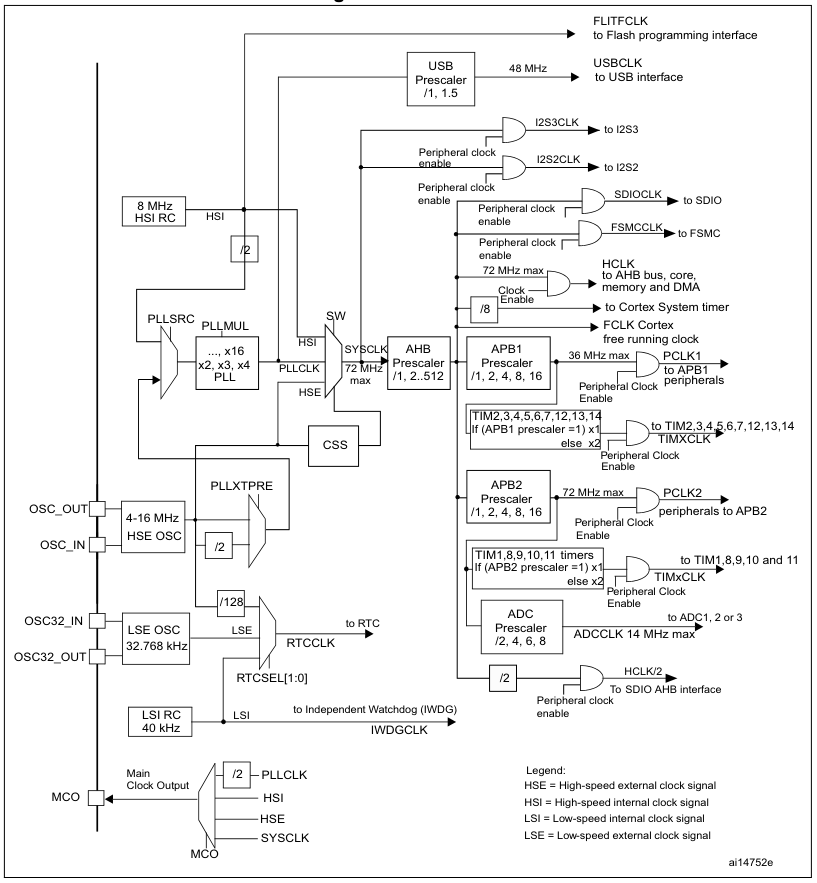
We can see the HSI clocked at 8 MHz, which feeds into the clock input switch (SW), from where it can provide the 8 MHz system clock without further fuss. Our other options are to use the HSE, which is fed in via its respective oscillator pins and from there is wired to the same switch as the HSI. If we want to get a higher clock speed than what the HSI or HSE can provide directly, we need to use the Phase Locked Loop (PLL) to generate a higher clock speed.
For this we need to first configure the PLL, enable it and select it as the input source for the clock switch. Before we can throw the switch, however, we also need to make sure that the prescalers for the buses (APB1, APB2, AHB) are set correctly. As we can see in the clock tree diagram, we have maximum speeds for each bus and fixed scaling numbers for each prescaler.
This pattern continues with individual peripherals, some of which also have their own prescaler – like USB and the ADC – but this is just something to keep in mind for when using these peripherals. If we’re just trying to crank the CPU core up to its maximum speed and still want to use the UART, all we need is to get the PLL configuration right, along with the AHB and APB prescalers so that the UART peripheral can be interacted with.
Plugging In Numbers
Before we start happily punching numbers on our keyboard to make the MCU go faster, there’s one tedious detail that we have take care of first: appeasing the Flash memory so that it can keep up. This involves configuring the right number of wait states, the use of prefetching and similar options. For this we open our copy of RM0008 to page 60 to ogle at the FLASH_ACR register and its options.
In this Flash access control register for the F103 and kin we get to enable or disable the prefetch buffer and the latency. Fortunately, for the latency the RM tells us exactly how many wait states we have to set here depending on our target system clock speed. For the 72 MHz that the F103 is rated for, we have to set two wait states.
Scrolling up a bit to page 58 and doing the unspeakable thing of reading the documentation, we can see that the prefetch buffer is turned on after reset by default and is best left enabled. As for the half cycle option, this is related to ‘power optimization’, which means that you will not touch this unless you know what you are doing and are sure that you need to change this.
Consequently we can configure our Flash as:
FLASH->ACR |= 2 << FLASH_ACR_LATENCY_Pos | FLASH_ACR_PRFTBE;
Next we wish to use the HSE via the PLL to get the most accurate and fastest system clock speed, which first requires enable the HSE and waiting for RCC_CR_HSERDY to change to 1 as indicate that it is ready for use.
RCC->CR & RCC_CR_HSEON
while ((RCC->CR & RCC_CR_HSERDY) == 0) {
// Handle time-out.
}
Up next is configuring the PLL, starting with setting the PLL source to HSE:
RCC->CFGR |= RCC_CFGR_PLLSRC;
Now we can configure the AHB and APB prescalers. These take the new system clock and divide it by the set number. For the F103, the 36 MHz-limited APB1 needs to be set to 2, while AHB and APB2 can run at the full 72 MHz, ergo 1.
RCC->CFGR |= 1 << RCC_CFGR_HPRE_Pos;
RCC->CFGR |= 2 << RCC_CFGR_PPRE1_Pos;
RCC->CFGR |= 1 << RCC_CFGR_PPRE2_Pos;
Final Steps
Continuing configuring of the PLL and assuming that it is currently disabled, we can now mash in its multiplier number. Unlike other STM32 families, the F1’s PLL is rather simple, with just a single multiplication factor. Since we’re using the HSE, we need to know the board that we are using and the speed that this HSE oscillates at. Taking the common ‘Blue Pill’ STM32F103 board as example, this features an 8 MHz HSE input, meaning that we have to multiply this by 9 to get the target of 72 MHz.
RCC->CFGR |= 7 << RCC_CFGR_PLLMULL_Pos;
The target PLLMUL register starts at 0x02 for a multiplier of x4, ergo we need to subtract two from our target multiplier. With that done we can enable the PLL and wait for it to stabilize:
RCC->CR |= RCC_CR_PLLON;
while (!(RCC->CR & RCC_CR_PLLRDY)) {
// Timeout handling.
}
Next we throw the big switch to use the PLL’s output as the system clock source and wait for the switch to complete:
RCC->CFGR &= ~(RCC_CFGR_SW);
RCC->CFGR |= RCC_CFGR_SW_PLL;
while (!(RCC->CFGR & RCC_CFGR_SWS_PLL)) { }
We should be up and running now, leaving us just to update the global CMSIS SystemCoreClock variable with the new clock speed of 72 MHz.
Benchmarking
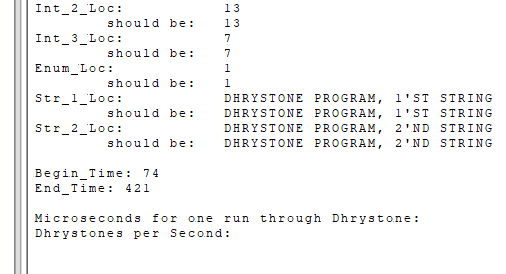
Running Dhrystone on our F103 seems like a bit of a challenge as the benchmark was created for your typical desktop and server systems. To achieve this, I took the original pre-ANSI C code for Dhrystone 2.1 and adapted it to a Nodate project. The [url=https://github.com/MayaPosch/Nodate/blob/master/examples/stm32/dhrystone/src/dhrystone.cpp]dhrystone.cpp[/url] file contains the benchmark itself, with no significant modifications other than to set up the MCU and the UART as standard output target. The number of runs is also hardcoded to be 100 million so that it doesn’t have to be punched in every time.
After compiling the benchmark and flashing it to the STM32F103 board, it seemed to take a few eternities for it to complete with so many runs. When the board’s single LED finally started doing its leisurely blinking routine to indicate completion, it turned out that 347 seconds had expired, or roughly 5.78 minutes. As can be seen in the start time, this wasn’t the first attempt, after a 10 million run completed too quickly according to the benchmark’s criteria. C’est la vie.
Annoyingly, the printf-lite implementation that I use with Nodate didn’t seem to like the 32-bit float values and were absent in the final output, so I had to do the calculations for the Dhrystones Per Second (DPS) and related MIPS (DPS / 1757) myself. Since the times() implementation’s ticks equal seconds, this was at least fairly easily, giving the following numbers:
- DPS: ~288,184.438
- MIPS: ~164.021
To see whether these numbers are at all plausible, I consulted a few lists of Dhrystone benchmark results, including one for DPS and one for MIPS. Taking into account the noise created by running it on an OS versus bare metal, my use of -Og optimization level and other differences, the placement at the level of about a Pentium 100 doesn’t seem too farfetched.
There is an official ARM Dhrystone benchmarking guide (AN273), which cites a DPS of 40,600.9 for a Cortex-M MCU running at 18.5 MHz. This would be 158,014 DPS if extrapolated linearly, but obviously not the exact board, MCU or compile flags are used, so ‘rough ballpark’ seems to be the term of the day here.
Perhaps the most interesting finding is that a lowly STM32F103 MCU can keep up with a once high-end Pentium CPU of the early 1990s, at least within the limited integer-only Dhrystone benchmark. Next target will probably be to run the more modern and extensive CoreMark on the F103 and other STM32 MCUs, to give a more holistic perspective.
Interactive Hopscotch Tiles Make The Game More Exciting

Hopscotch is a game usually played with painted lines or with the aid of a bit of chalk. However, if you desire fancier equipment, you might like the interactive hopscotch setup from [epatell].
The build uses yoga mats as the raw material to create each individual square of the hopscotch board. The squares all feature simple break-beam light sensors that detect when a foot lands in the given space. These sensors are monitored by a Raspberry Pi Pico in each square. In turn, the Pico lights up addressable NeoPixel LED strips in response to the current position of the player.
It’s a simple little project which makes a classic game just a little more fun. It’s also a great learning project if you’re trying to get to grips with things like microcontrollers and addressable LEDs in an educational context. We’d love to see the project taken a step further, perhaps with wirelessly-networked squares that can communicate and track the overall game state, or enable more advanced forms of play.
Meanwhile, if you’re working on updating traditional playground games with new technology, don’t hesitate to let us know!


Anlasslose Massenüberwachung: SPD-Politiker fordert Inhaltskontrolle auf allen Endgeräten
netzpolitik.org/2025/anlasslos…

Fena Hize reshared this.
Google, Amazon und Mastercard: Wo US-Konzerne beim digitalen Euro mitreden
netzpolitik.org/2025/google-am…

Strano... Trump aveva portato la pace da quelle parti...


La Thailandia ha bombardato la Cambogia sostenendo di aver colpito un centro logistico per missili - Il Post
https://www.ilpost.it/2025/12/18/thailandia-bombardamento-centro-logistico-poipet-cambogia/?utm_source=flipboard&utm_medium=activitypubPubblicato su News @news-ilPost

Poliversity - Università ricerca e giornalismo reshared this.
Il nuovo video di Pasta Grannies: youtube.com/shorts/EbZJcq2jkIM
@Cucina e ricette
(HASHTAG)
Cucina e ricette reshared this.
Radar e sicurezza, l’intesa tra Difesa e Leonardo
@Notizie dall'Italia e dal mondo
L’Italia compie un nuovo passo nel rafforzamento delle proprie capacità di difesa contro le minacce a lungo raggio, in una fase in cui la sicurezza europea è attraversata da trasformazioni rapide e da un ritorno della centralità dei sistemi di protezione integrata. Il quadro strategico dell’annuncio L’annuncio riguarda
Notizie dall'Italia e dal mondo reshared this.
Maurizio Belpietro è stato condannato per diffamazione per una copertina di Panorama che definiva le ong “i nuovi pirati”
Dovrà risarcire con 10mila euro ciascuna le ong Open Arms, Emergency, Sea-Watch, SOS Mediterranée, Louise Michel e Mediterranea, e con 7mila euro AOI, associazione che rappresenta le organizzazioni non governative italiane
Tutto questo è bellissimo 😁
Il giornalista Maurizio Belpietro è stato condannato per diffamazione per aver definito le ong che soccorrono i migranti “i nuovi pirati” - Il Post
https://www.ilpost.it/2025/12/18/maurizio-belpietro-condanna-diffamazione-ong/?utm_source=flipboard&utm_medium=activitypubPubblicato su News @news-ilPost

reshared this
QuickLook e file EML: soluzione al problema
@Informatica (Italy e non Italy 😁)
Molti utenti Apple MacOS lamentano da anni un problema nell’anteprima dei file attraverso l’uso del componente QuickLook. Il componente serve per generare un’anteprima senza necessariamente aprire il file e normalmente […]
L'articolo QuickLook e file EML: soluzione al problema proviene da Edoardo Limone.
Informatica (Italy e non Italy 😁) reshared this.
Humanity has talked about aliens throughout recorded history, and obsession that has changed science, faith, and media.#Podcast #aliens
Why Are We Obsessed With Aliens?
The past few years have been very exciting for those who want to believe. The U.S. government has released tantalizing videos and held several gripping hearings showing and discussing UFOs. People who always thought the government was hiding evidence of alien life from the general population saw it as proof that what they’ve said was happening all along. Skeptics have made compelling arguments for why all these revelations could be anything but aliens.But this debate and humanity’s obsession with aliens goes as far back as recorded history. In her book, First Contact: The Story of Our Obsession with Aliens, 404 Media’s science reporter and author of The Abstract newsletter Becky Ferreira delves deep into this history, what it teaches us about humans, and what the near and far future of the search for alien life looks like.
open.spotify.com/embed/episode…
I had a great time reading Becky’s book and an even better time discussing it with her on the podcast. It’s a great conversation that unpacks why these stories get so much attention, and a perspective on aliens in the news and pop culture that’s rooted in history and science.Listen to the weekly podcast on Apple Podcasts, Spotify, or YouTube.
Become a paid subscriber for early access to these interview episodes and to power our journalism. If you become a paid subscriber, check your inbox for an email from our podcast host Transistor for a link to the subscribers-only version! You can also add that subscribers feed to your podcast app of choice and never miss an episode that way. The email should also contain the subscribers-only unlisted YouTube link for the extended video version too. It will also be in the show notes in your podcast player.
youtube.com/embed/QToByEeq2vU?…

Druetti-Marro: sgombero Askatasuna, altro che sicurezza, rappresaglie governative e repressione del dissenso militarizzano i quartieri
Druetti (Possibile)-Marro (AVS): sgombero Askatasuna, altro che sicurezza, rappresaglie governative e repressione del dissenso militarizzano i quartieri
“Lo sgombero dell’Askatasuna è allo stesso tempo una rappresaglia e un ennesimo tassello nel progetto sistematico di repressione del dissenso e degli spazi sociali e solidali da parte del governo”, dichiara Francesca Druetti, Segretaria Nazionale di Possibile. “Così è stato per il Leoncavallo, così è per ogni spazio simbolo e realtà attiva sui territori”.
“Perquisizioni e sgomberi notturni e una militarizzazione dei quartieri, con scuole inaccessibili e strade bloccate, come testimoniano i cittadini e le cittadine che si sono trovate davanti uno scenario di guerra mentre portavano i figli a scuola non rendono niente e nessuno più sicuro, anzi”, continua Giulia Marro, Consigliera Regionale di Avs in Piemonte. “Danno volto e sostanza a una distopia autoritaria in cui conta solo fare sfoggio di muscoli e manganello, aprendo gli idranti sui presidi pacifici e interrompendo con cordoni di polizia in assetto anti sommossa la vita quotidiana delle persone”.
“Questa non sarà mai la nostra definizione di sicurezza, né la risposta alla tensione e alle proteste. Ci vediamo alle 18.00 al presidio in corso Regina 47 con tutte le persone solidali che la pensano così”, concludono Marro e Druetti.
L'articolo Druetti-Marro: sgombero Askatasuna, altro che sicurezza, rappresaglie governative e repressione del dissenso militarizzano i quartieri proviene da Possibile.

Ministero dell'Istruzione
Ieri il Ministro Giuseppe Valditara ha incontrato al #MIM le delegazioni delle scuole vincitrici della prima edizione del concorso “San Francesco d’Assisi: il pensiero, l’opera, la cultura e la sua eredità”.Telegram
Turn ‘Em On: Modern Nintendo Cartridges May Have a Limited Lifespan

Cartridge-based consoles have often been celebrated for their robust and reliable media. You put a simple ROM chip in a tough plastic housing, make sure the contacts are fit for purpose, and you should have a game cart that lasts for many decades.
When it comes to the Nintendo 3DS, though, there are some concerns that its carts aren’t up to snuff. Certain engineering choices were made that could mean these carts have a very limited lifespan, which could now be causing failures in the wild. It may not be the only Nintendo console to suffer this fate, either, thanks to the way modern cart-based consoles differ from their forebearers.
Lost Memory

To understand why modern cartridges are at risk, we should first understand why retro consoles don’t have the same problem. It all comes down to how cartridges store their data. Old-school consoles, like the Sega Mega Drive or the Super Nintendo, stored their games on mask ROMs. These are read-only chips that literally have their data hard-baked in at the lithography stage during the chip’s production. There is no way to change the contents of the ROM—hence the name. You simply fire in addresses via the chip’s address pins, and it spits out the relevant data on the data pins.
By virtue of being a very simple integrated circuit, mask ROMs tend to last a very long time. They don’t require an electrical charge to retain their data, as it’s all hard-etched into the silicon inside. Indeed, there are a million old game carts from the 1980s that are still perfectly functional today as proof. Eventually, they may fail, like any other integrated circuit, but if treated properly, by and large, they can be expected to survive for many decades without issue. Game carts with battery-backed save chips will still lose that storage over time, unless the battery is regularly replaced, but this is a side issue. The mask ROM that stores the game itself is generally very reliable as long as it’s not abused.
The problem for modern cart-based consoles is that mask ROM fell out of favor compared to other rewriteable methods of storing data. To a certain degree, it comes down to economics. You could spin up a custom mask ROM design for a new game, and have many copies produced by a chip foundry, and install those in your carts. However, it’s far easier to simply design a writeable cart in various capacities, and have all your company’s games released on those formats instead. You can use standard off-the-shelf parts that are produced in the millions, if not billions, and you have the flexibility to rewrite carts or update them in the event there’s a bug or something that needs to be corrected. In contrast, if you’d relied on mask ROMs, you’d have to trash your production run and start again if the data needs to be changed by even a single bit.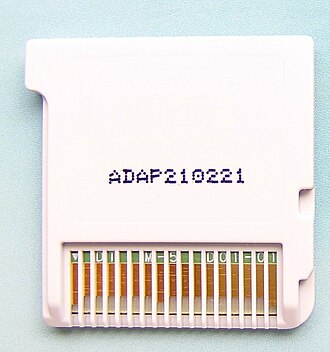
This has become a particular issue for some Nintendo systems. Up to the Nintendo DS, it was still common for cartridges to be built with bespoke mask ROMs; only certain titles that needed greater storage used writeable chips like EPROMs. However, when the Nintendo 3DS came along in 2011, norms had shifted. Carts were produced using a product called XtraROM from Macronix. Flip through the marketing materials as one forum user did in 2021, and you won’t find out a whole lot of real technical detail. However, on the basis of probabilities and datasheets in the wild, XtraROM appears to be a technology based on NAND Flash storage.
Exact details of the technology used in Nintendo carts are unclear to a degree, though, as datasheets for those part numbers are not readily available. Carts would often also contain a small amount of user-rewriteable memory for game saves, but the main game data tended to be stored in XtraROM chips. It also appears from certain Nintendo leaks that the 3DS may have certain built-in commands used to refresh this storage regularly, to keep it healthy over time.
If you’re a video game archivist, or just someone that wants their old Pokemon carts to still work in 2030, this is a bad thing. It’s all because of the way Flash memories work. Data is stored as electrical charges that are trapped in a floating gate transistor. Over time, those charges tend to leak out. This isn’t a problem in regular use, because Flash memory devices have controllers that continually refresh the charges as long as they’re powered. However, if you leave such a device unpowered for long enough, then that process can’t take place, and data loss is the eventual result. This has become a particular problem with modern solid-state drives, which can lose data in just years or even months when left unplugged, particularly in warmer environments where charge loss occurs at a faster rate.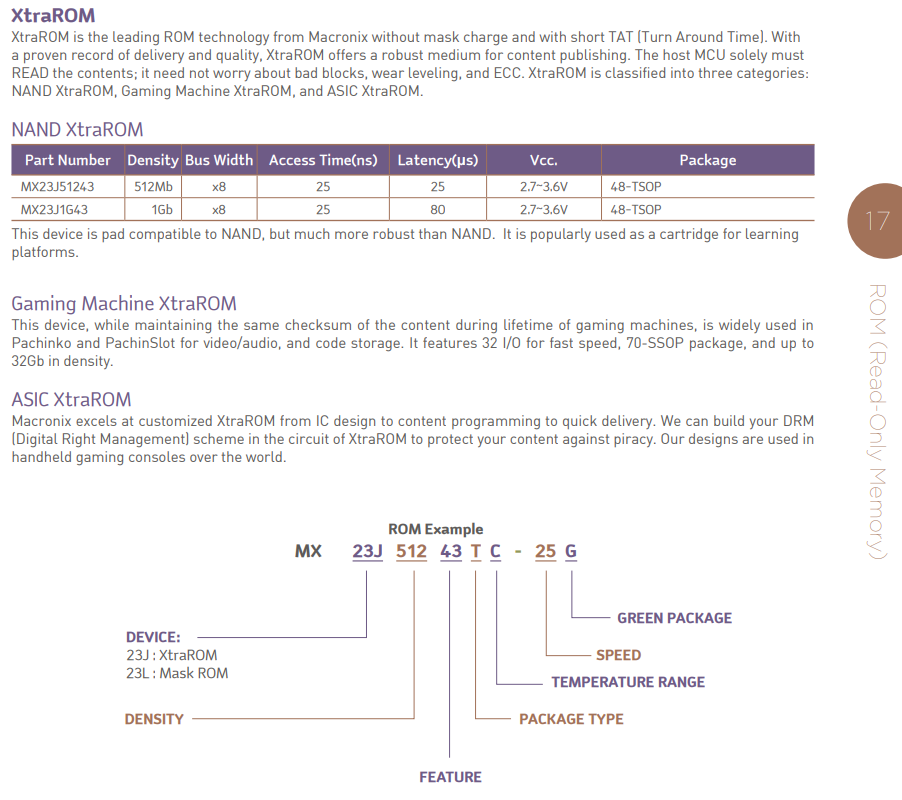
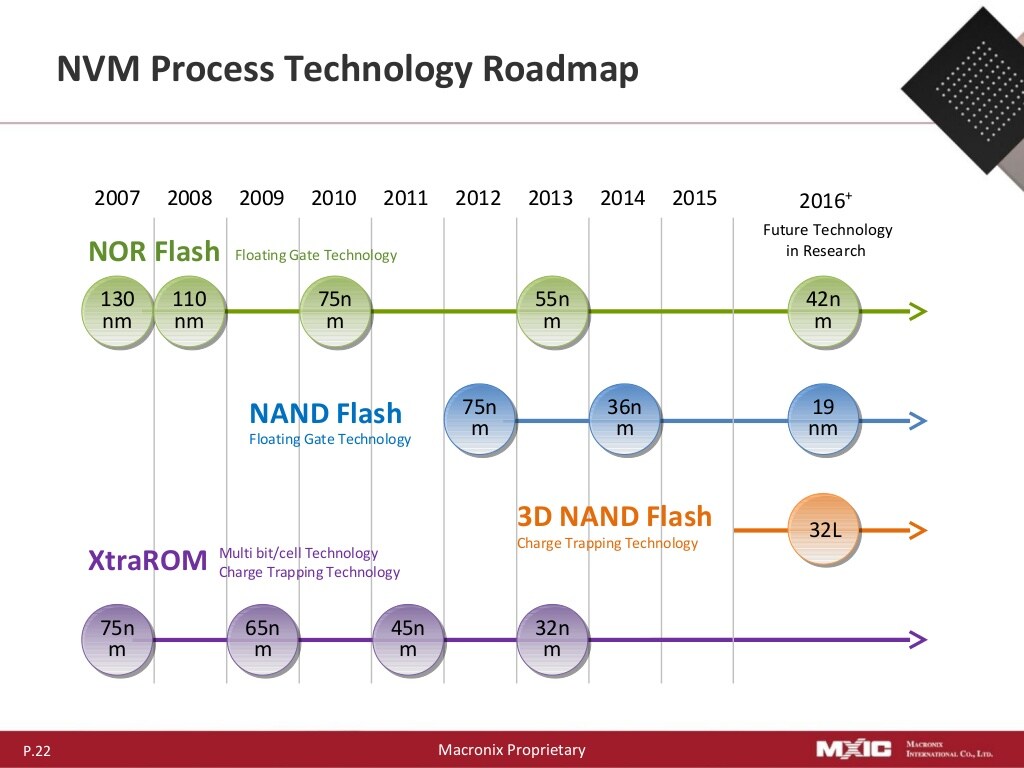
If they are indeed based on flash technology, Nintendo 3DS cartridges could be subject to the same phenomena of data loss after long periods without power. The same problem could affect the Nintendo Switch, too, which uses XtraROM chips from the same family. Fine details are hard to come by due to it being a proprietary product, but Macronix has claimed that its XtraROM-based products should offer 20 years of reliable storage at temperatures up to 85 C. However, these products haven’t existed that long. Those results are from accelerated aging tests that are run at higher temperatures to try and back-calculate what would happen at lower temperatures over longer periods of time. Their results don’t always map one-to-one on what happens in the real world. In any case, the fact that Macronix is quoting that 20-year figure suggests that XtraROM is perhaps a particularly long-lived flash technology. You’d expect a more robust mask ROM to outlast even the best EEPROMs that claim longevity figures in centuries.
Fears around widespread cartridge failures float around social media and gaming websites every now and again. It’s believed to be a particular issue with a certain Fire Emblem title, too. However, what we don’t have is a clear idea of the scale of the problem, or if it’s actually happening in the wild just yet. There are many people complaining on the Internet that they’ve grabbed an old cartridge that has failed to boot, but that can happen for a wide range of reasons. Without dumping the cart, it’s hard to definitively put this down to bit rot of the flash storage inside. There are other failures that can happen, for example, like bad solder joints.
There are hints that flash rot really could be affecting some Nintendo 3DS cartridges in the real world, though. A particularly interesting case from a forum concerned a copy of Mario & Luigi Paper Jam Bros. that completely failed to run. After some investigation, the owner decided to see if the 3DS’s cartridge refresh routine could possibly bring the cart back to life. This led them to develop a tool for “fixing” 3DS carts, with files shared on Github. It works in a simple fashion—using the 3DS’s built-in cartridge refresh routines when errors are detected in a given area of data.
youtube.com/embed/8NkzPD0QRaE?…
This copy of Mario & Luigi Paper Jam Bros. was reportedly resurrected by using the 3DS’s built in cartridge refresh routines. It’s a very anecdotal piece of evidence that NAND flash rot could be affecting these carts. It also suggests that it can be guarded against by regularly plugging in carts so the console can run the refresh routines that keep them alive. 
Ultimately, if you’re precious about your 3DS or Switch games, it probably pays to boot them up and run them once in a while. The same may go for games on the Sony PSVita, too. Even if the stated 20-year lifetime of these carts is legitimate, it’s helpful to juice up the flash every once in a while. Plus, at the very worst, you’ve spent some time playing your cherished games, so it’s hardly a waste of time.
We’d still love to see the issue investigated further. The best way would be to see some dumps and checksums of sealed 3DS games from over 10 years ago, but that’s perhaps unlikely given the value of these rare items. In the meantime, the best way forward is perhaps the cautious one—if you’re worried about data loss on your flash-based cartridges, boot them up just in case. Happy gaming out there!
L’AI cambia l’università! Gli studenti americani abbandonano in massa l’informatica
Negli Stati Uniti sta prendendo forma un cambiamento netto nelle preferenze degli studenti universitari. Sempre più giovani scelgono corsi di laurea in intelligenza artificiale, abbandonando l’informatica tradizionale, considerata meno sicura sul piano occupazionale rispetto al passato.
Il fenomeno è evidente nelle principali università. Al MIT, il corso triennale “Artificial Intelligence and Decision Making”, attivato nel 2022, è diventato in soli tre anni il secondo programma più frequentato dell’ateneo, subito dopo Informatica. Entro il 2025, il numero di iscritti dovrebbe raggiungere circa 330 studenti.
Anche altri atenei stanno seguendo la stessa direzione. L’Università della Florida del Sud ha inaugurato un Istituto di Intelligenza Artificiale e Cybersecurity con oltre 3.000 studenti nel primo semestre, mentre l’Università della California a San Diego ha avviato un corso di laurea triennale in IA che ha già attirato 150 matricole.
Un mercato del lavoro che spinge verso l’IA
Il cambio di rotta degli studenti è strettamente legato all’evoluzione del mercato del lavoro tecnologico. Le recenti ondate di licenziamenti nella Silicon Valley hanno ridimensionato l’attrattiva della laurea in informatica, un tempo considerata una garanzia occupazionale.
Secondo Hany Farid, professore all’Università della California a Berkeley, il contesto è profondamente cambiato: se in passato i laureati in informatica ricevevano più offerte di lavoro prima ancora di terminare gli studi, oggi anche una sola proposta viene considerata un risultato positivo.
La crescente automazione della programmazione, favorita dall’uso di strumenti di intelligenza artificiale, ha inoltre ridotto la domanda di programmatori junior. Aziende come Amazon stanno già richiedendo ai propri ingegneri di utilizzare sistemi di codifica automatizzata basati su IA.
Crescono i corsi di IA, calano quelli di informatica
I numeri confermano la tendenza. Secondo Programs.com, le offerte di lavoro online che richiedono competenze in intelligenza artificiale generativa sono aumentate del 323% nell’ultimo anno. Oggi oltre 300 università statunitensi offrono lauree in IA.
Tra il 2022 e il 2025, i master in intelligenza artificiale sono quasi raddoppiati, passando da 116 a 310, mentre i corsi di laurea triennale saliranno da 90 nel 2024 a 193 nel 2025. Parallelamente, il 62% dei corsi di laurea in informatica ha registrato un calo delle iscrizioni nell’ultimo anno accademico.
Secondo Tracy Camp, direttrice esecutiva dell’Association for Computing Research, non si tratta della fine dell’informatica, ma di una nuova fase di specializzazione. L’intelligenza artificiale sta diventando il fulcro di molte discipline, estendendo il proprio impatto anche a settori come sanità, finanza, diritto e ingegneria.
L'articolo L’AI cambia l’università! Gli studenti americani abbandonano in massa l’informatica proviene da Red Hot Cyber.
Attacco cyber al Ministero dell’Interno francese. 22enne, hacker di BreachForums in manette
Le forze dell’ordine francesi hanno arrestato un ragazzo di 22 anni sospettato di aver condotto un recente attacco informatico al Ministero dell’Interno. L’attacco è avvenuto a metà dicembre e ha colpito i server diposta elettronica interni dell’agenzia.
La procura di Parigi ha riferito che l’arresto è avvenuto il 17 dicembre nell’ambito di un’indagine condotta da un’unità informatica specializzata.
Secondo gli inquirenti, l’imputato ha ottenuto l’accesso non autorizzato a un sistema automatizzato di elaborazione di dati personali, il che costituisce un reato commesso nell’ambito di un’organizzazione organizzata. La pena massima per un simile atto in Francia è fino a dieci anni di carcere.
Il detenuto era già stato condannato per reati simili all’inizio del 2025. L’indagine è in corso ed è condotta dalla National Cybercrime Agency. Le autorità hanno promesso di fornire ulteriori informazioni al termine dell’interrogatorio di polizia, che potrebbe durare fino a due giorni.
L’incidente è stato reso noto diversi giorni fa. Secondo il Ministro dell’Interno Laurent Nunez, l’intrusione nella rete è stata rilevata nella notte tra l’11 e il 12 dicembre. Sconosciuti sono riusciti ad accedere a diversi file interni. Le autorità non hanno confermato il furto di dati, ma hanno osservato che le misure di sicurezza sono state rafforzate e le policy di accesso al sistema sono state riviste subito dopo l’attacco.
Quasi contemporaneamente all’incidente, è stata notata un’attività sul forum di hacker BreachForums, precedentemente inattivo . Uno degli amministratori del sito ha pubblicato una dichiarazione in cui affermava che dietro l’attacco al ministero c’era il suo gruppo.
Il rapporto affermava inoltre che l’attacco fosse una ritorsione per l’arresto di altri cinque amministratori del forum, detenuti all’inizio di quest’anno. Forniva inoltre presunte prove sotto forma di screenshot e chiedeva al governo di contattare le autorità entro una settimana per impedire la pubblicazione dei dati rubati.
Gli aggressori affermano di aver avuto accesso a informazioni su oltre 16 milioni di persone tratte dagli archivi della polizia. Tuttavia, le autorità francesi non hanno ancora confermato l’autenticità di queste affermazioni.
Non è inoltre noto se l’arrestato sia direttamente collegato ai membri di BreachForums o agli autori delle affermazioni.
L'articolo Attacco cyber al Ministero dell’Interno francese. 22enne, hacker di BreachForums in manette proviene da Red Hot Cyber.


Università cattolica: Beccalli (rettrice), “gli atenei sono chiamati ad agire come autentiche arene geopolitiche” - AgenSIR
Non più soltanto luoghi di formazione e di ricerca, ma anche spazi di dialogo tra culture e visioni differenti.M.Michela Nicolais (AgenSIR)
Religiosi: Congregazione dei Figli dell’Immacolata Concezione, fra Aldo Genova eletto superiore della Provincia italiana
Fr. Aldo Genova è stato confermato superiore della Provincia italiana della Congregazione dei Figli dell’Immacolata Concezione.

possibile.com/druetti-marro-sg…
Lo sgombero dell'Askatasuna è allo stesso tempo una rappresaglia e un ennesimo tassello nel progetto sistematico di repressione del dissenso e degli spazi sociali e solidali da parte
Per l’Italia la partita del Quantum è ancora aperta
@Notizie dall'Italia e dal mondo
Gli Stati generali del Quantum, di cui Formiche era Media partner, hanno offerto uno spaccato multilivello della realtà quantistica italiana, mettendo attorno allo stesso tavolo istituzioni, mondo accademico, industria e decision-maker. Ne è emersa una fotografia composita, quella di un ecosistema che non nasce
Notizie dall'Italia e dal mondo reshared this.
È uscito il nuovo numero di The Post Internazionale. Da oggi potete acquistare la copia digitale
@Politica interna, europea e internazionale
È uscito il nuovo numero di The Post Internazionale. Il magazine, disponibile già da ora nella versione digitale sulla nostra App, e da domani, venerdì 19 dicembre, in tutte le edicole, propone ogni due settimane inchieste e approfondimenti sugli affari e il potere
Politica interna, europea e internazionale reshared this.
Scientists found submerged stone structures off Brittany that date back at least 7,000 years, which may have been used as fish traps and protective cover for prehistoric people.#TheAbstract
Scientists Discover Massive Underwater Ruins That May Be a Lost City of Legend
Scientists have discovered the underwater ruins of huge stone structures erected by humans at least 7,000 years ago in the coastal waters of France, according to a new study published in the International Journal of Nautical Archaeology.The submerged granite ruins near Sein Island, a Breton island in the Atlantic Ocean, are among the oldest large stone structures ever found in France, and may have inspired an ancient local legend about a city called Ys that vanished under the waves.
The structures vary in size from small stone dams, which were probably fish traps, to large monoliths and slabs that protrude six feet from the seafloor and extend 400 feet in length, which perhaps once served as a protective seawall.
Yves Fouquet, a geologist who works with the Society for Maritime Archaeology and Heritage (SAMM), first noticed hints of these long-lost megaliths in LiDAR data collected by the Litto3D program, a national initiative to create a precise 3D digital reconstruction of the entire French coastline. Fouquet and his colleagues confirmed the existence of the mysterious structures, and mapped out their locations, across dozens of dives carried out by ten SAMM divers between 2022 and 2024.
“The detailed analysis of these maps to redraw the underwater geological map of this area (faults, rock types) has made it possible to identify structures that did not appear natural to a geologist,” Fouquet said in an email to 404 Media.
Brittany, a peninsular region of northwest France, is home to the oldest megaliths in the nation and some of the earliest in Europe, which date back some 6,500 years. The team estimated that the submerged stone structures off Sein Island may predate these early megaliths in Brittany by about 500 years, based on their estimation of when the stones would have last been above sea level. But it will take more research to home in on the exact age of the megaliths.
“We plan to continue the exploration and carry out more detailed work to understand the architecture and precise the age of the structures,” Fouquet said.
The discovery of these stones opens a new window into the societies living in Brittany during the Mesolithic/Neolithic Transition, a period when hunter-gatherers began to shift toward settled lifestyles involving fishing, farming, and the construction of megaliths and other buildings.
Photos of the structures in Figure 7 of the study. Image: SAMM, 2023
The peoples who made these structures must have been both highly organized and relatively abundant in population in order to erect the stones. They were also sophisticated marine navigators, as the waters around Sein Island are notoriously dangerous—prone to swells and strong currents—which is one reason its underwater heritage has remained relatively poorly explored.“Our results bear witness to the possible sedentary lifestyle of maritime hunter-gatherers on the coast of the extreme west of France from the 6th millennium onwards,” said Fouquet and his colleagues in the study. “The technical know-how to extract, transport, and erect monoliths and large slabs during the Mesolithic/Neolithic transition precedes by about 500 years the megalithic constructions in western France in the 5th millennium.”
The discovery raises new questions about the origins of these megalithics structures, which may have had a symbolic or religious resonance to these past peoples. the team added. “This discovery in a high hydrodynamic environment opens up new perspectives for searching for traces of human settlement in Brittany along the submerged coastline of the period 6000–5000 years cal. BCE.”
The researchers also speculate about a possible link between these structures, and the prehistoric people who made them, and local legends about sunken cities that may date back thousands of years.
“Legends about sunken cities, compared with recent data on rising sea levels, shows that the stories of ancient submergences, passed down by oral tradition, could date back as far as 5,000 to 15,000 years,” the team said, citing a 2022 study. “This suggests that oral traditions that may have preserved significant events in memory that could well be worthy of scientific examination. These settlements described in legend reveal the profound symbolic significance of maritime prehistory, which should not be overlooked.”
In particular, the people of Brittany have long told tales of the lost city of Ys, a sunken settlement thought to be located in the Bay of Douarnenez, about six miles east of Sein Island. The sunken megaliths off Sein Island “allow us to question the origin of the history of the city of Ys, not from the historical legends and their numerous additions, but from scientific findings that may be at the origin of this legend,” the team said.
It’s extremely tantalizing to imagine that the long-hidden ruins of these peoples, who appear to have been expert seafarers and builders, are the source of tales that date back for untold generations in the region. But while the researchers raise the possibility of a link between the stones and the story, they cannot conclusively confirm the connection.
“Legend is legend, enriched by all the additions of human imagination over the centuries,” Fouquet said in his email. “Our discoveries are based on what can be scientifically proven.”
🌘
Subscribe to 404 Media to get The Abstract, our newsletter about the most exciting and mind-boggling science news and studies of the week.Accueil - Archéologie sous-marine, les Epaves et naufrages en Manche et Atlantique
Société d’Archéologie et de Mémoire Maritime Plongez dans l’histoire maritime. Vous recherchez sur le littoral Manche-Atlantique un navire, un naufrage, un ancêtre […]Archéologie sous-marine, les Epaves et naufrages en Manche et Atlantique
iRobot Roomba modello del 2008 - Questo è un post automatico da FediMercatino.it

Prezzo: 0 €
iRobot Roomba modello del 2008 completo di:
- stazione di ricarica e cavo
- muro virtuale
Funziona ma bisogna sostituire la batteria perché non tiene più la carica.
Il Mercatino del Fediverso 💵♻️ reshared this.
Sette anni di GDPR e privacy ancora all’abc: la lezione dalla sanzione a Verisure e Aimag
@Informatica (Italy e non Italy 😁)
Il Garante Privacy sanziona Verisure Italia e Aimag, ma le condotte multate sembrano appartenere alla preistoria del Regolamento. Ecco cosa ci insegnano questi due casi
L'articolo Sette anni di GDPR e privacy ancora all’abc: la
Informatica (Italy e non Italy 😁) reshared this.
Corte Suprema austriaca: Meta deve dare agli utenti pieno accesso ai loro dati
La Corte Suprema austriaca ha emesso una sentenza in un procedimento lungo 11 anni contro Meta
mickey18 December 2025

Auszeichnung für unsere Chefredaktion: „netzpolitik.org war in diesem Jahr unverzichtbar“
netzpolitik.org/2025/auszeichn…

Dietro le lodi servili: il flop di Trump svelato.
noblogo.org/transit/dietro-le-…


Dietro le lodi servili: il flop di Trump svelato.
(188)
Il discorso alla nazione di #DonaldTrump del 17 dicembre 2025, trasmesso in prima serata dalla Diplomatic Room (con decorazioni natalizie perlomeno incongruenti), è durato meno di 20 minuti, ma ha condensato un tono visibilmente frustrato, aggressivo e autocelebrativo. Trump ha puntato il dito contro i democratici e Joe Biden con frasi ripetute come “Ho ereditato un disastro totale” e “È tutta colpa loro”, apparendo “arrabbiato e sulla difensiva” secondo le cronache dei media.
Questo stile, lontano da un sobrio aggiornamento sullo stato dell'Unione, sembrava mirare a placare i malumori crescenti tra gli elettori per il carovita persistente e le delusioni economiche, invitando gli americani alla “pazienza” in attesa di un futuro “boom senza precedenti”. Ha chiuso con un appello patriottico, esaltando l'“America prima di tutto”, ma il suo cipiglio tradiva insicurezze sul consenso interno in calo.Il discorso è stato un autentico tripudio di superlativi e iperboli, tipico del repertorio trumpiano.
Ha descritto il confine meridionale come “il più sicuro della storia americana”, l'economia “tornata più forte che mai”, con “prezzi che calano a velocità record”, “salari che crescono più dell'inflazione per la prima volta in anni” e un “boom economico senza precedenti” realizzato in soli 11 mesi di mandato. Trump ha vantato 18.000 miliardi di dollari di investimenti privati attratti grazie ai dazi (definita la sua “parola preferita”, come se non si fosse capito) e ha rivendicato di aver “risolto otto guerre calde nel mondo”, inclusa una presunta pace stabile a #Gaza, portando “pace duratura in Medio Oriente per la prima volta nella storia”.
Non sono mancati annunci come il “warrior dividend” di 1.776 dollari (un numero simbolico per l'anno della dichiarazione d'indipendenza) per ogni militare, con assegni “già spediti per Natale”, esaltando un'America che “fa invidia al mondo intero” e che “tornerà grande come mai prima”.Queste affermazioni, pronunciate con enfasi teatrale, ignorano del tutto le complessità reali.
Il tycoon ha scaricato sistematicamente ogni problema economico e sociale sul predecessore #Biden, dipingendolo come responsabile di un'“invasione barbarica” alle frontiere, un “caos economico totale”, con un’inflazione “alle stelle come mai vista” e “mayhem” nei quartieri urbani.Ha deriso il suo predecessore per aver implorato al Congresso aiuti sul confine, sostenendo che bastava “un nuovo leader forte come me” per chiuderlo ermeticamente in soli sette mesi, riducendo i flussi di droga del 94% e fermando “milioni di criminali”.
Queste narrazioni distorcono i fatti storici: l'inflazione era già stabilizzata al 3% annuo all'insediamento di Trump a gennaio 2025, ereditata dal post-pandemia e dalle politiche globali, non un “disastro esclusivo” di Biden. Similmente, i flussi migratori erano in calo pre-Trump grazie a accordi messicani, e le accuse di “invasione” si basano su numeri gonfiati, come confermato da fact-check indipendenti.
Un capitolo a parte merita l'incapacità cronica di Trump nel gestire le relazioni internazionali, nonostante le millanterie. Ha vantato di aver “risolto otto guerre” e portato “pace duratura in Medio Oriente”, con #Gaza come “trionfo personale” grazie a presunte mediazioni USA. In realtà, il conflitto in #Ucraina persiste senza tregue stabili, con aiuti militari USA in stallo; a Gaza, le escalation israeliane continuano con centinaia di vittime civili, mentre i raid USA in Yemen hanno solo intensificato le tensioni con gli Houthi anziché risolverle.
Le sue “storiche paci” con nazioni arabe del primo mandato sono rimaste fragili e unilaterali, senza affrontare il nodo palestinese. Intanto, le elazioni con #Cina e alleati #NATO si sono deteriorate per dazi protezionistici e minacce di ritiri, lasciando gli USA più isolati diplomaticamente e con costi militari in aumento del 15% per operazioni “unilaterali”.
Questa politica erratica ha alimentato instabilità globale, contraddicendo le promesse di “pace attraverso la forza”. Contrariamente alle iperboli, i numeri del primo anno di Trump deludono clamorosamente le attese. Il PIL ha contratto dello 0,3% nel primo trimestre 2025 a causa dell'afflusso massiccio di import pre-dazi, con rischi di recessione che hanno portato a una crescita anemica del 3%, ma solo grazie a import in calo e non a investimenti strutturali. L'inflazione resta ferma al 3% annuo a settembre (lontana dal “prezzi in calo” promesso). La disoccupazione è salita al 4,6% a novembre, ai massimi dal 2021, con un mercato del lavoro in indebolimento, licenziamenti nel settore tech e consumi al palo.
Gli investimenti vantati sono gonfiati: annunci non vincolanti, stimati realisticamente al massimo 7-9 trilioni, non i 18 promessi, mentre i salari crescono ma non compensano i rincari energetici. I fact-check confermano: l'economia arranca tra tariffe, incertezze e debiti pubblici alle stelle.
Questo sproloquio riflette la narrazione trumpiana classica: trionfalistica, divisiva e smentita dai fatti. Trump vanta lodi dall'estero da leader come #GiorgiaMeloni, che lo esaltano pubblicamente per interessi economici (evitare dazi punitivi su export di auto Fiat, vino e macchinari) e strategici, come il supporto #NATO contro la Russia, ma si tratta di puro servilismo opportunistico. Meloni ha scritto su “X” “...Trump ha reso l'America forte di nuovo”, ignorando come le politiche protezioniste USA stiano causando rincari energetici in Europa e tensioni nel Mediterraneo, danneggiando Roma con bollette alle stelle e instabilità migratoria. Simili elogi da Orban o Netanyahu mascherano calcoli cinici, non ammirazione genuina. Gli americani, intanto, pagano costi elevati, crescita fiacca, caos internazionale e un'amministrazione isolata, con l'opinione pubblica in calo al 42%.
È ora di distinguere retorica da realtà. E sarebbe sempre il momento di imparare a fare da soli, che è meglio che essere accompagnati da un ballista dilettante.
#Blog #USA #Trump #Politica #Economia #Esteri #Opinioni
Mastodon: @alda7069@mastodon.unoTelegram: t.me/transitblogFriendica: @danmatt@poliverso.orgBlue Sky: bsky.app/profile/mattiolidanie…Bio Site (tutto in un posto solo, diamine): bio.site/danielemattioli
Gli scritti sono tutelati da “Creative Commons” (qui)
Tutte le opinioni qui riportate sono da considerarsi personali. Per eventuali problemi riscontrati con i testi, si prega di scrivere a: corubomatt@gmail.com


