
How Do PAL and NTSC Really Work?

Many projects on these pages do clever things with video. Whether it’s digital or analogue, it’s certain our community can push a humble microcontroller to the limit of its capability. But sometimes the terminology is a little casually applied, and in particular with video there’s an obvious example. We say “PAL”, or “NTSC” to refer to any composite video signal, and perhaps it’s time to delve beyond that into the colour systems those letters convey.
Know Your Sub-carriers From Your Sync Pulses
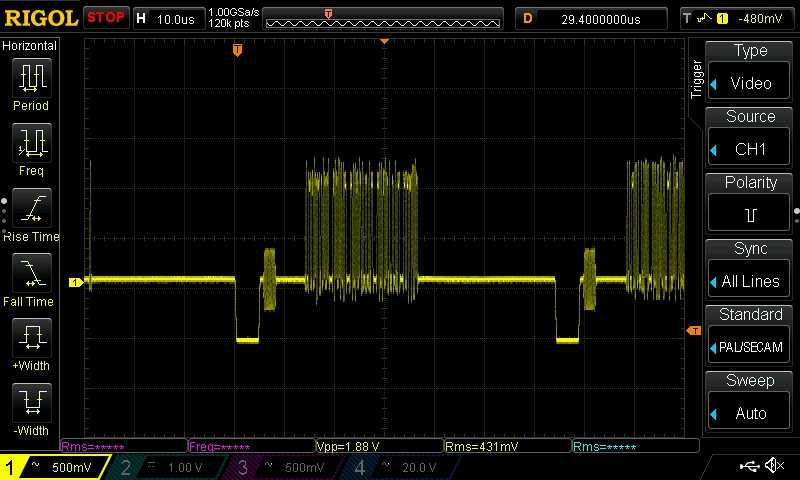
A video system of the type we’re used to is dot-sequential. It splits an image into pixels and transmits them sequentially, pixel by pixel and line by line. This is the same for an analogue video system as it is for many digital bitmap formats. In the case of a fully analogue TV system there is no individual pixel counting, instead the camera scans across each line in a continuous movement to generate an analogue waveform representing the intensity of light. If you add in a synchronisation pulse at the end of each line and another at the end of each frame you have a video signal.
But crucially it’s not a composite video signal, because it contains only luminance information. It’s a black-and-white image. The first broadcast TV systems as for example the British 405 line and American 525 line systems worked in exactly this way, with the addition of a separate carrier for their accompanying sound.
The story of the NTSC colour TV standard’s gestation in the late 1940s is well known, and the scale of their achievement remains impressive today. NTSC, and PAL after it, are both compatible standards, which means they transmit the colour information alongside that black-and-white video, such that it doesn’t interfere with the experience of a viewer watching on a black-and-white receiver. They do this by adding a sub-carrier modulated with the colour information, at a frequency high enough to minimise its visibility on-screen. for NTSC this is 3.578MHz, while for PAL it’s 4.433MHz. These frequencies are chosen to fall between harmonics of the line frequency. It’s this combined signal which can justifiably be called composite video, and in the past we’ve descended into some of the complexities of its waveform.
It’s Your SDR’s I and Q, But Sixty Years Earlier
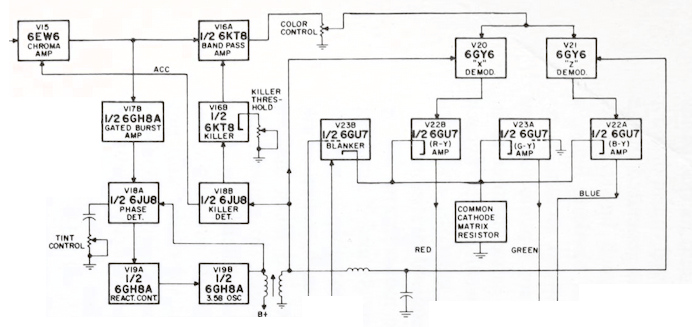
An analogue colour TV camera produces three video signals, one for each of the red, green, and blue components of the picture. Should you combine all three you arrive at that black-and-white video waveform, referred to as the luminance, or as Y. The colour information is then reduced to two further signals by computing the difference between the red and the luminance, or R-Y, and the blue and the luminance, or B-Y. These are then phase modulated as I-Q vectors onto the colour sub-carrier in the same way as happens in a software-defined radio.
At the receiver end, the decoder isolates the sub-carrier, I-Q demodulates it, and then rebuilds the R, G, and B, with a summing matrix. To successfully I-Q demodulate the sub-carrier it’s necessary to have a phase synchronised crystal oscillator, this synchronisation is achieved by sending out a short burst of the colour sub-carrier on its own at the start of the line. The decoder has a phase-locked-loop in order to perform the synchronisation.
So, Why The PAL Delay Line?

There in a few paragraphs, is the essence of NTSC colour television. How is PAL different? In essence, PAL is NTSC, with some improvements to correct phase errors in the resulting picture. PAL stands for Phase Alternate Line, and means that the phase of those I and Q modulated signals swaps every line. The decoder is similar to an NTSC one and indeed an NTSC decoder set to that 4.433MHz sub-carrier could do a job of decoding it, but a fully-kitted out PAL decoder includes a one-line delay line to cancel out phase differences between adjacent lines. Nowadays the whole thing is done in the digital domain in an integrated circuit that probably also decodes other standards such as the French SECAM, but back in the day a PAL decoder was a foot-square analogue board covered in juicy parts highly prized by the teenage me. Since it was under a Telefunken patent there were manufacturers, in particular those from Japan, who would try to make decoders that didn’t infringe on that IP. Their usual approach was to create two NTSC decoders, one for each phase-swapped line.
So if you use “NTSC” to mean “525-line” and “PAL” to mean “625-line”, then everyone will understand what you mean. But make sure you’re including that colour sub-carrier, or you might be misleading someone.
The Rise and Fall of The In-Car Fax Machines

Once upon a time, a car phone was a great way to signal to the world that you were better than everybody else. It was a clear sign that you had money to burn, and implied that other people might actually consider it valuable to talk to you from time to time.
There was, however, a way to look even more important than the boastful car phone user. You just had to rock up to the parking lot with your very own in-car fax machine.
Dial It Up
Today, the fax machine is an arcane thing only popular in backwards doctor’s offices and much of Japan. We rely on email for sending documents from person A to person B, or fill out forms via dedicated online submission systems that put our details directly in to the necessary databases automatically. The idea of printing out a document, feeding it into a fax machine, and then having it replicated as a paper version at some remote location? It’s positively anachronistic, and far more work than simply using modern digital methods instead.
Back in the early 90s though, the communications landscape looked very different. If you had a company executive out on the road, the one way you might reach them would be via their cell or car phone. That was all well and good if you wanted to talk, but if you needed some documents looked over or signed, you were out of luck.
Even if your company had jumped on the e-mail bandwagon, they weren’t going to be able to get online from a random truck stop carpark for another 20 years or so. Unless… they had a fax in the car! Then, you could simply send them a document via the regular old cellular phone network, their in-car fax would spit it out, and they could go over it and get it back to you as needed.
Of course, such a communications setup was considered pretty high end, with a price tag to match. You could get car phones on a wide range of models from the 1980s onwards, but faxes came along a little later, and were reserved for the very top-of-the-line machines.


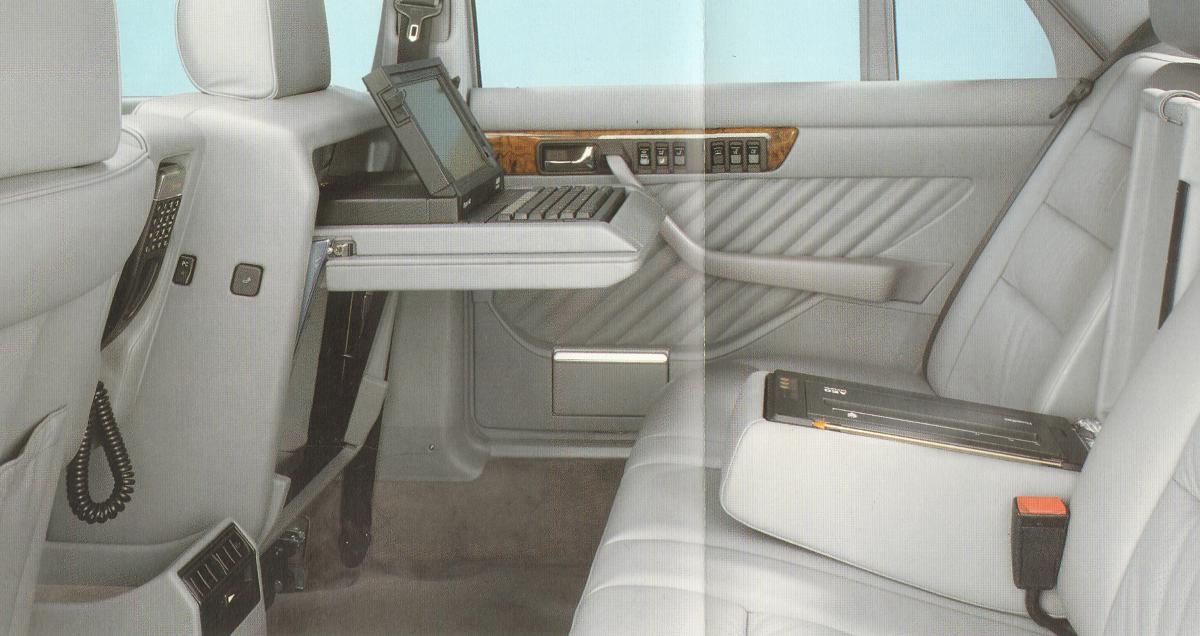
Mercedes-Benz was one of the first automakers to offer a remote fax option in 1990, but you needed to be able to afford an S-Class to get it. With that said, you got quite the setup if you invested in the Büro-Kommunikationssystem package. It worked via Germany’s C-Netz analog cellular system, and combined both a car phone and an AEG Roadfax fax machine. The phone was installed in the backrest of one of the front seats, while the fax sat in the fold-down armrest in the rear. The assumption was that if you were important enough to have a fax in the car, you were also important enough to have someone else driving for you. You also got an AEG Olyport 40/20 laptop integrated into the back of the front seats, and it could even print to the fax machine or send data via the C-Netz connection.
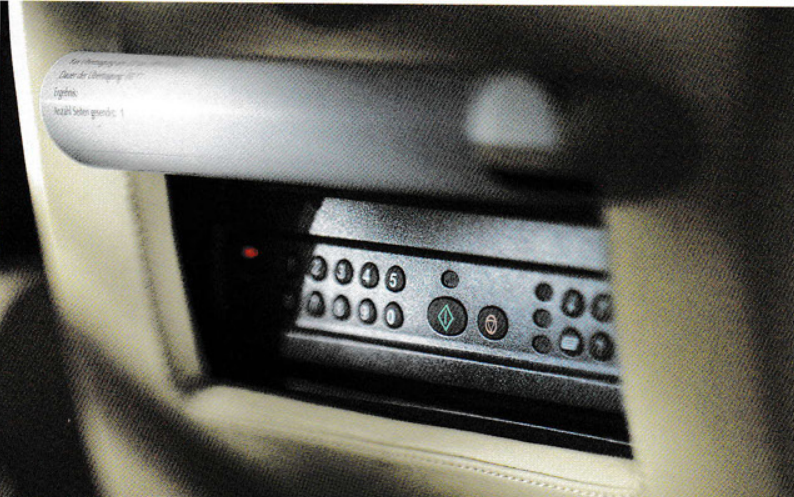
Not to be left out, BMW would also offer fax machines on certain premium 7 Series and L7 limousine models, though availability was very market-dependent. Some would stash a fax machine in the glove box, others would integrate it into the back rest of one of the front seats. Toyota was also keen to offer such facilities in its high-end models for the Japanese market. In the mid-90s, you could purchase a Toyota Celsior or Century with a fax machine secreted in the glove box. It even came with Toyota branding!
Ultimately, the in-car fax would be a relatively short-lived option in the luxury vehicle space, for several reasons. For one thing, it only became practical to offer an in-car fax in the mid-80s, when cellular networks started rolling out across major cities around the world.
By the mid-2000s, digital cell networks were taking over, and by the end of that decade, mobile internet access was trivial. It would thus become far more practical to use e-mail rather than a paper-based fax machine jammed into a car. Beyond the march of technology, the in-car fax was never going to be a particularly common selection on the options list. Only a handful of people ever really had a real need to fax documents on the go. Compared to the car phone, which was widely useful to almost anyone, it had a much smaller install base. Fax options were never widely taken up by the market, and had all but disappeared by 2010.
youtube.com/embed/0vbvu7EiWNA?…
The Toyota Celsior offered a nice healthy-sized fax machine in the 1990s, but it did take up the entire glove box.
These days, you could easily recreate a car-based fax-type experience. All you’d need would be a small printer and scanner, ideally combined into a single device, and a single-board computer with a cellular data connection. This would allow you to send and receive paper documents to just about anyone with an Internet connection. However, we’ve never seen such a build in the wild, because the world simply doesn’t run on paper anymore. The in-car fax was thus a technological curio, destined only to survive for maybe a decade or so in which it had any real utility whatsoever. Such is life!
Build a 2K Resolution MSLA 3D Resin Printer for Cheap

Have an old Android device collecting dust somewhere that you’d like to put to better use? [Electronoobs] shows us how to make a Masked Stereolithography Apparatus (MSLA) printer for cheap using screens salvaged from old Android phones or tablets.
[Electronoobs] wanted to revisit his earlier printer with all the benefits of hindsight, and this is the result. The tricky bit, which is covered in depth in the video below the break, is slicing up the model into graphics for each layer, so that these layers can be rendered by the LCD for each layer during the print.
The next tricky bit, once your layer graphics are in hand, is getting them to the device. This build does that by installing a custom Android app which connects to a web app hosted on the ESP32 microcontroller controlling the print, and the app has a backchannel via a USB OTG adapter installed in the device. [Electronoobs] notes that there are different and potentially better ways by which this full-duplex communication can be achieved, but he is happy to have something that works.
If you’re interested in resin printer tech, be sure to check out Continuous Printing On LCD Resin Printer: No More Wasted Time On Peeling? Is It Possible? and Resin Printer Temperature Mods And Continuous IPA Filtration.
youtube.com/embed/fu2NBy5zDxI?…
hackaday.com/2026/01/07/build-…
Homemade open source MSLA Arduino 3D printer
Tutorial of open source homemade MSLA printer with Arduino code on an ESP32 and usinga 4 inch TFT display and a UV LEDs matrix plus step motor control.electronoobs.com
Joe Vinegar reshared this.
This 8-Bit Commodore PET Was Hard to Fix

Over on [Ken Shirriff]’s blog is a tricky Commodore PET repair: tracking down 6 1/2 bad chips. WARNING: contains 8-bit assembly code.
The Trinity of 1977 which started the personal computer revolution were the Apple II, the Commodore PET, and the TRS-80. In this project it’s a failing Commodore PET which is being restored.
In the video below the break you can see [Ken Shirriff] and [CuriousMarc] team up to crack this tough nut. Resolving the various issues required a whole heap of software and equipment. Most notably a Keysight DSOX3104T oscilloscope, a Retro Chip Tester Pro, an old Agilent 1670G logic analyzer (this thing is rocking a 3.5″ floppy disk drive!), an old Agilent 54622A oscilloscope (also rocking a floppy drive!), a Data I/O 29B Universal Programmer With UniPak 2 insert, and the disassembly software Ghidra.
In the end there were 6 (and a half) bad chips which needed to be discovered and then replaced. This project is a reminder that it’s nice to have the right tools for the job!
If you’re interested in the Commodore PET you might like to read A Tricky Commodore PET Repair And A Lesson About Assumptions or Tracking Satellites With A Commodore PET.
youtube.com/embed/nxilekpLp6g?…
An RP2040 Powered ADS-B Receiver

If you’ve ever heard the sound of an aircraft passing overhead and looked at an online plane tracker to try and figure out what it was, then you’ve interacted with ADS-B. It’s a protocol designed to enable easier aircraft monitoring, and it just so happens you can decode it yourself with the right hardware and software — which is how [John McNelly] came to develop ADSBee, an open source ADS-B receiver based around an RP2040.
ADS-B uses on–off keying (OOK) at 1 Mbps, and operates at 1090 MHz. This might seem like a rather difficult protocol to decode on a microcontroller, but the RP2040’s PIO is up to the task. All it takes is a bit of optimization, and a some basic RF components to amplify and digitize the signals.
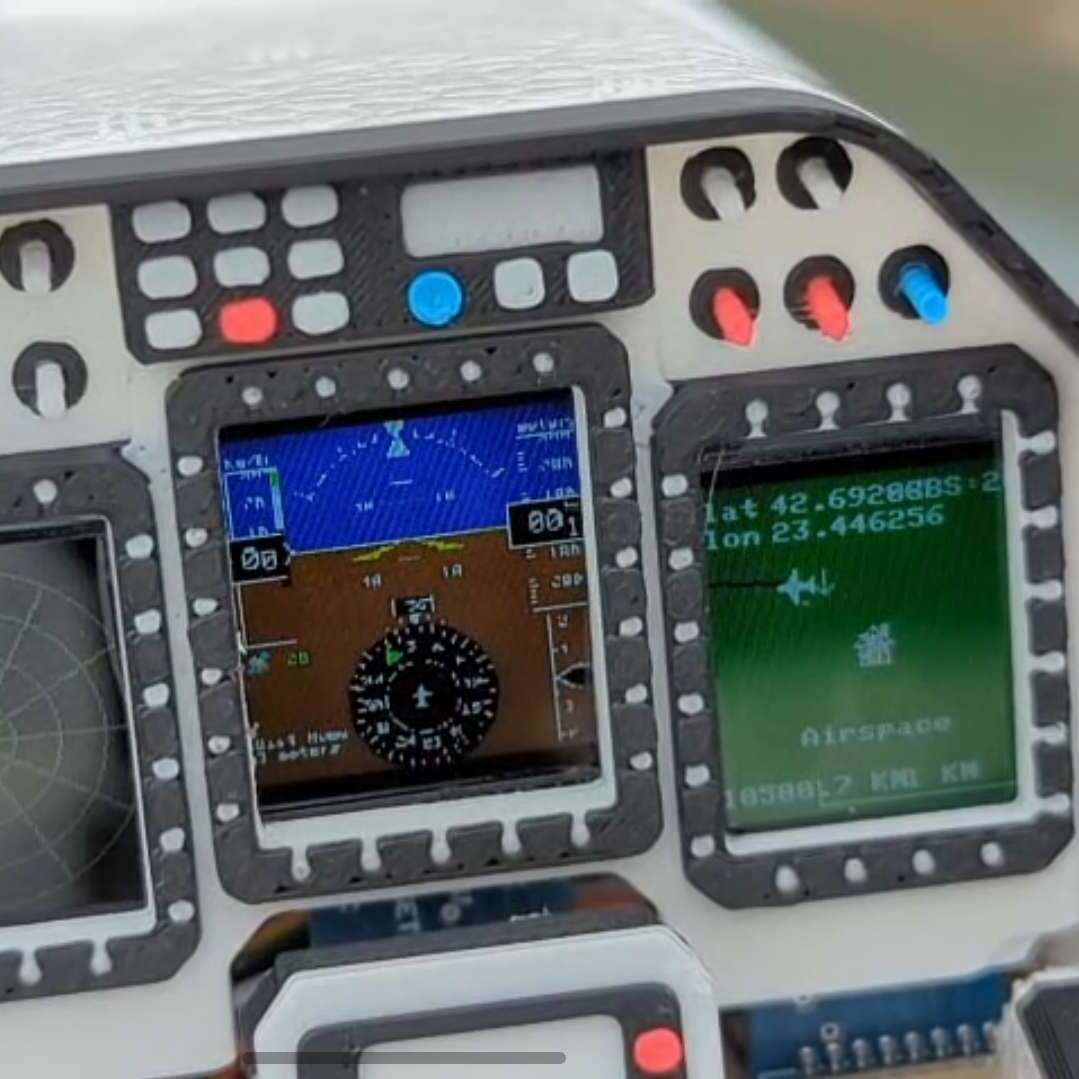
What’s quite impressive is the various form factors the module is available in. Ranging from small solder-down modules to weatherproof outdoor base stations, nearly every potential need for an ADS-B receiver is covered. With POE or ESP32 S3 options available, there is no shortage of networking options either!
ADSBees have been placed in numerous locations, ranging from base stations to drones. One user even built out a tiny flight display cluster complete with traffic indicators into an FPV drone.
This isn’t the first time we have seen ADS-B receivers used by drone enthusiasts, but this is certainly the most feature rich and complete receiver we have come across.
Repairing a Self-Destructing SRS DG535 Digital Delay Generator

There’s a lot of laboratory equipment out there that the casual hobbyist will never need to use, but that doesn’t mean you wouldn’t snap it up if the price is right. That’s what happened when [Tom Verbeure] saw a 1980s digital delay generator at a flea market for $40. Not only is it an excellent way to learn something about these devices, but it also provides a fascinating opportunity to troubleshoot and hopefully fix it. Such was also the case with this Stanford Research Systems (SRS) DG535 that turned out to be not only broken, but even features an apparently previously triggered self-destruct feature.
These devices are pretty basic, with this specimen incorporating a Z80 MPU in addition to digital and analog components to provide a programmable delay with 12.5 nanosecond resolution on its output channels after the input trigger is sensed. For that reason it was little surprise that the problem with the device was with its supply rails, of which a few were dead or out of spec, along with a burned-out trace.
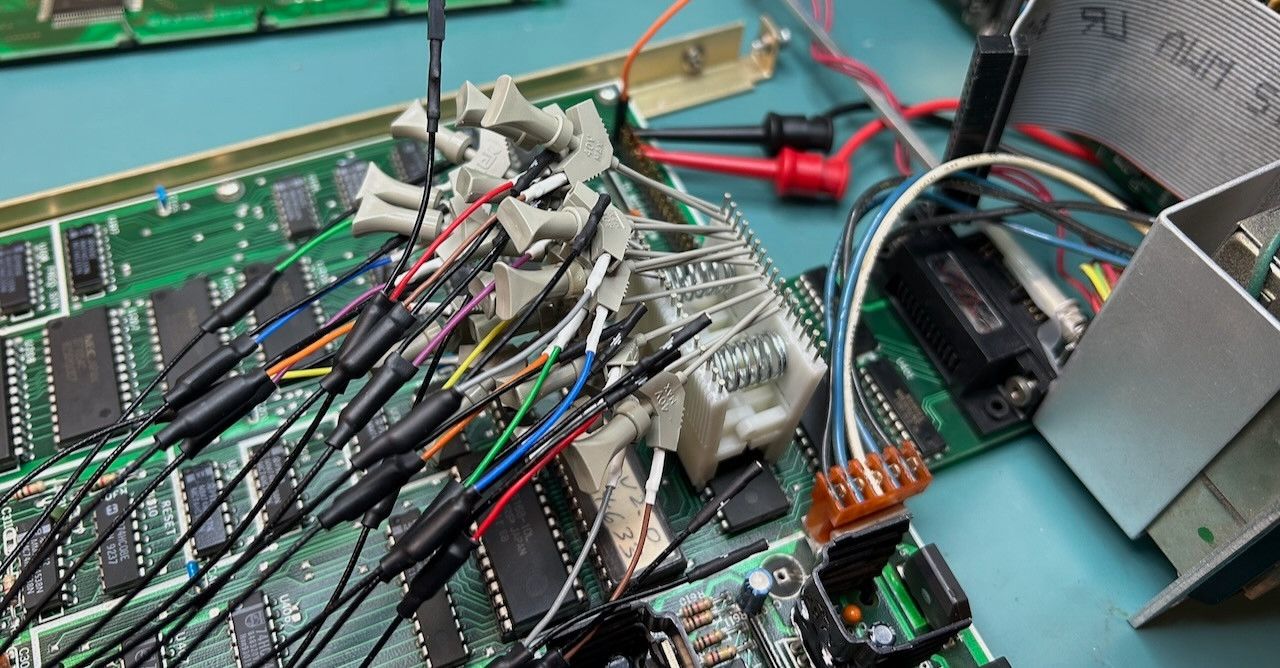
Unsurprisingly, this issue caused the same charred trace to reignite during [Tom]’s first repair attempt, but after working up the courage over the subsequent 18 months the second repair attempt went much better, also helped by the presence of the mostly correct original board schematics.
Ultimately the fixes were relatively modest, involving replacing a discrete diode bridge with an integrated one, fixing the -9 V rail with a bodge wire, and replacing the LCD with its busted AC-powered backlight with a modern one with a LED backlight. Fortunately running the 5 V rail at 7 V for a while seemed to have caused no readily observable damage, nor did flipping connectors because of SRS’ inconsistent ‘standards’ for its connector orientations.
Sadly, when [Tom] emailed SRS to inquire about obtaining an updated schematic for this unit — which is currently still being sold new for $4,495 — he merely got told to send his unit in for repair.


Vorhersehbare Forderung: Gegen Stromausfall helfen keine Überwachungskameras
netzpolitik.org/2026/vorherseh…


Digitale Gewalt: Musks Chatbot Grok verbreitet weiter sexualisierte Deepfakes
netzpolitik.org/2026/digitale-…

Olli Graf🚟 reshared this.
Bastian’s Night #458 January, 8th
Every Thursday of the week, Bastian’s Night is broadcast from 21:30 CET.
Bastian’s Night is a live talk show in German with lots of music, a weekly round-up of news from around the world, and a glimpse into the host’s crazy week in the pirate movement.
If you want to read more about @BastianBB: –> This way
The most effective surveillance-evading gear might already be in your closet.#Surveillance #AI


The State of Anti-Surveillance Design
An abridged version of this story appeared in 404 Media's zine. Get a copy here.The same sort of algorithms that use your face to unlock your phone are being used by cops to recognize you in traffic stops and immigration raids. Cops have access to tools that have scraped billions of images from the web, letting them identify essentially anyone by pointing a phone camera at them. Being aware of all the ways your face is being recognized by algorithms and sometimes collected by cameras when you walk outside can start to feel overwhelming at best, and futile to resist at worst.
But there are ways to disguise yourself from facial recognition systems in your everyday life, and it doesn’t require owning clothes with a special design, or high-tech anti-surveillance gear.
Technologist Adam Harvey’s interest in privacy started right after 9/11, when caring about what information governments and companies could extract from one’s movements was still fringe. “You can connect all these dots from 9/11 and how the surveillance and biometric surveillance industry exploded after that,” Harvey told me in a call. “And the projects that I was interested in doing were a response to that.” One of his earliest forays into anti-surveillance design was CV Dazzle, strategically applied facepaint and hair that fooled a specific facial recognition algorithm. But that was in 2010, and face paint is no longer useful for evading those, or any, systems. They mostly just look cool.
“I try to point that out in all of my texts, but it's often not as interesting as painting your face,” Harvey said. “So people paint their faces and then think that's the key to making it work, and it's fun. I don't want to tell people that they shouldn't have fun. So, you know, the project has really taken on a life of its own online, and I've taken a step back from trying to manage that.”
playlist.megaphone.fm?p=TBIEA2…
In the years since the Dazzle project made adversarial design mainstream, there have been lots of projects that attempt to confound, pollute, or elude the cameras that watch us move through the world every day. Harvey’s made several more, including heat obscuring ponchos meant to hide the wearer from drones, Faraday cage pockets for phones, and high-powered LED flash arrays for blinding paparazzi. But much of the wearables in this genre—from high-fashion streetwear shops to cheap listings by dropshippers—rely on 2D printed designs that don’t keep up with how quickly algorithms change and improve. The $600 hoodie with a cool pixel design on it might have worked yesterday, in perfect conditions, but the next time the cameras in the mall update their algorithms or datasets, it doesn’t work anymore.To outsmart surveillance systems, it’s helpful to understand them. Facial recognition—which identifies an individual face—works differently from biometric scans that look at a person’s iris or fingerprints, and those systems work differently from automatic license plate readers, which could in theory match an individual’s movements to a car through a database. And consumer-level facial recognition systems, like Pimeyes, operate using different algorithms and databases from the cameras you might encounter when boarding a flight—with the caveat that the differences in these systems and what data they share is more blurred every day.
Most facial recognition systems break down the elements of a face into its parts: the shape of your eyes, lips, nose, and even ears, and the distances between each part of your face, combined with skin color and numerous other factors. The system then boils your face down to a numerical value. If that value matches the value of existing images it has in its database closely enough, it may be presented as being you.
404 Media Is Making a Zine
We are publishing a risograph-printed zine about the surveillance technologies used by ICE.404 MediaJason Koebler
The facial recognition rabbit hole goes a lot deeper than that; there are theories about how individuals’ face, fingerprint, and iris biometric “signatures” are read by these systems. In the Biometric Menagerie theory developed in 2010, researchers grouped people into four categories: “Sheep,” or people who are easily recognizable by biometric systems; the more difficult “goats” which are difficult to recognize; shape-shifting “wolves” that can successfully imitate others, and later, more subsets of these including “worms,” “doves,” and “lambs.”All of this sounds complex and sophisticated, but these systems aren’t necessarily hard to fool. It turns out, you probably already own the most effective anti-surveillance fashion: a cloth mask.
“Despite how anybody may try to discourage you, covering your face with a face mask is still very effective,” technologist and fashion designer Kate Rose told me. In 2019, Rose created Adversarial Fashion, a line of clothing that’s covered in fake license plates, meant to pollute the data collected by automatic license plate readers.
“But the question that you had, and everyone has, is, can you beat face recognition? And the answer is yes, and the easiest way is with a Covid mask,” Harvey said. “You see ICE operatives wearing face coverings and sunglasses. At some point there's not enough information to do face recognition.”
Every system is different and every scenario is contextual, but adding a few common items to your kit can reduce the likelihood that enough of your biometrics are obscured to get your biometric matching score down. Big sunglasses, covering your chin and mouth, and wearing a baseball cap or brimmed hat that obscures your features from cameras placed above can all bring that score down. “It's kind of almost a linear relationship between how much of your face you hide and your score in that way. It's quite simple,” Harvey said. But the problem is, you never know what your score is, so you’re going out blindly, not knowing if your Jackie Onassis sunglasses are going to cover enough of your face, or if you have to get an extra long turtleneck or something to wear.”
If you want to really step up your sunglasses game, you could get a pair of glasses that block infrared wavelengths from cameras, like the ones in newer iPhones that use FaceID. The creator of infrared-blocking glasses line Reflectacles, who asked to go by Skitch, told me he sees the anti-surveillance “fashion” market becoming more mainstream with companies like Zenni selling glasses that block some types of facial recognition joining the trend 10 years after he launched his own IR-blocking specs. “I see the landscape of anti-surveillance wearables becoming popularized and monetized,” Skitch said. “If people with money find out that an area of business exists without them making money, they will certainly find a way to gather that market, that money.”
Reflectacles don’t look like normal glasses—they look like something from The Matrix, with a green tint and cyberpunk shapes—but sometimes signaling that you care about privacy to other people is part of the point.
Rose has been organizing community meetings in her small Pacific Northwest town to talk about the influx of Flock cameras on their streets, and she said she’s found that people across all walks of life and political leanings care deeply about privacy. “It can feel kind of futile, but I think it's important to remember that it's also about art and fashion, right? It’s about helping people with their mental abstraction of how [surveillance] works. And to have a tiny little protest that says, well, you have to store all my garbage, analyze it... People get a chance to talk to each other about what's important to them, and it actually helps people to understand something that’s often kind of techy and abstract about how a piece of prevalent surveillance tech works.” If a license plate camera database can be foiled by a t-shirt, maybe we should think twice about putting a camera on every corner.
“I like the definition of privacy from the Cypherpunk Manifesto: ‘Privacy is the power to selectively reveal yourself,’” Harvey said, referring to technologist and cryptographer Eric Hughes’ 1993 call for encrypted information systems. “By allowing other people to collect, watch or monitor you... It's a power dynamic that puts you on the losing end. It's really about power and individual agency, but there's also a destructive political and democratic component to allowing these mass surveillance systems to grow even larger.”
Zenni’s Anti-Facial Recognition Glasses are Eyewear for Our Paranoid Age
These anti-facial recognition glasses technically work, but won’t save you from our surveillance dystopia.Matthew Gault (404 Media)


pure la california vorrebbe probabilmente andarsene...

"Non vogliamo essere americani", la Groenlandia 'rifiuta' gli Stati Uniti di Trump
Dichiarazione congiunta dei partiti al presidente degli Stati Uniti, che ha ribadito la sua volontà di 'prendere' l'isola nell'ArticoRedazione Adnkronos (Adnkronos)
infodata.ilsole24ore.com/2026/…
secondo questo grafico trump ha attaccato il venezuela, lo stato sbagliato...

Dove si trovano le terre rare nel mondo? La mappa #BuoneFeste2026 - Info Data
Quando si parla di terre rare l’aggettivo inganna ma solo fino a un certo punto: non sono poi così rare. Sono 17 elementi — dal lantanio al lutezio più scandio e ittrio — ampiamente presenti nella crosta terrestre.Infodata (Info Data)
Meloni e la morale del carciofo
@Giornalismo e disordine informativo
articolo21.org/2026/01/meloni-…
Dalla conferenza stampa della presidente Meloni è uscita chiara, coerente e spaventosa la morale del “carciofo”, che può sedurre nell’immediato ma porta soltanto alla tragedia della guerra. Cosa è la morale del “carciofo”’ Il mix tra “deterrenza” ed “interesse nazionale”. La
Il Viminale e il dovere costituzionale
@Giornalismo e disordine informativo
articolo21.org/2026/01/il-vimi…
Come se l’apologia di fascismo potesse essere considerata una violazione secondaria
L'articolo Il Viminale e il dovere costituzionale proviene da Articolo21.
David ci servivi qui, e tanto
@Giornalismo e disordine informativo
articolo21.org/2026/01/david-c…
Dal quel triste 11 gennaio di quattro anni fa mi domando cosa sarebbe cambiato se avessimo ancora avuto David Sassoli in campo per la politica europea e per la politica italiana. Poco più di un mese dopo sarebbero partiti i carri armati russi per Kiev, l’anno dopo il 7 ottobre, Hamas,
RFanciola reshared this.
Referendum Giustizia – Cesare Parodi: “Mi oppongo alla riforma costituzionale nell’interesse della cittadinanza”
@Giornalismo e disordine informativo
articolo21.org/2026/01/referen…
Alla vigilia della prima grande iniziativa del
Turchia, assolti gli avvocati di Istanbul: una vittoria rara nello Stato che imprigiona i suoi difensori
@Notizie dall'Italia e dal mondo
Assolto il vertice dell’Ordine di Istanbul dopo un processo politico seguito da osservatori internazionali: una crepa nel sistema repressivo, mentre centinaia di legali restano in carcere.
L'articolo
𝐒𝐚𝐧𝐭𝐚 𝐏𝐚𝐥𝐨𝐦𝐛𝐚 𝐢𝐥 𝐜𝐨𝐫𝐚𝐠𝐠𝐢𝐨 𝐝𝐢 𝐫𝐞𝐬𝐢𝐬𝐭𝐞𝐫𝐞
𝐒𝐚𝐧𝐭𝐚 𝐏𝐚𝐥𝐨𝐦𝐛𝐚 𝐢𝐥 𝐜𝐨𝐫𝐚𝐠𝐠𝐢𝐨 𝐝𝐢 𝐫𝐞𝐬𝐢𝐬𝐭𝐞𝐫𝐞
Un soliloquio per riflettere sul domani che non vogliamo. Scritto da Alessandro Lepidini (Portavoce dell'Unione dei Comitati contro l'inceneritore) e interpretato da Andrea Santarelli.
Stop Inc Fest - Santa Paolomba 26 agosto 2023
Insieme, diciamo NO all’inceneritore a Santa Palomba.
#Ambiente #Ecologia #NoInceneritore #RifiutiZero #TutelaDelTerritorio #SalutePubblica #RomaPulita #Sostenibilità #CrisiAmbientale #Termovalorizzatore
🔴 𝐑𝐄𝐏𝐋𝐈𝐂𝐀 𝐀 𝐆𝐔𝐀𝐋𝐓𝐈𝐄𝐑𝐈: 𝐋𝐚 𝐯𝐞𝐫𝐢𝐭𝐚̀ 𝐬𝐮𝐥𝐥'𝐢𝐧𝐜𝐞𝐧𝐞𝐫𝐢𝐭𝐨𝐫𝐞
Mentre il Sindaco Gualtieri "celebra" l'impianto di Copenaghen, noi riportiamo i piedi per terra.
In questi video, Alessandro Lepidini (Portavoce dell'Unione dei Comitati contro l'inceneritore) replica alla " Sviolinata " di Gualtieri sul termovalorizzatore di Copenaghen.
Alla narrazione unilaterale attendiamo ancora Confronti Reali.
Video realizzati dal Comitato No Inceneritore a Santa Palomba.
👇 Condividi per informare i cittadini.
#Ambiente #Ecologia #NoInceneritore #RifiutiZero #TutelaDelTerritorio #SalutePubblica #RomaPulita #Sostenibilità #CrisiAmbientale #Termovalorizzatore


La maggioranza dei Paesi UE ha dato il prima via libera alla firma dell’accordo di libero scambio con il blocco sudamericano del Mercosur, che comprende Brasile, Argentina, Uruguay e Paraguay. Intanto, a Milano decine di trattori hanno bloccato il traffico in piazza Duca d’Aosta per protestare contro l’intesa. Agricoltori e allevatori da tutta Italia, con bandiere tricolori e cartelli come “Difendiamo il Made in Italy”, chiedono garanzie su prezzi, controlli e tutela del reddito agricolo, denunciando che l’accordo favorirebbe importazioni a basso costo e speculazione dannosa per produttori e consumatori. La mobilitazione è promossa da Riscatto Agricolo Lombardia, Coapi e altri sindacati di settore.

Non solo Venezuela, perché è pop negli Usa la difesa cyber
Per vedere altri post come questo, segui la comunità @Informatica (Italy e non Italy 😁)
“Spegnere le luci” di Caracas: la guerra tecnologica americana smette di essere segreta. Questa trasformazione della difesa non è solo una strategia di marketing politico, ma è diventata essenziale per la gestione e l’attrazione del talento, tema cruciale della competizione