

Ministero dell'Istruzione
Inizia oggi il #ViaggiodellaMemoria 2026 della scuola italiana in ricordo delle vittime della #Shoah. L’iniziativa, promossa dal #MIM in collaborazione con l’UCEI, quest’anno è concepita come un laboratorio itinerante di formazione e preparazione al …Telegram
[2026-01-17] L'obbedienza non è più una virtù @ Candelo - Oratorio San Pietro
L'obbedienza non è più una virtù
Candelo - Oratorio San Pietro - via San Francesco, 9 - Candelo
(sabato, 17 gennaio 21:00)
Conferenza - L'ostinata esigenza di pace nel pensiero di Don Milani - A cura di Don Simone Rocco

Looking at a Real Fake Raspberry Pi RP2040 Board

Since the RP2040 microcontroller is available as a stand-alone component, it’s easy enough for third parties to churn out their own variations — or outright clones of — the Raspberry Pi Pico. Thus we end up with for example AliExpress sellers offering their own versions that can be significantly cheaper than the genuine article. The ones that [electronupdate] obtained for a test and decapping session cost just $2.25 a pop.

As can be seen in the top image, the board from AliExpress misses the Raspberry Pi logo on the silkscreen for obvious reasons, but otherwise appears to feature an identical component layout. The QSPI Flash IC is marked on the die as BY250156FS, identifying it as a Boya part.
Niggles about flash ROM quality aside, what’s perhaps most interesting about this teardown is what eagle-eyed commentators spotted on the die shot of the RP2040. Although on the MCU the laser markings identify the RP2040 as a B2 stepping, the die clearly identifies it as an ‘RP2 B0’ part, meaning B0 stepping. This can be problematic when you try to use the USB functionality due to hardware USB bugs in the B0 and B1 steppings.
As they say, caveat emptor.
youtube.com/embed/uQ3kNFOhTIw?…

[2026-01-18] A-J Va Ën Paìss Për... - Spettacolo Teatrale @ Cossato - Teatro Comunale
A-J Va Ën Paìss Për... - Spettacolo Teatrale
Cossato - Teatro Comunale - P.za Elvo Tempia, 54, 13836 Cossato BI
(domenica, 18 gennaio 16:00)
Biglietti e info --> Clicca il link!

Ogni paese ha il suo ubergi di fiducia, e così il nostro, tranquillo paesino di montagna in cui la vita scorre lentamente e senza particolari colpi di scena. L’equilibrio, però, viene rotto alla notizia del fidanzamento della figlia dell’ubergista. La giovane cerca di convincere la madre a darle la contenta, ma questa si rivela essere un’impresa non da poco.
Come se non bastasse, ad aiutare o intralciare i due innamorati c’è l’intero paese: il prete con la sua perpetua e il sacrestano, l’impicciona postina che conosce gli affari di tutti, la guardia comunale (con trombettista al seguito) e un contadino stavanito che riceve una lettera misteriosa di cui nessuno co- nosce il contenuto (nessuno a parte la postina, ovviamente); a complicare la faccenda arriva anche un patachin ’d Turin. Per risolvere i propri problemi tutti si rivolgono alla ciucaluna del paese che è disposta ad aiutarli… al giu- sto prezzo.
Insomma, un nutrito gruppo di personaggi, che dimostra una volta per tutte che, come dice la figlia dell’ubergista, a-j va ën paìss për… per far que?
Il Gruppo Teatrale Snoopi ’74 torna in scena con una classica ambientazione contadina capace di unire la tradizione con un pizzico di innovazione e lo stesso obiettivo di sempre: passare insieme una serata in allegria!
The proposed law would force DHS only use the app, called Mobile Fortify, at ports of entry; delete all photos of U.S. citizens taken by the app; and effectively kill the local law enforcement of the app.#Impact #ICE


New Legislation Would Rein In ICE’s Facial Recognition App
A group of six Democratic lawmakers is proposing legislation that would dramatically rein in Immigration and Customs Enforcement’s (ICE) facial recognition app, according to a copy of the draft bill shared with 404 Media. ICE and Customs and Border Protection (CBP) have been scanning peoples’ faces with the app, called Mobile Fortify, across the country, using it to verify their citizenship and claiming that a result in the app should be trusted over a birth certificate.The move signals the first potential legislative move against the app after 404 Media first revealed Mobile Fortify’s existence in June based on leaked ICE emails. Since then, 404 Media has covered its continued use against U.S. citizens, the 200 million images it uses, and the Department of Homeland Security’s (DHS) plan to roll out a version of the app to local law enforcement.
💡
Do you know anything else about this app? I would love to hear from you. Using a non-work device, you can message me securely on Signal at joseph.404 or send me an email at joseph@404media.co.“When ICE claims that an image it snaps and runs through an unproven app can be enough evidence to detain people for possible deportation, no one is safe,” Rep. Bennie G. Thompson (D-MS), ranking member of the Committee on Homeland Security, and who authored the legislation, said. “ICE’s use of Mobile Fortify to determine a person’s legal status is an outrageous affront to the civil rights and civil liberties of U.S. citizens and immigrants alike. DHS should not be conducting surveillance by experimenting with Americans’ faces and fingerprints in the field—especially with unproven and biased technology. It is time to put an end to its widespread use. We can secure the Homeland and respect the rights and privacy of Americans at the same time.”
The bill is being cosponsored by by Rep. Lou Correa (D-CA), Ranking Member of the Subcommittee on Border Security & Enforcement; Rep. Shri Thanedar (D-MI), Ranking Member of the Subcommittee on Oversight, Investigations & Accountability; Rep. Yvette D. Clarke (D-NY), Chair of the Congressional Black Caucus; Rep. Grace Meng (D-NY), Chair of the Congressional Asian Pacific American Caucus; and Rep. Adriano Espaillat (D-NY), Chair of the Congressional Hispanic Caucus. It follows some of the lawmakers demanding answers from DHS about the app in September.
The proposed law, called the Realigning Mobile Phone Biometrics for American Privacy Protection Act, aims to curtail both Mobile Fortify and Mobile Identify, the local law enforcement version, in a few ways. First, it would ban use of the apps except for identification at ports of entry. As 404 Media showed, Mobile Fortify uses CBP systems that are usually reserved for identifying and taking photos of people as they enter the U.S. Mobile Fortify turned that capability inwards to American streets.
The law would also require all photos and fingerprints of U.S. citizens captured before the practices introduced by the bill be deleted, and require that all photographs or fingerprints of U.S. citizens be destroyed within 12 hours of being taken. The law would also prohibit DHS from sharing the apps with non-DHS law enforcement agencies, effectively killing the local law enforcement version. (404 Media reported the app became unavailable on the Google Play Store in early-December.)
When an immigration officer scans someone’s face with Mobile Fortify, the app runs their face against a bank of 200 million images held by DHS, according to the app’s user manual previously obtained by 404 Media. If the app finds what it believes is a matching face, it returns a name, their nationality, age and date of birth, unique identifiers such as their “alien registration,” and a field titled “Immig. Judge Decision,” the manual says. This appears to refer to whether an immigration judge has ruled on this person’s case, and may include a result that says “remove.”
404 Media previously obtained an internal DHS document through the Freedom of Information Act (FOIA) which showed ICE does not let people decline to be scanned by the app. 404 Media has found likely cases of the app being used in Chicago. In a partnership with Reveal, 404 Media reported the app has been used on U.S. citizens.
One video posted to social media this week showed an officer using the app to take a photo of an identification document in what the video said was Minnesota. 404 Media compared the app shown in the video to the user interface in the leaked Mobile Fortify user manual and they matched.
“The Trump Administration has weaponized federal agencies against the American people. This latest effort to use facial recognition to further target immigrant families is reckless and dangerous,” said Rep. Espaillat in a statement. “I’m proud to stand with Ranking Member Thompson to introduce legislation to combat ICE and DHS, prohibiting the use of facial recognition as yet another ruthless tactic to further this administration’s mass deportation agenda.”
“The abuse of this type of technology by DHS agents is not only invasive, it is likely unconstitutional and certainly un-American,” Rep. Meng added. “Immigration enforcement should not be conducted by an app and DHS should not conduct dragnet operations that terrorize communities and violate people's constitutional rights. I am proud to have worked with Ranking Member Thompson and my colleagues to introduce this commonsense legislation.”
DHS did not immediately respond to a request for comment.
Inside ICE’s Supercharged Facial Recognition App of 200 Million Images
404 Media has seen user manuals for Mobile Fortify, ICE’s new facial recognition app which allows officers to instantly look up DHS, State Department, and state law enforcement databases by just pointing a phone at someone’s face.Joseph Cox (404 Media)


Nuove modalità di richiesta di prestito interbibliotecario (ILL)
La Biblioteca nazionale centrale di Firenze, nell’ottica del miglioramento dei servizi all’utenza, mette ora a disposizione un form di richiesta online per il prestito interbibliotecario (ILL), a livello nazionale e internazionale, che sostituisce la compilazione dell’analogo modulo cartaceo.
Gli utenti iscritti alla Biblioteca, a partire dal 15 gennaio 2026, troveranno la nuova funzionalità “Form di richiesta ILL” nella propria area personale del catalogo (OPAC).
Ulteriori dettagli sono disponibili alla Pagina dedicata al servizio di Prestito.
L'articolo Nuove modalità di richiesta di prestito interbibliotecario (ILL) proviene da Biblioteca nazionale centrale di Firenze.
Aperitivo per i diritti con Marco Cappato a Pomezia
Mercoledì 21 gennaio , a partire dalle 18:30,AR Circolo Alessandro Casponi ospiterà un aperitivo speciale con la partecipazione di Marco Cappato, tesoriere dell’Associazione Luca Coscioni. Introdurrà la serata Flavio Sabato, coordinatore della Cellula Coscioni di Pomezia che racconterà le iniziative portate avanti sul territorio.
AR Circolo Alessandro Casponi – Via Industria, 9, Pomezia
Mercoledì 21 gennaio 2026
Inizio ore 18:30
L’incontro organizzato in collaborazione con Arci Pomezia sarà momento di riflessione e condivisione, durante il quale sarà possibile approfondire le campagne dell’Associazione e scoprire come partecipare attivamente.
Ingresso con tessera ARCI, per maggiori informazioni:cellulapomezia@associazionelucacoscioni.it
L'articolo Aperitivo per i diritti con Marco Cappato a Pomezia proviene da Associazione Luca Coscioni.
#IscrizioniOnline, sulla piattaforma #Unica è possibile approfondire i percorsi della filiera...
#IscrizioniOnline, sulla piattaforma #Unica è possibile approfondire i percorsi della filiera tecnologico professionale 4+2 che consentono agli studenti, dopo 4 anni di scuola tecnica o professionale, di entrare immediatamente nel mondo del #lavoro, …

Ministero dell'Istruzione
#IscrizioniOnline, sulla piattaforma #Unica è possibile approfondire i percorsi della filiera tecnologico professionale 4+2 che consentono agli studenti, dopo 4 anni di scuola tecnica o professionale, di entrare immediatamente nel mondo del #lavoro, …Telegram
Windows? Linux? Browser? Same Executable

We’ve been aware of projects like Cosmopolitan that allow you to crank out a single executable that will run on different operating systems. [Kamila] noticed that the idea was sound, but that the executables were large and there were some limitations. So she produced a 13K file that will run under Windows, Linux, or even in a Web browser. The program itself is a simple snake game.
There seems to be little sharing between the three versions. Instead, each version is compressed and stitched together so that each platform sees what it wants to see. To accommodate Windows, the file has to start with a PE header. However, there is enough flexibility in the header that part of the stub forms a valid shell script that skips over the Windows code when running under Linux.
So, essentially, Windows skips the “garbage” in the header, which is the part that makes Linux skip the “garbage” in the front of the file.
That leaves the browser. Browsers will throw away everything before an <HTML> tag, so that’s the easy part.
Should you do this? Probably not. But if you needed to make this happen, this is a clear template for how to do it. If you want to go back to [Kamila’s] inspiration, we’ve covered Cosmopolitan and its APE format before.
Francesco d’Assisi (1181-1226) è uno dei santi più amati della cristianità, tanto che la sua storia affascina ancora a 800 anni dalla morte. L’agile volume del cardinal Angelo Comastri a lui dedicato non soltanto offre una biografia del Poverello, ma può essere considerato come una guida per scoprire o riscoprire l’insegnamento francescano: «È quello che vogliono proporre queste povere pagine, che tentano di dipingere davanti agli occhi distratti della gente di oggi la via percorsa da Francesco d’Assisi» (p. 7).

L’esistenza dell’Assisiate appare segnata fin dall’inizio, quando Francesco doveva essere Giovanni: «Quando il padre tornò dal suo viaggio, subito si lamentò con Pica per la scelta del nome troppo religioso. E cambiò il nome del figlio: lo chiamò Francesco, in omaggio a un panno che commerciava e che era chiamato “francesco” perché veniva prodotto in Francia. E così il nome Francesco entrò nella storia: entrò a motivo della ricchezza del commercio per indicare un uomo che avrebbe avuto orrore per la ricchezza al punto tale da chiamare “sua sposa” la povertà» (pp. 16 s.).
L’A. va poi al cuore del messaggio che il francescanesimo lascia alla Chiesa, una testimonianza «semplice e allo stesso tempo […] formidabile: Francesco ci invita a prendere sul serio il Vangelo, a prendere sul serio Gesù, a prendere sul serio la via percorsa da Gesù […], perché l’amore rende simili: l’amore genera l’imitazione! La lezione di Francesco sta tutta qui» (p. 73).
L’utopia francescana – si legge tra le righe – è allora possibile e consiste nel «vivere il Vangelo di Gesù alla lettera! E questa utopia ritorna come una sfida in ogni generazione cristiana e la interpella: Dio ha suscitato il francescanesimo proprio per questo!» (p. 82).
Nell’anno in cui si celebra l’ottavo centenario della dipartita al cielo di Francesco d’Assisi, il profondo libro del card. Angelo Comastri consente di avvicinare questa grande figura di santità, attualizzata in riflessioni che fanno comprendere le intenzioni dell’umile frate, così da suscitare in tutti l’imitazione: «E, ancora oggi, il seme gettato da Francesco grida che il Vangelo è un’utopia, ma è un’utopia possibile! Che mistero! Che bel mistero! Che affascinante mistero!» (p. 123).
The post Francesco d’Assisi first appeared on La Civiltà Cattolica.
875 Eltern und Kinder befragt: Social-Media-Verbot ist nicht die beste Lösung
netzpolitik.org/2026/875-elter…

Wikipedia’s 25th birthday proves the power of free speech
In the mid-1700s, Denis Diderot published his Encyclopédie in France, collecting the work of more than 140 authors to summarize the Enlightenment. It quickly landed on the Catholic Church’s banned books list for including contrarian thoughts, and, at one point, his publisher preemptively censored some content without Diderot’s knowledge.
Around the same time, King George III censored the first edition of Encyclopaedia Britannica, requiring the removal of some anatomically correct drawings in an article about midwifery.
So when the 13 newly independent American states ratified the First Amendment a few decades later, it laid the groundwork not only for a free press but also for an encyclopedia that was not censored by an oppressive government.
Today, we celebrate the realization of that dream in the form of Wikipedia, which over the past 25 years has been collaboratively built by unpaid strangers on the internet. Wikipedia went from the source that teachers universally clamored “you can’t trust it” to one of the most reliable sources in a world of “disinformation” and AI-generated slop.
Despite not being written by professional journalists (I edit it myself as a volunteer and used to work for its nonprofit host, Wikimedia Foundation), it’s still able to set trends and drive narratives. For example, in 2011, Wikipedia editors started collating a list of people killed by law enforcement in the U.S., three years before The Washington Post would win a Pulitzer for its version of the same.
And for better or worse, Wikipedia is most likely the largest single source powering today’s AI models. All in all, it’s the largest repository of knowledge in human history.
But it’s important to understand and appreciate that Wikipedia only exists because of the robust free speech and free press protections that exist in the United States.
But it’s important to understand and appreciate that Wikipedia only exists because of the robust free speech and free press protections that exist in the United States.
Kunal Mehta
Wikipedia has never been actively censored in the U.S., nor has any U.S.-based editor ever been arrested for their edits to Wikipedia. There’s never even been a serious threat of censorship of Wikipedia by the federal government. (The FBI once demanded Wikipedia stop using its seal under a law written to stop impersonation of federal agents; Wikipedia’s legal team laughed it off.)
The same cannot be said about Wikipedia in other countries. In France, intelligence operatives held a Wikipedia administrator until he deleted an article about a military radio station, under the guise it contained classified information. Agents made this demand even though the information in question wasn’t classified at all and was mostly based on a documentary that the French air force had worked on and publicly released.
In India, a court required Wikipedia to remove an article about a news agency because it was supposedly defamatory. To top it off, the court then demanded Wikipedia remove the separate article that was written about the court case and removal order!
This kind of censorship shouldn’t happen in the U.S. The Supreme Court ruled the First Amendment protects publishing classified information in a case about the Pentagon Papers. A U.S. court cannot order an article to be taken down, as that would be an unconstitutional prior restraint.
In the U.S., the law known as Section 230 would also protect Wikipedia from defamation claims, and instead require litigants to sue the editor who actually wrote and published the allegedly defamatory content. Those editors would be protected under the First Amendment and the high court’s New York Times v. Sullivan decision, which requires defamation claims from public officials — later expanded to public figures — to meet the much higher standard of actual malice to win (nearly every biography on Wikipedia is of a public figure, by policy).
And to state the obvious, the U.S. has never blocked all of Wikipedia, unlike China (since 2015), Myanmar (since 2021), or Turkey, which did so from 2017 until an appeal to the European Court of Human Rights forced that nation to unblock it in 2020. We know of one editor, Bassel Khartabil, who was executed for their online activity, and a few others who are incarcerated in Belarus and Saudi Arabia.
Certainly, there are plenty of people in power who wish they could censor or control Wikipedia. At first, it was through editing: In 2006, a number of Congressional staffers were caught whitewashing their bosses’ biographies, and, in 2007, someone at the FBI tried to remove images from the Guantánamo Bay detention camp article.
Then, in 2013, Edward Snowden leaked that the National Security Agency was illegally spying on Wikipedia readers and editors, revealing that the U.S. had adopted the same playbook as China. Wikipedia responded by encrypting all connections using HTTPS a few years later, and (unsuccessfully) sued the NSA for First and Fourth amendment violations.
The attacks against Wikipedia are starting to ramp up once again; last year saw ethically compromised interim U.S. Attorney Ed Martin and Sen. Ted Cruz complain about Wikipedia’s supposed left-wing bias, despite the First Amendment prohibiting the government from acting as speech police. We’ve also seen bits of the First Amendment firewall begin to crumble, with judges green-lighting prior restraints, or bipartisan groups of lawmakers working to repeal Section 230.
It will require a concerted effort by all of us to not just maintain existing First Amendment protections, but to expand them. That’s the only way Wikipedia will thrive for another 25 years.
Википедии 25 лет!
🎁 15 января 2026 года крупнейшей энциклопедии в истории интернета исполняется четверть века — ровно 25 лет с момента её основания в 2001 году. Википедия выросла из идеи свободного знания до глобальной платформы с десятками миллионов статей на 300+ языках, служащей фундаментом для образования, исследований и повседневных нужд людей по всему миру, а также площадкой для обучения искусственных интеллектов человеческой культуре.
В течение всего 2026 года сообщество Wikimedia планирует отмечать этот юбилей серией событий, онлайн-акций и материалов, объединённых темой «Knowledge is Human» (Знание это человек) — ведь именно люди, их вклад и сотрудничество сделали Википедию тем, чем она стала.
Википедия существует благодаря волонтёрам, которые ежедневно пишут, проверяют и улучшают статьи. Проект сохраняет свою независимость: без рекламы и платных подписок, полагаясь на добровольные пожертвования и вклад людей, открыто делящихся знаниями.
🏴 Пиратская партия России традиционно поддерживает свободу знаний и информационные свободы, которые являются сердцем Википедии. На страницах русскоязычной версии Википедии есть статья о нашей партии, где можно ознакомиться с нашей историей, целями, принципами и многой другой полезной информацией.
Википедия — это не просто энциклопедия, это символ открытого обмена знаниями и коллективного творчества. Она показывает, как миллионы людей могут объединиться, чтобы создать нечто намного большее, чем просто набор фактов — целый мир знаний, доступный каждому. Эта идеология перекликается с нашими принципами:
- свобода информации — право каждого получать и распространять знания без цензуры;
- прозрачность и участие — общественные процессы, открытые для вклада каждого;
- борьба с монополией на знание — против закрытых систем и БД;
- децентрализация и совместное творчество — как основы прямой электронной демократии.
Для нас Википедия — это не только ресурс, но и пример того, каким может быть общество, где информация свободна, а участие каждого ценится.
В эпоху, когда знания всё чаще оказываются под давлением государственных и коммерческих интересов, алгоритмов и корпоративных блоков, Википедия остаётся редким пространством, где человеческое знание по-прежнему доступно всем и каждому. Призываем всех активно участвовать в наполнении Википедии и сохранять своё имя в культуре человечества, включая его будущих небиологических представителей.
Сообщение Википедии 25 лет! появились сначала на Пиратская партия России | PPRU.
cyrboost reshared this.
Europe’s Open Source Digital Strategy – Bottlenecks To Navigate
As part of its digital sovereignty drive, the European Commission is currently inviting public input on the future of European Open Digital Ecosystems through an open consultation. The idea is to gather perspectives from different parties – developers, civil society, policy makers, public administrators, and industry insiders and ascertain how it could establish and shape the foundations of Europe’s digital future.
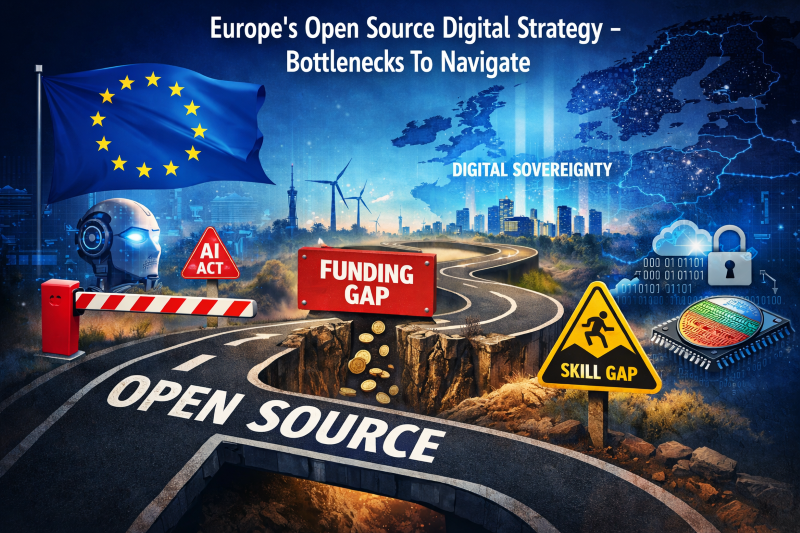
The European Pirates will take this opportunity to submit a response to the commission’s call. The discussion below is a starting point for that wider reflection. It outlines key ambitions of the EU’s open digital strategy and highlights several structural bottlenecks that deserve careful attention as Europe defines its next steps.
Amid rapid transformations and politically charged ramifications in the global digital landscape, the European Union has decided to restructure and strengthen its open-source digital ecosystem strategy. Over the past few years, digital infrastructure has quietly become a geopolitical asset. Cloud systems, AI models, data pipelines, and even open-source software now shape economic power, security posture, and democratic resilience. The European Commission initially adopted the strategy in 2020-2023. The call to action is amplified at the Summit on European Digital Sovereignty in Berlin in November 2025.
The underlying idea is simple: Achieve and maintain Europe’s digital sovereignty.
Key Goals Of The Initiative:
- Digital sovereignty & independence: Help Europe reduce reliance on non-EU tech companies by making it easier to use, modify, and host digital tools within European infrastructure, giving users and institutions greater control and real choices.
- Innovation & competitiveness: Offer shared, reusable tech foundations so startups, small businesses, and researchers can build faster, experiment more, and focus on new ideas instead of starting from scratch.
- Security & trust: Open code can be examined by anyone, which makes it easier to spot problems, improve safety, and build public confidence, especially for systems used in sensitive or essential sectors.
- Economic growth: Support a stronger digital economy by encouraging collaboration, lowering entry barriers, and creating space for new European tech companies to emerge and scale.
- Standards & interoperability: Push for open technologies that work well together across Europe and connect seamlessly, rather than becoming isolated silos.
- Strategic autonomy: Strengthen Europe’s digital capabilities, particularly in areas such as AI, to ensure geopolitical independence on an ever-evolving technological platform.
History as a mirror shows that sovereignty can only be attained when something, be it a nation or a system, is built brick by brick. It cannot be purchased off the shelf as a commodity. In the face of current volatile geopolitical situations and ever-evolving technological innovations, the EU’s initiative to build a digital ecosystem is indeed a need of the hour and a duty to its citizens.
But it is essential to recognise that, though the initiative’s ambition is straightforward, it is underpinned by complex challenges. Europe is trying to build an open digital ecosystem while simultaneously operating one of the world’s most assertive regulatory environments. It wants openness without dependency, innovation without loss of control, and sovereignty without isolation. Whether these goals can coexist is no longer a theoretical question. It is now a structural one.
The initiative marks a shift away from reliance on non-European digital infrastructure toward home-grown, openly accessible technologies. But building software is easier than sustaining ecosystems. Open Source does not thrive on policy declarations alone. It survives on developer communities, long-term funding, legal clarity, and trust. In a climate shaped by AI disruption, transatlantic regulatory tensions, and growing corporate consolidation, Europe’s strategy is as much an experiment in governance as it is in technology.
The proposed framework of the EU’s Open Source Initiative works through four interconnected layers:
- Digital Governance
- Digital Infrastructures Software and Data
- Digital Products and Markets
- People
In this context, it is critical to analyse the bottlenecks that can impede the development of an open digital ecosystem in Europe. Various views have been put forth by policymakers, developers, industry leaders, and digital rights advocates. Below are a few bottlenecks that must be carefully examined and navigated:
Bottlenecks
1. Regulatory Complexity, Legal Uncertainty, and Burden On Developers
The EU’s AI Act introduces a risk-based way to govern AI. Some uses of AI are completely banned, others need strict oversight, and general-purpose AI must follow rules for transparency and safety.
The main challenge is how these rules affect Open Source projects. Vague definitions, complex requirements, and excessive bureaucracy have worried both developers and civil society groups. Smaller teams may feel discouraged—not because they oppose safeguards, but because complying with the rules may be too much for them.
Recent delays in the European Commission’s AI compliance deadlines in late 2025 demonstrate this problem. If the rules are too strict or confusing, independent developers might stop participating. If the rules are too weak, people may lose trust. Without clearer guidance and more practical expectations for open projects, these rules could slow down Europe’s digital progress by discouraging people from getting involved.
2. Funding Gaps and Ecosystem Support Challenges
Beyond being a cornerstone of Europe’s digital sovereignty, Open Source is a highly viable economic proposition for the EU (contributing approximately €65-95 billion annually and $8.8 trillion globally). But Open Source remains underfunded relative to traditional infrastructure.
This highlights significant gaps in strategy and funding within Europe’s Open-Source ecosystem. Many organisations lack clear plans or long-term investments in Open Source, making it harder to sustain projects and remain competitive.
In this context, it is crucial to pay attention to the EU’s position on digital products and markets. For instance, the global generative AI landscape is dominated by China and the US, with 60% and 12% share, respectively, while Europe ranks third with just 7%. Interestingly, Europe produces 21% of research papers worldwide, but its share of patent filings remains at 2%. The gap is due to the lack of access to venture capital.
Europe is heavily dependent on non-EU countries for critical raw materials and semiconductors. Such heavy reliance on external producers makes the supply chain vulnerable to supply chain disruptions and geopolitical pressures. Without a robust industrial base and competitive markets, the idea of digital sovereignty will remain a far-fetched dream.
3. Harmonising Policy and Technical Implementation
It is essential to recognise that the open-source initiative is not only about passing laws. It is about building systems people are expected to use.
The bottleneck arises when laws, funding mechanisms, and public technology projects become misaligned. If policies advance faster than practical tools, developers are left uncertain. If systems are built without legal and social clarity, adoption slows.
Open Source grows through steady collaboration. It depends more on continuity than on declarations. When coordination weakens, Europe risks producing strong frameworks that struggle to take root beyond official documents.
4. Addressing Cybersecurity Regulation Without Excluding Open Source
Secure networks and compatible systems to software, hardware, data networks, and cloud infrastructure are the mainstay of digital sovereignty that Europe strives to achieve.
- The Digital Decade Policy 2030 is focused on improving connectivity across the continent.
- The EU’sCyber Resilience Act (CRA) aims to improve the security of digital systems.
- A proposed €300 billion investment is in the pipeline as part of the Eurostack initiative, which aims to integrate cloud services, the AI Continent Action Plan, new AI Factories, and shared data spaces into a unified European digital infrastructure.
Despite these efforts, structural weaknesses persist, and cybersecurity remains a significant concern. Fragmentation is another challenge. If EU countries do not work together, they might continue to develop separate, incompatible data-sharing systems. This would make it harder to create a unified European data space.
Digital infrastructure and data systems are key to Europe’s digital future. They support governance, markets, and the protection of individual rights. But sovereignty is not just about having technology. It also means Europe must be able to create, store, manage, and use data in ways that reflect its values.
At this moment, as Europe seeks to shape its digital future, it cannot outsource its strategic technology layers. Digital sovereignty cannot be achieved by focusing solely on the application. Priority investment is needed in foundational systems such as:
- Secure networking and VPN tooling
- collaborative productivity platforms
- web and application security infrastructure
- data-centre orchestration and virtualisation layers
5. Skill Gap and Lack of Trust
According to the Commission’s second annual report on the State of the Digital Decade, only 55.6% of Europeans had basic digital literacy. Public trust in EU policies concerning the protection of online rights stands at 45%. This gap of skill and public trust is a matter that needs to be examined critically.
Many people still feel unsure about technology and unconvinced that their rights are truly protected online. When digital policies feel distant, complex, or designed only for experts, people can feel excluded. That loss of trust can quietly weaken Europe’s digital ambitions.
This human side shows that digital sovereignty is more than laws and systems. It is about ensuring people feel confident, included, and able to join the digital world. Without this, even the best strategies risk being about people instead of truly serving them.
Ecosystem and Infrastructure Realities
Beyond geopolitics and regulation lies a quieter layer where Open Source actually lives.
Most projects are maintained by individuals or small teams. This creates vulnerabilities that no sovereignty strategy can ignore.
Critical tools often depend on only a few people. When they burn out or move on, systems falter. Enterprises hesitate to rely on software without clear responsibility structures. When problems arise, there is often no obvious place to turn.
This does not undermine openness. It undermines resilience.
Contribution pathways face similar strain. Companies often want to return improvements to the broader community. Yet limited maintenance capacity, slow review timelines, and project governance constraints frequently push the organisation towards considering an internal/private version. Once that happens, the incentive to contribute back erodes, fragmenting ecosystems and increasing maintenance burdens across the board.
The obstacle here is not motivation. It is the absence of institutional scaffolding.
From ideology to infrastructure: what Europe would need to build
If Europe is serious about Open Source as public digital infrastructure, it must consider new structural instruments, such as:
- EU-based sponsorship platforms that reduce friction between developers and funders
- public-sector sponsorship obligations tied to software procurement
- early-stage funding mechanisms for individual maintainers
- Public-funding conditions that require open-source contributions
These are not symbolic gestures. They are the economic foundations of a sustainable open-source ecosystem.
Closing Perspective: The Value of Digital Rights Voices
As Europe navigates regulation, competition, and technological acceleration, digital rights organisations continue to stress an essential point: innovation and rights protection are not opposites.
They argue that digital policy should not only prevent harm, but also actively empower people. That means meaningful transparency, accountability, and the protection of the integrity of Open Source itself.
This perspective reframes Europe’s initiative. It is not only about market position or technological independence. It is about shaping a digital environment where infrastructure supports dignity, autonomy, and democratic choice.
Europe now faces a rare opportunity. It can build an open-source strategy that does more than produce software. It can create a digital public space where innovation is structurally supported, and rights are structurally protected.
Garante della Privacy: indagato il presidente Stanzione, perquisizioni in corso
@Giornalismo e disordine informativo
articolo21.org/2026/01/garante…
Mattinata di tensione in Piazza Venezia, sede dell’Autorità Garante per la protezione dei dati personali. Su disposizione della Procura di
Strade Sicure e il perdurante deficit di cultura della difesa in Italia
@Notizie dall'Italia e dal mondo
Il ministro della Difesa ha chiarito che anche quest’anno non calerà il numero di militari dell’Esercito impegnati nell’operazione Strade Sicure. Anche se l’operazione è già finanziata nella sua attuale configurazione fino al 2027, la decisione ha comunque sollevato un dibattito perché negli scorsi mesi
Altro che bolla dell’Ia: i chip di Tsmc fanno schizzare le azioni di Asml
Per vedere altri post come questo, segui la comunità @Informatica (Italy e non Italy 😁)
Grazie alle ottime previsioni di Tsmc per il 2026, che hanno allontanato i timori del mercato sulla "bolla" dell'intelligenza artificiale, Asml schizza in borsa. La capitalizzazione della più importante azienda di macchinari per i chip al mondo
Emilio Villa è un allucinogeno
Notilla del differxdiario:
-> noblogo.org/differx/emilio-vil…
semplice segnalazione:
differx.noblogs.org/2026/01/15…
reshared this
Metaverso goodbye! In Meta altri licenziamenti in Reality Labs
Per vedere altri post come questo, segui la comunità @Informatica (Italy e non Italy 😁)
Chi negli anni scorsi, pur di accontentare uno spirito neocolonialista da sempre insito nella razza umana, s'è scapicollato per acquistare un lotto di terreno digitale nella Frontiera del Terzo millennio, è rimasto con un pugno di mosche
like this
SnowSNAC reshared this.
Antonin Artaud: “Lettera ai Rettori delle università europee” (1925)
Antonin Artaud: “Lettera ai Rettori delle università europee” (1925) :
reshared this
Non solo Starlink, anche Macron vuole aiutare gli iraniani con Eutelsat
Per vedere altri post come questo, segui la comunità @Informatica (Italy e non Italy 😁)
Se Elon Musk ha garantito l'accesso al servizio Internet Starlink gratuitamente in Iran, mentre il regime continua la brutale repressione delle proteste, anche la Francia valuta l'invio di terminali Eutelsat nel paese
Andre123 🐧 reshared this.
Referendum, il NO a un passo dalle 500mila firme
@Giornalismo e disordine informativo
articolo21.org/2026/01/referen…
Oggi, salvo sorprese, il referendum oppositivo alla loro controriforma della giustizia avrà superato le 500 mila firme. Quando i 15 “cittadini innocenti “ sono partiti, poco prima di Natale, erano circondati da scetticismo, dalla
Microsoft Patch Tuesday, gennaio 2026
@Informatica (Italy e non Italy 😁)
Microsoft ha inaugurato il 2026 con il suo primo Patch Tuesday, un appuntamento che ha portato alla luce e alla correzione di 114 vulnerabilità nei prodotti Windows e correlati, tra cui otto classificazioni critiche e una zero-day già sfruttata attivamente in attacchi reali. Questo round di aggiornamenti, distribuito martedì 13 gennaio,
Pechino ordina alle aziende cinesi di abbandonare i software di cybersecurity made in USA e Israele
@Informatica (Italy e non Italy 😁)
Reuters rivela una mossa drastica delle autorità cinesi, che hanno notificato a numerose imprese domestiche di interrompere l’uso di soluzioni di sicurezza informatica prodotte da oltre una dozzina di vendor
reshared this



freezonemagazine.com/articoli/…
Poetica Anne Sexton, (all’anagrafe Anne Gray Harvey nata a Newton, nello stato del Massachussets il 9 novembre 1928 e morta a Weston, nello stesso stato il 4 ottobre 1974) è stata una delle principali scrittrici e poetesse statunitensi, considerata, con Sylvia Plath, la pioniera della poesia confessionale, basata su contenuti legati alle esperienze personali, ma […]
L'articolo Anne Sexton proviene
Poetica Anne Sexton,
Ma perché la Cina non vuole i super-microchip di Nvidia?
Per vedere altri post come questo, segui la comunità @Informatica (Italy e non Italy 😁)
La Cina ha bloccato le importazioni dei processori H200 di Nvidia: si tratta di chip per l'intelligenza artificiale molto potenti, che hanno appena ricevuto l'autorizzazione all'export dal governo americano. Pechino, però, preferisce concentrarsi sullo sviluppo delle
Europe’s Open Source Digital Strategy – Bottlenecks To Navigate
@politics
europeanpirates.eu/europes-ope…
As part of its digital sovereignty drive, the European Commission is currently inviting public input on the future of European Open Digital Ecosystems…
Il Venezuela tra continuità formale e cooperazione con Washington
@Notizie dall'Italia e dal mondo
In Venezuela sempre più persone si chiedono chi decida veramente le sorti del paese mentre la presidente Delcy Rodriguez alterna dichiarazioni bellicose e distensive nei confronti degli Stati Uniti
L'articolo Il Venezuela tra continuità formale e cooperazione con Washington proviene
IA e lavoro: l’IMF avverte, senza una svolta su competenze ed educazione i divari cresceranno
Per vedere altri post sull' #IntelligenzaArtificiale, segui la comunità @Intelligenza Artificiale
L’avanzamento dell’intelligenza artificiale (IA) sta rinnovando il mondo del lavoro con una velocità senza precedenti, più rapida rispetto alle
Philips Kid’s Kit Revisited

[Anthony Francis-Jones], like us, has a soft spot for the educational electronic kits from days gone by. In a recent video you can see below, he shows the insides of a Philips EE08 two-transistor radio kit. This is the same kit he built a few months ago (see the second video, below).
Electronics sure look different these days. No surface mount here or even printed circuit boards. The kit had paper cards to guide the construction since the kit could be made into different circuits.
The first few minutes of the video recap how AM modulation works. If you skip to about the ten-minute mark, you can see the classic instruction books for the EE08 and EE20 kits (download a copy in your favorite language), which were very educational.
There were several radios in the manual, but the one [Anthony] covers is the two-transistor version with a PNP transistor as a reflex receiver with a diode detector with a second transistor as an audio power amplifier.
We covered [Anthony’s] original build a few months ago, but we liked the deep dive into how it works. We miss kits like these. And P-Boxes, too.
youtube.com/embed/eC2wwNq92mw?…
youtube.com/embed/PWPHGEWwKbU?…
[2026-01-23] PRESENTAZIONE del n.28 della rivista JACOBIN Italia 📖 *CASA A PRIMA VISTA* @ Casa del Popolo Bottegone
PRESENTAZIONE del n.28 della rivista JACOBIN Italia 📖 *CASA A PRIMA VISTA*
Casa del Popolo Bottegone - Strada Statale Fiorentina, 697, 51100 Bottegone PISTOIA
(venerdì, 23 gennaio 18:30)
PRESENTAZIONE del n.28 della rivista JACOBIN Italia

CASA A PRIMA VISTA
Indagine sul tema della casa come nodo centrale delle attuali diseguaglianze e ingiustizie sociali, inquadrandolo dentro l’ultradecennale carenza di politiche pubbliche, in un contesto di trasformazioni delle forme speculative e del comando, mettendo a critica la forma stessa dell’abitare dominante.
VENERDì 23 GENNAIO
ore 18.30
intervengono
_Simona Baldanzi - scrittrice working class e redattrice di JACOBIN Italia;
_ Silvia Bini - presidente ARCI Pistoia;
_Davide Innocenti - SUNIA di Pistoia e Prato;
_Teresa Menchetti - attivista del progetto C.A.S.A. di Mondeggi Bene Comune;
Il patrimonio edilizio da bene comune diventa invece un asset finanziario in un sistema incentrato sulla rendita e sulla concentrazione dei profitti, a scapito dei redditi da lavoro, sempre più impoveriti dal carovita.Una questione urgente per molte persone, al centro del dibattito pubblico, ripresa anche dal numero della rivista JACOBIN Italia su "Casa a prima vista" (https://jacobinitalia.it/rivista/casa-a-prima-vista/)
CASA del POPOLO di BOTTEGONE
Via Fiorentina n.697, PISTOIA
a seguire aperello conviviale
INFO:
facebook.com/events/2987481511…
gruppoletturajacobinpiana@gmail.com
Copie della rivista JACOBIN Italia disponibili all'acquisto in loco
[2026-01-16] TREMATE, SIAMO TORNATE! @ La Polveriera Spazio Comune
TREMATE, SIAMO TORNATE!
La Polveriera Spazio Comune - Via S. Reparata 12r, Firenze
(venerdì, 16 gennaio 16:00)
Tremate, siamo tornate!

Questo venerdì 16 gennaio dedicheremo la giornata al nostro io stregə, io animalə, noi collettivə per liberarci dagli archetipi e stare insieme.
Ci troviamo alle 16 per la laboratoria di immaginazione, scrittura e alterità “prima di essere umana” di Francesca Matteoni seguita dalla costruzione collettiva di una fanzine sul tema.
La cena andrà a benefit per le casse anti repressione e sarà accompagnata in cortile dalla performance “archetipo” seguita da un rituale collettivo aperto a tuttə. Dalle 20 in poi troverete anche dei banchini di autoproduzioni flinta e dalle 21 partirà la musica con Suz-psytrance seguita da Angie che ci farà ballare della deep techno!!
No machi, No fasci, No spaccio e droghe pesanti, No cis performativi, No sbirri!
Si presa a bene e spazio allə flinta!
Otttoz
in reply to Antonella Ferrari • • •ma renzi difende ilgiornale fascio...uniamo i puntini...e pure stanzone non è del pd è di renziberlusconi...
ilgiornale.it/news/magistratur…
Il Garante indaga sul caso "Mr. Report". E Renzi ci difende
Felice Manti (il Giornale)