

radioradio.it/2026/02/francesc…
Francesco Capaldini likes this.
pagellapolitica.it/articoli/sa…
pagellapolitica.it/articoli/gu…
pagellapolitica.it/articoli/me…
Non so se sentite anche voi l'indaffararsi delle classi dirigenti occidentali - che per decenni hanno dato lezioni (armate) di diritti umani a tutto il mondo - per ottenere pieno accesso agli Epstein files.
Non so se notate il fervore con cui le magistrature occidentali tutte stanno avviando richieste di accesso ai documenti, indagini e approfondimenti.
Non so se vedete l'intensità con cui i giornali indagano e riflettono e sollecitano l'opinione pubblica a indignarsi.
Non so se notate come le mille lobby progressiste, che fanno mostra di vivere per la tutela dei diritti umani e dei diritti delle donne, stiano tempestando i parlamenti e le redazioni di giornali per approfondire le implicazioni dei legami di potere emergenti negli Epstein files.
Se anche voi non notate niente, fatemelo sapere, perché io non vedo nessuna eco che travalichi la "marginale vicenda di costume".
Andrea Zhok

Un eroe.


L'atleta ucraino di skeleton Vladyslav Heraskevych è stato squalificato dalle Olimpiadi per il suo casco con le foto di atleti ucraini uccisi in guerra
https://www.ilpost.it/2026/02/12/vladyslav-heraskevych-skeleton-squalificato-olimpiadi-casco-foto-atleti-uccisi/?utm_source=flipboard&utm_medium=activitypubPubblicato su News @news-ilPost

reshared this

like this
Parrot 7.1: tutte le novità della nuova release
linuxeasy.org/parrot-7-1-tutte…
Parrot 7.1 introduce un nuovo spin con Enlightenment, kernel 6.17, fix per GRUB, miglior gestione dei repository e strumenti di sicurezza aggiornati. L'articolo Parrot 7.1: tutte le novità della nuova release è su Linux Easy.
GNU/Linux Italia reshared this.
freezonemagazine.com/articoli/…
Era stato il precedente Honey Birds, un lavoro nato da un’urgenza emotiva molto forte, che dava l’idea di una ricerca di mettere in luce una sorta di buio interiore frutto dello scorrere della vita con tutto il carico di sorprese, a volte dolorose, che si porta dietro. Endeavours parte da lì, ma prova a guardare […]
L'articolo Joseph Martone – Endeavours proviene da FREE ZONE MAGAZINE.
Era stato il
freezonemagazine.com/rubriche/…
Jean-Claude Izzo è famoso per la Trilogia di Marsiglia (Casino totale, Chourmo, Solea), che ha come protagonista Fabio Montale, poliziotto atipico, disilluso, profondamente umano. Attraverso di lui, Izzo ridefinisce il noir: non più semplice meccanismo narrativo fondato sull’enigma e sulla soluzione,
Tails 7.4.2 disponibile per il Download
linuxeasy.org/tails-7-4-2-disp…
Tails 7.4.2 risolve falle critiche di sicurezza nel Tor Browser. Ecco perché è fondamentale aggiornare subito il sistema operativo anonimo basato su Debian. L'articolo Tails 7.4.2 disponibile per il Download è su Linux Easy.
GNU/Linux Italia reshared this.
Minacce a Salvo Palazzolo. Articolo21 a fianco del giornalista
@Giornalismo e disordine informativo
articolo21.org/2026/02/minacce…
Salvo Palazzolo è un giornalista “vero”, di quelli che la strada se la sono “mangiata” per raccontarci storie di mafia, corruzione, malaffare. Ancora una volta, dopo essere finito sotto
reshared this
Il Procuratore di Caltanissetta spara a zero contro Report
@Giornalismo e disordine informativo
articolo21.org/2026/02/il-proc…
Per il Procuratore di Caltanissetta, Salvatore De Luca, il collaboratore Gaspare Spatuzza è universalmente ritenuto attendibile e prezioso: la presidente Colosimo non perda l’occasione di
reshared this
Agente Digos identifica il giornalista di Rete4 al lavoro su CasaPound e l’occupazione abusiva
@Giornalismo e disordine informativo
articolo21.org/2026/02/agente-…
Il giornalista Marco Sales voleva raccontare la curiosa vicenda dell’occupazione abusiva di
Francesco Capaldini likes this.
reshared this
Savona, comunità e valori
@Giornalismo e disordine informativo
articolo21.org/2026/02/savona-…
Cittadinanza onoraria per ius soli a 118 bambini nati a Savona da genitori stranieri: il sindaco firma il provvedimento. Può capitare che nel complesso andamento della vita di un’amministrazione comunale, nel caso quella di Savona guidata da Marco Russo, si compiano scelte che intrecciano progetto
like this
reshared this
[2026-02-14] CENA POPOLARE ECUADORIANA @ Cuore in Gola @ Spazio Comune Cuore in Gola
CENA POPOLARE ECUADORIANA @ Cuore in Gola
Spazio Comune Cuore in Gola - Via Gola 21
(sabato, 14 febbraio 19:00)
Un momento di comunità, lotta e solidarietà!

Cena Popolare nel quartiere Ticinese.
Sabato 14 febbraio dalle ore 19 spazio comune cuore in gola.
[2026-05-10] Ape Unit + Bostrico @ Baitattack
Ape Unit + Bostrico
Baitattack - chiedilo: baitattack.diy@gmail.com
(Sunday, 10 May 16:00)
Supergrindeo + neocrusteo
[2026-02-18] Hacklabkelo espazioa @ La Kelo Gaztetxea
Hacklabkelo espazioa
La Kelo Gaztetxea - Mahastiak / Las Viñas 63, 48980 Santurtzi
(miércoles, 18 febrero 20:00)
Hacklabkelo espazioa teknologiarekin, softwarearekin, hardware librearekin, sistema eragileekin, sareekin, birtualizazioarekin, DIY, etab. erlazionatutako guztiarekin esperimentatzeko

Espacio Hacklabkelo para experimentar con todo lo relacionado con la tecnologia, software y hardware libre, sistemas operativos, redes, virtualización, DIY, etc.
[2026-02-19] A-K-M-E – Storia della pirateria e del pezzotto @ Piano Terra
A-K-M-E – Storia della pirateria e del pezzotto
Piano Terra - via Federico Confalonieri 3, Milano
(jueves, 19 febrero 21:00)

A-K-M-E – Storia della pirateria e del pezzotto
19.02 – dalle ore 21:00
Storia della pirateria e del pezzotto
La pirateria informatica, warez board, ANSI/ASCII art, cracktro dai floppy ai CD‑R masterizzati. Copie software, gaming e pezzotti smart‑card per pay‑TV, micro‑economie basate su dump, keygen, patcher e scambi peer‑to‑peer. Estetica tra reverse engineering e distribuzione underground… ne parliamo ad A-K-M-E
19 febbraio a partire dalle 21:00
[2026-02-18] Corso di percussioni brasiliane @ CSA Magazzino 47
Corso di percussioni brasiliane
CSA Magazzino 47 - via industriale 10 Brescia
(mercoledì, 18 febbraio 20:30)

[2026-02-22] Perché un'associazione spirituale viva @ Oasi Acquafresca
Perché un'associazione spirituale viva
Oasi Acquafresca - Strada dei Cozzi, Ca' di Pe, Gabbiano, Monzuno, Unione dell'Appennino Bolognese, Bologna, Emilia-Romagna, 40036, Italia
(domenica, 22 febbraio 09:00)

Implementing 3D Graphics Basics

Plenty of our childhoods had at least one math teacher who made the (ultimately erroneous) claim that we needed to learn to do math because we wouldn’t always have a calculator in our pockets. While the reasoning isn’t particularly sound anymore, knowing how to do math from first principles is still a good idea in general. Similarly, most of us have hugely powerful graphics cards with computing power that PC users decades ago could only dream of, but [NCOT Technology] still decided to take up this project where he does the math that shows the fundamentals of how 3D computer graphics are generated.
The best place to start is at the beginning, so the video demonstrates a simple cube wireframe drawn by connecting eight points together with lines. This is simple enough, but modern 3D graphics are really triangles stitched together to make essentially every shape we see on the screen. For [NCOT Technology]’s software, he’s using the Utah Teapot, essentially the “hello world” of 3D graphics programming. The first step is drawing all of the triangles to make the teapot wireframe. Then the triangles are made opaque, which is a step in the right direction but isn’t quite complete. The next steps to make it look more like a teapot are to hide the back faces of the triangles, figure out which of them face the viewer at any given moment, and then make sure that all of these triangles are drawn in the correct orientation.
Rendering a teapot is one thing, but to get to something more modern-looking like a first-person shooter, he also demonstrates all the matrix math that allows the player to move around an object. Technically, the object moves around the viewer, but the end effect is one that eventually makes it so we can play our favorite games, from DOOM to DOOM Eternal. He notes that his code isn’t perfect, but he did it from the ground up and didn’t use anything to build it other than his computer and his own brain, and now understands 3D graphics on a much deeper level than simply using an engine or API would generally allow for. The 3D world can also be explored through the magic of Excel.
youtube.com/embed/yaG1fBNxjdE?…
DIY Wall-Plotter Does Generative Art, But Not As We Know It

[Teddy Warner]’s GPenT (Generative Pen-trained Transformer) project is a wall-mounted polargraph that makes plotter art, but there’s a whole lot more going on than one might think. This project was partly born from [Teddy]’s ideas about how to use aspects of machine learning in ways that were really never intended. What resulted is a wall-mounted pen plotter that offers a load of different ‘generators’ — ways to create line art — that range from procedural patterns, to image uploads, to the titular machine learning shenanigans.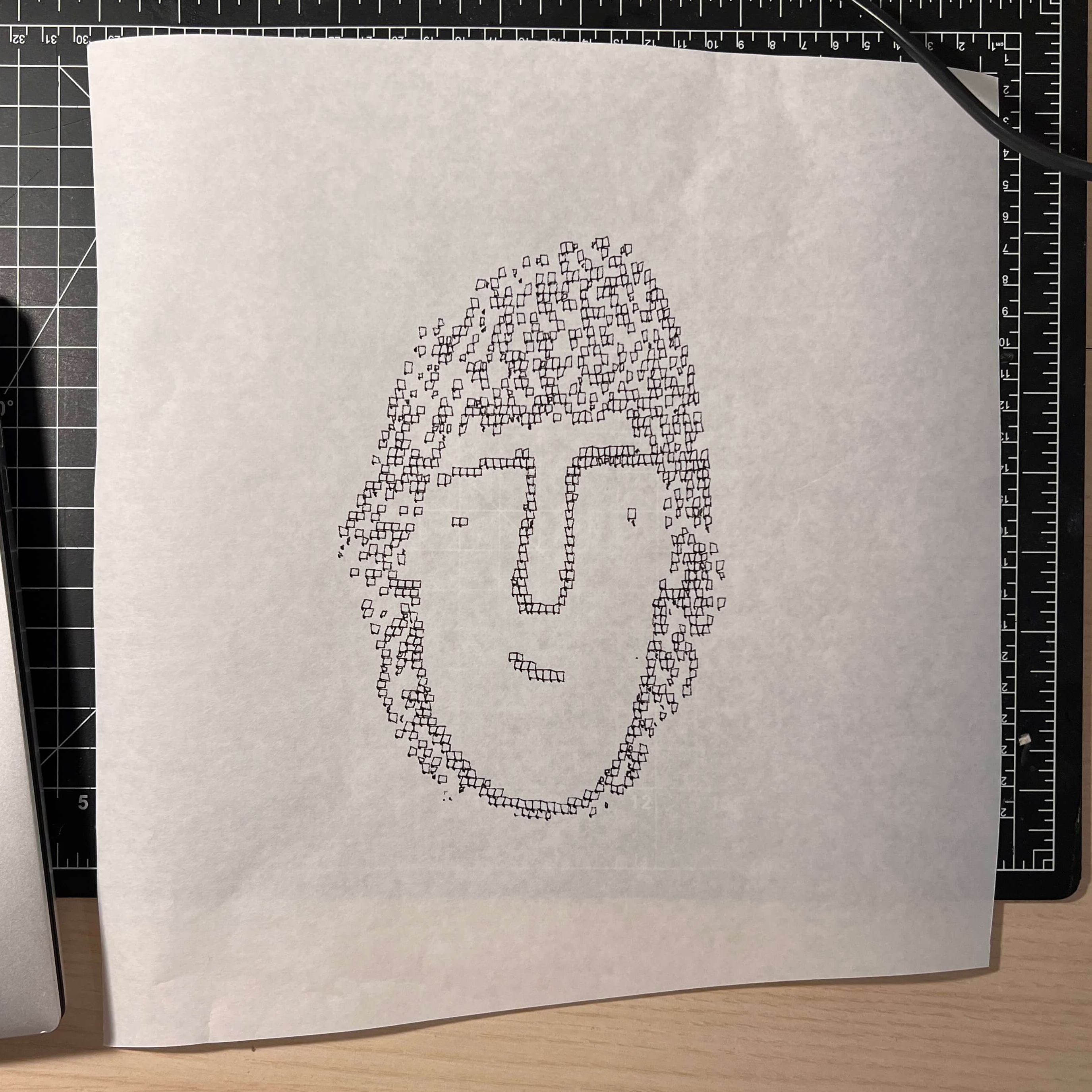
Want to see the capabilities for yourself? There’s a publicly accessible version of the plotter interface that lets one play with the different generators. The public instance is not connected to a physical plotter, but one can still generate and preview plots, and download the resulting SVG file or G-code.
Most of the generators do not involve machine learning, but the unusual generative angle is well-represented by two of them: dcode and GPenT.
dcode is a diffusion model that, instead of converting a text prompt into an image, has been trained to convert text directly into G-code. It’s very much a square peg in a round hole. Visually it’s perhaps not the most exciting, but as a concept it’s fascinating.
The titular GPenT works like this: give it a scrap of text inspiration (a seed, if you will), and that becomes a combination of other generators and parameters, machine-selected and stacked with one another to produce a final composition. The results are unique, to say the least.
Once the generators make something, the framed and wall-mounted plotter turns it into physical lines on paper. Watch the system’s first plot happen in the video, embedded below under the page break.
This is a monster of a project representing a custom CNC pen plotter, a frame to hold it, and the whole software pipeline both for the CNC machine as well as generating what it plots. Of course, the journey involved a few false starts and dead ends, but they’re all pretty interesting. The plotter’s GitHub repository combined with [Teddy]’s write up has all the details one may need.
It’s also one of those years-in-the-making projects that ultimately got finished and, we think, doing so led to a bit of a sigh of relief on [Teddy]’s part. Most of us have unfinished projects, and if you have one that’s being a bit of a drag, we’d like to remind you that you don’t necessarily have to finish-finish a project to get it off your plate. We have some solid advice on how to (productively) let go.
youtube.com/embed/8UEqEzWdhAY?…
Thermoforming: Shaping Curvy Grilles With No Supports
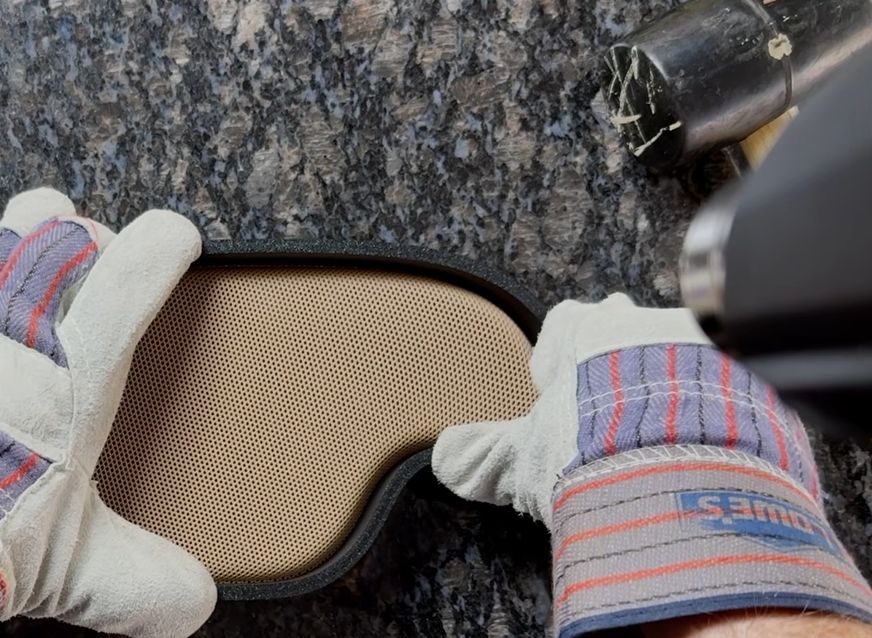
Although hobbyists these days most often seem to use thermoplastics as a print-and-done material in FDM printers, there’s absolutely nothing stopping you from taking things further with thermoforming. Much like forming acrylic using a hot wire or hot air, thermoplastics like PLA can be further tweaked with a similar method. This can be much less complex than 3D printing the design with supports, as demonstrated by [Zion Brock].

For this classically styled radio project the front grille was previously 3D printed with the curved shape, but to avoid an ugly edge it had to be printed with most of the grille off the print bed, requiring countless supports and hours of printing time. To get around this, [Zion] opted to print the grille flat and then thermoform its curved shape. Of course, due to the unusual shape of the grille, this required a bit more effort than e.g. a spherical form.
This is similar to what is used with sheet metal to get detailed shaped, also requiring a mold and a way to stretch the flat shape over the mold. With the flat form designed to have all the material in the right places, it was able to be printed in less than an hour in PLA and then formed with a heatgun aimed at the part while the two-section mold is slid together to create the final form.
You can find the design files and full instructions on the website for the radio project.
youtube.com/embed/z20IXm1w-Fo?…
Anche la Francia contro Albanese
#freepalestine #restiamoumani
l'aria malsana tra napoli e caserta

Mal'Aria 2026, Acerra e San Vitaliano tra le più inquinate d'Italia
Mal'Aria 2026, il quadro peggiora: Acerra e San Vitaliano tra le più inquinate d'Italia. Il dossier di Legambiente.Redazione GL (Ilgiornalelocale.it)
reshared this
Difendere il Rojava è difendere l’umanità-Solidarietà con il Rojava – Giornata di mobilitazione Nazionale – Corteo a Cagliari
Il Rojava resiste. E questa resistenza parla anche di noi. Nel Nord e nell’Est della Siria, donne e uomini continuano a difendere, giorno dopo giorno, un’esperienza politica unica: un autogoverno costruito dal basso, fondato sulla libertà delle donne, sull’ecologia, sulla convivenza pacifica tra popoli e religioni diverse, sul rifiuto dell’autoritarismo e della guerra come destino inevitabile.
Non è solo un territorio a essere sotto attacco. È una proposta politica concreta a essere colpita. Il popolo del Rojava resiste agli attacchi militari della Turchia, alle violenze delle milizie jihadiste come HTS, e alle conseguenze dirette e indirette delle politiche di USA e Israele, che continuano a trattare la regione come uno spazio di interesse strategico e non come una realtà fatta di persone, comunità e diritti.
A tutto questo si aggiunge la responsabilità grave dell’Unione Europea e delle Nazioni Unite, che con il loro silenzio, la loro inerzia e i loro doppi standard permettono che questa esperienza venga progressivamente soffocata. L’indifferenza internazionale è parte dell’aggressione.
Il 14 febbraio non è una data qualsiasi. È il giorno di mobilitazione contro il complotto internazionale che ha portato alla cattura e alla detenzione di Abdullah Öcalan,che da 27 anni é sottoposto ad un regime di isolamento che viola apertamente i diritti umani. Le sue elaborazioni politiche hanno ispirato il progetto del Rojava: colpire lui, ieri, e colpire il Rojava, oggi, fa parte della stessa strategia.
Difendere il Rojava significa difendere la possibilità reale di un’alternativa alla guerra permanente, al patriarcato, allo sfruttamento della natura, alla divisione tra popoli e religioni.
Sabato 14 febbraio Piazza Garibaldi. ore 17:00.
Scendere in piazza è rompere il silenzio. È scegliere da che parte stare. È affermare che la solidarietà internazionale non è uno slogan, ma una responsabilità. Noi scegliamo di essere parte di questa resistenza. La resistenza é vita – Berxwedan jiyan e!
Per info e contatti:
retekurdistansardegna@hacari.org
L'articolo Difendere il Rojava è difendere l’umanità-Solidarietà con il Rojava – Giornata di mobilitazione Nazionale – Corteo a Cagliari proviene da Retekurdistan.it.
The tool presents users with a 3D model they can then manipulate to, the creator says, bypass Discord's age verification system.
The tool presents users with a 3D model they can then manipulate to, the creator says, bypass Discordx27;s age verification system.#Privacy #News


Free Tool Says it Can Bypass Discord's Age Verification Check With a 3D Model
A newly released tool claims it can bypass Discord’s age verification system by allowing users to control a 3D model of a computer-generated man in their browser instead of scanning their real face.On Monday, Discord announced it was launching teen-by-default settings globally, meaning that more users may be required to verify their age by uploading an identity document or taking a selfie. Users responded with widespread criticism, with Discord then publishing an update saying, “You need to be an adult to access age-restricted experiences such as age-restricted servers and channels or to modify certain safety settings.”
The tool, however, shows those age verification checks may be bypassed. 404 Media previously reported kids said they were using photos of Trump and G-Man from Half Life to bypass the age verification software in the popular VR game Gorilla Tag. That game uses the service k–ID, which is the same as what Discord is using.
This post is for subscribers only
Become a member to get access to all content
Subscribe nowFree Tool Says it Can Bypass Discord's Age Verification Check With a 3D Model
The tool presents users with a 3D model they can then manipulate to, the creator says, bypass Discord's age verification system.Joseph Cox (404 Media)

reshared this
A Kafkaesque saga in which the government has failed to produce critical video footage has reached new levels of absurdity.#ICE
Government Loses Hard Drives It Was Supposed to Put ICE Detention Center Footage On
The legal saga over surveillance footage from within an Immigration and Customs Enforcement detention center in suburban Chicago has reached new levels of Kafkaesque absurdity, with the federal government losing three hard drives it was supposed to put footage on, refusing to provide footage from five critical surveillance cameras, and delivering soundless video of a highly contested visit from Department of Homeland Security Secretary Kristi Noem.We have repeatedly covered an abuse lawsuit about living conditions within the Broadview detention facility. The federal government has claimed that 10 days of footage from within the facility, taken during a critical and highly contested period, was “irretrievably destroyed” and could not be produced as part of the lawsuit, which was brought by people being held at Broadview in what were allegedly horrendous conditions. It later said that due to a system crash, the footage was never recorded in the first place. The latest update in this case, however, deals with surveillance camera footage that was recorded and that a judge has ordered the federal government to turn over.
For this footage, the federal government first claimed that it could not afford the storage space necessary to take the footage that it did have and produce it for discovery to the plaintiffs’ lawyers in the case. The plaintiffs’ lawyers, representing Broadview’s detainees, then purchased 78 terabytes of empty hard drives and gave them to the federal government, according to court records. This included three 8-terabyte SSDs and three 18-terabyte hard drives.
Court records note that “plaintiffs provided defendants with five large hard drives to facilitate Defendants’ production, yet Defendants inexplicably lost three of them.” Emails submitted as evidence suggest that the U.S. government and the plaintiffs’ attorneys had a call to discuss the lost hard drives.
One of the emails sent by plaintiffs’ attorneys to the Department of Justice in late January notes that the government had been exceedingly slow in producing footage, taking weeks to produce just a small amount of footage.
“There should be plenty of hard drive space at Broadview’s disposal,” the email reads. “The team there should currently have in its possession 5 hard drives with 72 terabytes of space, provided by plaintiffs’ counsel at the last 2 site visits. We have received only one hard drive back from Broadview to date. Copying of November/December footage should have taken place over the past week so that it could be delivered to plaintiffs’ counsel today when they visit Broadview this afternoon. At the very least, that footage should be being copied now.”
The two sides then arranged a phone call, a summary of which was emailed by plaintiffs’ attorneys to the Department of Justice:“Thanks for the productive call this morning. For the benefit of everyone:We discussed the production of video footage. You relayed that, at present, your agency contact knows where 2 of the 5 hard drives are and that you have relayed that copying of footage from November to present for all 10 feeds and footage from September to November for the 5 additional cameras should be underway. You will investigate further where the remaining hard drives are and will also work on a plan to exchange footage on a more regular basis than plaintiffs' counsel's weekly visits.
We discussed providing an accounting of the hard drives to facilitate your conversations with personnel at Broadview:
• On January 8, plaintiffs' counsel delivered four hard drives to Broadview during an attorney visit. One was a 20 TB hard drive; three were 8 TB SSD drives.
• On January 16, plaintiffs' counsel received from Broadview one of the 8 TB SSD drives containing 150 GB of footage from 5 cameras for one week in January.
• Also on January 16, plaintiffs' counsel provided personnel at Broadview (SDDO Taylor, in particular) with two 18 TB hard drives.
• The sum total of storage capacity Broadview should have is: 5 drives, with a total of 72 TB of space. Using the productions we have received to date, we anticipate that the Government owes us at least 15 TB of footage.”
Days later, the Department of Justice told the plaintiffs’ attorneys that “they are still searching for those hard drives at Broadview.” The plaintiffs’ attorneys responded: “Losing multiple drives provided to facilitate speedy production is not acceptable,” and “the missing hard drives and lack of production of any footage predating January remains a significant, prejudicial issue.”A filing by the plaintiffs with the court highlights some of the ongoing issues they have had with the government complying with court-ordered discovery requirements, which includes the lost hard drives, missing footage, footage from only five of the 10 cameras that were supposed to be delivered. A separate filing notes that footage produced by the government from a high-profile visit by Noem is missing audio “despite visible professional microphones and cell phones with audio capabilities in the footage.”
“Plaintiffs have gone above and beyond their obligations under federal law to streamline rolling production of such footage, purchasing expensive hard drives and agreeing to transport and pick up those drives from Broadview during weekly attorney visits. Defendants agreed to this arrangement,” they wrote in the filing. “Yet, Defendants have fallen unacceptably short of their production obligations. Defendants have provided no footage from five of the ten camera feeds […] Defendants have also failed to provide footage for a near-two-month span for the remaining five camera feeds. What’s more, Defendants have purportedly lost multiple hard drives provided by Plaintiffs’ counsel […] There is no excuse for Defendants’ discovery failures.”
The filing notes that the five missing cameras are specifically from detainee isolation cells, “despite those cells being a key part of Plaintiffs’ complaint. The produced feeds show egregious conditions but were insufficient to provide Plaintiffs the discovery necessary to fully investigate their claims.” These cells were designed to hold one person at a time, but were allegedly being used to hold multiple detainees at a time during a critical period that the lawsuit covers; “such cells are also where ICE holds detainees with acute medical or mental health conditions, including those who have suffered medical emergencies while in detention, and where it holds detainees who have been subjected to use of force by ICE officers while inside the facility,” they add.
The filing says that the plaintiffs learned that the government lost the hard drives in late January, when the government claimed that it had returned all of the hard drives to the plaintiffs’ attorneys, and that it had run out of storage space with which to provide them court-ordered footage.
“On January 28, Defendants’ counsel relayed that Broadview personnel had advised that they were out of storage space on drives provided by Plaintiffs, reporting that all hard drives provided by Plaintiffs had been returned to them.This was the first indication that some or all of 70 terabytes’ worth of hard drives were unaccounted for,” they wrote. “In the days since, the Government has admitted that it cannot find three of the five hard drives that should be in its possession.”
“Plaintiffs are waiting on months of footage. Every day that passes without this evidence compounds the prejudice to Plaintiffs’ ability to prepare for the upcoming hearing. Defendants’ foot dragging and poor organizational practices—and their instinct to rely on Plaintiffs to take the laboring oar for the purchase, delivery, pickup, and return of storage devices to facilitate Defendants’ discovery obligations—cannot be permitted.”


Giornata mondiale del malato, abbiamo scritto al Ministro Schillaci sulle liste d’attesa
QUI il testo della lettera inviata
“Sono stati stanziati 28 milioni di euro, ma i tempi di attesa peggiorano. A questo ritmo servino 100 anni per una visita nei tempi”. Secondo la nostra analisi, condotta in base ai dati disponibili, in 6 mesi la percentuale di esami garantiti nei tempi è calata dello 0,5%. Filomena Gallo commenta: “Servono sanzioni e trasparenza su piattaforma e controlli”.
In occasione della Giornata Mondiale del Malato, l’Associazione Luca Coscioni ha inviato una lettera aperta indirizzata al Ministro della Salute Orazio Schillaci per denunciare il fallimento della gestione delle liste d’attesa e della relativa piattaforma per monitorarne l’andamento, a fronte degli ingenti investimenti dedicati.
Secondo una analisi dei dati disponibili, a cura del Professor Marcello Crivellini, docente di Analisi e Organizzazione di Sistemi Sanitari al Politecnico di Milano e consigliere generale dell’Associazione Luca Coscioni, il miglioramento in sei mesi dei tempi di attesa per ottenere una visita specialistica è stato appena dello 0,2% (dal 34,7% di luglio al 34,9% di dicembre). Per gli esami diagnostici, la situazione è addirittura peggiorata, con un calo dello 0,5% (dal 40,4% di luglio al 39,9% di dicembre).
L’Associazione sottolinea inoltre come i finanziamenti erogati alla piattaforma Agenas (circa 3,5 milioni annui con previsioni di cassa oltre i 7 milioni) e i 28 milioni stanziati per le Regioni per la gestione della Piattaforma Nazionale, non corrispondano una piattaforma funzionante e dati trasparenti e utili.
“La Piattaforma sui Tempi e le Liste di Attesa voluta dal Ministero della Salute è per ora un fallimento. Fallimento scientifico, di conoscenza, e gestionale, al quale va posto rimedio”, hanno dichiarato Filomena Gallo, avvocata e Segretaria nazionale dell’Associazione Luca Coscioni e Marcello Crivellini, docente di Analisi e Organizzazione di Sistemi Sanitari al Politecnico di Milano e consigliere generale dell’Associazione Luca Coscioni , “Non ci sono dati disaggregati per regioni né per strutture sanitarie; sono riportati solo dati complessivi e vengono sovrapposte prestazioni gratuite e prestazioni a pagamento. L’unica informazione che si può ricavare è che negli ultimi sei mesi il fenomeno è sostanzialmente stazionario o, in alcuni casi, in peggioramento. Per questo abbiamo scritto al Ministro della Salute sottoponendo al suo dicastero alcune proposte migliorative, in particolare in termini di sanzioni e trasparenza, e chiedendogli un incontro urgente per fornire il nostro contributo di idee e proposte. Il Ministro può cessare di considerarsi esclusivamente un mediatore fra regioni inadempienti e non rispettose delle leggi e agire al più presto nell’interesse di migliaia di persone in attesa di cure. Intanto, sul sito dell’Associazione Luca Coscioni prosegue la campagna di informazione per far valere i propri diritti in tempi certi”.
L’Associazione dunque chiede:
- un intervento urgente sulla Piattaforma Nazionale delle Liste d’Attesa al fine di garantire dati completi, suddivisi per Regione e per strutture, corretti e aggiornati;
- sanzioni rigorose per le aziende e i CUP, anche regionali, che mantengono le “liste chiuse” (pratica illegale dal 2006);
- una campagna informativa massiccia rivolta ai cittadini sul Percorso di Tutela.
- trasparenza totale sull’attività dell’Organismo di controllo ministeriale.
Per aiutare i cittadini a far valere i propri diritti, questa volta di fronte al problema dei grossi ritardi delle prenotazioni di prestazioni sanitarie nel sistema sanitario pubblico, l’Associazione Luca Coscioni ha messo sul proprio sito a disposizione dei cittadini un modulo scaricabile che consente agli utenti di richiedere l’applicazione del cosiddetto “percorso di tutela” nel caso in cui la struttura sanitaria a cui ci si è rivolti per prenotare una visita o un esame non sia in grado di assicurare l’esecuzione della prestazione entro i tempi massimi previsti per legge.
L'articolo Giornata mondiale del malato, abbiamo scritto al Ministro Schillaci sulle liste d’attesa proviene da Associazione Luca Coscioni.
@Lista Referendum e Democrazia
Avevo bisogno di fare un esame.
Ho chiesto un appuntamento in ospedale a pagamento ( tramite asl neanche ci provo ).
" Non abbiamo date disponibili da darle".
Non tra 6 mesi, un anno...no, in OSPEDALE A PAGAMENTO non sapevano dirmi quando e se avrei potuto fare il mio esame.
Clinicuzza privata: "Venga domani alle 11".
Non parliamo poi dei pazienti oncologici a cui viene detto di fare esami entro
Novembre e danno l'appuntamento a Giugno....
Ora, se vogliamo trasformare la sanità in un modello americano, ditelo subito che ci organizziamo e , almeno, non perdiamo ore in linea col cup per farci dire " lallero".
Nicola Pizzamiglio likes this.

FLOSS Weekly Episode 864: Work Hard, Save Money, Retire Early

This week Jonathan chats with Bill Shotts about The Linux Command Line! That’s Bill’s book published by No Starch Press, all about how to make your way around the Linux command line! Bill has had quite a career doing Unix administration, and has thoughts on the current state of technology. Watch to find out more!
youtube.com/embed/9zpSG6sAJiY?…
Did you know you can watch the live recording of the show right on our YouTube Channel? Have someone you’d like us to interview? Let us know, or have the guest contact us! Take a look at the schedule here.
play.libsyn.com/embed/episode/…
Direct Download in DRM-free MP3.
If you’d rather read along, here’s the transcript for this week’s episode.
Places to follow the FLOSS Weekly Podcast:
Theme music: “Newer Wave” Kevin MacLeod (incompetech.com)
Licensed under Creative Commons: By Attribution 4.0 License
hackaday.com/2026/02/11/floss-…
Motorola’s Password Pill Was Just One Idea

Let’s face it; remembering a bunch of passwords is the pits, and it’s just getting worse as time goes on. These days, you really ought to have a securely-generated key-smash password for everything. And at that point you need a password manager, but you still have to remember the password for that.
Well, Motorola is sympathetic to this problem, or at least they were in 2013 when they came up with the password pill. Motorola Mobility, who were owned by Google at the time, debuted it at the All Things Digital D11 tech conference in California. This was a future that hasn’t come to pass, for better or worse, but it was a fun thought experiment in near-futurism.
Dancing with DARPA
Back then, such bleeding-edge research was headed by former DARPA chief Regina Dugan. At the conference, Dugan stated that she was “working to fix the mechanical mismatch between humans and electronics” by doing things such as partnering with companies that “make authentication more human”.
Along with Proteus Digital Health, Dugan et. al created a pill with a small chip inside of it and a switch. Once swallowed, your various stomach acids serve as the electrolyte. The acids power the chip, and the switch goes on and off, creating an 18-bit ECG-like signal.
Basically, your entire body becomes an authentication token. Unlock your phone, your car door handle, and turn on your computer, just by existing near them.
It should be noted that Proteus already had FDA clearance for a medical device consisting of an ingestible sensor. The idea behind those is that medical staff can track when a patient has taken a pill based on the radio signal. Dugan said at the conference that it would be medically safe to ingest up to thirty of these pills per day for the rest of your life. Oh yeah, and she says the only thing that the pill exposes about the taker is whether they took it or not.
Motorola head Dennis Woodside stated that they had demonstrated this authentication technology working and authenticating a phone. While Motorola never intended to ship this pill, it was based on the Proteus device with FDA clearance, presumably so they could test it safely.
The story of Proteus Digital Health is beyond us here, but for whatever reason, their smart pills never took off. So we’re left to speculate about the impact on society that this past future of popping password pills would have had.
About That Government Influence

While it sounds sorta cool at first, it also seems like something a government might choose to force on a person sooner or later. Someone they wanted to insert behind enemy lines, perhaps, or just create an inside job that otherwise wouldn’t have happened.
Taking off my tin foil hat for a moment, I’ll compare this pill with existing modern biometrics. A face scan, a fingerprint, or even my voice is my passport, verify me are all momentary actions.
With these, you’re more or less in control of when authentication happens. A pill, on the other hand, must run its course. You can’t change the signal mid-digestive cycle. Plus, you’d have to guard your pills with your life, and if a couple pills pass through you every day, you’d better have a big pillbox.
Authentication Can Be Skin Deep
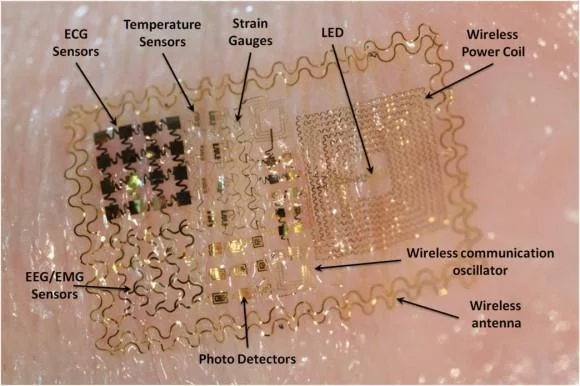
So the password pill never came to pass, but it’s worth mentioning that at the same conference, Dugan debuted another method of physical authentication — a temporary password tattoo they developed along with MC10, a company that makes stretchable circuits and has since been acquired by a company called Medidata.
More typically, their circuits are used to do things like concussion detection for sports, or baby thermometers that continuously track temperature.
Dugan said that the key MC10 technology is in the accordion-like structures connecting the islands of inflexible silicon. These structures can stretch up to 200% and still work just fine. The tattoos are waterproof, so go ahead and swim or shower. Of course, the password tattoo never came to be, either. And that’s just fine with me.
Vintage Film Editor Becomes HDMI Monitor

With the convenience of digital cameras and editing software, shooting video today is so easy. But fifty years ago it wasn’t electronics that stored the picture but film, and for many that meant Super 8. Editing Super 8 involved a razor blade and glue, and an editing station, like a small projector and screen, was an essential accessory. Today these are a relatively useless curio, so [Endpoint101] picked one up for not a lot and converted it into an HDMI monitor.
Inside these devices there’s a film transport mechanism and a projection path usually folded with a couple of mirrors. In this case the glass screen and much of the internals have been removed, and an appropriate LCD screen fitted. It’s USB powered, and incorporates a plug-in USB power supply mounted in a UK trailing socket for which there’s plenty of space.
There’s always some discussion whenever a vintage device like this is torn apart as to whether that’s appropriate. These film editors really are ten a penny though, so even those of us who are 8 mm enthusiasts can see beyond this one. The result is a pleasingly retro monitor, which if we’re honest we could find space for ourselves. The full video is below the break. Meanwhile it’s not the first conversion we’ve seen, here’s another Hanimex packing a Raspberry Pi.
youtube.com/embed/YTQoNQL0R9E?…
Information Integrity & Wikipedia: How community-governed platforms can inform future policy-making.
The event will give the opportunity to the researchers, the University of Amsterdam and Eurecat – Centre Tecnològic de Catalunya, to showcase the results of their analyses, presenting the policy options that can inform future policy-making.
The post Information Integrity & Wikipedia: How community-governed platforms can inform future policy-making. appeared first on European Digital Rights (EDRi).
Vic
in reply to Max - Poliverso 🇪🇺🇮🇹 • • •Giank_hill
in reply to Max - Poliverso 🇪🇺🇮🇹 • • •E Putin gode di ste robe.
Il cio squalifica per un casco che onora i caduti ma nel frattempo impedisce agli atleti russi di partecipare (mentre gli israeliani si?).
E secondo loro non sarebbero olimpiadi politicizzate?
Le regole valgono solo per qualcuno
@ilPost