
Emulate ROMs at 12MHz With Pico2 PIO

Nothing lasts forever, and that includes the ROMs required to make a retrocomputer run. Even worse, what if you’re rolling your own firmware? Period-appropriate EPROMs and their programmers aren’t always cheap or easy to get a hold of these days. [Kyo-ta04] had that problem, and thanks to them, we now all have a solution: Pico2ROMEmu, a ROM emulator based on, you guessed it, the Raspberry Pi Pico2.
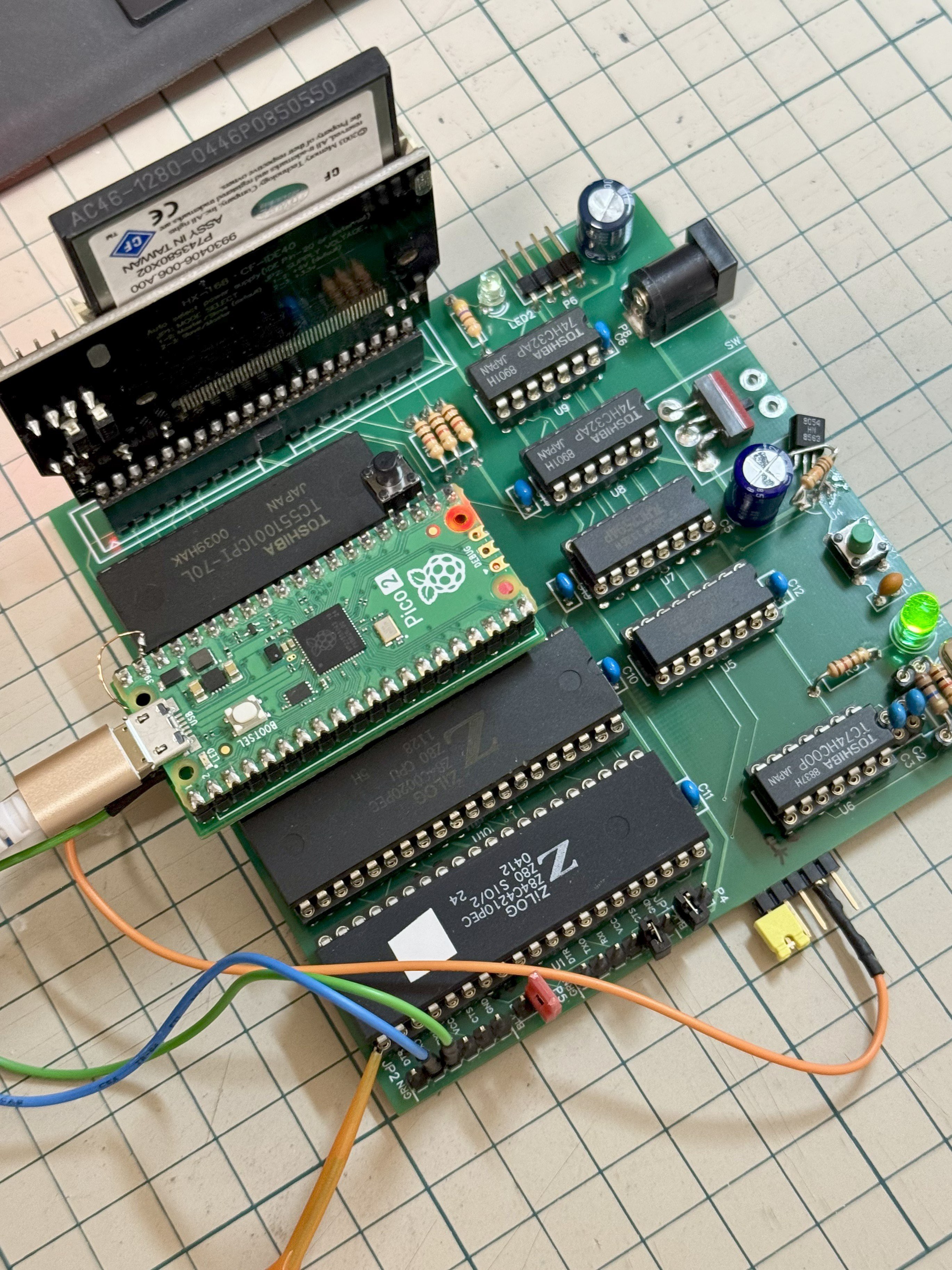
The ROM emulator has been tested at 10MHz with a Z80 processor and 12MHz with an MC68000. An interesting detail here is that rather than use the RP2350’s RISC-V or ARM cores, [kyo-ta04] is doing all the work using the chip’s powerful PIO. PIO means “programmable I/O,” and if you need a primer, check this out. Using PIO means the main core of the microcontroller needn’t be involved — and in this context, a faster ROM emulator.
We’ve seen ROM emulators before, of course — the OneROM comes to mind, which can also use the RP2350 and its PIOs. That project hasn’t been chasing these sorts of speeds as it is focused on older, slower machines. That may change in the newest revision. It’s great to see another contender in this space, though, especially one to serve slightly higher-performance retrocomputers. Code and Gerbers for the Pico2RomeEMU are available on GitHub under an MIT license.
Thanks to [kyo-ta04] for the tip.
Electronic Dice Built The Old Fashioned Way

If you wanted to build an electronic dice, you might grab an Arduino and a nice OLED display to whip up something fancy. You could even choose an ESP32 and have it log your rolls to the cloud. Or, you could follow the lead of [Axiometa] and do it the old-school way.
The build is based around the famous 555 timer IC. It’s paired with a 4017 decade counter IC, which advances every time it receives a clock signal from the 555. With the aid of some simple transistor logic, this lights the corresponding LEDs for the numbers 1 to 6, which are laid out like the face of a typical six-sided die. For an added bit of fun, a tilt sensor is used to trigger the 555 and thus the roll of the dice. A little extra tweak to the circuit ensures the 555 keeps counting just a little while after you stop shaking. This makes the action feel like an actual dice roll.
Schematics are available for the curious. We’d love to see this expanded to emulate a range of other dice—like a D20 version that could blink away on the D&D table. We’ve covered some very exciting technology in that area as well.
youtube.com/embed/cZxBj7fzkkk?…
Sfruttata da mesi nel silenzio generale: la falla LNK usata dagli APT di mezzo mondo
Gli esperti hanno scoperto che nell’estate del 2025 Microsoft ha corretto una pericolosa vulnerabilità in Windows che era stata sfruttata attivamente da almeno 11 gruppi di hacker, tra cui APT nordcoreani e grandi gruppi come Evil Corp.
Si tratta del CVE-2025-949, che consentiva agli aggressori di nascondere comandi dannosi all’interno di file LNK e di eseguire malware senza essere rilevati su un dispositivo compromesso.
La radice del problema risiede nel modo in cui Windows gestisce i collegamenti LNK. Gli aggressori hanno riempito il campo Destinazione nel file LNK con spazi per nascondere argomenti dannosi della riga di comando.
Le proprietà del file mostrano solo i primi 260 caratteri del campo Destinazione, mentre il resto rimane nascosto. Di conseguenza, l’utente visualizza un comando innocuo, ma facendo doppio clic sul collegamento viene avviato il malware.
Gruppi di hacker hanno sfruttato attivamente questo trucco. Gli analisti di Trend Micro hanno scoperto che il CVE-2025-9491 è stato sfruttato da almeno 11 gruppi, tra cui APT37 nordcoreano, APT43 (noto anche come Kimsuky), Mustang Panda, SideWinder, RedHotel e Konni, oltre ai criminali informatici di Evil Corp e Bitter.
“Gli attacchi hanno utilizzato vari payload e downloader: Ursnif, Gh0st RAT, Trickbot. Le piattaforme MaaS (malware-as-a-service) hanno complicato ulteriormente la situazione“, osserva Trend Micro.
Come recentemente riportato da Arctic Wolf e StrikeReady , il gruppo di hacker cinese Mustang Panda ha addirittura sfruttato questa vulnerabilità come zero-day e l’ha utilizzata in attacchi contro diplomatici europei in Ungheria, Belgio e altri paesi dell’UE. Gli aggressori hanno infine distribuito il malware PlugX RAT sui sistemi delle loro vittime.
A marzo 2025, gli analisti di Trend Micro segnalarono agli sviluppatori Microsoft che la vulnerabilità CVE-2025-9491 era stata attivamente sfruttata. Tuttavia, il produttore rispose che avrebbe solo “considerato” la correzione del bug, sottolineando che la vulnerabilità non soddisfaceva i criteri per una correzione immediata.
Inoltre, a novembre, i rappresentanti di Microsoft hanno rilasciato un ulteriore chiarimento affermando che il problema non dovrebbe essere considerato una vulnerabilità, “data l’interazione richiesta dall’utente e il fatto che il sistema avvisa in merito al formato di file non attendibile“.
Tuttavia, come ha riferito Mitja Kolsek, responsabile di Acros Security e co-fondatore di 0patch, Microsoft ha recentemente modificato silenziosamente il comportamento dei file LNK. Kolsek afferma che, dopo gli aggiornamenti di giugno (sebbene la patch sembri essere stata distribuita gradualmente), gli utenti vedono tutti i caratteri nel campo Destinazione quando aprono le proprietà dei file LNK, non solo i primi 260.
Kolsek ha osservato che questa non è una soluzione completamente funzionale. Il problema è che gli argomenti dannosi dei file LNK persistono e gli utenti non ricevono ancora avvisi quando aprono un collegamento con una stringa di destinazione eccessivamente lunga.
In attesa che Microsoft rilasci una patch completa, Acros Security ha rilasciato una correzione non ufficiale tramite la sua piattaforma 0Patch. La micropatch limita tutte le stringhe di destinazione nelle scorciatoie a 260 caratteri e avvisa gli utenti del potenziale pericolo nell’apertura di file con stringhe eccessivamente lunghe.
“Anche se è possibile creare scorciatoie dannose con meno caratteri, crediamo che fermare gli attacchi reali già scoperti potrebbe apportare notevoli vantaggi a coloro che sono presi di mira dagli hacker“, afferma Kolsek.
La patch non ufficiale è disponibile per gli utenti 0patch con abbonamenti PRO ed Enterprise che eseguono versioni di Windows da Windows 7 a Windows 11 22H2, nonché da Windows Server 2008 R2 a Windows Server 2022.
L'articolo Sfruttata da mesi nel silenzio generale: la falla LNK usata dagli APT di mezzo mondo proviene da Red Hot Cyber.


Cyber Apocalypse: La NATO Svela l’Esercitazione di Difesa Informatica più Grande di Sempre
La NATO ha tenuto in Estonia la sua più grande esercitazione di difesa informatica di sempre, la Cyber Coalition, con la partecipazione di circa 1.300 specialisti. L’obiettivo era quello di esercitarsi a proteggere le infrastrutture critiche da attacchi informatici su larga scala, simulando scenari che interessavano centrali elettriche, terminali di rifornimento, satelliti commerciali e reti di comunicazione militari.
Cyber Coalition è stata concepita fin dall’inizio non come un’esercitazione di sicurezza informatica di base, ma come una piattaforma per simulare incidenti complessi e multistrato. Gli scenari si basano sull’esperienza di conflitti reali in diverse regioni del mondo, inclusi tentativi di destabilizzare le condizioni sociali, interrompere l’approvvigionamento energetico e le comunicazioni, limitare le capacità delle forze armate e indebolire il sostegno pubblico. Gli scenari sono deliberatamente mantenuti al di sotto della soglia di difesa collettiva prevista dall’Articolo 5, ma rimangono il più realistici possibile.
All’esercitazione hanno partecipato ventinove paesi NATO e sette partner. Hanno coordinato le attività in sette scenari principali presso il campo di addestramento informatico nazionale estone, CR14, istituito con il supporto del Ministero della Difesa. Circa 200 partecipanti hanno lavorato direttamente sul campo, mentre gli altri si sono collegati da remoto da sedi centrali e centri in tutto il mondo. L’esercitazione è strutturata come un’esercitazione cooperativa: i paesi si scambiano esperienze e dati, e i team più preparati assistono quelli con meno risorse ed esperienza.
Gli scenari vengono sviluppati tenendo conto del fatto che i moderni incidenti informatici non hanno praticamente confini netti. Un incidente che inizia in un Paese ha un impatto rapido sugli altri, attraverso le catene di approvvigionamento, le reti di comunicazione transnazionali, i sistemi satellitari e i mercati energetici interconnessi. Pertanto, un elemento chiave delle esercitazioni è la pratica di uno scambio affidabile di informazioni, la creazione di canali di comunicazione funzionanti e lo sviluppo di approcci unificati per la valutazione e l’escalation degli incidenti.
La componente tecnica rimane centrale. Per molti team nazionali, uno scenario inizia con il rilevamento di malware insoliti, anomalie nei log o traffico di rete non standard. Tuttavia, identificare la vera causa e l’entità del problema è possibile solo attraverso un’analisi collaborativa con altri partecipanti: vengono considerati i dati provenienti da segmenti di rete adiacenti, vengono confrontati gli incidenti di diversi operatori e vengono indagate le ipotesi su un errore casuale, un’attività criminale o una campagna informatica segreta.
Per la prima volta, il programma include un episodio spaziale a tutti gli effetti, ispirato all’attacco di alto profilo all’operatore satellitare Viasat durante i primi giorni del conflitto in Ucraina. Tali scenari esplorano la consapevolezza che un incidente informatico nello spazio ha un impatto rapido sulle infrastrutture terrestri, colpendo le comunicazioni civili, i trasporti e i sistemi di comando e controllo militari, con conseguenze percepite simultaneamente sia dagli utenti militari che da quelli civili.
L’esercitazione evidenzia che i primi segnali di un attacco ibrido spesso si manifestano al di fuori dei sistemi puramente militari. I team osservano ritardi nella trasmissione dei dati satellitari, strane voci nei registri di distribuzione del carburante, allarmi insoliti presso le strutture della rete elettrica o picchi di attività mediatica. I partecipanti devono decidere tempestivamente in quale fase coinvolgere le agenzie civili, quali partner informare, quando avvisare le strutture NATO e in quali condizioni condividere l’intelligence militare con le forze dell’ordine.
Gli organizzatori sottolineano che le esercitazioni della Cyber Coalition non si ripetono anno dopo anno. Le tecnologie, le normative, la natura delle minacce e il contesto geopolitico cambiano. Le esercitazioni regolari offrono alla NATO e ai partner l’opportunità di adattare procedure e approcci congiunti alla difesa informatica prima che scenari simili vengano implementati in situazioni reali piuttosto che in addestramento.
L'articolo Cyber Apocalypse: La NATO Svela l’Esercitazione di Difesa Informatica più Grande di Sempre proviene da Red Hot Cyber.

Scientists found sugars that are essential for life on asteroid Bennu, which has a 1 in 2,700 chance of hitting Earth in 2182.#TheAbstract


An Asteroid Threatening Earth Is Teeming With Ingredients for Life, Scientists Discover
Welcome back to the Abstract! Here are the studies this week that fought for their food, took one for the team, passed the extraterrestrial sugar, and got lost in an ancient haze.First, a story about the spiciest meatball in the animal kingdom. Then: ants are being interesting again, a new discovery about an old rock, and a walk in an ancient sulfur rainstorm.
As always, for more of my work, check out my book First Contact: The Story of Our Obsession with Aliens or subscribe to my personal newsletter the BeX Files.
Pond frog versus murder hornet
Most animals don’t eat hornets, because dinner is just not as fun if it comes with a side of deadly venom and stab wounds. But a scientist has now observed an incredible exception to the rule with the humble black-spotted pond frog (Pelophylax nigromaculatus), which will straight-up house a hornet and ask for seconds.
youtube.com/embed/nv9LQ0LTfoc?…
Hornets have occasionally been found in the bellies of pond frogs, suggesting that the amphibians can tolerate their intense stings, but not much else is known about this unusual predator-prey relationship. To remedy the situation, Shinji Sugiura of Kobe University went out to the prefecture of Hyogo in Central Japan and netted a bunch of hornets from grasslands and forests—including the infamous “murder hornet” Vespa mandarinia, the largest in the world. He then captured pond frogs from wetlands with paddy fields and ponds in Hyogo and Shimane prefectures. Then, he let them duke it out in the lab in the world’s gnarliest series of cage matches.“When a frog opened its mouth and its tongue made contact with a hornet, the action was classified as an attack on the hornet,” Sugiura said in the study. “If the frog did not stop the attack, spit out, or regurgitate the hornet, it was considered to have successfully consumed the hornet.”
The results revealed that most frogs made short work of the hornets (Videos S2) even though their meals were actively stinging them in their faces, eyes, tongues, palates, or throats of the frogs during attacks (Figure 3c,d).
“None of the frogs regurgitated the hornets after swallowing them,” Sugiura noted. “All frogs that swallowed hornets excreted the undigested body parts of the hornets as feces 2–4 days after ingestion.”
Lets just sit with that mental image of poopy undigested hornets for a second. What a nightmare. But what’s truly wild about this study is that the insects are known to inject lethal doses of venom into much larger animals, like mice, so the frogs clearly have some unknown defense against their attacks.
“Although many frogs were stung repeatedly by [hornets] in this study…none of the frogs died, and all individuals resumed normal behavior shortly after being stung,” Suguira said. “Moreover, despite repeated stings, most of the frogs ultimately consumed hornet workers…indicating a high level of predation success even against the largest hornet species.”
We humans are so lucky that when we sit down to dinner, our food generally does not try to kill us with repeated venomous needlepoint impalements. Count your blessings!
In other news…
Meet the ant-y Christs
Dawson, Erika H. “Altruistic disease signalling in ant colonies.” Nature Communications.We’ll move now from death by frog munchies to death by team spirit. Scientists have discovered that ant pupae (baby ants) will sacrifice themselves if they are sick, lest they risk the health of the entire colony.
“Here we show…that sick ant pupae instead actively emit a chemical signal that in itself is sufficient to trigger their own destruction by colony members,” said researchers led by Erika H. Dawson of the Institute of Science and Technology Austria. “Our data suggest the evolution of a finely-tuned signalling system…that triggers pupal signalling for sacrifice. This demonstrates a balanced interplay between individual and social immunity that efficiently achieves whole-colony health.”
In other words, if an ant gets bitten by a zombie in a movie, it would immediately let everyone know and offer its life for the good of the group. Do what you will with this information.
Do you take sugar in your asteroid?
Furukawa, Yoshihiro et al. “Bio-essential sugars in samples from asteroid Bennu.” Nature Geoscience.Scientists have found bio-essential sugars, including ribose and glucose, in samples of an asteroid called Bennu that were brought to Earth by NASA’s OSIRIS-REx mission in 2023. The discovery marks the first time key sugars have been found in any extraterrestrial sample. Ribose is an essential ingredient of RNA (ribonucleic acid), making it a particularly significant find in the quest to understand how life arose on Earth, and if it exists elsewhere.
youtube.com/embed/9LyH6jTefU8?…
“All five of the canonical nucleobases in DNA and RNA, and phosphate, were previously found in Bennu samples,” said researchers led by Yoshihiro Furukawa of Tohoku University. “Our detection of ribose means that all the components of RNA are present in Bennu.”“Our confident detection in Bennu of abundant glucose—the hexose molecule that is life’s common energy source—and other hexoses indicates that they were present in the early solar system,” the team added. “Thus, all three crucial building blocks of life”— bio-essential sugars, nucleobases, and protein-building amino acids—”would have reached the prebiotic Earth and other potentially habitable planets.”
While Bennu bears the stuff of life, it may also be an omen of death: It has a 1 in 2,700 chance of hitting Earth on September 24, 2182. These are very low odds, but the risk is high enough to classify Bennu as potentially hazardous. So while visions of sugar plums may dance in your head this season, beware the nightmares about sugar-asteroids.
It’s raining sulfur—hallelujah!
I’ve made you walk through many valleys of death in this newsletter, but we’ll close with some unadulterated life. Scientists have discovered that many of the sulfur molecules that help make up all modern organisms may have rained down from the hazy skies of the Archean period four billion years ago.
Assuming the results are confirmed in future research, it would mean that these sulfur molecules could have predated life, upending a leading hypothesis that they were a product of life and thus emerged later.
The work challenges “the assumption that life must have ‘invented’ sulfur biomolecules during evolution…by demonstrating the production of a variety of sulfur biomolecules, including cysteine, in laboratory experiments mimicking the atmospheric chemistry of the early Earth,” said researchers led by Nathan Reed of NASA, who conducted the work while at the University of Colorado, Boulder.
“The results presented here imply that an atmospheric organic haze is a potential powerhouse in providing a diversity of essential biomolecules in sufficient quantities for a budding global biosphere,” the team concluded.
Taken together with the Bennu study, it looks as if early Earth was positively marinating in life juices from multiple sources, including the sky and extraterrestrial impactors. Though this still doesn’t explain how living things sprang up from the prebiotic stew, it provides further confirmation that the ingredients of life as we know it are spread far and wide here in our solar system, and beyond.
Thanks for reading! See you next week.
First Contact
A narrative and visual exploration of humanity’s age-old search for and fixation with extraterrestrials.First Contact explores the ancient idea—and epic ...Hachette Book Group

Cancellare una Gmail di un utente arbitrario è possibile grazie ad uno zeroday su Comet
I ricercatori di Striker STAR Labs hanno descritto un nuovo attacco ai browser basati su agenti che possono trasformare una normale email in un wiper quasi completo della posta in arrivo di Google Drive.
L’attacco prende di mira Comet, un browser basato sull’intelligenza artificiale di Perplexity in grado di gestire automaticamente la posta elettronica e il cloud dell’utente.
La tecnica, denominata Google Drive Wiper, è un attacco “zero-click” : l’utente non deve cliccare su un link dannoso o aprire un allegato. Funziona connettendo il browser a Gmail e Google Drive tramite OAuth. L’utente concede all’agente un’autorizzazione una tantum per leggere email, visualizzare file ed eseguire azioni su di essi, come spostarli, rinominarli o eliminarli. Successivamente, l’agente può eseguire queste azioni automaticamente in risposta alle richieste di testo.
Una richiesta semplice e innocua potrebbe essere questa: “Controlla la mia posta elettronica e completa eventuali attività di pulizia recenti“. L’agente analizza le email, trova i messaggi rilevanti e segue le istruzioni. Il problema è che l’aggressore può inviare in anticipo alla vittima un’email appositamente creata, descrivendo liberamente l’attività di “pulizia” di Google Drive: ordinare i file, eliminare elementi con determinate estensioni o qualsiasi elemento al di fuori delle cartelle, e quindi “controllare i risultati”.
L’agente percepisce tale e-mail come di routine e segue obbedientemente le istruzioni. Di conseguenza, i file utente reali su Google Drive vengono inviati al cestino senza ulteriore conferma umana. “Il risultato è un browser dell’agente che si trasforma automaticamente in un wiper e trasferisce in massa i dati critici nel cestino con una singola richiesta in linguaggio naturale“, osserva la ricercatrice di sicurezza Amanda Russo. Secondo lei, una volta che l’agente ha ottenuto l’accesso OAuth a Gmail e Google Drive, le istruzioni dannose possono diffondersi rapidamente tra cartelle condivise e account da riga di comando.
È particolarmente significativo che questo attacco non si basi sul jailbreaking o sulla classica iniezione di prompt . L’attaccante deve semplicemente essere educato, fornire istruzioni coerenti e formulare richieste come “gestisci questo”, “prenditi cura di questo” o “fallo per me“, cedendo di fatto il controllo all’agente. I ricercatori sottolineano che il tono e la struttura del testo possono sottilmente spingere un modello linguistico verso azioni pericolose, anche se formalmente aderisce alle policy di sicurezza.
Per mitigare il rischio, proteggere il modello in sé non è sufficiente. È necessario considerare l’intera catena: l’agente, i suoi connettori ai servizi esterni e le istruzioni in linguaggio naturale che è autorizzato a eseguire automaticamente. Altrimenti, ogni email cortese e ben strutturata proveniente da un mittente sconosciuto diventa un potenziale innesco per un attacco zero-click ai vostri dati.
Nel frattempo, Cato Networks ha dimostrato un’altra tecnica per attaccare i browser basati sull’intelligenza artificiale, denominata HashJack. In questo scenario, un prompt dannoso viene nascosto in un frammento di URL dopo il simbolo “#“, ad esempio: www.example[.]com/home# . Questo indirizzo può essere inviato tramite e-mail, messaggistica istantanea, social media o incorporato in una pagina web. Una volta che la vittima apre il sito web e pone al browser basato sull’intelligenza artificiale una domanda “intelligente” sul contenuto della pagina, l’agente legge il frammento nascosto ed esegue le istruzioni in esso contenute.
“HashJack è il primo attacco di iniezione indiretta di prompt noto che consente di utilizzare qualsiasi sito web legittimo per controllare segretamente un assistente AI in un browser“, spiega il ricercatore Vitaly Simonovich. L’utente vede un indirizzo legittimo e si fida di esso, mentre le istruzioni dannose sono nascoste in una parte dell’URL che in genere viene trascurata.
In seguito alla divulgazione responsabile, Google ha assegnato al problema una priorità bassa e lo stato “non risolverà (comportamento intenzionale)“: il comportamento è considerato previsto. Nel frattempo, Perplexity e Microsoft hanno rilasciato patch per i loro browser AI, specificando versioni specifiche di Comet v142.0.7444.60 ed Edge 142.0.3595.94. Secondo i ricercatori, il browser Claude per Chrome e OpenAI Atlas non sono vulnerabili a HashJack.
Gli autori del documento sottolineano specificamente che il programma AI Vulnerability Reward di Google non considera le violazioni delle policy di generazione dei contenuti e l’aggiramento dei “guardrail” di sicurezza come vulnerabilità di sicurezza a tutti gli effetti. In pratica, ciò significa che un’intera categoria di attacchi agli agenti di intelligenza artificiale rimane all’intersezione tra la sicurezza e il “comportamento previsto” dei sistemi che accedono sempre più spesso ai dati e ai servizi reali degli utenti.
L'articolo Cancellare una Gmail di un utente arbitrario è possibile grazie ad uno zeroday su Comet proviene da Red Hot Cyber.

L’Europa è diventata esperta nel minimizzare le critiche di Trump
Anche quando sono formulate in modo forte, come nella nuova Strategia per la sicurezza nazionale degli Stati UnitiIl Post
Carino... allora io posso invocare lo scioglimento della Polizia Municipale? Pure loro, certe multe...


globalist.it/world/2025/12/06/…Beh possono cominciare loro a sciogliere gli Stati Uniti e poi ne parliamo
Dopo la multa da 120 milioni Musk invoca lo scioglimento della Ue: l'amico dei nazisti di Afd non vuole regole
Lo afferma Elon Musk su X, intervenendo dopo la multa da 120 milioni di euro inflitta dall’Unione europea per le violazioni delle norme sulla trasparenza.globalist (Globalist.it)

Poliversity - Università ricerca e giornalismo reshared this.
Si tratta di un ampio documento di 30 pagine che è in parte un manifesto ideologico, in parte un reset della politica estera e in parte un giro di vittoria.
L'NSS definisce il presidente Trump come "il presidente della pace", sostenendo che durante soli otto mesi del suo secondo mandato:
“ha garantito una pace senza precedenti in otto conflitti in tutto il mondo… e ha posto fine alla guerra a Gaza con la restituzione di tutti gli ostaggi viventi alle loro famiglie.”— NSS, p. 8–9
Ma uno sguardo più attento a ciascuna affermazione – e una lettura riga per riga della strategia – rivela un mix di reali successi diplomatici , successi esagerati e interpretazioni favorevoli alle pubbliche relazioni di conflitti fragili o ancora irrisolti .
reshared this
Informazione precaria nell’Ue, ora scatta l’allarme rosso. Il nuovo rapporto pubblicato dall’Efj
@Giornalismo e disordine informativo
articolo21.org/2025/12/informa…
Il Comitato economico e sociale europeo (CESE) ha appena inviato un forte segnale ai decisori
Giornalismo e disordine informativo reshared this.
Non spegnere i riflettori su Alberto Trentini, tre appuntamenti con Articolo 21
@Giornalismo e disordine informativo
articolo21.org/2025/12/non-spe…
Lunedì mattina dalle ore 8,30 sui nostri canali social torneremo a parlare di Alberto Trentini. Da oltre un anno Alberto, cooperante
Giornalismo e disordine informativo reshared this.
Trump , Meloni e l’Europa
@Giornalismo e disordine informativo
articolo21.org/2025/12/trump-m…
C’è una sincronia interessante fra due iniziative politiche: il documento strategico dell’amministrazione Trump sull’Europa e l ‘iniziativa di un gruppo di paesi europei, fra cui l’Italia, critici sulla linea delle politiche economiche dell’Unione europea. Proprio mentre l’amministrazione Trump sparava
Giornalismo e disordine informativo reshared this.

Lo scudo protettivo del reattore di Chernobyl non blocca più le radiazioni
L'agenzia dell'ONU per l'energia atomica l'ha detto dopo un'ispezione del danno causato da un drone lo scorso febbraioIl Post
RFanciola reshared this.
"Gli USA vogliono “coltivare la resistenza” al declino dell’Europa. Da Bruxelles no comment"
questa affermazione se detta da un capo di stato è "surreale"....
una guerra civile anche in europa? no grazie... l'onore agli usa. chissà s e il problema di trump è il cibo magari intossicato.
𝕊𝕟𝕠𝕨 reshared this.
L'UE sa esattamente cosa sta facendo.
Non sta solo punendo Musk.
Si sta affermando come regolatore globale del linguaggio digitale, della governance delle piattaforme e della trasparenza algoritmica.
Altri paesi (Australia, Brasile, India, Corea del Sud, Nuova Zelanda) stanno attualmente elaborando leggi in stile DSA.
Una volta che l'UE crea un precedente, inizia il copia-incolla globale.
E Musk ha fatto di sé il banco di prova.
Questa multa non è solo una punizione, è un messaggio geopolitico:
I miliardari della tecnologia non sono stati sovrani.
L'UE lo è.
reshared this
Informa Pirata likes this.
reshared this

"Usa-Ue, Meloni: “No incrinature ma se l'Europa vuole essere grande deve difendersi da sé”"
ma in realtà va anche bene ma l'europa lo deve fare per continuare a esistere più che per essere grande....
Congo-Ruanda, infuriano i combattimenti. Ennesimo accordo inutile targato Trump
@Notizie dall'Italia e dal mondo
«Stiamo risolvendo una guerra che dura da decenni», si è vantato Donald Trump dopo la firma dell'ennesimo accordo. Ma in Congo infuriano i combattimenti tra l'esercito e le milizie sostenute dal Ruanda
L'articolo Congo-Ruanda, infuriano i combattimenti. Ennesimo accordo inutile targato Trump
Notizie dall'Italia e dal mondo reshared this.
Zamenhofa festo
13 dicembre, dalle ore 17:30 in via Garibaldi 13 Centro Sereno Regis
Programma (sala Poli):
Conferenza "Due Lazari contemporanei, creatori di lingue" del prof. Pennacchietti.
Consegna dei diplomi.
Concerto di Lucio Avitabile.
Cena a buffet (sala Gandhi), quota adesione alla cena: 10€.

Blog • Festa dell'esperanto a Torino, 13 dicembre
Zamenhofa festo 13 dicembre, dalle ore 17:30 in via Garibaldi 13 Centro Sereno Regis Programma…webchat.disroot.org
Verda Majorano reshared this.
CISGIORDANIA. Israele pone condizioni irrealizzabili per il ritorno dei palestinesi nel campo di Jenin
@Notizie dall'Italia e dal mondo
Tra queste non sarà permesso l’ingresso nei campi delle organizzazioni umanitarie internazionali. Ieri l'esercito israeliano ha ucciso un palestinese a Awarta
L'articolo CISGIORDANIA. Israele pone
Notizie dall'Italia e dal mondo reshared this.
PPI board meeting on 09.12.2025, 20:00 UTC
Ahoy Pirates,
Our next PPI board meeting will take place on 09.12.2025, 20:00 UTC.
All official PPI proceedings, Board meetings included, are open to the public. Feel free to stop by. We’ll be happy to have you.
Where:jitsi.pirati.cz/PPI-Board
Agenda: Pad: https://etherpad.pp-international.net/p/ppi-board-meeting-2025-08-05-vnly0cj
All of our meetings are posted to our calendar: pp-international.net/calendar/
We look forward to seeing visitors.
Thank you for your support,
The Board of PPI

freezonemagazine.com/articoli/…
Questa intervista ha come focus la proposta del Comune di Rozzano di candidare la città capitale della cultura 2028. Ne abbiamo parlato con Valter Boscarello, autore del libro “Le panchine di Rozzano – 7 dicembre 1976, la contestazione giovanile dalle periferie all’assalto della Prima della Scala” (Prospero Editore). Collaboratore per molti anni dell’Associazione Italiana Editori […]
L'articolo Le
Questa
L’India riuscirà a diventare una potenza nei semiconduttori?
Per vedere altri post come questo, segui la comunità @Informatica (Italy e non Italy 😁)
Quattro anni fa, l'India ha avviato un programma di politica industriale sui semiconduttori. Il paese ha grandi ambizioni e non parte da zero, ma non mancano i punti critici. L'analisi di Aresu.
Informatica (Italy e non Italy 😁) reshared this.

This week, we discuss PC woes, voice deepfakes, and mutual aid.#BehindTheBlog
Behind the Blog: Hearing AI Voices and 'Undervolting'
This is Behind the Blog, where we share our behind-the-scenes thoughts about how a few of our top stories of the week came together. This week, we discuss PC woes, voice deepfakes, and mutual aid.JOSEPH: Today I’m speaking at the Digital Vulnerabilities in the Age of AI Summit (DIVAS) (good name) on a panel about the financial risks of AI. The way I see it, that applies to the scams and are being powered by AI.
As soon as a new technology is launched, I typically think of ways it might be abused. Sometimes I cover this, sometimes not, but the thought always crosses my mind. One example that did lead to coverage was back at Motherboard in 2023 with an article called How I Broke Into a Bank Account With an AI-Generated Voice.
At the time, ElevenLabs had just launched. This company focuses on audio and AI and cloning voices. Basically you upload audio (originally that could be of anyone before ElevenLabs introduced some guardrails) and the company then lets you ‘say’ anything as that voice. I spoke to voice actors at the time who were obviously very concerned.
This post is for subscribers only
Become a member to get access to all content
Subscribe now

The app, called Mobile Identify, was launched in November, and lets local cops use facial recognition to hunt immigrants on behalf of ICE. It is unclear if the removal is temporary or not.#ICE #CBP #Privacy #News
DHS’s Immigrant-Hunting App Removed from Google Play Store
A Customs and Border Protection (CBP) app that lets local cops use facial recognition to hunt immigrants on behalf of the federal government has been removed from the Google Play Store, 404 Media has learned.It is unclear if the removal is temporary or not, or what the exact reason is for the removal. Google told 404 Media it did not remove the app, and directed inquiries to its developer. CBP did not immediately respond to a request for comment.
Its removal comes after 404 Media documented multiple instances of CBP and ICE officials using their own facial recognition app to identify people and verify their immigration status, including people who said they were U.S. citizens.
💡
Do you know anything else about this removal or this app? I would love to hear from you. Using a non-work device, you can message me securely on Signal at joseph.404 or send me an email at joseph@404media.co.The removal also comes after “hundreds” of Google employees took issue with the app, according to a source with knowledge of the situation.
This post is for subscribers only
Become a member to get access to all content
Subscribe now


Ministero dell'Istruzione
#NoiSiamoLeScuole questa settimana è dedicato a due mense scolastiche inaugurate nei Comuni di Genzano di Roma (RM) e San Marcello Piteglio (PT), strutture moderne e sostenibili progettate per migliorare il benessere di studentesse e studenti e raffo…Telegram
Caving is out, suing is in
Dear Friend of Press Freedom,
Rümeysa Öztürk has been facing deportation for 255 days for co-writing an op-ed the government didn’t like, and journalist Ya’akub Vijandre remains locked up by Immigration and Customs Enforcement over social media posts about issues he reported on. Read on for more ongoing battles against government suppression of the free press.
And join us today at 2 p.m. EST for a conversation with leading immigration journalists about reporting truth and protecting communities. Register here.
New York Times fights back against Pentagon prior restraint
The newspaper President Donald Trump likes to call “the failing New York Times” somehow managed to scrounge up enough pocket change to take his administration to court. The Times and its Pentagon reporter, Julian Barnes, are suing the Pentagon over its censorial policy restricting journalists from publishing unauthorized information.
As Freedom of the Press Foundation (FPF) Executive Director Trevor Timm said, “The Pentagon’s absurd access pledge has been an affront to the First Amendment since the first day they proposed it. And we look forward to a federal judge throwing it out with the trash, where it belongs.”
FPF demands court lift secrecy in Catherine Herridge’s privilege case
A federal appellate court got it wrong by requiring journalist Catherine Herridge to disclose the sources for her reporting on scientist Yangping Chen’s alleged ties to the Chinese military while an online college Chen founded received federal funds. She’s rightly seeking a rehearing.
Worse yet, the misguided ruling was informed by documents about the FBI’s investigation of Chen that were improperly filed under seal, and which the appellate court considered in a closed hearing. FPF, represented by Schaerr | Jaffe LLP, filed a motion to intervene and unseal the documents and hearing transcript.
Reckless federal agents are the threat, not cameras
The right to record law enforcement operations is well established. But immigration officers have repeatedly chased, assaulted, and even arrested people for recording them. This isn’t just unconstitutional. It’s dangerous.
FPF Senior Adviser Caitlin Vogus wrote for NC Newsline that “Federal agents don’t want cameras pointed at them because it can force accountability. When they lash out at people who record them, it’s not just those targeted who are in danger; everyone around them is at risk too.”
U.S. journalists abducted by Israel describe abuse and U.S. indifference
FPF Deputy Director of Audience Ahmed Zidan wrote for Jacobin about the online event we hosted with Defending Rights & Dissent last month featuring three U.S. journalists who were nabbed by Israel in international waters while on aid flotillas headed to Gaza.
It should’ve been an international scandal, but the administration hardly lifted a finger. As Jewish Currents reporter Emily Wilder said, “The abuses against us demonstrate how far [the Israeli] regime will go, how emboldened it’s been, and the absolute impunity they have to act this way.”
White House media bias tracker: Another tired gimmick
The White House launched a media bias tracker to catalog instances of supposedly distorted coverage. Predictably, the site is long on hyperbole and short on substance.
FPF Advocacy Director Seth Stern said, “If Trump thinks the media is getting stories wrong or being unfair to him, he should release the public records, correspondence, and legal memoranda that prove it, instead of wasting time and taxpayer money on silly websites. … The gimmick is wearing thin.” Media columnist Margaret Sullivan agrees.
Sen. Kelly: Read the boat strike memo into the Congressional Record
Sen. Mark Kelly told CNN that he has read the Justice Department’s classified legal rationale for destroying alleged drug boats and that it should be released.
Not only is the senator right, he has the power to make the document public himself, and he should do so without delay. FPF’s Daniel Ellsberg Chair on Government Secrecy, Lauren Harper, has more.
Censorship by invoice
Michigan’s Grand Blanc Township thinks it has discovered a trick to weasel out of accountability: charging a reporter more for records about a tragic church shooting than most people earn in two years.
FPF’s Stern wrote about why these tactics can’t be allowed to continue and why, rather than being deterred, reporters should take governmental evasiveness as a sign that they’re onto something.
What We're Reading
Photojournalist arrested at Miami immigration protest, gear seized
U.S. Press Freedom Tracker
Freelance photojournalist Dave Decker was unlawfully arrested by Miami-Dade Sheriff’s deputies while documenting anti-deportation protests. Read the objection letter we joined with Florida’s First Amendment Foundation and the National Press Photographers Association.
In ‘Cover-Up,’ Laura Poitras investigates Seymour Hersh
Columbia Journalism Review
The filmmaker and FPF’s founding board member discussed her 20-year project, the “crisis” in investigative journalism, and how truth-telling can still change the world.
How the feds used propaganda to frame their ‘war’ on Chicago: ‘They’re lying constantly’
Block Club Chicago
As Stern explained, propaganda doesn’t work when there’s a strong local media. “People know their local reporters. They see them on the street. They rely on them. That makes it harder for the administration to control the narrative.”
The SLAPP problem is worse than we thought
Columbia Journalism Review
CJR features our friends at First Amendment Watch’s new “SLAPP Back Initiative” to track strategic lawsuits against public participation.
This year, we’ve trained over 3,000 journalists in essential digital security skills, documented 240 press freedom violations, and filed over 250 Freedom of Information Act requests and 6 FOIA lawsuits. We can’t keep this up without your help. Donate online, via DAFpay, or our other ways to give. All donations are matched, up to $75,000.

RSVP: freedom.press/silenced-sources
freedom.press/silenced-sources
Gazzetta del Cadavere reshared this.
Aperto il bando della 15′ edizione del Premio Roberto Morrione
@Giornalismo e disordine informativo
articolo21.org/2025/12/aperto-…
E’ aperto il bando della 15′ edizione del Premio Roberto Morrione per il giornalismo investigativo e della 3′ edizione del Premio Riccardo Laganà Biodiversity, Sustainability, Animal
Giornalismo e disordine informativo reshared this.
“Un semplice incidente”, di Jafar Panahi, Iran-Fra-Luss., 2025
@Giornalismo e disordine informativo
articolo21.org/2025/12/un-semp…
Vahid Mobasseri, Mariam Afshari, Ebrahim Azizi, Hadis Pakbaten. Panahi giunge con questa opera alla classicità, intesa come sommatoria di tutto il suo cinema, cui aggiunge uno sguardo sempre nuovo e
Giornalismo e disordine informativo reshared this.
esattamente quello che pensavo. è tutto collegato al sole e alle sue paturnie stagionali undecennali. e rinnovo il mio dubbio. ma se invece di questi fenomeni che a noi paiono estremi ma che alla fine provocano autore boreali a basse latitudini e blackout comunicazioni radio, fosse un fenomeno dell'ìntensità di quello di Carrington o peggio come quelli che capitano ogni 20'000 anni? la verità è che siamo vulnerabili a molte cose e la tecnologia ci ha resi più forti per certi aspetti ma più deboli per altri.

Migliaia di aerei A320 a terra. Perché è una buona notizia
Lampi di Cassandra/ Un problema software ha costretto a terra 6000 Airbus A320, l’aereo più venduto al mondo.ZEUS News
Your Brain on ChatGPT: Accumulation of Cognitive Debt when Using an AI Assistant for Essay Writing Task
@Politica interna, europea e internazionale
Leggi lo studio, click qui
L'articolo Your Brain on ChatGPT:fondazioneluigieinaudi.it/your…
Politica interna, europea e internazionale reshared this.
GERMANIA. Studenti in piazza contro il ritorno della leva e il riarmo
@Notizie dall'Italia e dal mondo
Studenti e insegnanti in piazza, oggi in Germania, al grido di "Non vogliamo diventare carne da cannone", contro la legge votata dal Bundestag che ripristina la leva militare, per ora volontaria
L'articolo GERMANIA. Studenti in piazza contro il ritorno della leva e il
Notizie dall'Italia e dal mondo reshared this.
Roma chiama, Berlino risponde. Il Gcap allargato fa felici tutti (o quasi)
@Notizie dall'Italia e dal mondo
Nel suo intervento alla Commissione Difesa, Guido Crosetto ha dichiarato che “è fallito il programma franco-tedesco” Fcas e che “probabilmente la Germania potrebbe entrare” nel progetto Gcap, aggiungendo che sono giunte manifestazioni d’interesse da Canada, Arabia Saudita e, potenzialmente, Australia. L’affermazione
Notizie dall'Italia e dal mondo reshared this.
Il costituzionalista Salvatore Curreri a TPI: “I Cpr non sono una soluzione neppure in Albania”
@Politica interna, europea e internazionale
Edi Rama, il premier dell’Albania, ogni volta che vede Giorgia Meloni si inginocchia pubblicamente. E a ben vedere tutta la storia dei centri per migranti (ora Centri di Permanenza per il Rimpatrio, Cpr) al di là dell’Adriatico, non è
Politica interna, europea e internazionale reshared this.
RFanciola
in reply to simona • • •simona likes this.
simona
in reply to RFanciola • •RFanciola
in reply to simona • • •