
The Near Space Adventures of Bradfield the Bear

Admit it or not, you probably have a teddy bear somewhere in your past that you were — or maybe are — fond of. Not to disparage your bear, but we think Bradfield might have had a bigger adventure than yours has. Bradfield was launched in November on a high-altitude balloon by Year 7 and 8 students at Walhampton School in the UK in connection with Southampton University. Dressed in a school uniform, he was supposed to ride to near space, but ran into some turbulence. The BBC reported that poor Bradfield couldn’t hold on any longer and fell from around 17 miles up. The poor bear looked fairly calm for being so high up.
A camera recorded the unfortunate stuffed animal’s plight. Apparently, a companion plushie, Bill the Badger (the Badger being the Southampton mascot), successfully completed the journey, returning to Earth with a parachute.
There have been some news reports that Bradfield may have been recovered, but we haven’t seen anything definitive yet. Of course, there are plenty of things you can launch on a balloon, but what a great idea to let kids send a mascot aloft with your serious science payloads and radio gear. Because we know you are launching a balloon for a serious purpose, right? Sure, we won’t tell you just want the cool pictures.
No offense to Bradfield, but sending humans aloft on balloons requires a little more care. We aren’t as well-equipped to drop 17 miles. The Hackaday Supercon has even been the site of an uncrewed (and unbeared) balloon launch. Meanwhile, if you are around Reading and spot Bradfield, be sure to give him a cookie and call the Walhampton school.
youtube.com/embed/l7JiO5356KY?…

Perché il lancio di SuperSim cambierà l’intelligenza artificiale
Per vedere altri post come questo, segui la comunità @Informatica (Italy e non Italy 😁)
SuperSim e l’illusione dell’AI generalista: la partita della simulazione del mondo reale. L'intervento di Gianmarco Gabrieli.
reshared this
Super-Sizing Insects and the Benefits of Bones
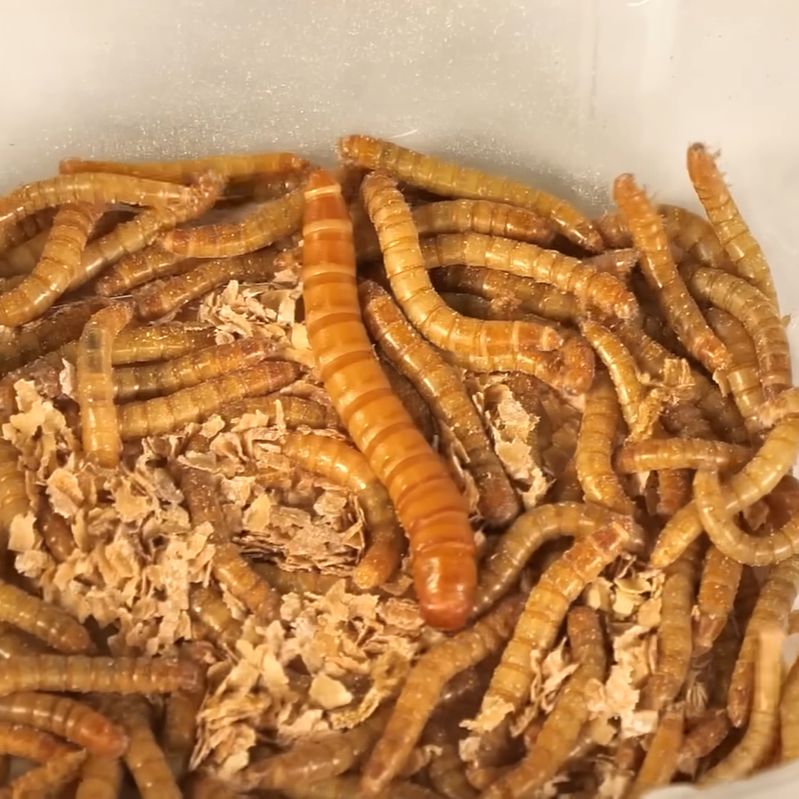
Have you ever found yourself looking at the insects of the Paleozoic era, including the dragonfly Meganeuropsis permiana with its 71 cm wingspan and wondered what it would be like to have one as a pet? If so, you’re in luck because the mad lads over at [The Thought Emporium] have done a lot of the legwork already to grow your own raven-sized moths and more. As it turns out, all it takes is hijacking the chemical signals that control the development phases, to grow positively humongous mealworms and friends.

The growth process of the juveniles, such as mealworms – the larval form of the yellow mealworm beetle – goes through a number of molting stages (instars), with the insect juvenile hormone levels staying high until it is time for the final molt and transformation into a pupa from which the adult form emerges. The pyriproxyfen insecticide is a juvenile hormone analog that prevents this event. Although at high doses larvae perish, the video demonstrates that lower doses work to merely inhibit the final molt.

That proof-of-concept is nice of course if you really want to grow larger grubs, but doesn’t ultimately really affect the final form as they simply go through the same number of instars. Changing this requires another hormone/insecticide, called ecdysone, which regulates the number of instars before the final molt and pupal stage.
Amusingly, this hormone is expressed by plants to mess with larvae as they predate on their tissues, with spinach expressing a very significant amount of this phyto-ecdysone. For humans this incidentally interacts with the estrogen receptor beta, which helps with building muscle. Ergo bodybuilding supplies provide a ready to use source of this hormone as ‘beta ecdysterone’ to make swol insects with.
Unfortunately, this hormone turned out to be very tricky to apply, as adding it to their feed like with pyriproxyfen merely resulted in the test subjects losing weight or outright dying. For the next step it would seem that a more controlled exposure method is needed, which may or may not involve some DNA editing. Clearly creating Mothra is a lot harder than just blasting a hapless insect with some random ionizing radiation or toxic chemicals.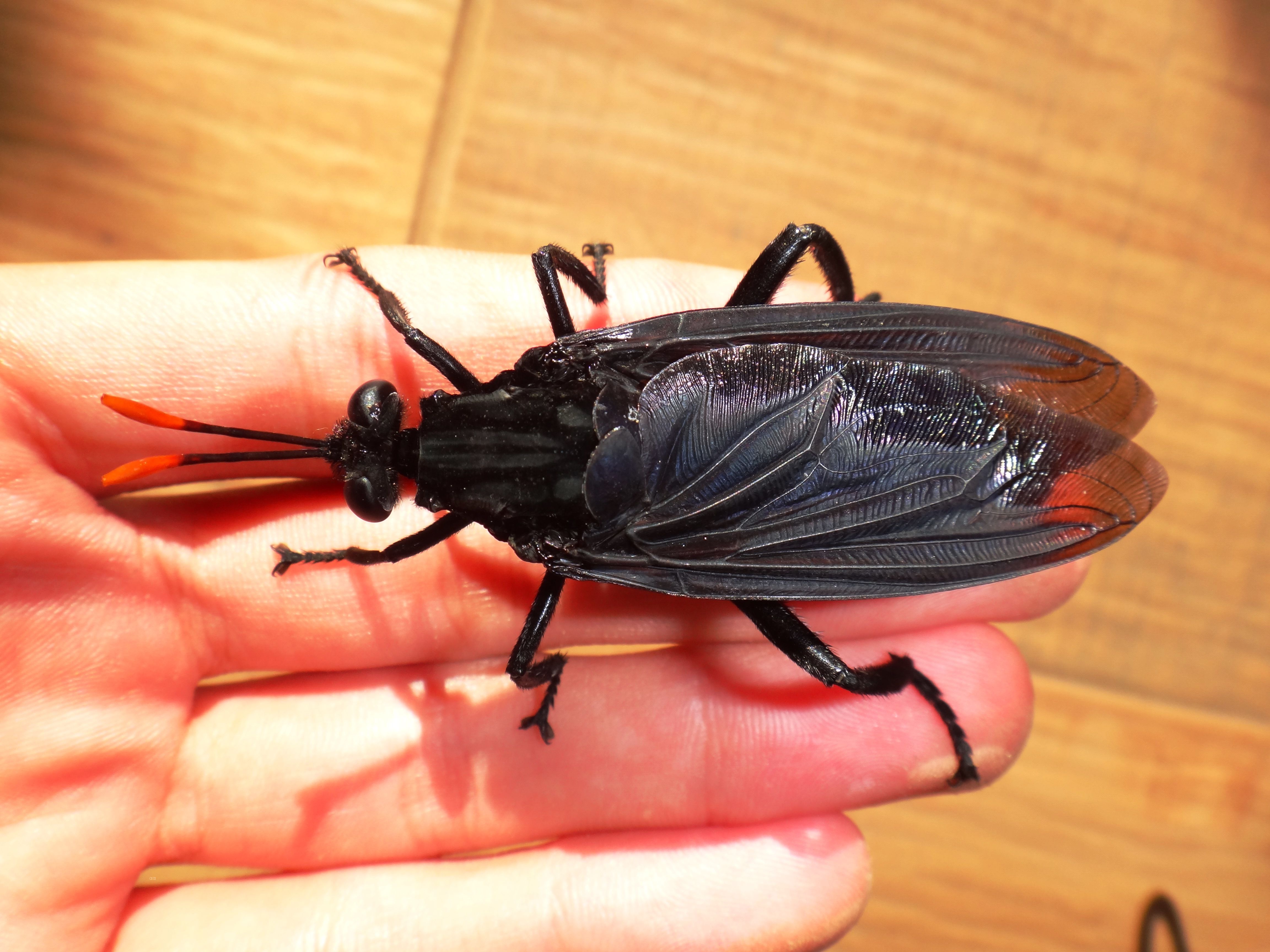
A common myth with insect size is that the only reason why they got so big during the Paleozoic was due to the high CO2 content in the atmosphere. This is in fact completely untrue. There is nothing in insect physiology that prevents them from growing much larger, as they even have primitive lungs, as well as a respiratory and circulatory system to support this additional growth. Consequently, even today we got some pretty large insects for this reason, including some humongous flies, like the 7 cm long and 10 cm wingspan Gauromydas heros.
The real reasons appears to be the curse of exoskeletons, which require constant stressful molting and periods of complete vulnerability. In comparison, us endoskeleton-equipped animals have bones that grow along with the muscles and other tissues around them, which ultimately seems to be just the better strategy if you want to grow big. Evolutionary speaking this makes it more attractive for insects and other critters with exoskeletons to stay small and fly under the proverbial radar.
The positive upshot of this is of course that this means that we can totally have dog-sized moths as pets, which surely is what the goal of the upcoming video will be.
youtube.com/embed/D0PjLvlBsWw?…
Liberating AirPods with Bluetooth Spoofing

Apple’s AirPods can pair with their competitors’ devices and work as basic Bluetooth earbuds, but to no one’s surprise most of their really interesting features are reserved for Apple devices. What is surprising, though, is that simple Bluetooth device ID spoofing unlocks these features, a fact which [Kavish Devar] took advantage of to write LibrePods, an AirPods controller app for Android and Linux.
In particular, LibrePods lets you control noise reduction modes, use ear detection to pause and unpause audio, detect head gestures, reduce volume when the AirPods detect you’re speaking, work as configurable hearing aids, connect to two devices simultaneously, and configure a few other settings. The app needs an audiogram to let them work as hearing aids, and you’ll need an existing audiogram – creating an audiogram requires too much precision. Of particular interest to hackers, the app has a debug mode to send raw Bluetooth packets to the AirPods. Unfortunately, a bug in the Android Bluetooth stack means that LibrePods requires root on most devices.
This isn’t the first time we’ve seen a hack enable hearing aid functionality without official Apple approval. However, while we have some people alter the hardware, AirPorts can’t really be called hacker- or repair-friendly.
Thanks to [spiralbrain] for the tip!
“Umanità negata”. A Trieste un presidio per denunciare la tragedia di quattro migranti morti
@Giornalismo e disordine informativo
articolo21.org/2025/12/umanita…
Di seguito il testo letto da don Paolo Iannacone a nome del costituendo Coordinamento regionale della
L’intelligenza artificiale spinge i ricavi delle WebSoft? Report Mediobanca
Per vedere altri post come questo, segui la comunità @Informatica (Italy e non Italy 😁)
L'Intelligenza Artificiale gonfia le vele delle WebSoft mondiali. Ecco l'outlook 2025 dell’Area Studi startmag.it/innovazione/lintel…
‘Io so’ con Elena Ruzza, a Borgaro Torinese. Un momento importante di ‘cucitura’ tra memoria e futur
@Giornalismo e disordine informativo
articolo21.org/2025/12/io-so-c…
Alla vigilia dell’anniversario della strage del 12 dicembre 1969, piazza Fontana,
Il caso Ispettorato Nazionale del Lavoro:, la priorità dei vertici dell’ente è la gestione del potere
@Giornalismo e disordine informativo
articolo21.org/2025/12/il-caso…
Dopo l’annuncio, in data 25.11.2025, di smantellamento dell’Ispettorato
Usigrai e CdR Approfondimento: a rischio “il Fattore Umano”
@Giornalismo e disordine informativo
articolo21.org/2025/12/usigrai…
‘Il fattore Umano’, programma Rai d’inchiesta che si occupa di diritti umani violati, è “a rischio”. Lo dicono in una nota congiunta Usigrai e CdR Approfondimento dove si ricorda che la trasmissione,
Stop the gatekeeping. The First Amendment is for all of us
Dear Friend of Press Freedom,
Rümeysa Öztürk has been facing deportation for 262 days for co-writing an op-ed the government didn’t like, and journalist Ya’akub Vijandre remains locked up by Immigration and Customs Enforcement over social media posts about issues he reported on. Read on for more on what we’re working on this week.
Stop the gatekeeping. The First Amendment’s for all of us
In the early days of the internet, online news confused analog-era judges, who pondered questions like, “If this is journalism then why are there no ink smudges on my fingers?” These days, First Amendment advocates tend to chuckle when thinking back on that era. But apparently it’s not quite over yet.
Freedom of the Press Foundation (FPF) Senior Adviser Caitlin Vogus wrote for the Sun-Sentinel about a judge in Florida’s unfortunate ruling that YouTube-based outlet Popcorned Planet can’t avail itself of the state’s reporter’s privilege to oppose a subpoena from actor Blake Lively. The court’s decision would “effectively exclude any independent journalist who publishes using online platforms from relying on the privilege to protect their sources.” If it stands, “vital information will stay buried,” she explained.
And FPF Executive Director Trevor Timm spoke to Columbia Journalism Review about another subpoena from Lively that’s testing whether celebrity blogger Perez Hilton can claim the privilege. “Hilton is gathering information, talking to sources, and publishing things in order to have the public consume them. That fits the definition of a journalist,” Timm explained. As CJR noted, FPF’s U.S. Press Freedom Tracker “was one of the few to highlight the Hilton case.”
It’s not a question of whether Popcorned Planet and Hilton are great journalists or if they pass some editorial purity test. It’s a question of whether the courts will allow litigants to chip away at First Amendment rights that protect all journalists, no matter what platform they use to report or what subjects they cover.
Administration is trolling America with its FOIA responses
As The New York Times reported this week, Immigration and Customs Enforcement claimed it has no body-worn camera footage from Operation Midway Blitz in Chicago, Illinois, despite a federal judge’s explicit order that agents wear and activate those cameras.
And as The Daily Beast reported, the Department of Homeland Security told FFP’s Daniel Ellsberg Chair on Government Secrecy Lauren Harper that Kristi Noem had no Truth Social Direct messages, despite her millions of followers. Harper requested cabinet officials’ messages in a Freedom of Information Act request after President Donald Trump accidentally publicly posted correspondence with Attorney General Pam Bondi.
As Harper told the Times, “They are trolling citizens and judges … ICE continues to feel increasing impunity and that it has the right to behave as a secret police that’s exempt from accountability.” FPF is, of course, appealing.
Don’t weaken Puerto Rico’s public records law
When the U.S. Navy quietly reactivated Roosevelt Roads Naval Station in Puerto Rico earlier this year, some residents saw the promise of new jobs, while others saw it as a painful reminder of past harms from the American military presence on the island.
Puerto Ricans — and Americans everywhere — deserve basic answers about what the military is up to as tensions escalate with Venezuela and whether Puerto Rico’s government is coordinating with the Pentagon and whether their concerns are being taken into account. And of course, there are countless local issues Puerto Ricans are entitled to be informed about.
But at the moment when transparency is most essential, lawmakers are trying to slam the door shut.
Don’t just take our word for it…
Throughout 2025 we’ve been hosting online events platforming journalists impacted by anti-press policies at the national and local levels, so you can hear directly from the people we hope will benefit from our work.
Read about three of our recent events. This week’s panel features journalists whose reporting is complicated by sources unwilling to come forward due to fear of retaliation. Last week we spoke with journalists about the difficulties of covering the immigration beat during Trump 2.0, and last month we talked about the immigration cases against journalists Sami Hamdi and Ya’akub Vijandre over their support for Palestinian rights (shoutout to our friends at The Dissenter for writing up that event). And there are even more past events on our YouTube channel.
WHAT WE'RE READING
Chokehold: Donald Trump’s war on free speech and the need for systemic resistance
Free Press
In a comprehensive new report, Free Press’s Nora Benavidez analyzes how Trump and his political enablers have sought to undermine and chill the most basic freedoms protected by the First Amendment.
Press freedom advocates sound alarm over Ya’akub Vijandre, stuck for over two months in ICE custody in Georgia
WABE
We cannot just accept that “every so often the administration is going to abduct some lawful resident who said something it doesn’t like about Israel or Palestine,” FPF’s Seth Stern told WABE.
Watched, tracked, and targeted: Life in Gaza under Israel’s all-encompassing surveillance regime
New York Magazine
A powerful essay by Palestinian journalist Mohammed Mhawish about life in Gaza “under Israel’s all-encompassing surveillance regime.”
ICEBlock creator sues Trump administration officials saying they pressured Apple to remove it from the app store
CNN
Threatening to punish app stores if they don’t remove apps the government dislikes is unconstitutional. This time it’s ICEBlock, but tomorrow it could be a news app.
Longtime LA radio exec Will Lewis dies; Went to prison in Hearst case
My News LA
Many heroes work behind the scenes on press freedom. Will Lewis was one of them. A radio executive who championed public media, he spent 15 days in prison to protect sources. RIP.
‘Heroic excavators of government secrets’
National Security Archive
Congratulations to the indefatigable National Security Archive on 40 years of clawing back the self-serving veil of government secrecy.
Cos’è la Agentic Ai Foundation per l’intelligenza artificiale aperta
Per vedere altri post come questo, segui la comunità @Informatica (Italy e non Italy 😁)
L'Aaif punta a creare uno standard universale e un linguaggio comune per gli agenti di intelligenza artificiale, con l’obiettivo di garantire interoperabilità, sicurezza e trasparenza. L'intervento startmag.it/innovazione/aaif-i…
La cyber-formazione esclude il 70% delle persone
Il 70% della popolazione ha un cervello asimmetrico. Solo il 30% possiede quella configurazione cognitiva bilanciata che i manuali di formazione considerano standard. Eppure continuiamo a progettare corsi di security awareness, procedure operative e processi di sicurezza come se tutti ragionassero allo stesso modo.
Il risultato? Un fallimento sistematico che è certificato dai tanti report annuali sull’incidenza degli attacchi (in Italia e nel mondo). Non perché le persone siano stupide o disattente, ma perché stiamo addestrando cervelli che non esistono.
Il mito dell’utente medio
Le aziende spendono milioni in tecnologie di difesa, firewall sofisticati, sistemi di rilevamento delle intrusioni. Poi il ransomware entra dopo un click su un’email di phishing. Come sempre, l’anello debole è additato con vari nomignoli: “utonto”, Layer 8, “ID-10T” (idiota).
Ma il vero problema non è il fattore umano. Il problema è trattare le persone come variabili da standardizzare invece che come ecosistemi cognitivi da comprendere.
Un dipendente con ADHD non fallisce il test di phishing perché è distratto: fallisce perché la sua attenzione funziona diversamente e nessuno ha progettato contenuti adatti al suo cervello. Una persona autistica non ignora le procedure perché è rigida: le ignora perché sono scritte in modo ambiguo e il suo cervello richiede coerenza logica assoluta. Un dislessico non legge male le policy: il suo cervello privilegia informazioni visive e nessuno gliele fornisce.
Almeno il 15-20% dei dipendenti in ogni organizzazione ha qualche forma di neurodivergenza (il 70% secondo lo studio di Greenberg, Warrier, Allison e Baron-Cohen) E la formazione standard li perde sistematicamente.
La catena dell’infezione democratica
Lo stesso malware che ieri bloccava i server di una banca oggi cripta le foto della signora Pina sul suo PC di casa. Come? Con un messaggio WhatsApp dal nipote, la cui moglie lavora in quella banca e che ha preso il virus sul PC aziendale che si è diffuso automaticamente nella rete di casa. E viceversa.
La cybersecurity è profondamente democratica: le minacce non fanno distinzioni tra multinazionali e casalinghe, tra esperti e principianti. Colpiscono l’anello più debole della catena, che quasi sempre è una persona che viene colta in un momento di vulnerabilità cognitiva.
Un attimo di distrazione, un messaggio che arriva nel momento sbagliato, una richiesta urgente che bypassa ogni difesa razionale. E un link che sembra legittimo perché usa esattamente le parole giuste per il tuo profilo cognitivo.
I criminali lo sanno. Usano social engineering, messaggi di urgenza, false autorità, pressione emotiva. E funziona su tutti: dal CEO al parente che non sa distinguere tra un link buono e uno cattivo.
Il gap italiano
L’Italia è agli ultimi posti tra i Paesi UE per competenze digitali di base: solo il 45% degli italiani le possiede secondo l’indice DESI 2025 della Commissione Europea. Un gap che rallenta la diffusione di una cultura della sicurezza che dovrebbe essere educazione civile, come quella stradale o sessuale.
Ma il problema non è solo l’alfabetizzazione digitale. È l’approccio cognitivo. Continuiamo a erogare formazione come se tutti processassero le informazioni allo stesso modo, come se tutti avessero gli stessi punti deboli, come se una soluzione unica potesse proteggere configurazioni mentali diverse.
Le aziende più avanzate lo hanno capito e stanno investendo in programmi di security awareness che coinvolgono non solo i dipendenti, ma anche le loro famiglie. Perché hanno compreso che la sicurezza non si ferma al perimetro aziendale: viaggia attraverso le connessioni umane, i dispositivi e le reti personali, le abitudini domestiche.
Verso una difesa cognitivamente inclusiva
La soluzione non è fare più formazione. È fare formazione diversa. Progettata per cervelli reali, non per l’utente medio che non esiste.
Significa profilare cognitivamente le persone: capire come processano informazioni, quali sono le loro vulnerabilità specifiche, quali leve cognitive funzionano su di loro. Non per manipolarle, ma per proteggerle efficacemente.
Significa usare formati diversi per configurazioni cognitive diverse: video brevi per ADHD, procedure dettagliate e logiche per autistici, infografiche e mappe visive per dislessici. Non un corso unico per tutti, ma percorsi adattivi.
Significa applicare il principio “zero trust” anche alle persone: non fidarsi delle buone intenzioni, verificare costantemente i comportamenti, rimediare rapidamente quando qualcuno devia dal protocollo.
Significa trattare la vulnerabilità umana come si tratta la vulnerabilità tecnologica: assessment continuo, prioritizzazione del rischio, patching comportamentale, monitoraggio degli indicatori.
Il fattore umano come risorsa
La cybersecurity deve spostarsi da silos tecnologici isolati a una visione integrata che consideri come il comportamento umano dentro e fuori dall’ufficio influisca direttamente sulla protezione aziendale.
E deve smettere di vedere la diversità cognitiva come problema. Un team con membri neurodivergenti vede vulnerabilità che un team omogeneo ignora. Ma solo se i processi sono progettati per usare il cervello che hanno, non per forzarli ad adattarsi a un modello che non gli appartiene.
La domanda non è più “come addestriamo meglio le persone?”. La domanda è “come progettiamo sistemi di difesa che funzionano su cervelli reali?”.
Se vuoi approfondire come trasformare il fattore umano da vulnerabilità a risorsa attraverso modelli di security awareness cognitivamente inclusivi, il libroCYBERCOGNITIVISMO 2.0 – Manipolazione, Persuasione e Difesa Digitale(in arrivo su Amazon) propone framework operativi per gestire la vulnerabilità cognitiva come si gestisce il rischio tecnologico: con assessment, profiling, remediation e monitoraggio continuo.
L'articolo La cyber-formazione esclude il 70% delle persone proviene da Red Hot Cyber.
Hidden Camera Build Proves You Can’t Trust Walnuts

Typically, if you happened across a walnut lying about, you might consider eating it or throwing it to a friendly squirrel. However, as [Penguin DIY] demonstrates, it’s perfectly possible to turn the humble nut into a clandestine surveillance device. It turns out the walnut worriers were right all along.
The build starts by splitting and hollowing out the walnut. From there, small holes are machined into the mating faces of the walnut, into which [Penguin DIY] glues small neodymium magnets. These allow the walnut to be opened and snapped shut as desired, while remaining indistinguishable from a regular walnut at a distance.
The walnut shell is loaded with nine tiny lithium-polymer cells, for a total of 270 mAh of battery capacity at 3.7 volts. Charging the cells is achieved via a deadbugged TP4056 charge module to save space, with power supplied via a USB C port. Holes are machined in the walnut shell for the USB C port as well as the camera lens, though one imagines the former could have been hidden purely inside for a stealthier look. The camera itself appears to be an all-in-one module with a transmitter built in, with the antenna installed in the top half of the walnut shell and connected via pogo pins. The video signal can be picked up at a distance via a receiver hooked up to a smart phone. No word on longevity, but the included batteries would probably provide an hour or two of transmission over short ranges if you’re lucky.
If you have a walnut tree in your backyard, please do not email us about your conspiracy theories that they are watching you. We get those more than you might think, and they are always upsetting to read. If, however, you’re interested in surveillance devices, we’ve featured projects built for detecting them before with varying levels of success. Video after the break.
youtube.com/embed/j0rs7ny2t8A?…
Gazzetta del Cadavere reshared this.
#Ucraina: l'Europa in trappola

Ucraina: l’Europa in trappola
La recente intervista di Trump alla testata on-line Politico ha fatto salire l’isteria dei governi europei a livelli senza precedenti, dal momento che il presidente americano ha ribadito per una platea decisamente più ampia la marginalità del vecchio…www.altrenotizie.org
rag. Gustavino Bevilacqua reshared this.


linkiesta.it/2025/12/piano-tru…
"È proprio perché vuole la pace che Kyjiv non può accettare le condizioni imposte dai russi (al chiaro scopo di riprendere la guerra),"
non avrei saputo dirlo meglio.
"Dunque, per tradurre la discussione in termini più comprensibili, dovremmo dire che la proposta di pace russa è questa: noi smettiamo di assediarvi e tentare di entrare dentro casa vostra, a condizione che da domani voi lasciate la porta aperta, anzi la porta la dovete proprio togliere dai cardini, in cambio della nostra parola di gentiluomini che non ne approfitteremo in alcun modo. Se a questo aggiungiamo pure le richieste sul ridimensionamento dell’esercito e degli armamenti ucraini, il gioco dovrebbe essere piuttosto chiaro a chiunque non sia completamente scemo."
Spazio, Leonardo ambisce al mercato dei lanciatori? Ecco cosa lo fa pensare
@Notizie dall'Italia e dal mondo
Se l’Europa politica stenta ancora a dare segnali concreti di unità, l’industria, dal canto suo, sembra avere le idee chiare sul futuro. Anche più di quanto non racconti apertamente, almeno finora. Dal palco di Atreju, Roberto Cingolani ha rivelato ulteriori dettagli su
This week, we discuss conversational AI, a behind the scenes of the zine, and more.#BehindTheBlog


Behind the Blog: Is This Headline 'Clickbait'?
This is Behind the Blog, where we share our behind-the-scenes thoughts about how a few of our top stories of the week came together. This week, we discuss conversational AI, a behind the scenes of the zine, and more.EMANUEL: I made the terrible mistake of looking at some Hacker News comments this week for my story about a developer whose Google accounts were banned after he uploaded training data to Google Drive. Unbeknownst to him, the training data contained CSAM.
As we’ve explained in previous stories, CSAM is a subject we dread covering not only because it’s one of the most awful things one could think about, but because it’s extremely difficult and legally risky. For understandable reasons, the laws around viewing, let alone possessing CSAM, are strict and punishing, which makes verification for reporting reasons challenging. For similar reasons, it’s something we need to write about very carefully, making sure we don’t wrongfully associate or whitewash someone when it comes to such horrible behavior.
This post is for subscribers only
Become a member to get access to all content
Subscribe now

""Pensavo fossimo molto vicini ad un accordo con la Russia e pensavo fossimo vicini ad un accordo con l'Ucraina. Al di là del presidente Zelensky, la sua gente apprezza l'idea dell'accordo"
trump non sa neppure cosa pensa la parte politica non propria negli stati uniti (e pure su quella ci sarebbe da discutere) e non rappresenta tutti i cittadini usa. figurarsi se può sapere meglio di zelensky cosa pensano gli ucraini. è improbabile. al massimo saprà cosa pensa quell'1 su 100'000 che per legge dei grandi numeri sono già fascistoni...
Dati, reti e deterrenza. Cosa emerge dall’esercitazione Cyber eagle
@Notizie dall'Italia e dal mondo
Si è chiusa una delle principali esercitazioni italiane dedicate alla difesa digitale, un appuntamento che restituisce una fotografia concreta di come il dominio cibernetico sia ormai parte integrante della sicurezza nazionale. L’Aeronautica militare ha presentato i risultati di
BOLIVIA. Arrestato l’ex presidente Luis Arce, timori per Evo Morales
@Notizie dall'Italia e dal mondo
In Bolivia la procura ha arrestato l'ex presidente di centrosinistra Luis Arce per malversazione di fondi pubblici. I sostenitori di Evo Morales temono che il prossimo ad essere arrestato sia l'ex leader del Movimento al Socialismo
L'articolo BOLIVIA. Arrestato l’ex

Ministero dell'Istruzione
#ScuolaFutura, dal 12 al 15 dicembre, il campus itinerante sull’innovazione didattica promosso dal #MIM farà tappa a #Sanremo con i laboratori nazionali di orientamento dedicati alla musica e alle #STEM.Telegram
Science Channel reshared this.
Componenti cinesi nelle auto americane? L’allarme del Congresso per la sicurezza nazionale
@Notizie dall'Italia e dal mondo
La catena globale della produzione automobilistica è ormai diventata un fronte della competizione strategica tra Stati Uniti e Cina. E il messaggio è emerso con chiarezza durante un’audizione della House Select Committee on China, in cui i vertici della
Dal gas russo al Green Deal, passando per il riarmo: i nodi politici della plenaria di dicembre
Per vedere altri post sull' #IntelligenzaArtificiale, segui la comunità @Intelligenza Artificiale
La plenaria del Parlamento europeo che si terrà dal 16 al 18 dicembre si conferma come il passaggio istituzionale più rilevante dell’anno
CheGuevaraRoma reshared this.
FinTech und Datenschutz: PayPal sammelt die sexuellen Vorlieben von Kunden
netzpolitik.org/2025/fintech-u…

Boerps ☑️ reshared this.
I conti volano ma Xiaomi tira giù le serrande dei suoi negozi
Per vedere altri post come questo, segui la comunità @Informatica (Italy e non Italy 😁)
Come molte Big Tech americane, pure la cinese Xiaomi razionalizza i costi nonostante abbia conti in costante crescita. A farne le spese oltrehttps://www.startmag.it/innovazione/i-conti-volano-ma-xiaomi-tira-giu-le-serrande-dei-suoi-negozi/
CheGuevaraRoma reshared this.
56 anni fa, la strage di piazza Fontana a Milano. Strage fascista, dove morirono 17 persone e ne vennero ferite 88. Lo stato accusò gli anarchici, arrestarono il ferroviere Giuseppe Pinelli, che guarda caso morì cadendo dalla finestra della questura di Milano. Dissero che si era buttato... Una preghiera per le vittime della stage e per Pinelli, vittima innocente di un omicidio di stato.
La storia della strage di Piazza Fontana: perché cambiò l’Italia
geopop.it/strage-di-piazza-fon…
strage di Piazza Fontana, strage di Stato, strage fascista
12 dicembre, Piazza Fontana, strage di stato: non dimentichiamo
differx.noblogs.org/2025/12/12…
#piazzafontana #stragidistato #ordinenuovo #stragifasciste #stragedistato
reshared this

BENIN. Il golpe sventato grazie all’intervento della Francia e dell’Ecowas
@Notizie dall'Italia e dal mondo
Per sventare il tentato golpe in Benin sono intervenute le truppe dell'Ecowas, un'alleanza regionale fedele a Parigi. La Francia non vuole perdere la sua residua influenza in Africa dopo l'avvicinamento a Mosca di Burkina Faso, Mali e Niger
L'articolo BENIN. Il golpe sventato grazie