


Reverse-Engineering the Intel 8087 Stack Circuitry

Although something that’s taken for granted these days, the ability to perform floating-point operations in hardware was, for the longest time, something reserved for people with big wallets. This began to change around the time that Intel released the 8087 FPU coprocessor in 1980, featuring hardware support for floating-point arithmetic at a blistering 50 KFLOPS. Notably, the 8087 uses a stack-based architecture, a major departure from existing FPUs. Recently [Ken Shirriff] took a literal closer look at this stack circuitry to see what it looks like and how it works.
Nearly half of the 8087’s die is taken up by the microcode frontend and bus controller, with a block containing constants like π alongside the FP calculation-processing datapath section taking up much of the rest. Nestled along the side are the eight registers and the stack controller. At 80 bits per FP number, the required registers and related were pretty sizeable for the era, especially when you consider that the roughly 60,000 transistors in the 8087 were paired alongside the 29,000 transistors in the 16-bit 8086.
Each of the 8087’s registers is selected by the decoded instructions via a lot of wiring that can still be fairly easily traced despite the FPU’s die being larger than the CPU it accompanied. As for the unique stack-based register approach, this turned out to be mostly a hindrance, and the reason why the x87 FP instructions in the x86 ISA are still quite maligned today. Yet with careful use, providing a big boost over traditional code, this made it a success by that benchmark, even if MMX, SSE, and others reverted to a stackless design.
Sachsen: Sogar dem Koalitionspartner ist dieses Polizeigesetz zu hart
netzpolitik.org/2025/sachsen-s…

Improving the Cloud Chamber

Want to visualize radioactive particles? You don’t need a boatload of lab equipment. Just a cloud chamber. And [Curious Scientist] is showing off an improved miniature cloud chamber that is easy to replicate using a 3D printer and common components.
The build uses a Peltier module, a CPU cooler, an aluminum plate, thermal paste, and headlight film. The high voltage comes from a sacrificed mosquito swatter. The power input for the whole system is any 12V supply.
The cloud chamber was high tech back in 1911 when physicist Charles T. R. Wilson made ionizing radiation visible by creating trails of tiny liquid droplets in a supersaturated vapor of alcohol or water. Charged particles pass through, leaving visible condensation trails.
According to the post, the cost of everything is under $100. He hasn’t made the 3D printed parts freely available, but there are enough pictures that you can probably work it out yourself. Besides, you’d almost certainly have to rework it for your particular jar, anyway.
After all, a cloud chamber’s construction isn’t a state secret. We’ve seen some fancy Peltier-based designs. If you manage your expectations, you can build one for even less using a plastic bottle and ingenuity.
915 MHz Forecast: Rolling Your Own Offline Weather Station

There are a lot of options for local weather stations; most of them, however, are sensors tied to a base station, often requiring an internet connection to access all features. [Vinnie] over at vinthewrench has published his exploration into an off-grid weather station revolving around a Raspberry Pi and an RTL-SDR for communications.
The weather station has several aspects to it. The main sensor package [Vinnie] settled on was the Ecowitt WS90, capable of measuring wind speed, wind direction, temperature, humidity, light, UVI, and rain amount. The WS90 communicates at 915 MHz, which can be read using the rtl_433 project. The WS90 is also available for purchase as a standalone sensor, allowing [Vinnie] to implement his own base station.
For the base station, [Vinnie] uses a weatherproof enclosure that houses a 12V battery with charger to act as a local UPS. This powers the brains of the operation: a Raspberry Pi. Hooked to the Pi is an RTL-SDR with a 915 MHz antenna. The Pi receives an update from the WS90 roughly every 5 seconds, which it can decode using the rtl_433 library. The Pi then turns that packet into structured JSON.
The JSON is fed into a weather model backend that handles keeping track of trends in the sensor data, as well as the health of the sensor station. The backend has an API that allows for a dashboard weather site for [Vinnie], no internet required.
Thanks, [Vinnie], for sending in your off-grid weather station project. Check out his site to read more about his process, and head over to the GitHub page to check out the technical details of his implementation. This is a great addition to some of the other DIY weather stations we’ve featured here.
Florida prosecutor agrees: Photography is not a crime
FOR IMMEDIATE RELEASE:
New York, Dec. 18, 2025 — Photojournalist Dave Decker was arrested in November while documenting a protest in Miami, Florida. A coalition of 23 press organizations spoke out against the charges — and this week the prosecutor agreed.
The following statement can be attributed to Adam Rose, deputy director of advocacy for Freedom of the Press Foundation (FPF):
“Journalists have a distinct role at protests. They are not participants, merely observers. A broad local and national coalition said this in unison, and we were glad to see all charges dropped against Dave Decker. Hats off to his attorneys, lawyers for the Florida State Attorney’s Office and the Miami-Dade Sheriff’s Office, and all the community groups who rallied to his side.“At the same time, that’s a lot of people who had to work on something entirely preventable. I hope law enforcement officers take this to heart: Swearing an oath to protect the community means protecting everyone — including press. This is an opportunity for agencies like the sheriff’s office and Florida Highway Patrol to take proactive steps and review training approaches. Freedom of the Press Foundation is happy to help.
“And of course, it would be nice to see an apology to Dave and an offer to fix any of his equipment they damaged.”
Read the coalition’s letter:
freedom.press/static/pdf.js/we…
Please contact us if you would like further comment.
Cheap 3D Printer Becomes CNC Wood Engraver

3D printers are built for additive manufacturing. However, at heart, they are really just simple CNC motion platforms, and can be readily repurposed to other tasks. As [Arseniy] demonstrates, it’s not that hard to take a cheap 3D printer and turn it into a viable wood engraver.
The first attempt involved a simple experiment—heating the 3D printer nozzle, and moving it into contact with a piece of wood to see if it could successfully leave a mark. This worked well, producing results very similar to a cheap laser engraving machine. From there, [Arseniy] set about fixing the wood with some simple 3D-printed clamps so it wouldn’t move during more complex burning/engraving tasks. He also figured out a neat trick to simply calibrate the right Z height for wood burning by using the built in calibration routines. Further experiments involved developing a tool for creating quality G-Code for these engraving tasks, and even using the same techniques on leather with great success.
If you need to mark some patterns on wood and you already have a 3D printer, this could be a great way to go. [Arseniy] used it to great effect in the production of a plywood dance pad. We’ve featured some other great engraver builds over the years, too, including this innovative laser-based project. Video after the break.
youtube.com/embed/WcHOnkO5-Sg?…
Decapsulating a PIC12F683 to Examine Its CMOS Implementation

In a recent video, [Andrew Zonenberg] takes us through the process of decapsulating a PIC12F683 to take a peak at its CMOS implementation.
This is a multipart series with five parts done and more to come. The PIC12F683 is an 8-pin flash-based, 8-bit microcontroller from Microchip. [Andrew] picked the PIC12F683 for decapsulation because back in 2011 it was the first microcontroller he broke read-protection on and he wanted to go back and revisit this chip, given particularly that his resources and skills had advanced in the intervening period.
The five videos are a tour de force. He begins by taking a package cross section, then decapsulating and delayering. He collects high-resolution photos as he goes along. In the process, he takes some time to explain the dangers of working with acid and the risk mitigations he has in place. Then he does what he calls a “floorplan analysis” which takes stock of the entire chip before taking a close look at the SRAM implementation.
If you’re interested in decapsulating integrated circuits you might want to take a look at Laser Fault Injection, Now With Optional Decapping, A Particularly Festive Chip Decapping, or even read through the transcript of the Decapping Components Hack Chat With John McMaster.
youtube.com/embed/videoseries?…
Thanks to [Peter Monta] for the tip.
Covering protests is a dangerous job for journalists
Dear Friend of Press Freedom,
Rümeysa Öztürk has been facing deportation for 268 days for co-writing an op-ed the government didn’t like, and journalist Ya’akub Vijandre remains locked up by Immigration and Customs Enforcement over social media posts about issues he reported on.
Join us today and Dec. 21 in New York City for two special screenings of the Oscar-shortlisted film “Cover-Up” by Laura Poitras — an FPF founding board member — and Mark Obenhaus.
Read on for more on what we’re working on this week. We’ll be back in the new year.
Covering protests is a dangerous job for journalists
As of Dec. 15, the U.S. Press Freedom Tracker has documented 32 detainments or charges against journalists in the U.S. — 28 of those at immigration-related protests — according to a new report released by the Freedom of Press Foundation (FPF) project this week.
The report notes how, unlike most years, the majority of journalists were released without charges or had them soon dropped, with law enforcement instead focusing on deterring news gathering rather than pursuing charges.
Stop the deportation of Heng Guan
Use our action center to tell lawmakers to stop the Trump administration from deporting Heng Guan, who helped journalists expose the horrors of Uyghur prison camps in Xinjiang, China. He’s exactly the kind of person asylum laws are intended to protect.
The next hearing in Guan’s case is Jan. 12. He could be sent to Uganda, placing him at risk of being shipped back to China, where, according to his mother, he’d likely be killed.
Sign Up. Take Action.
Join our email list to stay up to date on the issues and learn how you can help protect journalists and sources everywhere.
Full Name Email Address Subscribe See all newsletters Go to mailing list subscription page
Thanks for signing up for our newsletter. You are not yet subscribed! Please check your email for a message asking you to confirm your subscription.
The FCC’s declaration of dependence
Federal Communications Commission Chair Brendan Carr admitted at a Senate hearing on Wednesday that there had been a political “sea change” and he no longer viewed the FCC as an independent agency.
FPF Director of Advocacy Seth Stern wrote for The Guardian that Carr’s admission proves the danger of letting a self-proclaimed partisan weaponize the FCC’s public interest standard to grant himself amorphous censorship powers. “Carr avoids ever articulating his vision of public-interest news, forcing anyone seeking to avoid his ire to play ‘Whac-A-Mole.’ … The only discernible rule of Carr’s FCC is ’don’t piss off Trump’.”
Trump’s BBC lawsuit is nonsense, like his others
President Donald Trump on Monday followed through on his threats to sue the BBC over its editing of his remarks on Jan. 6, 2021, for a documentary.
“If any ordinary person filed as many frivolous multibillion-dollar lawsuits as Donald Trump, they’d be sanctioned and placed on a restricted filers list,” FPF said in a statement, noting that Trump has demanded a total of $65 billion in damages from media outlets since taking office.
Under First Amendment, Diddy ‘can’t stop, won’t stop’ Netflix documentary
Sean “Diddy” Combs is threatening to sue Netflix for airing a docuseries that is, to say the least, unflattering to him. The disgraced music mogul’s cease-and-desist letter claims the series, “Sean Combs: The Reckoning,” uses “stolen footage.”
Stern wrote for Rolling Stone about why Diddy’s threatened lawsuit would be a non-starter: the right to publish content that sources obtain illegally is well established. But a series of recent cases nonetheless puts that right under unprecedented attack.
Body camera footage is for the public
The town of Hamburg, New York, claims its police body camera footage is copyrighted despite being a public record. It’s telling people who request footage under New York’s Freedom of Information Law that they can’t share the footage with others.
That’s ridiculous, and we wrote a letter to the police chief telling him to stop the nonsense and tell anyone who has received these frivolous warnings that they’re free to share body camera footage as they see fit.
Ask Lauren anything
FPF Daniel Ellsberg Chair on Government Secrecy Lauren Harper joined fellow Freedom of Information Act experts Jason Leopold, Liz Hempowicz, and Kevin Bell to take questions about FOIA and the numerous ways that it’s broken. They teamed up for a Reddit “ask me anything” discussion this week.
Free screening of “Cover-Up”
To our New York audiences and documentary film buffs: FPF is proud to host a special screening tonight of the Oscar-shortlisted film “Cover-Up” by award-winning directors Laura Poitras and Mark Obenhaus, followed by a Q&A moderated by our executive director, Trevor Timm. The film chronicles the career of legendary investigative journalist Seymour Hersh.
What we're reading
The Pentagon and the press
NPR
It’s shameful the Department of Defense is curtailing press access five decades after the Supreme Court’s Pentagon Papers ruling, Harper told NPR’s “1A.” Harper also joined “1A” to discuss how the Trump administration is enhancing its surveillance capabilities.
The US supreme court’s TikTok ruling is a scandal
The Guardian
That TikTok remains available “makes a mockery” of the government’s earlier national security claims that the platform was “an urgent national security risk – and of the court that deferred to those claims.”
How an AM radio station in California weathered the Trump administration’s assault on media
Associated Press
“‘Chilling effect’ does not begin to describe the neutering of our political coverage,” said one former KCBS journalist about the aftermath of Carr’s threats.
Defend the press: Brendan Carr has gone too far with attacks on media
Courier
Read the op-ed we co-wrote with partner organizations demanding the FCC recommit to the First Amendment.
Paramount’s Warner Bros Discovery bid faces conflict of interest concerns
Al Jazeera
Stern explained, “Throwing out the credibility of CNN and other Warner Bros Discovery holdings might benefit the Ellisons in their efforts to curry favour with Trump, but it’s not going to benefit anyone else, including shareholders.”
Europe’s Next Digital Frontier: Balancing Web 3.0 Innovation with Fundamental Rights
Evolution Of the Internet
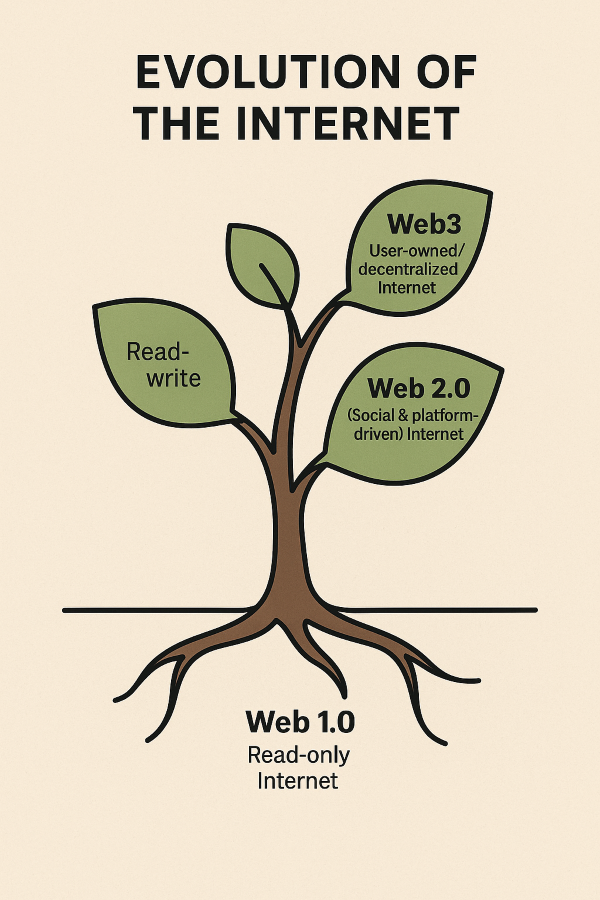
Comparing the internet’s growth to Darwin’s theory of evolution helps explain how it has changed over time, with each stage adapting to the needs, behaviours, and technologies of its time.
The initial phase, known as Web 1 (spanning the 1990s to the early 2000s), was characterised by the internet’s primary function as an information dissemination tool. During this period, only site owners managed content, resulting in a read-only experience for users and a unidirectional flow of information similar to a digital brochure.
Tim O’Reilly introduced the term “Web 2.0” in 2004, marking a new era as mobile services expanded, broadband connectivity improved, and technologies such as AJAX and HTML5 emerged. The internet became interactive, enabling users to create, share, and engage with content without needing special skills. This change opened new ways for people to communicate and connect worldwide.
But as Web 2.0 grew, a few big companies gained significant power and control over data. They decided how information was shared, which voices were heard, and how personal data was handled. Algorithms control every piece of information and opinion. At the same time, many of these platforms rely on business models that depend on extensive data collection, with user behaviour fueling targeted advertising. While these services often appear free, the trade-off is a gradual loss of privacy, autonomy, and control over one’s digital presence.
Concerns about this central control, privacy, and reliance on these platforms led to the idea of a new kind of internet, now called Web 3.0.
What is Web 3.0?
The internet is now moving toward a more user-focused phase, where data ownership is decentralised. Web 3.0 uses technologies such as blockchain and the Semantic Web to return control of data and digital assets to users rather than large technology companies. This change aims to enhance the transparency, security, and personalisation of online experiences.
Key Characteristics of Web 3.0
1. Decentralisation
Control is shared across networks rather than held by a single company or authority. This means that people need not rely on centralised platforms as much.
2. User control over data and identity
Users have more control over their digital identities and personal data, rather than giving that control to platforms by default.
3. Reduced intermediaries
Web 3.0 aims to cut out intermediaries by enabling people to interact, share, and make transactions directly, without needing a central platform to manage these actions.
4. Transparency by design
Many Web 3.0 systems are designed to make rules, transactions, and changes open and verifiable, rather than hidden within private systems.
5. Permissionless participation
Anyone can participate without approval from a central authority, provided they comply with the network’s rules.
6. Resilience and censorship resistance
The distribution of data and services increases the difficulty for any single entity to shut down platforms or completely silence users.
People often use the term Web 3.0 to refer to technologies such as cryptocurrencies, tokens, or blockchain-based finance. However, the main features listed above also make Web 3.0 useful in many areas, including supply chain management, gaming and the metaverse, healthcare, content creation and social media, intellectual property, and digital identity.
How Does Web 3.0 Work – A Brief Sneak Peek
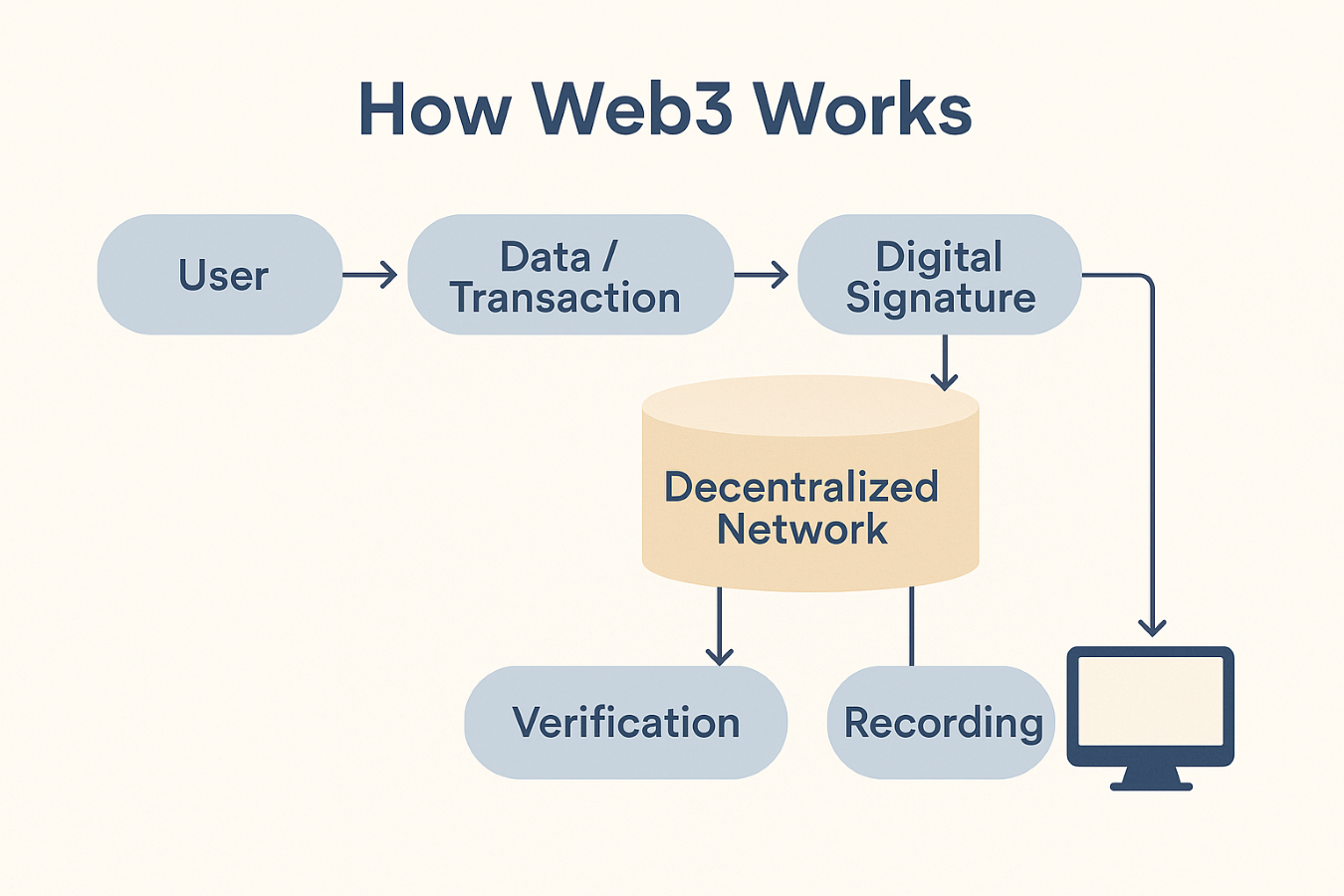
At its core, Web 3.0 changes how information is stored and managed. Instead of storing data on servers owned by a single company, information is distributed across networks. The action is cryptographically signed by the user, verified by multiple participants, and recorded in a shared ledger that is difficult to alter. This structure reduces reliance on central intermediaries and makes manipulation or data abuse more difficult, while shifting greater control and responsibility to users. Although the technology driving Web 3.0 is complex, the primary goal is simple: to give users greater control and responsibility.
Web 3.0: An Emerging, Yet Unsettled, Part of the EU’s Digital Vision
Freedom, Democracy, and Respect for human rights have been the core pillars of the European Union since its inception. These principles have been a centre of discussion whenever policies are framed, and the digital space is no exception. The European Union has signalled a clear willingness to invest in the development of Web 3.0-relevant technologies through official strategies, infrastructure development, and research funding. The European Union is actively shaping the digital world by protecting users, ensuring fair competition, and defending fundamental rights.
A Few Examples:
- The Commission’s blockchain and Web3 strategy outlines policy support, funding programmes, and legal frameworks to foster innovation in decentralised systems.
- Web 3.0-aligned technologies are being evaluated for identity and credential management and secure data exchange.
- EU funding programmes support projects on decentralised data, privacy-preserving technologies, and interoperability. (In recent times, 2016-2019, the EU invested 180 million Euros in a project called Horizon Europe, with grants expected to flow in the future as well)
Web 3.0 Is Still A probability, Not A Concrete Solution Yet.
However, the EU also values legal certainty, accountability, and consumer protection, which can be challenging to achieve in decentralised systems. As a result, the relationship between Web 3.0 and EU policy is still developing, reflecting both a willingness to innovate and a careful approach to potential risks. In this light, it is imperative to understand the complications and challenges associated with Web 3.0.
Challenges of Web 3.0:
- Still in its nascent stage, the technology underlying Web 3.0 is complex and not widely known. Concepts such as private keys, smart contracts, wallets, and decentralised storage are still largely unfamiliar and challenging for non-tech-savvy users.
- Centralised platforms outperform Web 3.0 due to easier user navigation. Influencing users to shift from a seamless platform to a complex option would require substantial investment in digital education and community building, as well as time.
- Beneath the layers of immutable privacy structures, due to a decentralised mechanism for data sharing and storage, technologies such as Web 3.0 lack accountability systems. In the absence of a centralised moderation mechanism, addressing harmful or illegal content, misinformation, and responding to abuse becomes challenging. Once the content is stored, its removal becomes nearly impossible.
- Protocols may be decentralised in theory, but small groups of developers or influential participants still influence many major decisions. This can recreate power imbalances similar to centralised platforms, undermining ideals of shared governance.
- Although Web 3.0 may be emerging as a technical solution to censorship, it is critical to understand that technology alone cannot address deeper social and political issues. Issues such as governance, community norms, power dynamics, and regulatory compliance require broader approaches beyond code.
- For less experienced users, the sole onus for online security, privacy, and data management, owing to greater control, could be overwhelming.
Looking ahead: between regulation and re-imagining
As Europe debates the future of its digital space, organisations such as European Digital Rights reiterate that technology alone does not secure freedom or fairness online. ERDi firmly believes that human rights, data protection, and democratic accountability should be the core of any discussion of new digital systems. From this perspective, Web 3.0 is neither a solution nor a threat in itself, but offers a new avenue of technological experimentation that must operate within existing legal frameworks and fundamental rights.
In the current political landscape, EU initiatives such as the Digital Services Act, the Digital Markets Act, and ongoing discussions around chat control and the Digital Omnibus reflect growing concern about platform dominance, surveillance, and the limits of the Web 2.0 model. These laws aim to correct structural harms through regulation, but also raise deeper questions about how digital infrastructures are designed and who ultimately holds power over them.
In this context, Web 3.0 can be seen as part of a broader conversation about decentralisation and user agency rather than a finished alternative. While its principles resonate with long-standing European Pirate values around privacy, autonomy, and resistance to excessive central control, decentralised technologies also risk creating new concentrations of power if left unchecked. EDRI’s cautious approach emphasises the need for civic interest control, civil society involvement, and robust safeguards.
The interaction between regulation and experimentation will likely shape Europe’s digital future. If approached critically and inclusively, discussions around Web 3.0 can help imagine an internet where innovation supports user rights, rather than undermining them.
europeanpirates.eu/europes-nex…

This week, we discuss history repeating itself, a phone wipe scandal, Meta's relationship with links and more.
This week, we discuss history repeating itself, a phone wipe scandal, Metax27;s relationship with links and more.#BehindTheBlog


Behind the Blog: Resisting Demoralization
This is Behind the Blog, where we share our behind-the-scenes thoughts about how a few of our top stories of the week came together. This week, we discuss history repeating itself and Meta's relationship with links.JOSEPH: I wanted to add a little bit from behind the scenes of this piece: Man Charged for Wiping Phone Before CBP Could Search It. As I said on the podcast this week, there are and continue to be many questions around the case. Especially why CBP stopped Samuel Tunick in the first place.
In the piece I did not focus on Tunick’s activism because frankly we don’t know yet how big a role it played in CBP stopping him. I mentioned it but didn’t focus on it. I think regardless, someone being charged for allegedly wiping a phone is interesting essentially no matter who they are.
Yes, it absolutely may turn out that he was stopped specifically because of his activism. Maybe lots of people think it’s very likely that’s the reason. But I can’t frame a story because it feels like that’s maybe the case. I have to go on what actual evidence I have at the moment.
This post is for subscribers only
Become a member to get access to all content
Subscribe nowBehind the Blog: Resisting Demoralization
This week, we discuss history repeating itself, a phone wipe scandal, Meta's relationship with links and more.Samantha Cole (404 Media)


Ministero dell'Istruzione
#Scuola, da oggi è disponibile il “Fascicolo digitale del personale scolastico”, la nuova piattaforma del #MIM che consente di consultare in modo semplice e sicuro le informazioni relative al proprio percorso professionale, attraverso i dati presenti…Telegram
Associazione Peacelink reshared this.


La direttiva Ue sulle confische e la tentazione di neutralizzare quarant’anni di antimafia
@Giornalismo e disordine informativo
articolo21.org/2025/12/la-dire…
Mentre la UE discute animatamente della confisca definitiva dei patrimoni russi e del loro ri-utilizzo
reshared this
In occasione del cinquantesimo anniversario della Convenzione di Washington (CITES), l'Arma dei Carabinieri ha celebrato con solennità "CITES: 50 anni di tutela della biodiversità globale".
Mezzo secolo di impegno nella protezione delle specie animali e vegetali minacciate di estinzione.

La presentazione ufficiale del Calendario CITES 2026 si è svolta presso la Scuola Ufficiali Carabinieri, condotta dalla giornalista Licia Colò, alla presenza del Ministro dell'Ambiente e della Sicurezza Energetica, Gilberto Pichetto Fratin, e del Gen. C.A. Fabrizio Parrulli, Comandante del #CUFAA (Comando Unità Forestali, Ambientali e Agroalimentari #Carabinieri). Durante l'evento, il Segretario Generale della Convenzione delle Nazioni Unite CITES, Ivonne Higuero, ha rivolto un video-messaggio alla platea, elogiando con enfasi l'impegno pluriennale profuso dai Carabinieri e dalle autorità italiane nel contrasto ai traffici di specie selvatiche protette.
La Convenzione #CITES, ratificata dall'Italia con la legge n. 874 del 19 dicembre 1975, rappresenta oggi lo strumento internazionale più efficace e riconosciuto per garantire un commercio sostenibile di oltre 40.000 specie di fauna e flora protette. Adottata dalle Nazioni Unite e ratificata da 185 Paesi, la Convenzione costituisce il pilastro normativo fondamentale per prevenire che mercati illegali, abusi sistematici e prelievi eccessivi compromettano irrimediabilmente la sopravvivenza delle specie più vulnerabili del nostro pianeta.

Il Calendario CITES 2026, realizzato dal Raggruppamento Carabinieri CITES del Comando Carabinieri per la Tutela della Biodiversità del CUFAA, ripercorre il lavoro svolto prima dal Corpo Forestale dello Stato e, dal 2017, dall'Arma dei Carabinieri attraverso i Nuclei CITES, nel contrasto determinato ai traffici illegali e nella salvaguardia della biodiversità globale. L'opera accompagna il pubblico in un viaggio emozionante attraverso 12 storie emblematiche, ciascuna dedicata a una specie protetta che, grazie all'azione tempestiva e professionale dei Carabinieri, ha conquistato una nuova possibilità di vita.

Tra queste emergono quella di Edy e Bingo, due scimpanzé coraggiosamente sottratti a gravi maltrattamenti in circhi e locali notturni; il maestoso leopardo rinvenuto in uno zoo privato illegale a Guspini (VS) e trasferito in una struttura finalmente idonea; Oscar, una rara e splendida tigre bianca recuperata da condizioni totalmente incompatibili con il benessere animale. Il calendario documenta, inoltre, il commovente ritorno alla libertà di centinaia di esemplari di Testudo graeca e Testudo hermanni, reimmessi nei loro habitat naturali dopo essere stati sequestrati ai traffici illegali, così come il delicato e complesso rimpatrio di numerose piante del genere Copiapoa nel deserto di Atacama, in Cile. A coronare il racconto, l'energia vitale dei tursiopi, nuovamente liberi di nuotare in acque pulite e adeguate, testimonianza del successo delle attività di recupero e trasferimento operate dagli specialisti CITES.
Ogni storia rappresenta un simbolo del trionfo della legalità sulla sofferenza, sull'abuso e sul profitto illecito, e riflette l'impegno dei Carabinieri nel difendere ecosistemi fragili, specie rare e patrimoni naturali che appartengono all'intera umanità e alle generazioni future.

Nel corso dell'evento, sempre all'interno della Scuola Ufficiali Carabinieri, è stata allestita una mostra fotografica di grande impatto emotivo a cura del fotografo Marco Lanza, dal titolo eloquente: "Vite spezzate: dal contrasto al commercio illegale in Italia, i reperti confiscati del deposito centrale dei Carabinieri CITES", con scatti realizzati nel Deposito di Magliano dei Marsi (AQ), gestito dal Raggruppamento Carabinieri CITES, dove viene custodita gran parte dei reperti confiscati durante le attività di contrasto al traffico illecito di animali e piante in via d'estinzione. Ogni fotografia ritrae animali tragicamente trasformati in oggetti tra oggetti, volutamente inseriti dall'autore in un contesto scarno ed essenziale, che suscita incredulità nel trovarsi in un luogo come questo; animali che interrogano l'osservatore mentre sembrano implorare di uscire e riconquistare il proprio ruolo naturale.
Il cinquantesimo anniversario della CITES e il nuovo Calendario 2026 rappresentano un'occasione per riaffermare con forza il valore insostituibile della cooperazione internazionale e il ruolo assolutamente determinante dell'Italia – e dell'Arma dei Carabinieri – nel contrasto alla criminalità ambientale e nella protezione della biodiversità mondiale.

Sul Calendario è riportata anche una significativa dichiarazione personale del Gen. C.A. Salvatore Luongo, Comandante Generale dell'Arma dei Carabinieri: "L'anniversario per i 50 anni dell'Atto di ratifica in Italia della Convenzione di Washington rappresenta un'occasione preziosa di riflessione sull'importanza cruciale della salvaguardia della biodiversità su scala planetaria e sulla necessità imprescindibile di affrontare con crescente efficacia la criminalità che lucra senza alcuno scrupolo sullo sfruttamento della fauna e flora minacciate di estinzione. Conservazione attiva, educazione alla legalità, prevenzione e contrasto sono le direttrici strategiche che vedono l'Arma dei Carabinieri, nel suo insieme e con i propri assetti di specialità del CUFAA, sempre più impegnata con determinazione per dare piena attuazione ai principi fondamentali della Carta Costituzionale su tutto il territorio nazionale e negli scenari di #cooperazioneinternazionale".
LA REPUBBLICA ROMA: NUOVO ARTICOLO PIENO ZEPPO DI PROPAGANDA
Contro la falsa informazione pro-inceneritore.
Nell’articolo dell’edizione romana di ieri a firma di Salvatore Giuffrida leggiamo “Il cantiere a Santa Palomba partirà entro il primo trimestre del 2026 e durerà 32 mesi, fino a oltre la metà del 2028”. Il sottotitolo contiene la prima menzogna o bufala, come preferite. Le attività di costruzione dureranno 39 mesi e non 32 come scrive il giornalista e il cantiere terminerà nel maggio 2029. Attenzione, non siamo noi a dichiaralo ma è scritto nero su bianco sul più recente cronoprogramma del proponente.
“Il 2026 sarà l’anno del termovalorizzatore di Roma”. Nell’attacco del pezzo si condensa tutto lo strumentario della retorica tipica dei fan dell’incenerimento che si guarda bene dal ricordare, neppure incidentalmente che i poteri straordinari sono stati attributi per impiantistica destinata a far fronte all’afflusso straordinario dei pellegrini del Giubileo 2025. Un impianto che a Giubileo terminato non è ancora autorizzato e il cui iter è potuto andar avanti esclusivamente a forza di ordinanze, con la Procura di Roma che sta indagando al riguardo. Profili questi, guarda caso, del tutto omessi.
“Bisogna ancora aspettare due anni per inaugurare l’impianto, ma il percorso è già avviato: di fatto è ormai concluso il procedimento autorizzatorio unico regionale, Paur, che riunisce in un unico atto tutte le valutazioni, i pareri e le autorizzazioni di competenza regionale necessarie a realizzare il progetto e avviare il cantiere.”
Il procedimento non è affatto concluso. Ci sono i pareri contrari dei comuni di Albano, Ardea e Pomezia. C’è soprattutto la Soprintendenza Speciale di Roma ha tutta la competenza e decisive motivazioni per bocciare gli elaborati progettuali nella conferenza di servizi in corso e per contestare la procedura avviata in virtù delle proprie prerogative istituzionali discendenti dall’articolo 9 della Costituzione, attuato dal codice dei beni culturali.
Seguono poi i consueti ritornelli della propaganda inceneritorista: “Saranno inoltre realizzati quattro impianti ausiliari per recuperare le ceneri pesanti, un impianto fotovoltaico, una rete di teleriscaldamento e un sistema sperimentale per catturare l’anidride carbonica. Il termovalorizzatore sarà capace di bruciare 600mila tonnellate l’anno di rifiuti e di produrre energia elettrica per circa 200mila abitazioni”.
Al riguardo solo due repliche lampo a proposito di teleriscaldamento e sistema sperimentale cattura CO2. Il teleriscaldamento, conti alla mano, riguarderà un centinaio di famiglie. Dovranno provare di avere il contratto di fornitura indispensabile per la verifica del coefficiente R1 indice di efficienza energetica per ricondurre l’impianto tra quelli di recupero energetico.
Sull’impianto di cattura della CO2, oltre a non essere sperimentale come evidenziato dallo stesso proponente basti ricordare che la massima cattura equivale ad appena l’1per mille della Co 2 emessa. Su questo ci sono ben due esposti alla Corte dei conti ma anche su questo silenzio tombale.
Le 200 mila abitazioni che vorranno l’energia elettrica prodotta, non l’avranno certo a gratis ma dovranno pagarla a prezzi di mercato.
“Infine, a ottobre il Comune ha ratificato un protocollo d’intesa con Ferrovie dello Stato per gestire la logistica ambientale in merito al trasporto dei rifiuti senza costi aggiuntivi per le parti.” Un protocollo d’intesa privo di qualsivoglia autentica portata, chissà perché riportarlo?
Davanti a tanta spudorata propaganda rispondiamo con il nostro prossimo appuntamento: la mattina di lunedì 29 dicembre sit-in presso la Soprintendenza speciale di Roma per smuoverla a tutelare i beni archeologici presenti nell’area del progetto e che verrebbero irrimediabilmente distrutti.
Concludiamo il nostro comunicato richiamando il recentissimo parere contrario della Regione Lazio nella conferenza di servizi sulla discarica di Tor Tignosa che lascia l’inceneritore privo della sua discarica di servizio.
Non serve il giornalismo di inchiesta, sarebbe sufficiente il semplice giornalismo.
Buona serata!
19 dicembre 2025


L'animale più longevo mai scoperto aveva 507 anni. E lo abbiamo ucciso per sbaglio
Ming, nato nel 1499, ha attraversato cinque secoli di storia prima di morire il giorno della sua scoperta... purtroppo.Everyeye Tech
Effetto Gaza: piazze piene, urne vuote. L’ultimo sondaggio di Youtrend spiega perché
@Politica interna, europea e internazionale
Le elezioni regionali nelle Marche dello scorso settembre avevano già evidenziato questo tema: il candidato del centrosinistra Matteo Ricci ha dedicato gli ultimi giorni della campagna elettorale a iniziative apertamente a favore della causa palestinese. Le urne,
Politica interna, europea e internazionale reshared this.
I bambini della famiglia nel bosco restano in comunità, gli attacchi di Salvini e Roccella ai giudici: “Vergogna”
@Politica interna, europea e internazionale
Matteo Salvini ed Eugenia Roccella attaccano i giudici dopo la decisione della Corte d’Appello dell’Aquila di rigettare il ricorso di Nathan Trevallion e Catherine Birmingham contro la sospensione della responsabilità genitoriale. Il
Politica interna, europea e internazionale reshared this.
I giornalisti palestinesi Mohanna e Selmi sono riusciti ad arrivare in Italia
@Politica interna, europea e internazionale
Lo scorso 18 ottobre, a Roma, in Campidoglio, l’Istituto Ricerche Archivio Disarmo (Iriad) li aveva insigniti del Premio giornalistico Colombe d’Oro per la Pace. Ma loro, i premiati, non avevano potuto partecipare alla cerimonia di consegna, bloccati com’erano nella
Politica interna, europea e internazionale reshared this.
Perché il 2026 sarà un anno spartiacque per il Governo Meloni
@Politica interna, europea e internazionale
Giorgia Meloni si affaccia sul nuovo anno forte di sondaggi che stimano il suo partito, Fratelli d’Italia, saldamente intorno al 30% dei consensi. La fiducia di cui gode la presidente del Consiglio costituisce un’assicurazione sulla vita – anzi, un’assicurazione sul governo – anche per gli altri
Politica interna, europea e internazionale reshared this.
“Le Big Tech sono una minaccia per la democrazia”: intervista al prof. Juan De Martin
@Politica interna, europea e internazionale
Dal 23 al 25 gennaio il Palazzo Ducale di Genova ospiterà “Democrazia alla prova”, una tre giorni di dibattiti organizzata dal Forum Disuguaglianze e Diversità e dal Palazzo Ducale e curata in particolare dall’ex ministro Fabrizio Barca (co-coordinatore
reshared this
Il potente messaggio di pace di papa Prevost e la nomina del nuovo arcivescovo di New York
@Giornalismo e disordine informativo
articolo21.org/2025/12/il-pote…
Arriva la nomina del nuovo arcivescovo di New York e papa Prevost, per alcuni commentatori che così lo
Giornalismo e disordine informativo reshared this.

Missioni di pace, Crosetto e Portolano tracciano l’impegno dell’Italia nel mondo
@Notizie dall'Italia e dal mondo
Nell’ambito della tradizionale cerimonia di auguri natalizi ai militari italiani impegnati all’estero, alla presenza del presidente della Repubblica e dei vertici delle Forze armate, il ministro della Difesa Guido Crosetto e il capo di Stato maggiore della Difesa, il
Notizie dall'Italia e dal mondo reshared this.
Schleswig-Holstein: la sovranità digitale è possibile ed economica
softwareliberoliguria.org/schl…
Segnalato dall'Associazione Software Libero Liguria di #Genova e pubblicato sulla comunità Lemmy @GNU/Linux Italia
#Firenze
LibreOffice
GNU/Linux Italia reshared this.
Nessuno spiraglio alla pace
@Giornalismo e disordine informativo
articolo21.org/2025/12/nessuno…
A Gaza i neonati muoiono assiderati. In Ucraina muoiono sotto i bombardamenti. Che in altre aree del mondo sono definiti come “Raid”. Così pesano di meno. I telegiornali occupano la prima metà dei loro notiziari con guerre e omicidi, ed anche con le conseguenze giudiziarie di questi ultimi.
Giornalismo e disordine informativo reshared this.

kulturjam.it/news/mattarella-e…

il sommarsi di tre vettori di variazione culturale/scientifica straordinari – cioè (1) gli avanzamenti sperimentali e teorici in fisica quantistica + (2) le neuroscienze + (3) l'intelligenza artificiale – sembra attestarsi (in termini di eccezionalità) come contraltare all'avanzamento delle destre medioevali coloniali in tutto il mondo.
o, detto altrimenti: → noblogo.org/differx/il-sommars…

il sommarsi di tre vettori di variazione culturale/scientifica straordinari -...
o, detto altrimenti: i neofascismi violentano le lancette dell'orologio per portarle indietro nel momento stesso in cui queste sembrano invece accelerare positivamente.differxdiario
reshared this
Luna entro il 2028, reattori nucleari e armamenti. Ecco la nuova space strategy Usa
@Notizie dall'Italia e dal mondo
Donald Trump ha emesso un nuovo ordine esecutivo, formalizzando la nuova strategia nazionale per lo spazio degli Stati Uniti. Punti cardine del documento, il ritorno degli astronauti americani sulla Luna entro il 2028, un deciso rafforzamento delle capacità militari
Notizie dall'Italia e dal mondo reshared this.
Omaggio a Jane Austen, una penna per lo schermo
@Giornalismo e disordine informativo
articolo21.org/2025/12/omaggio…
In un panorama culturale saturo di celebrazioni per il 250° anniversario della nascita di Jane Austen, il saggio di Giancarlo Zappoli e Claudia Bersani si propone come un intervento necessario e ambizioso. “Jane Austen, una penna per
Giornalismo e disordine informativo reshared this.
PODCAST. La Cina espande la sua influenza nel Golfo
@Notizie dall'Italia e dal mondo
Pechino promuove il suo modello di cooperazione alternativo agli Usa e ai paesi arabi ora servono i suoi investimenti in tecnologie green
L'articolo PODCAST. La Cina espande la sua influenza nel Golfo pagineesteri.it/2025/12/19/med…
Notizie dall'Italia e dal mondo reshared this.
Ustica, non archiviate la ricerca di tutta la verità
@Giornalismo e disordine informativo
articolo21.org/2025/12/ustica-…
I parenti delle vittime della strage di Ustica oggi sono davanti al Gip per opporsi alla domanda di archiviazione dell’indagine aperta nel 2008 per la denuncia/testimonianza di Cossiga che indicava i francesi,
Giornalismo e disordine informativo reshared this.
freezonemagazine.com/articoli/…
Ho scelto di leggere questo romanzo perché ho sempre subito il fascino dell’America Latina e delle storie che in essa nascono, ma ero piuttosto scettica all’inizio perché spesso nei libri ambientati in questa parte di mondo ci si trova di fronte a un eccessivo utilizzo del “realismo magico”, dell’irreale, del soprannaturale, che non si sposano […]
L'articolo Miguel Bonnefoy –
“Vittoria!”. Nei Paesi Baschi la mobilitazione batte la speculazione
@Notizie dall'Italia e dal mondo
Dopo tre anni di massicce proteste i comitati e gli abitanti sono riusciti a bloccare la realizzazione di un progetto speculativo del museo Guggenheim all'interno dell'unica riserva naturale dei Paesi Baschi
L'articolo “Vittoria!”. Nei Paesi Baschi la mobilitazione batte la speculazione
Notizie dall'Italia e dal mondo reshared this.
Decine di Ong internazionali perderanno l’accesso a Gaza e in Cisgiordania
@Notizie dall'Italia e dal mondo
A causa delle nuove regole di registrazione decise da Israele decine di gruppi umanitari internazionali rischiano la cancellazione entro il 31 dicembre, e dovranno chiudere le operazioni entro 60 giorni
L'articolo Decine di Ong internazionali perderanno
Notizie dall'Italia e dal mondo reshared this.
Video virale di un colpo di Stato creato con l’IA fa infuriare Macron mentre l’UE lavora a regole sull’etichettatura dei deepfake
Per vedere altri post sull' #IntelligenzaArtificiale, segui la comunità @Intelligenza Artificiale
Un video generato con l’intelligenza artificiale che affermava erroneamente
Intelligenza Artificiale reshared this.
Sono sempre più convinto che l'Europa dovrebbe oscurare i social di meta
Intelligenza Artificiale reshared this.
Altbot
in reply to storiaweb • • •Spiacente, non sono riuscito a elaborare questa immagine.
―
Two individuals in formal black uniforms with red shoulder accents stand indoors holding printed materials. The person on the left wears a black cap with a golden emblem, white shirt, and black tie; the person on the right wears a similar uniform and cap. Both hold brochures displaying “CARABINIERI CITES” and an image of a large cat. Behind them, background elements include posters with “CARABINIERI CITES” text, images of colorful parrots, a calendar with “LUN MAR MER GIO VEN SAB DOM” labels, and bookshelves. Visible text also includes “LA MILANO,” “www.lamilaio.it,” and “CITES 35 OTTOBRE 2023.”
―
A 2020 calendar features a white tiger, a globe, and text elements. At the top, large gray letters display "CALENDARIO 2020". In the center, a white tiger with its head tilted up appears beside a black-and-white globe; overlaid on this is "CITES" in white letters and "50" in green letters, with "Celebrating 50 Years of CITES" in smaller text below. A green bar at the bottom contains "CARABINIERI" in large white letters, followed by smaller white text: "COMANDO UNITÀ FORESTALI AMBIENTALI E AGROALIMENTARI", "COMANDO CARABINIERI PER LA TUTELA DELLA RIGOROSITÀ", "RAGGRUPPAMENTO CARABINIERI CITES". The green bar also includes a white winged logo on the left and a shield-shaped logo on the right.
―
Due persone stanno all'esterno; una indossa una maglia blu scuro con il testo "CARABINIERI CITIES" in bianco, l'altra un'uniforme scura con un cappello che ha una stella e strisce rosse e bianche, tenendo un uccello con le ali spiegate. L'uccello ha piume grigie e bianche. Sullo sfondo ci sono vegetazione alta, un paesaggio marino e il cielo azzurro.
―
A person in a dark blue uniform with "CARABINIERI" printed on the chest stands outdoors with a large brown eagle perched on a brown glove held in their right hand. The uniform features an Italian flag patch on the left sleeve, red and white insignia on the chest and collar, and a cap with a badge. The eagle has brown feathers, a yellow beak, and is attached with a harness. The background consists of dense green trees and foliage. The person’s left hand is on their hip, and they wear a belt with a buckle.
Fornito da @altbot, generato localmente e privatamente utilizzando Qwen3-Vl:30b
🌱 Energia utilizzata: 1.560 Wh