For people who build their own model trains there are a range of manufacturers from whom a power bogie containing the motor and drive can be sourced. But as [Le petit train du Berry] shows us in a video, it’s possible to make one yourself and it’s easier than you might think (French language video with truly awful YouTube auto-translation).
At the heart of the design is a coreless motor driving a worm gear at each end that engages with a gear on each axle. The wheelsets and power pickups are off-the-shelf items. The chassis meanwhile is 3D printed, and since this is an ongoing project we see two versions in the video. The V5 model adds a bearing, which its predecessor lacked.
The result is a pretty good power bogie, but it’s not without its faults. The gear ratio used is on the high side in order to save height under a model train body, and in the version without a bearing a hard-wearing filament is required because PLA will wear easily. We’re guessing this isn’t the last we’ll see of this project, so we hope those are addressed in future versions.
We like this project and we think you will too after you’ve watched the video below the break. For more home-made model railway power, how about a linear motor?
Archivists Posted the 60 Minutes CECOT Segment Bari Weiss Killed
Archivists have saved and uploaded copies of the 60 Minutes episode new CBS editor-in-chief Bari Weiss ordered be shelved as a torrent and multiple file sharing sites after an international distributor aired the episode.
The moves show how difficult it may be for CBS to stop the episode, which focused on the experience of Venezuelans deported to El Salvadorian mega prison CECOT, from spreading across the internet. Bari Weiss stopped the episode from being released Sunday even after the episode was reviewed and checked multiple times by the news outlet, according to an email CBS correspondent Sharyn Alfonsi sent to her colleagues.
“You may recall earlier this year when the Trump administration deported hundreds of Venezuelan men to El Salvador, a country most had no connection to,” the show starts, according to a copy viewed by 404 Media.
This post is for subscribers only
Become a member to get access to all content Subscribe now
Few of us complain that hot dogs take too long to cook, because we buy them from a stand. Still, if you do have to make your own dog, it can be a frustrating problem. To solve this issue, [Joel Creates] whipped up a solution to cook hot dogs nearly instantaneously. What’s more, it even fits in your pocket!
The idea behind this build is the same as the classic Presto hot dog cooker—pass electricity through a hot dog frank, and it’ll heat up just like any other resistive heating element. To achieve this, [Joel] hooked up a lithium-polymer pack to a 12-volt to 120-volt inverter. The 120-volt output was hooked up to a frank, but it didn’t really cook much. [Joel] then realized the problem—he needed bigger electrodes conducting electricity into the sausage. With 120 volts pumping through a couple of bolts jammed into either end of the frank, he had it cooked in two minutes flat.
All that was left to do was to get this concept working in a compact, portable package. What ensued was testing with a variety of boost converter circuits to take power from the batteries and stepping it up to a high enough voltage to cook with. That, and solving the issue of nasty chemical byproducts produced from passing electricity through the sausages themselves. Eventually, [Joel] comes up with a working prototype which can electrically cook a hot dog to the point of shooting out violent bursts of steam in under two minutes. You’d still have to be pretty brave to eat something that came out of this thing.
The biggest problem with hot dogs remains that the franks are sold in packs of four while buns are sold in packs of six. Nobody’s solved that problem yet, except for those hateful people who inexplicably have eleven friends. If you solve that one, don’t hesitate to notify the tipsline. Don’t forget, either, that the common hot dog can make for an excellent LED tester. Video after the break.
@Giornalismo e disordine informativo articolo21.org/2025/12/rapido-… C’è una strage spesso dimenticata tra quelle che hanno insanguinato l’Italia dal 1969 (Piazza Fontana) ed è quella del Rapido 904, ribattezzata la strage di Natale. L’attentato al treno che il 23 dicembre 1984 era partito dalla stazione di
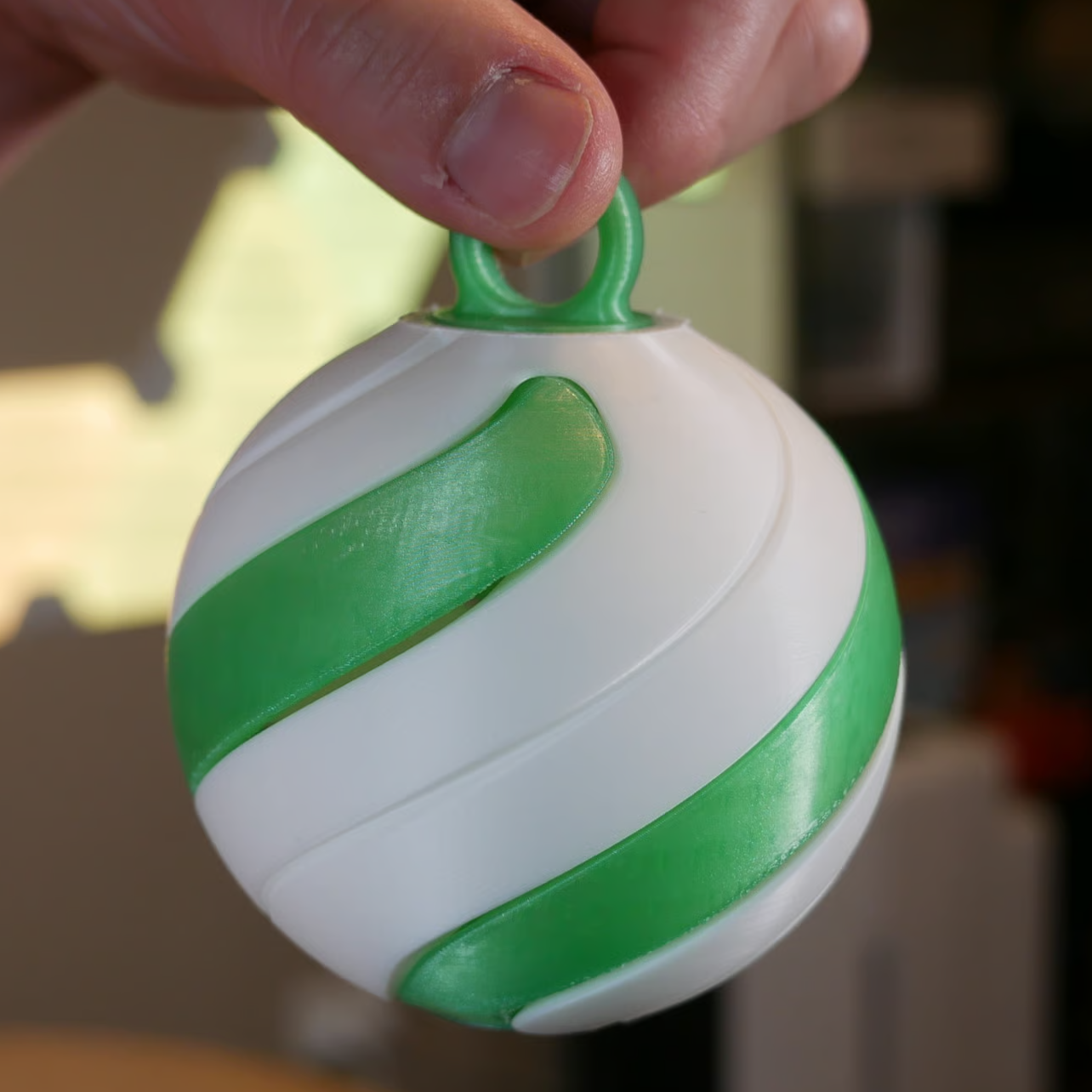
If you need something clever for a gift, consider this two-part 3D-printed Christmas ornament that has a small secret compartment. But there’s a catch: the print is a challenging one. So make sure your printer is up to the task before you begin (or just mash PRINT and find out). Want a challenging print that’s also useful? This two-piece ornament has a small gift area inside, and prints without supports. This design is from [Angus] of [Maker’s Muse] and it’s not just eye-catching, but meticulously designed specifically for 3D printing. In fact, [Angus]’s video (embedded under the page break) is a great round-up of thoughtful design for manufacture (DFM) issues when it comes to filament-based 3D printing.
The ornament prints without supports, which is interesting right off the bat because rounded surfaces (like fillets, or a spherical surface) facing the build plate — even when slightly truncated to provide a flat bottom — are basically very sharp overhangs. That’s a feature that doesn’t generally end up with a good surface finish. [Angus] has a clever solution, and replaces a small section with a flat incline. One can’t tell anything is off by looking at the end result, but it makes all the difference when printing.
There are all kinds of little insights into the specific challenges 3D printing brings, and [Angus] does a fantastic job of highlighting them as he explains his design and addresses the challenges he faced. One spot in particular is the flat area underneath the hang hole. This triangular area is an unsupported bridge, and because of its particular shape, it is trickier to print than normal bridges. The workable solution consists of countersinking a smaller triangle within, but [Angus] is interested in improving this area further and is eager to hear ideas on how to do so. We wonder if he’s tried an approach we covered to get better bridges.
Want to print your own? 3D files are available direct from [Angus]’s site in a pay-what-you-like format. If your 3D printer is up to it, you should be able to make a few before Christmas. But if you’d prefer to set your sights on next year with something that uses power and hardware, this tiny marble machine ornament should raise some eyebrows.
[Dennis] of [Made by Dennis] has been building a Voron 0 for fun and education, and since this apparently wasn’t enough of a challenge, decided to add a number of scratch-built improvements and modifications along the way. In his latest video on the journey, he rigorously calibrated the printer’s motion system, including translation distances, the perpendicularity of the axes, and the bed’s position. The goal was to get better than 100-micrometer precision over a 100 mm range, and reaching this required detours into computer vision, clock synchronization, and linear algebra.
To correct for non-perpendicular or distorted axes, [Dennis] calculated a position correction matrix using a camera mounted to the toolhead and a ChArUco board on the print bed. Image recognition software can easily detect the corners of the ChArUco board tiles and identify their positions, and if the camera’s focal length is known, some simple trigonometry gives the camera’s position. By taking pictures at many different points, [Dennis] could calculate a correction matrix which maps the printhead’s reported position to its actual position.
Leveling the bed also took surprisingly deep technical knowledge; [Dennis] was using a PZ probe to detect when the hotend contacted the bed in various places, and had made a wiper to remove interfering plastic from the nozzle, but wasn’t satisfied by the bed’s slight continued motion after making contact (this might have introduced as much as five micrometers of error). To correct for this, he had the microcontroller in the hotend record the time of contact and send this along with the hit signal to the Raspberry Pi controller, which keeps a record of times and positions, letting the true contact position be looked up. This required the hotend’s and the printer’s microcontrollers to have their clocks synchronized to within one microsecond, which the Pi managed using USB start-of-frame packets.
The final result was already looking quite professional, and should only get better once [Dennis] calibrates the extrusion settings. If you’re looking for more about ChArUco boards, we’ve covered them before, as well as calibration models. If you’re looking for high-precision bed leveling, you could also check out this Z sensor.
There’s an interesting cultural observation to be made as a writer based in Europe, that we like our sans-serif fonts, while our American friends seem to prefer a font with a serif. It’s something that was particularly noticeable in the days of print advertising, and it becomes very obvious when looking at government documents.
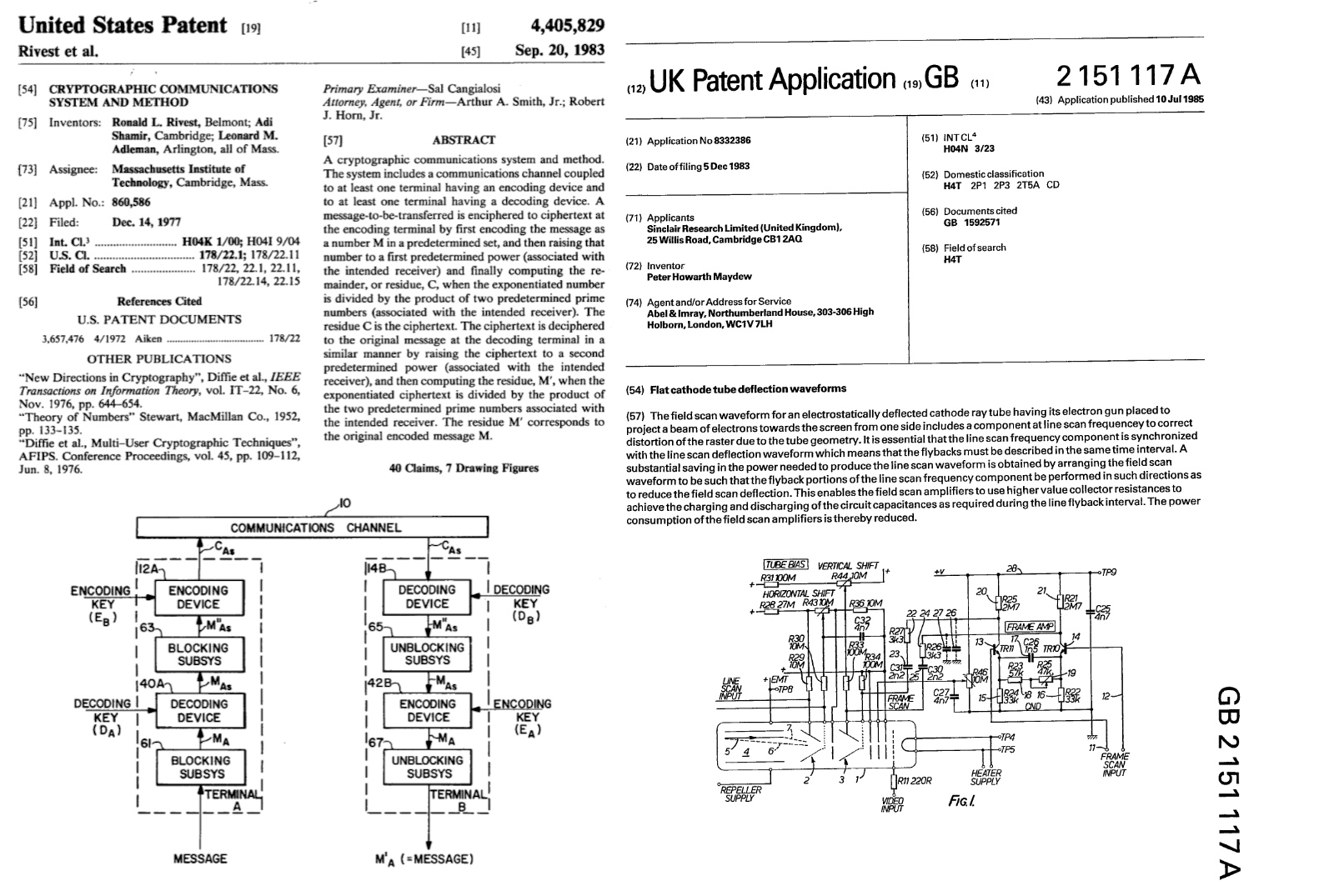
We’ve brought together two 1980s patents from the respective sources to illustrate this, the American RSA encryption patent, and the British drive circuitry patent for the Sinclair flat screen CRT. The American one uses Times New Roman, while the British one uses a sans-serif font which we’re guessing may be Arial. The odd thing is in both cases they exude formality and authority to their respective audiences, but Americans see the sans-serif font as less formal and Europeans see the serif version as old-fashioned. If you thought Brits and Americans were divided by a common language, evidently it runs much deeper than that.
But What Makes Text Easier To Read?
Is this legible enough for you?
We’re told that the use of fonts such as Arial or Calibri goes a little deeper than culture or style, in that these sans-serif fonts have greater readability for users with impaired vision or other conditions that impede visual comprehension. If you were wondering where the hack was in this article it’s here, because many of us will have made device interfaces that could have been more legible.
So it’s worth asking the question: just what makes a font legible? Is there more to it than the presence or absence of a serif? In answering that question we’re indebted to the Braille Institute of America for their Atkinson Hyperlegible font, and to Mencap in the Uk for their FS Me accessible font. It becomes clear that these fonts work by subtle design features intended to clearly differentiate letters. For example the uppercase “I”, lowercase letter “l”, and numeral “1” can be almost indistinguishable in some fonts: “Il1”, as can the zero and uppercase “O”, the lowercase letters “g”, and “q”, and even the uppercase “B” and the numeral “8”. The design features to differentiate these letters for accessibility don’t dominate the text and make a font many readers would consider “weird”.
Bitmap Fonts For The Unexpected Win
The typeface used in the Commodore 8-bit machines. User:HarJIT, Public domain.
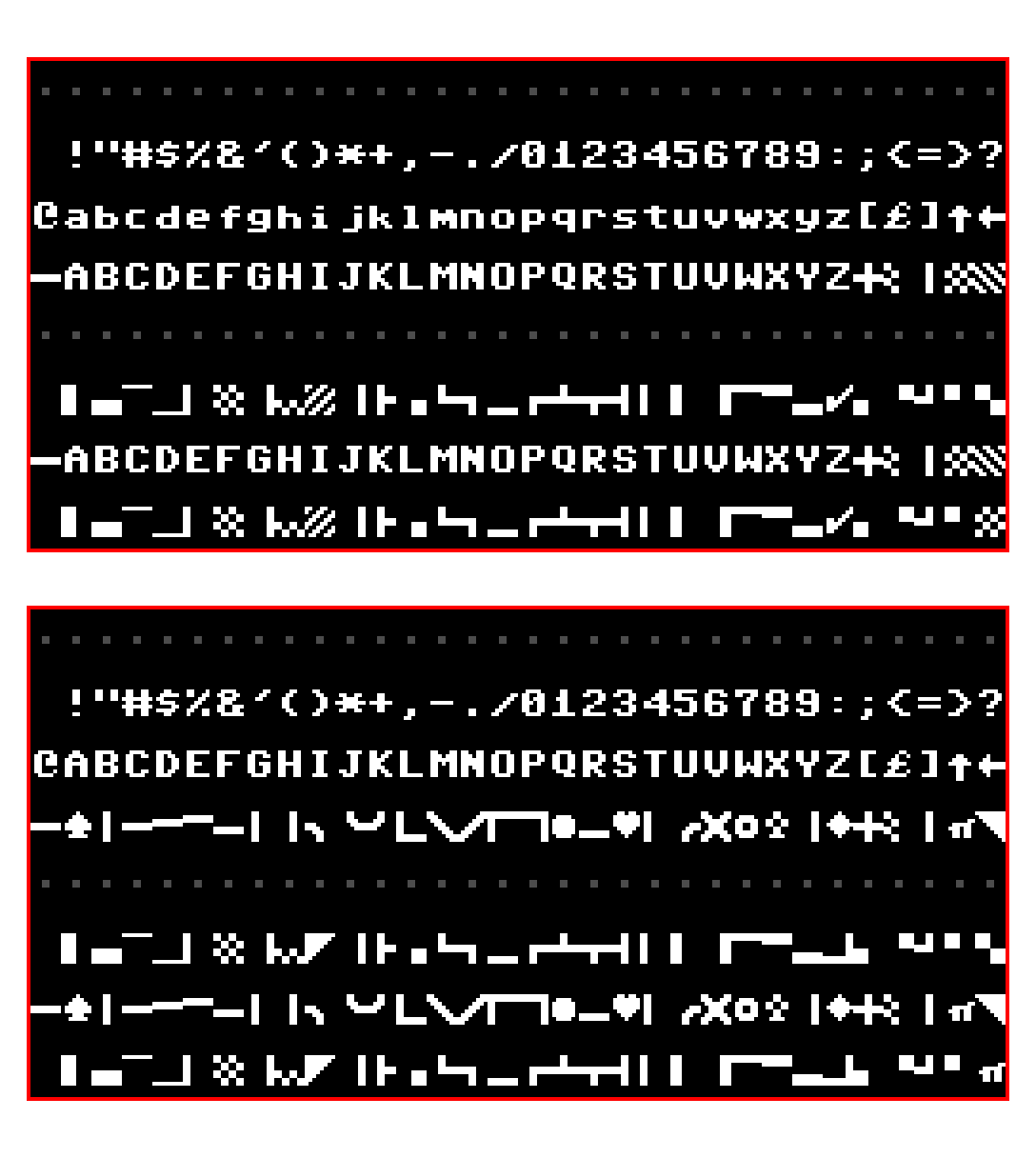
It’s all very well to look at scaleable fonts for high resolution work, but perhaps of more interest here are bitmap fonts. After all it’s these we’ll be sending to our little screens from our microcontrollers. It’s fair to say that attempts to produce smooth typefaces as bitmaps on machines such as the Amiga produced mixed results, but it’s interesting to look at the “classic” ROM bitmap fonts as found in microcomputers back in the day. After years of their just flowing past he eye it’s particularly so to examine them from an accessibility standpoint.
Machines such as the Sinclair Spectrum or Commodore 64 have evidently had some thought put into differentiating their characters. Their upper-case “Ii” has finials for example, and we’re likely to all be used to the zero with a line through it to differentiate it from the uppercase “O”. Perhaps of them all it’s the IBM PC’s code page 437 that does the job most elegantly, maybe we didn’t realise what we had back in the day.
So we understand that there are cultural preferences for particular design choices such as fonts, and for whatever reason these sometimes come ahead of technical considerations. But it’s been worth a quick look at accessible typography, and who knows, perhaps we can make our projects easier to use as a result. What fonts do you use when legibility matters?
Header: Linotype machines: AE Foster, Public domain.
Nella primavera del 2025 ricorreva l’ottavo centenario della composizione di un testo noto, dalle sue prime parole, come l’Audite poverelle: l’ultima volontà del Poverello di Assisi, lasciata a Chiara, alle donne di San Damiano e alle loro seguaci sp…
l'UE sempre più "mazzolata", ma bomber Pfizer & c pensano a giocare alla guerra.
Cina: dazi sui prodotti caseari UE
A partire da domani la Cina imporrà dazi dal 21,9% al 42,7% sui prodotti lattiero caseari dell’Unione Europea. Lo ha annunciato il ministro del Commercio cinese, che ha spiegato che la misura sarà temporanea e avrà lo scopo di compensare le perdite del settore in Cina. «I prodotti lattiero-caseari importati provenienti dall’UE ricevono sussidi», ha detto il ministro. «L’industria lattiero-casearia nazionale cinese ha subito danni sostanziali ed esiste un nesso causale tra i sussidi e il danno», ha aggiunto.
@Giornalismo e disordine informativo articolo21.org/2025/12/lo-sgom… Il punto non è quanto ci piaccia o meno Askatasuna, quanto ci entusiasmino presupposto ideologico, finalità, obiettivi e metodi. Il punto è cosa deve tentare di fare la politica di fronte ad un fatto sociale così rilevante,
Podcast: Marisa Kabas on Landing Big Scoops as an Independent Journalist
Marisa Kabas is the founder of The Handbasket, an independent newsletter and website that has been breaking stories left and right about government workers, the media business, and Trump’s mass deportation campaign. Please go subscribe to The Handbasket here!
Listen to the weekly podcast on Apple Podcasts, Spotify, or YouTube. Become a paid subscriber for access to this episode's bonus content and to power our journalism. If you become a paid subscriber, check your inbox for an email from our podcast host Transistor for a link to the subscribers-only version! You can also add that subscribers feed to your podcast app of choice and never miss an episode that way. The email should also contain the subscribers-only unlisted YouTube link for the extended video version too. It will also be in the show notes in your podcast player.
Flock Exposed Its AI-Powered Cameras to the Internet. We Tracked Ourselves
I am standing on the corner of Harris Road and Young Street outside of the Crossroads Business Park in Bakersfield, California, looking up at a Flock surveillance camera bolted high above a traffic signal. On my phone, I am watching myself in real time as the camera records and livestreams me—without any password or login—to the open internet. I wander into the intersection, stare at the camera and wave. On the livestream, I can see myself clearly. Hundreds of miles away, my colleagues are remotely watching me too through the exposed feed.
Flock left livestreams and administrator control panels for at least 60 of its AI-enabled Condor cameras around the country exposed to the open internet, where anyone could watch them, download 30 days worth of video archive, and change settings, see log files, and run diagnostics. Unlike many of Flock’s cameras, which are designed to capture license plates as people drive by, Flock’s Condor cameras are pan-tilt-zoom (PTZ) cameras designed to record and track people, not vehicles. Condor cameras can be set to automatically zoom in on people’s faces as they walk through a parking lot, down a public street, or play on a playground, or they can be controlled manually, according to marketing material on Flock’s website. We watched Condor cameras zoom in on a woman walking her dog on a bike path in suburban Atlanta; a camera followed a man walking through a Macy’s parking lot in Bakersfield; surveil children swinging on a swingset at a playground; and film high-res video of people sitting at a stoplight in traffic. In one case, we were able to watch a man rollerblade down Brookhaven, Georgia’s Peachtree Creek Greenway bike path. The Flock camera zoomed in on him and tracked him as he rolled past. Minutes later, he showed up on another exposed camera livestream further down the bike path. The camera’s resolution was good enough that we were able to see that, when he stopped beneath one of the cameras, he was watching rollerblading videos on his phone.
0:00 /0:16 1×
The exposure was initially discovered by YouTuber and technologist Benn Jordan and was shared with security researcher Jon “GainSec” Gaines, who recently found numerous vulnerabilities in several other models of Flock’s automated license plate reader (ALPR) cameras. They shared the details of what they found with me, and I verified many of the details seen in the exposed portals by driving to Bakersfield to walk in front of two cameras there while I watched myself on the livestream. I also pulled Flock’s contracts with cities for Condor cameras, pulled details from company presentations about the technology, and geolocated a handful of the cameras to cities and towns across the United States. Jordan also filmed himself in front of several of the cameras on the Peachtree Creek Greenway bike path. Jordan said he and Gaines discovered many of the exposed cameras with Shodan, an internet of things search engine that researchers regularly use to identify improperly secured devices. youtube.com/embed/vU1-uiUlHTo?… After finding links to the feed, “immediately, we were just without any username, without any password, we were just seeing everything from playgrounds to parking lots with people, Christmas shopping and unloading their stuff into cars,” Jordan told me in an interview. “I think it was like the first time that I actually got like immediately scared … I think the one that affected me most was as playground. You could see unattended kids, and that’s something I want people to know about so they can understand how dangerous this is.” In a YouTube video about his research, Jordan said he was able to use footage pulled from the exposed feed to identify specific people using open source investigation tools in order to show how trivially an exposure like this could be abused. Benn Jordan Last year, Flock introduced AI features to Condor cameras that automatically zoom in on people as they walk by. In Flock’s announcement of this feature, it explained that this technology “zooms in on a suspect exiting one car, stealing an item from another, and returning to his vehicle. Every detail is captured, providing invaluable evidence for investigators.” On several of the exposed feeds, we saw Flock cameras repeatedly zooming in on and tracking random people as they walked by. The cameras can be controlled by AI or manually.
The exposure highlights the fact that Flock is not just surveilling cars—it is surveilling people, and in some cases it is doing so in an insecure way, and highlight the types of places that its Condor cameras are being deployed. Condor cameras are part of Flock’s ever-expanding quest to “prevent crime,” and are sometimes integrated with its license plate cameras, its gunshot detection microphones, and its automated camera drones.
Cooper Quintin, senior staff technologist at the Electronic Frontier Foundation, told me the behavior he saw in videos we shared with him “shows that Flock's ambitions go far beyond license-plate surveillance. They want to be a nation-wide panopticon, watching everyone all the time. Flock's goal isn't to catch stolen cars, their goal is to have total surveillance of everyone all the time."
0:00 /1:03 1×
The cameras were left not just livestreaming to the internet for anyone who could find the link, but in many cases their administrative portals were left open with no login credentials required whatsoever. On this portal, some camera settings could be changed, diagnostics could be run, and text logs of what the camera was doing were being streamed, too. Thirty days of the camera’s archive was left available for anyone to watch or download from any of the cameras that we found. We were not able to geolocate every camera that was left unprotected, but we found cameras at a New York City Department of Transportation parking lot, on a street corner in suburban New Orleans, in random cul-de-sacs, in a Lowes parking lot, in the parking lot of a skatepark, at a pool, outside a parking garage, at an apartment complex, outside a church, on a bike path, and at various street intersections around the country.
“This is not the first time we have seen ALPRs exposed on the public internet, and it won't be the last. Law enforcement agencies around the country have been all too eager to adopt mass surveillance technologies, but sometimes they have put little effort into ensuring the systems are secure and the sensitive data they collect on everyday people is protected,” Quintin said. “Law enforcement should not collect information they can’t protect. Surveillance technology without adequate security measures puts everyone’s safety at risk.”
It was not always clear which business or agency owned specific cameras that were left exposed, or what type of misconfiguration led to the exposure, though I was able to find a $348,000 Flock contract for Brookhaven, Georgia, which manages the Peachtree Creek Greenway, and includes 64 Condor cameras.
"This was a limited misconfiguration on a very small number of devices, and it has since been remedied," a Flock spokesperson told 404 Media. It did not answer questions about what caused the misconfiguration or how many devices ultimately were affected.
💡 Do you know anything else about surveillance? I would love to hear from you. Using a non-work device, you can message me securely on Signal at jason.404. Otherwise, send me an email at jason@404media.co.
In response to Jordan and Gaines’ earlier research on vulnerabilities in other Flock cameras, Flock CEO Garrett Langley said in a LinkedIn post that “The Flock system has not been hacked. We secure customer data to the highest standard of industry requirements, including strict industry standard encryption. Flock’s cloud storage has never been compromised.” The exposure of these video feeds is not a hack of Flock’s system, but demonstrates a major misconfiguration of at least some cameras. It also highlights a major misconfiguration in its security that persisted for at least days.
“When I was making my last video [about Flock ALPR vulnerabilities], it was almost like a catchphrase where I'd say like, ‘I don't see how it could get any worse.’ And then something would happen where you'd be like, wow, they pulled it off. They made it worse,” Jordan said. “And then this is like the ultimate one. Because this is completely unrelated [to my earlier research] and I don’t really know how it could be any worse to be honest.” In a 2023 video webinar introducing the Condor platform to police, Flock executives said the cameras are meant to be paired with their ALPR cameras and are designed to feed video to FlockOS, a police panel that allows cops to hop from camera to camera in real time across a mapped-out view of their city. In Bakersfield, which has 382 Flock cameras according to a transparency report, one of the Condor cameras we saw was located next to a mall that had at least two Flock ALPR cameras stationed at the entrances to the mall parking lot.
Kevin Cox, a Flock consultant who used to work for the Grand Prairie, Texas Police Department, said in the webinar that he built an “intel center” with a high “density” of Flock cameras in that city. “I am passionate about this because I’ve lived it. The background behind video [Condor] with LPR is rich with arrests,” he said. “That rich experience of seeing what happened kind of brings it alive to [judges]. So video combined with the LPR evidence of placing a vehicle at the scene or nearby is an incredibly game changing experience into the prosecutorial chain of events.”
“You can look down a tremendous distance with our cameras, to the next intersection and the next intersection,” he said. “The camera will identify people, what they’re wearing, and cars up to a half a mile away. It’s that good.”
0:00 /0:08 1×
Condor cameras in a Flock demo showing off its AI tracking features
In the webinar Cox pulled up a multiview panel of a series of cameras and took control of them, dragging, panning, and zooming on cameras and hopping between multiple cameras in real time. Cox suggested that police officers could either use Flock’s cameras to pinpoint a person at a place and time and then use it to request “cell tower dumps” from wireless companies, or could use cell GPS data to then go into the Flock system to track a person as they moved throughout a city. “If you can place that person’s cell phone and then the Condor video and Falcon LPR evidence, it would be next to impossible to beat that in court,” he said, adding that some towns may just want to have always-on, always recording video of certain intersections or town squares. “There’s endless endless uses to what we can do with these things.”
On the webinar, Seth Cimino, who was a police officer at the Citrus Heights, California police department at the time but now works directly for Flock, told participants that officers in his city enjoyed using the cameras to zoom in on crimes.
“There is an eagerness amongst our staff that are logged in that have their own Flock accounts to be able to monitor our ALPR and pan tilt zoom Condor cameras throughout the community, to a point where sometimes our officers are beating dispatch with the information,” he said. “If there’s an incident that occurs at a specific intersection or a short distance away where our Condor cameras can zoom in on that area, it allows for real time overwatch […] as I sit here right now with you—how cool is this? We just had a Flock alert here in the city. I mean, it just popped up on my screen!”
Oggi, nella cattedrale “Assunzione della Beata Vergine Maria” a Sofia, sede dei cattolici di rito bizantino, è stato validato il francobollo giubilare in occasione del 100° anniversario dell’arrivo di mons.
youtube.com/@masspiratesSteve and James discuss a new bipartisan effort to sunset CDA Section 230, a Trump DOJ memorandum the claims recording ICE agents is violence and wish you all a happy holidays on our last pirate news for 2025.
“In questi ultimi decenni, la crisi della fiducia nella Chiesa suscitata dagli abusi commessi da membri del clero, che ci riempiono di vergogna e ci richiamano all’umiltà, ci ha reso ancora più consapevoli dell’urgenza di una formazione integrale che…
“Mentalità efficientista” e “quietismo”. Sono queste, per il Papa, le due tentazioni opposte da cui i preti devono guardarsi “nel nostro mondo contemporaneo, caratterizzato da ritmi incalzanti e dall’ansia di essere iperconnessi, che ci rende spesso …
“Il rapporto con il vescovo, la fraternità con gli altri presbiteri, il rapporto con i fedeli laici”. Sono le tre coordinate dell’identità sacerdotale, raccomandate dal Papa nella lettera apostolica “Una fedeltà che genera futuro”.
‼️La vicenda di David McBride rappresenta un caso emblematico nella discussione sul whistleblowing, ossia il coraggio di denunciare crimini o comportamenti illeciti all’interno di strutture di potere, e la ragion di Stato che tende a proteggere tale …
Sarvarov era capo dell’Ufficio di Addestramento Operativo delle Forze Armate della Federazione Russa, una posizione chiave nello Stato Maggiore militare del Paese.
eccoci... considerato che siamo già al limite per l'elevato numero di oggetti in orbita, e potrebbe bastare anche solo una tempesta solare a provocare il disastro, ecco a voi, signori e signori, la tecnologia che cancellerà l'accesso allo spazio (con tutte le ricadute e i benefici tecnologici evidenti) per l'umanità per 2-3 secoli... grazie alla famosa sindrome di Kessler....
Il #GarantePrivacy europeo (GEPD) ha pubblicato il suo ultimo TechDispatch , una serie di articoli che forniscono analisi dettagliate su nuove tecnologie e tendenze. Questo numero si concentra sui Digital Identity Wallet (DIW) e su come possiamo garantire che rimangano conformi ai principi di protezione dei dati.
(segui l'account @Privacy Pride per avere gli ultimi aggiornamenti sulla #privacy e la gestione dei dati personali)
Un DIW consente agli utenti di archiviare in modo sicuro dati di identità e credenziali in un repository digitale, consentendo l'accesso ai servizi sia nel mondo fisico che in quello digitale. Intitolata "Il percorso verso un approccio di protezione dei dati by design e by default", la nuova pubblicazione è una lettura essenziale per decisori politici e professionisti che desiderano garantire che lo sviluppo di DIW, come il futuro Portafoglio Europeo di Identità Digitale (EUDIW) , aderisca ai principi di Privacy by Design e by Default.
Per saperne di più sulle raccomandazioni del GEPD per un quadro normativo sull'identità digitale sicuro e rispettoso della privacy,
The idea behind a Digital Identity Wallet (DIW) is to provide users with an easy way to store their identity data and credentials in a digital repository.
@Notizie dall'Italia e dal mondo Le dimissioni dell’11 dicembre non sono un incidente ma l’esito di una crisi che dura dal 2020. Proteste, corruzione, inflazione, ingresso nell’euro e scontro istituzionale si innestano su un sistema incapace
#NoiSiamoLeScuole questa settimana è dedicato a due nuove scuole, la “Falcone-Borsellino” di Monterenzio (BO) e la “Mustica” di Santa Sofia d’Epiro (CS) che, con i fondi del #PNRR finalizzati alla costruzione di nuove scuole, sono state demolite e ri…
#NoiSiamoLeScuole questa settimana è dedicato a due nuove scuole, la “Falcone-Borsellino” di Monterenzio (BO) e la “Mustica” di Santa Sofia d’Epiro (CS) che, con i fondi del #PNRR finalizzati alla costruzione di nuove scuole, sono state demolite e ri…
Il bilancio del 2025 in cinque articoli: in quello di oggi l’anno del presidente statunitense, che ha sovvertito l’ordine mondiale ma fatica a imporsi. Leggi
Negli anni il settore spaziale è passato da ambito specialistico, quasi esclusivamente istituzionale, a terreno centrale della competizione economica e tecnologica nonché dominio di contrasto militare. Questa trasformazione, spesso sintetizzata nel mondo civile
Maurizio Pratelli – Scendo prima del capolinea freezonemagazine.com/articoli/… Nel suo secondo romanzo, Maurizio Pratelli mette a punto, in modo piuttosto convincente, la propria capacità di narratore e lo stile di scrittura portando in scena un protagonista in bilico tra il peso del passato e la ricerca di un futuro ancora possibile. Andrea, soffocato da un lavoro che non sente suo e da una […] L'articolo Maurizio Pratelli – Scendo prima
@Notizie dall'Italia e dal mondo Il paese interrotto descritto nei racconti dell'autore Roberto Cirelli è la Palestina: economia, cultura e vita sociale sono messe in pericolo quotidianamente dall’occupazione israeliana L'articolo LIBRI. Cronache da un paese interrotto. Diario di un prof in Palestina
La vicenda di David McBride rappresenta un caso emblematico nella discussione sul whistleblowing, ossia il coraggio di denunciare crimini o comportamenti illeciti all’interno di strutture di potere, e la ragion di Stato che tende a proteggere tale potere a scapito della giustizia e dei diritti umani. McBride, ex capitano dell’Esercito britannico e avvocato militare dell’Esercito australiano, […]
Riceviamo e pubblichiamo: Mentre il mondo celebra le festività natalizie e la fine dell’anno, i cittadini di Gaza vivono queste giornate nel modo più doloroso: accompagnando i propri cari verso l’ultimo saluto nei cimiteri. Nella giornata di ieri, sette civili hanno perso la vita nel quartiere di Al-Tuffah, nella parte orientale della città di Gaza, a seguito di bombardamenti israeliani che hanno colpito una scuola trasformata in centro di accoglienza per sfollati, già costretti a fuggire dalle loro abitazioni a causa dei continui attacchi. Dal 11 ottobre scorso, data di entrata in vigore della tregua, oltre 400 cittadini di Gaza sono stati uccisi, in quella che appare come una violazione continua e sistematica della tregua firmata a Sharm El-Sheikh, in Egitto. Questi eventi confermano il grave e persistente calpestamento dei diritti umani fondamentali della popolazione civile. La popolazione di Gaza ha urgente bisogno di aiuto umanitario: ha bisogno dell’apertura dei valichi, di tende, di medicine, di cibo, di acqua potabile e di protezione. Non ha bisogno di bombe che continuano a spezzare vite e distruggere famiglie. I cittadini gazawi chiedono semplicemente ciò che spetta a ogni essere umano: la possibilità di vivere in sicurezza, di proteggere i propri figli e di accogliere il nuovo anno in pace, come ogni altro popolo del mondo. Il silenzio e l’inazione della comunità internazionale di fronte a questa tragedia rappresentano una grave responsabilità morale e politica. È tempo di agire, di fermare la violenza e di garantire una reale protezione ai civili. 20/12/2025 Associazione dei Palestinesi in Italia (API)
Riceviamo e pubblichiamo:
Mentre il mondo celebra le festività natalizie e la fine dell’anno, i cittadini di Gaza vivono queste giornate nel modo più doloroso: accompagnando i propri cari verso l’ultimo saluto nei cimiteri.
L'escalation continua quando il Presidente Trump ha annunciato il 10 dicembre, due giorni dopo la cerimonia del Nobel, che gli scioperi degli Stati Uniti sarebbero "iniziati via terra.
per la brexit mi dispiace solo per gli scozzesi. e l'irlanda del nord. la scozia ha fatto un referendum per uscire dal regno unito ed ha votato no solo perché fuoriuscendo dal regno unito si sarebbe trovata fuori dalla UE e il regno unito avrebbe posto sicuramente un veto per farla entrare come singola nazione. ma poi il regno unito è uscito e la loro scelta si è rivelata, a posteriori, sbagliata 🙁
posso chiederti come ti trovi con questo sistema operativo? Le app android classiche ci sono? O sono insatallabili? Intendo cose come le app delle banche, soprattutto.
@🇪🇺 Il Simone Viaggiatore ✈️🧳 Le applicazioni ci sono. Lo store di /e/OS è essenzialmente un ponte con il Play Store di Google e F-Droid per quelle FOSS. L'unica applicazione che non sono riuscito a far funzionare, finora, è PosteID per lo SPID. Le altre app per banche/pagamenti/governative son riuscito a farle funzionare con relativamente poco sbatti.
ci ho "giocato" per qualche giorno, e in generale mi è piaciuto, salvo il fatto che per l'interfaccia hanno voluto scopiazzare iOs (ma quello si rimedia).
Apprezzabile il fatto che di default google non c'è, ma si riesce a fare praticamente tutto. Bella la VPN integrata.
Per i miei scopi immediati preferisco Lineage (l'ho reinstallato) ma nonneacludo di usarlo prima o poi su altri telefoni.
@🇪🇺 Il Simone Viaggiatore ✈️🧳 L'interfaccia non piace neanche a me, ma l'ho rimpiazzata subito con il launcher che mi fa da miglior compromesso.
Sono neofita... ho scelto /e/OS perché mi dava l'idea (credo a ragione) di essere una derivata #LineageOS preconfigurata anche con MicroG e con accesso alle app del PlayStore e perché mi permetteva di ri-bloccare il boot-loader.
Ho speso circa sedici anni su #Ubuntu per poi passare alla sua origine #Debian; magari ci metterò meno a passare da /e/OS a #LineageOS?! 😄
mi vedi Viaggiatore ma di mestiere vivo di informatica.
Hai ragione, Lineage non ti da MicroG di default e ti pone subito di fronte a una scelta: installare le app di Google (e allora diventa un android qualunque) oppure no. In questo caso potrebbe servire MicroG che va aggiunto, e ogni app che si appoggia ai servizi google potrebbe fare problemi, anche se potresti usare ovviamente le app open Source. Insomma, in quel caso ogni scelta va calibrata e tentata, dipende da caso a caso. 👇🏻
il mio consiglio è di tenere e OS se non ti da difficoltà, hai già un sistema de-googlizzato di default, e con MicroG. Le prestazioni sono di tutto rispetto.
Io lo userò su alcuni vecchi cellulari, mentre su quello di riserva che uso in viaggio ho voluto mettere lineage+app google, perché avendo un canale YouTube le app che ho trovato su eOS non funzionavano benissimo per i miei scopi, ma solo per quello!
continuo a credere in una disseminazione/diffusione [...] orizzontale, e diffido di una prassi verticale e centripeta. i #social e qualsiasi altro luogo della superficie #mainstream della rete blandiscono e capitalizzano il #narcisismo e la #separazione degli utenti (e dei) critici, quindi privilegiano l'aspetto centralizzatore e verticale ... [continua qui] → noblogo.org/differx/continuo-a…
al contrario, l'idea orizzontale e rizomatica del modus operandi che mi convince ha al fondo un progetto di distribuzione delle informazioni (recenti, storiche, politiche, artistiche ecc.
Uno degli esempi più interessanti per rispondere all’annosa questione sul finanziamento delle spese militari viene da un Paese che difficilmente si tende ad associare a questi temi: il Canada. Che sia un modo per aumentare il peso diplomatico del Paese in sede Nato o una risposta alle
Io ci sto migrando i servizi proprio in questi giorni. Ho spostato calendario e rubrica e lentamente anche il drive. Per ora non ho avuto grandi problemi. Sembra ben fatto ed è esteticamente curato
Purtroppo io ho un abbonamento già pagato su Cloud Microsoft, che condivido con altre persone. La parte difficile sarà far capire a loro perché è importante uscirne.
Di sicuro io ne uscirò, nel tempo che ho davanti sposterò i vari account su kmail (ho aperto intanto l'account gratuito).
anche io la sto prendendo con molta calma. Durante le feste comunicherò a tutti i clienti il cambio della mail e perché ho scelto una soluzione etica ed europea. Finalmente una suite decente made in EU










The HandbasketMarisa Kabas

 The HandbasketMarisa Kabas
 The HandbasketMarisa Kabas
Benn Jordan





🇪🇺 Il Simone Viaggiatore ✈️🧳
in reply to 𝓘𝓰𝓸𝓻 🏴☠️ 🏳️🌈 🇮🇹 • • •posso chiederti come ti trovi con questo sistema operativo? Le app android classiche ci sono? O sono insatallabili? Intendo cose come le app delle banche, soprattutto.
Ti ringrazio per quanto potrai dirmi.
𝓘𝓰𝓸𝓻 🏴☠️ 🏳️🌈 🇮🇹
in reply to 🇪🇺 Il Simone Viaggiatore ✈️🧳 • — (Torino) •Le applicazioni ci sono. Lo store di /e/OS è essenzialmente un ponte con il Play Store di Google e F-Droid per quelle FOSS. L'unica applicazione che non sono riuscito a far funzionare, finora, è PosteID per lo SPID. Le altre app per banche/pagamenti/governative son riuscito a farle funzionare con relativamente poco sbatti.
🇪🇺 Il Simone Viaggiatore ✈️🧳
in reply to 𝓘𝓰𝓸𝓻 🏴☠️ 🏳️🌈 🇮🇹 • • •🇪🇺 Il Simone Viaggiatore ✈️🧳
in reply to 𝓘𝓰𝓸𝓻 🏴☠️ 🏳️🌈 🇮🇹 • • •ci ho "giocato" per qualche giorno, e in generale mi è piaciuto, salvo il fatto che per l'interfaccia hanno voluto scopiazzare iOs (ma quello si rimedia).
Apprezzabile il fatto che di default google non c'è, ma si riesce a fare praticamente tutto. Bella la VPN integrata.
Per i miei scopi immediati preferisco Lineage (l'ho reinstallato) ma nonneacludo di usarlo prima o poi su altri telefoni.
Ottima alternativa europea, comunque!
𝓘𝓰𝓸𝓻 🏴☠️ 🏳️🌈 🇮🇹
in reply to 🇪🇺 Il Simone Viaggiatore ✈️🧳 • •@🇪🇺 Il Simone Viaggiatore ✈️🧳 L'interfaccia non piace neanche a me, ma l'ho rimpiazzata subito con il launcher che mi fa da miglior compromesso.
Sono neofita... ho scelto /e/OS perché mi dava l'idea (credo a ragione) di essere una derivata #LineageOS preconfigurata anche con MicroG e con accesso alle app del PlayStore e perché mi permetteva di ri-bloccare il boot-loader.
Ho speso circa sedici anni su #Ubuntu per poi passare alla sua origine #Debian; magari ci metterò meno a passare da /e/OS a #LineageOS?! 😄
🇪🇺 Il Simone Viaggiatore ✈️🧳
in reply to 𝓘𝓰𝓸𝓻 🏴☠️ 🏳️🌈 🇮🇹 • • •mi vedi Viaggiatore ma di mestiere vivo di informatica.
Hai ragione, Lineage non ti da MicroG di default e ti pone subito di fronte a una scelta: installare le app di Google (e allora diventa un android qualunque) oppure no. In questo caso potrebbe servire MicroG che va aggiunto, e ogni app che si appoggia ai servizi google potrebbe fare problemi, anche se potresti usare ovviamente le app open Source. Insomma, in quel caso ogni scelta va calibrata e tentata, dipende da caso a caso. 👇🏻
🇪🇺 Il Simone Viaggiatore ✈️🧳
in reply to 🇪🇺 Il Simone Viaggiatore ✈️🧳 • • •il mio consiglio è di tenere e OS se non ti da difficoltà, hai già un sistema de-googlizzato di default, e con MicroG. Le prestazioni sono di tutto rispetto.
Io lo userò su alcuni vecchi cellulari, mentre su quello di riserva che uso in viaggio ho voluto mettere lineage+app google, perché avendo un canale YouTube le app che ho trovato su eOS non funzionavano benissimo per i miei scopi, ma solo per quello!