We start this week with Joseph’s article about ELITE, a tool Palantir is working on for ICE. After the break, Emanuel tells us how AI influencers are making fake sex tape-style photos with celebrities, who can’t be best pleased about it. In the subscribers-only section, Matthew breaks down Comic-Con’s ban of AI art. playlist.megaphone.fm?p=TBIEA2… Listen to the weekly podcast on Apple Podcasts,Spotify, or YouTube. Become a paid subscriber for access to this episode's bonus content and to power our journalism. If you become a paid subscriber, check your inbox for an email from our podcast host Transistor for a link to the subscribers-only version! You can also add that subscribers feed to your podcast app of choice and never miss an episode that way. The email should also contain the subscribers-only unlisted YouTube link for the extended video version too. It will also be in the show notes in your podcast player. youtube.com/embed/b-QHWpqjD-E?…
Tech News Podcast · Updated Weekly · Welcome to the podcast from 404 Media where Joseph, Sam, Emanuel, and Jason catch you up on the stories we published this week. 404 Media is a journalist-owned digital media company exploring the way …
This week Jonathan chats with Nicholas Adams about OpenRiak! Why is there a Riak and an OpenRiak, which side of the CAP theorem does OpenRiak land on, and why is it so blazingly fast for some operations? Listen to find out!
Did you know you can watch the live recording of the show right on our YouTube Channel? Have someone you’d like us to interview? Let us know, or have the guest contact us! Take a look at the schedule here.
“Per affrontare questa epoca segnata – anche nel campo della comunicazione – dall’irruzione dell’intelligenza artificiale, è urgente tornare alle ragioni del cuore, alla centralità delle buone relazioni e alla capacità di relazionarsi agli altri, sen…
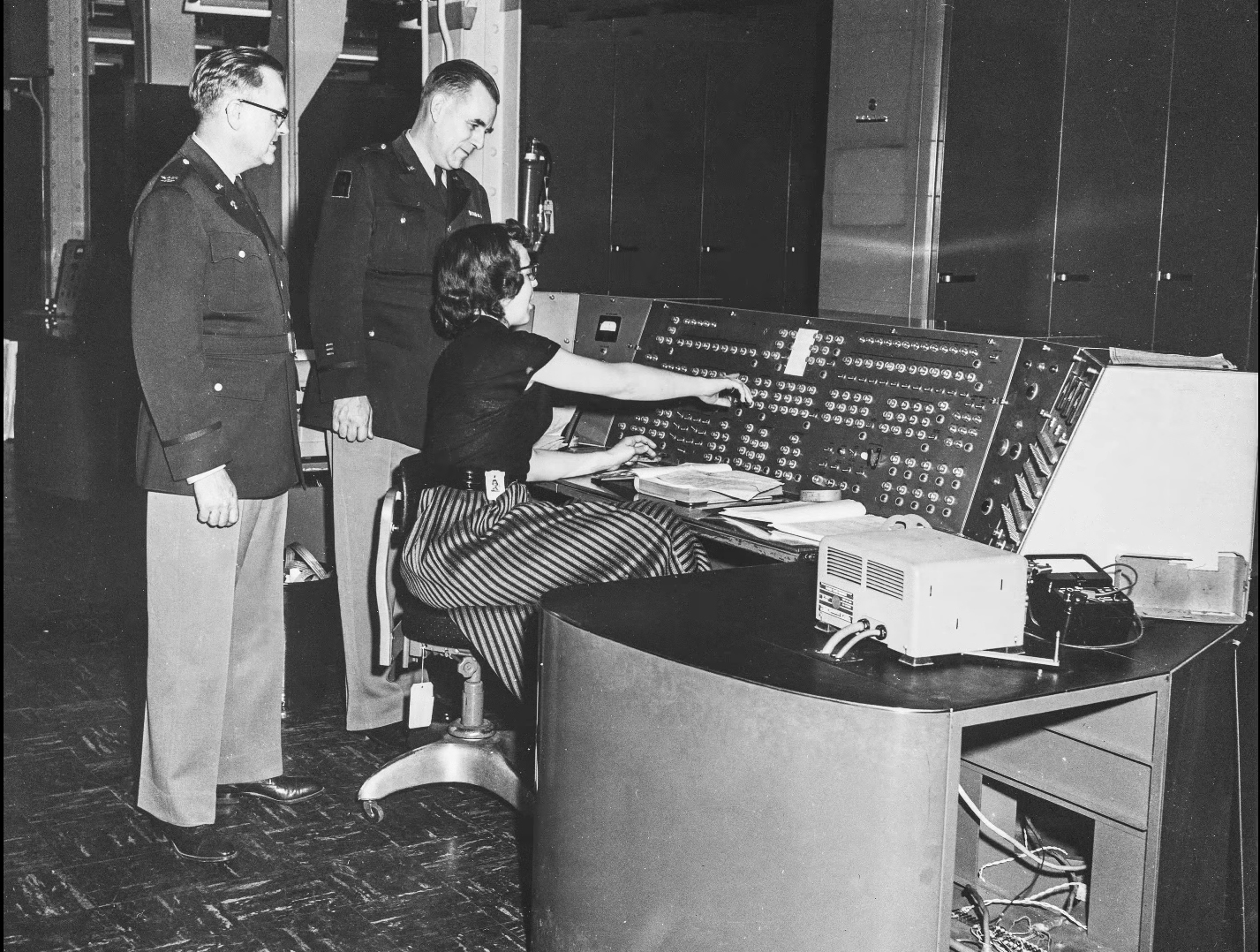
If you follow electronics history, few names were as ubiquitous as RCA, the Radio Corporation of America. Yet in modern times, the company is virtually forgotten for making large computers. [Computer History Archive Project] has a rare film from the 1970s (embedded below) explaining how RCA planned to become the number two supplier of business computers, presumably behind behemoth IBM. They had produced other large computers in the 1950s and 1960s, like the BIZMAC, the RCA 510, and the Spectra. But these new machines were their bid to eat away at IBM’s dominance in the field.
RCA had innovative ideas and arguably one of the first demand paging, virtual memory operating systems for mainframes. You can hope they were better at designing computers than they were at making commercials.
The BIZMAC was much earlier and used tubes (public domain). In 1964, [David Sarnoff] famously said: “The computer will become the hub of a vast network of remote data stations and information banks feeding into the machine at a transmission rate of a billion or more bits of information a second … Eventually, a global communications network handling voice, data and facsimile will instantly link man to machine — or machine to machine — by land, air, underwater, and space circuits. [The computer] will affect man’s ways of thinking, his means of education, his relationship to his physical and social environment, and it will alter his ways of living. … [Before the end of this century, these forces] will coalesce into what unquestionably will become the greatest adventure of the human mind.”
He was, of course, right. Just a little early. The machines in the video were to replace the Spectra 70 computers, seen here from an RCA brochure. The machines were somewhat compatible with IBM computers, touted virtual memory, and had flexible options, including a lease that let you own your hardware in six years. They mention, by the way, IBM customers who were paying up to $60,000 / month to IBM. They mentioned that an IBM 360/30 with 65K was about $13,200 / month. You could upgrade with a 360/30 for an extra $3,000 / month, which would double your memory but not double your computing power. (If you watch around the 18-minute mark, you’ll find the computing power was extremely slow by today’s standards.)
RCA, of course, had a better deal. The RCA 2 had double the memory and reportedly triple the performance for only $2,000 extra per month. We don’t know what the basis for that performance number was. For $3,500 a month extra, you could have an RCA 3 with the miracle of virtual memory, providing an apparent 2 megabytes per running job.
There are more comparisons, and keep in mind, these are 1970 dollars. In 1970, a computer programmer probably made $10,000 to $20,000 a year while working on a computer that cost $158,000 in lease payments (not to count electricity and consumables). How much cloud computing could you buy in a year for $158,000 today? Want to buy one? They started at $700,000 up to over $1.6 million.
By their release, the systems were named after their Spectra 70 cousins. So, officially, they were Spectra 70/2, 70/3, 70/5, and 70/6.
Despite all the forward-looking statements, RCA had less than 10% market share and faced increasing costs to stay competitive. They decided to sell the computer business to Sperry. Sperry rebranded several RCA computers and continued to sell and support them, at least for a while.
Now, RCA is a barely remembered blip on the computer landscape. You are more likely to find someone who remembers the RCA 1800 family of CPUs than an actual RCA mainframe. Maybe they should have throw in the cat with the deal.
Want to see the IBM machines these competed with? Here you go. We doubt there were any RCA computers in this data center, but they’d have been right at home.
Older fiber optic lamps use a dim filament lamp or halogen lamp to light them up. They also often feature a spinning color disk to vary the light patterns, which does have the side effect of absorbing some of the already-limited light output.
When it came to upgrading his own decades-old lamp, [Braniac75] decided to initially stick within the specs of the original halogen lamp. The fixture was rated for 12 volts at 5 watts, with a GU4/GZ4 compatible base, and white light was desired so the color wheel could still do its thing. Swapping out the original 5 W halogen for a 2.5 W LED unit brought a big upgrade in brightness, since the latter is roughly equivalent to a 20 W halogen in light output. Upgrading to a 4.2 W LED pushed things even further, greatly improving the look of the lamp.
The video also explores modding a modern fiber optic lamp, too. It was incredibly cheap, running off batteries and using a single color-changing LED to illuminate the fibers. [Braniac75] decided to try illuminating the plastic fibers with an RGB stage lighting laser rig—namely, the LaserCube Ultra 7.5 W from Wicked Lasers. With this kind of juice, the fiber lamp is eye-searingly bright, quite literally, and difficult to film. However, with the laser output dialed way down, the lamp looks amazing—with rich saturated colors dancing across the fiber bundle as the lasers do their thing.
sede lhive - via Camillo Finocchiaro aprile 160 (giovedì, 22 gennaio 18:30) Due incontri di confronto e formazione con Tiziana La Portera, consulente in sessuologia e insegnante
BI-SCUSSIONI + APERI-BI-VO | Cerchi di discussione su bisessualità, bifobia e misoginia con a seguire aperitivo bisessuale
Ex 51 - Via Aurelio Bacciarini 12, Valle Aurelia (sabato, 24 gennaio 15:30) CERCHIO SU BISESSUALITÀ, BIFOBIA E BIMISOGINIA + APERITIVO BISESSUALE
Un cerchio di discussione per esplorare e riflettere sulla bisessualità, e su come la bifobia si interseziona con la misoginia.
📅 sabato 24 gennaio 2026
🗣️ inizio discussione 15:30
🍷 inizio aperitivo 18:00
Non è necessario partecipare sia all'incontro che all'aperitivo.
📌 Spazio Sociale Ex 51
🗺️ Via Bacciarini 12 (MA Valle Aurelia)
L'incontro fa parte di una serie di cerchi di discussione organizzati in avvicinamento all'8 marzo. La partecipazione è libera e aperta: non è necessario prendere parte tutti gli incontri.
There was a time when wise older people warned you to check your tire pressure regularly. We never did, and would eventually wind up with a flat or, worse, a blowout. These days, your car will probably warn you when your tires are low. That’s because of a class of devices known as tire pressure monitoring systems (TPMS).
If you are like us, you see some piece of tech like this, and you immediately guess how it probably works. In this case, the obvious guess is sometimes, but not always, correct. There are two different styles that are common, and only one works in the most obvious way.
Obvious Guess
We’d guess that the tire would have a little pressure sensor attached to it that would then wirelessly transmit data. In fact, some do work this way, and that’s known as dTPMS where the “d” stands for direct.
Of course, such a system needs power, and that’s usually in the form of batteries, although there are some that get power wirelessly using an RFID-like system. Anything wireless has to be able to penetrate the steel and rubber in the tire, of course.
But this isn’t always how dTPMS systems worked. In days of old, they used a finicky system involving a coil and a pressure-sensitive diaphragm — more on that later.
TPMS sensor (by [Lumu] CC BY-SA 3.0Many modern systems use iTPMS (indirect). These systems typically work on the idea that a properly inflated tire will have a characteristic rolling radius. Fusing data from the wheel speed sensor, the electronic steering control, and some fancy signal processing, they can deduce if a tire’s radius is off-nominal. Not all systems work exactly the same, but the key idea is that they use non-pressure data to infer the tire’s pressure.
This is cheap and requires no batteries in the tire. However, it isn’t without its problems. It is purely a relative measurement. In practice, you have to inflate your tires, tell the system to calibrate, and then drive around for half an hour or more to let it learn how your tires react to different roads, speeds, and driving styles.
Changes in temperature, like the first cold snap of winter, are notorious for causing these sensors to read flat. If the weather changes and you suddenly have four flat tires, that’s probably what happened. The tires really do lose some pressure as temperatures drop, but because all four change together, the indirect system can’t tell which one is at fault, if any.
History
When the diaphragm senses correct pressure, the sensor forms an LC circuit. Low air pressure causes the diaphragm to open the switch, breaking the circuit. The first passenger vehicle to offer TPMS was the 1986 Porsche 959. Two sensors made from a diaphragm and a coil are mounted between the wheel and the wheel’s hub. The sensors were on opposite sides of the tire. With sufficient pressure on the diaphragm, an electrical contact was made, changing the coil value, and a stationary coil would detect the sensor as it passed. If the pressure drops, the electrical contact opens, and the coil no longer sees the normal two pulses per rotation. The technique was similar to a grid dip meter measuring an LC resonant circuit. The diaphragm switch would change the LC circuit’s frequency, and the sensing coil could detect that.
If one or two pulses were absent despite the ABS system noting wheel rotation, the car would report low tire pressure. There were some cases of centrifugal force opening the diaphragms at high speed, causing false positives, but for the most part, the system worked. This isn’t exactly iTPMS, but it isn’t quite dTPMS either. The diaphragm does measure pressure in a binary way, but it doesn’t send pressure data in the way a normal dTPMS system does.
Of course, as you can see in the video, the 959 was decidedly a luxury car. It would be 1991 before the US-made Corvette acquired TPMS. The Renault Laguna II in 2000 was the first high-volume car to have similar sensors.
Now They’re Everywhere
In many places, laws were put in place to require TPMS in vehicles. It was also critical for cars that used “run flat” tires. The theory is that you might not notice your run flat tires were actually flat, and while they are, as their name implies, made to run flat, they also require you to limit speed and distance when they are flat.
Old cars or other vehicles that don’t have TPMS can still add it. There are systems that can measure tire pressure and report to a smartphone app. These are, of course, a type of dTPMS.
Problems
Of course, there are always problems. An iTPMS system isn’t really reading the tire pressure, so it can easily get out of calibration. Direct systems need battery changing, which usually means removing the tire, and a good bit of work — watch the video below. That means there is a big tradeoff between sending data with enough power to go through the tire and burning through batteries too fast.
Another issue with dTPMS is that you are broadcasting. That means you have to reject interference from other cars that may also transmit. Because of this, most sensors have a unique ID. This raises privacy concerns, too, since you are sending a uniquely identifiable code.
Of course, your car is probably also beaming Bluetooth signals and who knows what else. Not to even mention what the phone in your car is screaming to the ether. So, in practice, TPMS attacks are probably not a big problem for anyone with normal levels of paranoia.
An iTPMS sensor won’t work on a tire that isn’t moving, so monitoring your spare tire is out. Even dTPMS sensors often stop transmitting when they are not moving to save battery, and that also makes it difficult to monitor the spare tire.
The (Half Right) Obvious Answer
Sometimes, when you think of the “obvious” way something works, you are wrong. In this case, you are half right. TPMS reduces tire wear, prevents accidents that might happen during tire failure, and even saves fuel.
Thanks to this technology, you don’t have to remember to check your tire pressure before a trip. You should, however, probably check the tread.
Amateur Radio Operators in Belarus Arrested, Face the Death Penalty
The Belarusian government is threatening three ham radio operators with the death penalty, detained at least seven people, and has accused them of “intercepting state secrets,” according to Belarusian state media, independent media outside of Belarus, and the Belarusian human rights organization Viasna. The arrests are an extreme attack on what is most often a wholesome hobby that has a history of being vilified by authoritarian governments in part because the technology is quite censorship resistant.
The detentions were announced last week on Belarusian state TV, which claimed the men were part of a network of more than 50 people participating in the amateur radio hobby and have been accused of both “espionage” and “treason.” Authorities there said they seized more than 500 pieces of radio equipment. The men were accused on state TV of using radio to spy on the movement of government planes, though no actual evidence of this has been produced.
State TV claimed they were associated with the Belarusian Federation of Radioamateurs and Radiosportsmen (BFRR), a long-running amateur radio club and nonprofit that holds amateur radio competitions, meetups, trainings, and forums. WhatsApp and email requests to the BFRR from 404 Media were not returned.
On Reddit, Siarhei Besarab, a Belarusian amateur radio operator, posted a plea for support from others in the hobby: “MAYDAY from Belarus: Licensed operators facing death penalty.”
“I am writing this because my local community is being systematically liquidated in what I can only describe as a targeted intellectual genocide,” Besarab wrote. “They have detained over 50 licensed people, including callsigns EW1ABT, EW1AEH, and EW1ACE. These men were paraded on state television like war criminals and were coerced to publicly repent for the "crime" of technical curiosity. Propagandists presented the Belarusian Federation of Radioamateurs and Radiosportsmen (BFRR) as a front for a ‘massive spy network.’”
“State propaganda unironically claims these men were ‘pumping state secrets out of the air’ using nothing more than basic $25 Baofeng handhelds and consumer-grade SDR dongles,” he added. “Any operator knows that hardware like this is physically incapable of cracking the modern AES-256 digital encryption used by government security forces. It is a technical fraud, yet they are being charged with High Treason and Espionage. The punishment in Belarus for these charges is life in prison or the death penalty.”
The Belarusian human rights group Viasna and its associated Telegram channel confirmed the detention and said that it spoke to a cellmate of Andrei Repetsi, who said that Repetsi was unable to talk about his case in jail: “The case is secret, so Andrei never told the essence of the case in the cell. He joked that his personal file was marked ‘Top secret. Burn before reading,’” Viasna wrote.
Most hams operate amateur radios for fun, as part of competitions, or to keep in touch with other hams around the world. But the hobby has a long history of being attacked by governments in part because it is resistant to censorship. Amateur radio often works even if a natural disaster or political action takes down internet, cell, and phone services, so it is popular among people interested in search and rescue and doomsday prepping. Amateur radio has been used to share information out of Cuba, for example, and in 2021 the Cuban government jammed ham radio frequencies during anti-government protests there.
Amateur radio operators regularly communicate between Florida and Cuba. Last week, mysterious signals originating from Havana jammed the most popular frequencies.
#Trump a Davos ha trasformato il World Economic Forum in un'asta immobiliare da quattro soldi, piantandosi sul palco a blaterare che l'Europa è un disastro irriconoscibile – “non nella maniera positiva”, ha detto lui, dalla sua bolla svizzera blindata – e che solo gli USA possono “salvare” la Groenlandia con negoziati immediati, altrimenti via con dazi al 10-25% su acciaio, auto e tutto ciò che l'Europa produce di decente. Ha giurato che non è una minaccia per la NATO, figuriamoci: niente urla “alleanza solida” come minacciare di comprarti un territorio danese sotto ricatto commerciale, mentre difende le sue tariffe come “sicurezza nazionale”, cioè o cedete l'Artico o i vostri export diventano il mio bancomat elettorale. L'Europa, però, stavolta non sta a guardare con la bocca aperta: il Parlamento UE ha già congelato l'accordo commerciale USA siglato l'estate scorsa, bollando le minacce di Trump come coercizione pura, e ora si parla di “trade bazooka” per ritorsioni su vasta scala. Von der Leyen e i leader tuonano contro questa “spirale pericolosa tra alleati”, promettendo risposte inflessibili, mentre a Bruxelles sale il fronte per un'autonomia strategica vera: difesa Artico con Canada e Norvegia, sovranità digitale, climatica e militare, usando Davos come alibi perfetto per dire basta al bullo a strisce e stelle. Economicamente è un disastro annunciato: dazi incrociati che gonfiano prezzi, uccidono catene di fornitura e regalano caos ai mercati globali, con la UE pronta a colpire duro sui big tech USA e l'agroexport yankee. Politicamente, Trump ha appena consegnato all'Europa il regalo avvelenato che sognava chiunque voglia più integrazione: “Ecco perché serve l'UE forte”, diranno da Stoccolma a Roma, mentre il suo show da venditore di tappeti usati accelera il declino del multilateralismo che lui finge di odiare ma di cui ha bisogno per i suoi tweet. Chiudo come farebbe “lui.” E ora, Donald, ascolta bene un continente che hai stancato: torna nel tuo bunker dorato, smettila di giocare al Monopoli con Groenlandia e dazi da due soldi, perché l' #Europa non è più la tua preda facile, siamo stufi del tuo circo da quattro soldi, e stavolta ti manderemo a casa con le tasche vuote e la coda tra le gambe, loser.
Gli scritti sono tutelati da “Creative Commons” (qui)
Tutte le opinioni qui riportate sono da considerarsi personali. Per eventuali problemi riscontrati con i testi, si prega di scrivere a: corubomatt@gmail.com
A novembre il giudice statunitense James Boasberg di Washington aveva respinto la tesi della Ftc, sostenendo che l'esistenza di TikTok dimostra che Meta non è monopolista. Ora la Commissione Federale per il Commercio torna all'assalto dihttps://www.startmag.it/innovazione/ftc-meta-monopolista/
Sarebbe troppo facile liquidare l’ennesima sortita della Ministra Eugenia Roccella con l’antico adagio per cui le colpe, proprio come i meriti, dei padri non devono ricadere sull’operato della loro prole, quindi occorre entrare nel merito di quanto da lei recentemente, e nuovamente, affermato in un incontro pubblico circa la necessità di bandiere in tutto il mondo la maternità surrogata prendendo a modello la legislazione italiana.
A metà gennaio, a Palazzo Borromeo, sede dell’Ambasciata d’Italia presso la Santa Sede, si è tenuto l’incontro “Un fronte comune per la dignità umana: prevenire la mercificazione di donne e bambini nella maternità surrogata”. Sul palco l’arcivescovo Paul Richard Gallagher, segretario vaticano per i Rapporti con gli Stati e le Organizzazioni Internazionali, e, appunto, la Ministra per la Famiglia, la Natalità e le Pari Opportunità Eugenia Roccella. Motivo del “dibattito” concordare un impegno comune per contrastare “l’utero in affitto a livello globale”.
Mentre da parte vaticana non c’era da aspettarsi altro che le solite denunce di mercificazione del corpo di donne, rafforzata in quella occasione da accenni a non meglio identificate “femministe” che pur però esistono, da parte della Ministra Roccella sono state avanzate proposte che, per l’impegno istituzionale, politico e diplomatico che comportano, necessiterebbero una mobilitazione internazionale straordinaria da parte del Governo Meloni.
“C’è bisogno di una convergenza, di una sensibilizzazione e di un luogo, come per esempio le Nazioni Unite, dove riuscire a creare un gruppo di nazioni che cerchino di combattere questo progressivo affermarsi della mercificazione della maternità” ha detto Roccella “la prima cosa possibile è proprio una sospensione, una moratoria, in particolare una moratoria per la surrogata “cross-border”.
Il Governo italiano di moratoria se ne intende. Da 32 anni, infatti, la proposta di proclamare una sospensione “universale” delle esecuzioni capitali è nota nel mondo come “Italian initiative”, una iniziativa che è Italiana perché frutto di anni di lotte politiche, nonviolente, parlamentari e governative, promosse dal Partito Radicale e portate avanti dall’associazione Nessuno Tocchi Caino.
Una proposta che partiva dalla (mai usata come argomento) tradizione giudaico-cristiana del “non uccidere” e che, ove mai fosse (stato) necessario, trovava negli strumenti internazionali sui diritti umani, in particolare nel protocollo opzionale del Patto internazionale sui diritti civili e politici, la conferma dell’illegalità dello Stato che si fa carnefice.
Una decisione politica presa dai primi congressi radicali transnazionali alla fine degli anni ‘80, arrivò a compimento nel 2007 grazie al Governo Prodi, nel 1994 c’era già stata un’importante prova generale tentata dal governo Berlusconi – in entrambi i casi con Emma Bonino protagonista.
A dicembre del 2007, l’Assemblea generale dell’ONU adottò a larga maggioranza una mozione che, appunto, proclamava una moratoria universale della pene di morte in vista della sua totale abolizione dovunque. Negli anni, ma non per inerzia, il sostegno a quella proposta è cresciuto. Grazie a quella iniziativa l’Italia ha iscritto il proprio nome nel registro di chi grazie alle opportunità offerte dalle Nazioni unite riesce a far qualcosa in ossequio cogli obblighi internazionali in materia di diritti umani.
Nei giorni in cui nel 2004 il Parlameno italiano adottava la famigerata Legge 40 – un coacervo di proibizioni che colpivano la ricerca scientifica sulle cellule staminali embrionali quanto la procreazione medicalmente assistita, PMA, inclusa gravidanza per altre persone, al Palazzo di Vetro l’Italia si prestava a una iniziativa vaticana: proibire in tutto il mondo la “clonazione umana”.
Nei primi anni 2000, la ricerca sulle blastocisti, le cellule staminali embrionali non utilizzate per la PMA, iniziava a suggerire che da quegli studi si potessero individuare cure per malattie rare o neurodegenerative per cui non esistevano risposte terapeutiche efficaci. Avendo a che fare con “materiale umano”, il Vaticano si era inserito in un dibattito in seno alla commissione affari legali dell’Assemblea generale dell’ONU, facendo diventare la “clonazione terapeutica”, riconosciuta come già praticabile da decine di Stati, una “costola” della “clonazione riproduttiva”. Il messaggio era “non fabbrichiamo esseri umani” per poi “venderne” “pezzi” per farli diventare medicine. All’iniziativa vaticana si unirono subitoItalia, Costarica e gli USA di Bush – a cui seguirono i peggiori regimi totalitari e autoritari.
Grazie a una sinergia tra i paesi che stavano investendo in ricerca sulle staminali embrionali, Canada, Belgio, Paesi Bassi, Sudafrica e Corea del sud e Singapore e una coalizione di organizzazioni non governative guidate, per l’appunto, dall’Associazione Luca Coscioni, e l’attiva mediazione di Francia e Germania, il tutto fu prima deferito all’UNESCO e poi caduto nel dimenticatoio.
Nell’estate del 2004, l’Associazione e il Partito Radicale convocano la prima sessione del Congresso mondiale Libertà di Ricerca proprio per far fronte al blocco che in seno alle Nazioni Unite voleva far adottare una vera e propria convenzione per bandire tutte le forme di clonazione, senza distinzione fra quella ritroduttiva e quella terapeutica.
Ne seguirono quattro mesi di mobilitazione internazionale, coordinata al Palazzo di Vetro dall’Associazione e la Coalition for the Advancement of Medical Research e il Genetics Policy Institute, diminuirono la portata della proposta che nel febbraio 2005 fu poi trasformata in una dichiarazione – pertanto non vincolante, al contrario della convenzione – appoggiata da 80 su 193 Stati Membri dell’ONU, Santa Sede e Italia in testa.
Se l’intenzione annunciata dalla Ministra Roccella fosse in effetti quella di proporre una moratoria universale della maternità surrogata, il Governo dovrebbe chiedere che il tema sia inserito all’ordine del giorno della VI commissione (affari legali) dell’Assemblea generale dell’ONU. Affinché venga discussa entro l’estate del 2025, l’Italia dovrebbe chiedere una calendarizzazione d’urgenza di un tema non previsto dal programma dei lavori, nel caso in cui non ci fossero i tempi tecnici, dovrebbe prepararsi per farlo a settembre prossimo in modo da avviare la discussione nelle commissioni competeneti per poi arrivare in plenaria.
Affinché la Commissione affari legali dell’Assemblea Generale concordi con la proposta, occorrerà che l’Italia, e che la pensa come lei, organizzi un fronte ampio di Stati Membri per predisporr una bozza di risoluzione.
Ma cosa dovrebbe chiedere tale risoluzione?
Proclamare una moratoria, giuridicamente non vincolante, come la risoluzione sulla moratoria delle esecuzioni capitali?
Rinviare la questione nuovamente in Commissione col mandato di predisporre un nuovo testo che si incarichi di abbozzare una vera e propria convenzione,magari coinvolgendo la Commissione sul dirito internazionale, che proibisca la pratica della maternità surrogata, un po’ come accade con la tortura?
Rinviare il tutto alla Commissione sullo Status delle Donne?
Interessare il Consiglio sui diritti umani?
Indipendentemente dagli scenari, occorre che il Governo, e non una singola Ministra, prenda una decisione formale, possibilmente confortata da un passaggio parlamentare. Dopodiché occorrerà che la diplomazia italiana dedichi il tempo e le risorse necessarie per creare una “coalizione” di governi che sostengano l’iniziativa al Palazzo di Vetro.
Meloni, e Tajani, sono al corrente? Cosa ne pensano?
OFFLINE. Un punto d’incontro, scambio e condivisione tra realtà musicali indipendenti.
Ex.Dynamo - Via Indipendenza, 71/Z (sabato, 24 gennaio 21:00) OFFLINE
Un punto d’incontro, scambio e condivisione tra realtà musicali indipendenti.
24/01/2026: primo appuntamento all’EX.Dynamo di Bologna con:
SPALATO WYALE w/ PRIMO ZANASI (live)
Etichetta indipendente italiana nata a Marina di Ravenna dai fratelli Filippo e Michele Papetti. Partita come brand DIY di t-shirt e felpe, è oggi un punto di riferimento nella scena underground hip-hop ed elettronica.
Nel corso degli anni Spalato Wyale ha pubblicato artisti come Valerio Delphi (Tiger & Woods), Primo Zanasi, Odeeno, HTT1 ecc. spalatowyale.bandcamp.com
Primo Zanasi, beatmaker e polistrumentista, è attivo tra hip-hop ed esplorazione sonora astratta. Il suo sound è riconoscibile per un’impronta personale e un’ironia fuori dagli schemi.
Per Spalato Wyale ha pubblicato “Con Occhio Benigno” e “Una preghiera per te”, due lavori realizzati esclusivamente con sample tratti da Radio Maria, “Zona Industriale”, una library music tematica, e “Party Crasher”, la sua ultima release in vinile.
Con la sua etichetta Tuned War Maschine ha pubblicato il singolo Kevlar Don di Gambino, che segna il ritorno dello storico membro dei Camelz. primozanasi.bandcamp.com
ALLEY VERSION w/ FLML (live)
Record label fondata nel 2017 a Bologna dai fratelli Francesco e Marco Leoci (FLML).
Specializzata in pubblicazioni di artisti di culto come Takeshi Kouzuki, Jamal Moss, DimDJ, Mituo Shiomi, Fashion Flesh, Alley Version porta avanti una ricerca che spinge la musica elettronica verso territori energicamente ruvidi e psichedelici. Il formato privilegiato è il vinile, distribuito worldwide da Bordello A Parigi (Amsterdam). alleyversion.bandcamp.com
Il duo FLML presenta un nuovo live-set nel quale modulazioni droney e acideliche di synth analogici si fondono con ruvide parti percussive, tra fumosità di dub delays e distorsioni.
RAGOO RECORDS w/ LUZEE (live)
Etichetta indipendente con base a Bologna. Il catalogo di Ragoo Records si muove tra uscite in tape dedicate all hip-hop strumentale e astratto e release in vinile orientate verso sonorità deep house. Nel tempo la label ha collaborato con produttori come Biga, The Mechanical Man, MessToo, DJ Rou ecc. ragoorecords.bandcamp.com
Luzee è un beatmaker e produttore italiano attivo dal 2017, noto per la sua capacità di fondere elementi elettronici e hip-hop. Ha pubblicato recentemente il suo ultimo lavoro, “Afro Sketches”, uscito per Ragoo Records, un tributo alla musica africana e afro-discendente. Il progetto si basa sul campionamento di vecchi field recording provenienti da Africa e Sud America, con l’obiettivo di catturarne l’essenza ritmica e trasportarla nel linguaggio del beatmaking. Oltre ai suoi lavori solisti, collabora come produttore con artisti come Subconscio, Qael, Amir Issaa e altri. luzee.bandcamp.com
DJ SET:
DADDARIO - FULVIO - BLACKFILTER
Vinili, cassette e merch delle label disponibili durante la serata.
“Let us pray for peace, at a moment in history that seems marked by a growing loss of the value of human dignity and in which war has come back into fashion”.
San Diego Comic-Con changed an AI art friendly policy following an artist-led backlash last week. It was a small victory for working artists in an industry where jobs are slipping away as movie and video game studios adopt generative AI tools to save time and money.
Every year, tens of thousands of people descend on San Diego for Comic-Con, the world’s premier comic book convention that over the years has also become a major pan-media event where every major media company announces new movies, TV shows, and video games. For the past few years, Comic-Con has allowed some forms of AI-generated art at this art show at the convention. According to archived rules for the show, artists could display AI-generated material so long as it wasn’t for sale, was marked as AI-produced, and credited the original artist whose style was used.
“Material produced by Artificial Intelligence (AI) may be placed in the show, but only as Not-for-Sale (NFS). It must be clearly marked as AI-produced, not simply listed as a print. If one of the parameters in its creation was something similar to ‘Done in the style of,’ that information must be added to the description. If there are questions, the Art Show Coordinator will be the sole judge of acceptability,” Comic-Con’s art show rules said until recently.
These rules have been in place since at least 2024, but anti-AI sentiment is growing in the artistic community and an artist-led backlash against Comic-Con’s AI-friendly language led to the convention quietly changing the rules. Twenty-four hours after artists called foul the AI-friendly policy, Comic-Con updated the language on its site. “Material created by Artificial Intelligence (AI) either partially or wholly, is not allowed in the art show,” it now says. AI is now banned at the art show.
Comic and concept artist Tiana Oreglia told 404 Media Comic-Con’s friendly attitude towards AI was a slippery slope towards normalization. “I think we should be standing firm especially with institutions like Comic-Con which are quite literally built off the backs of artists and the creative community,” she said. Oreglia was one of the first artists to notice the AI-friendly policy. In addition to alerting her circle of friends, she also wrote a letter to Comic-Con itself.
Artist Karla Ortiz told 404 Media she learned about the AI-friendly policy after some fellow artists shared it with her. Ortiz is a major artist who has worked with some of the major studios who exhibit work at Comic-Con. She’s also got a large following on social media, a following she used to call out Comic-Con’s organizers.
“Comic-con deciding to allow GenAi imagery in the art show—giving valuable space to GenAi users to show slop right NEXT to actual artists who worked their asses off to be there—is a disgrace!” Ortiz said in a post on Bluesky. “A tone deaf decision that rewards and normalizes exploitative GenAi against artists in their own spaces!”
According to Ortiz, the convention is a sacred place she didn’t want to see desecrated by AI. “Comic-Con is the big mecca for comic artists, illustrators, and writers,” she said. “I organize and speak with a lot of different artists on the generative AI issue. It’s something that impacts us and impacts our lives. A lot of us have decided: ‘No, we’re not going to sit by the sidelines.’”
Oritz explained that generative AI was already impacting the livelihood of working artists. She said that, in the past, artists could sustain themselves on long projects for companies that included storyboarding and design. “Suddenly the duration of projects are cut,” she said. “They got generative AI to generate a bunch of references, a bunch of boards. ‘We already did the initial ideation, so just paint this. Paint what generative AI has generated for us.’”
Ortiz pointed to two high profile examples: Marvel using AI to make the title sequence for Secret Invasion and Coca-Cola using AI to make Christmas commercials. “You have this encroaching exploitative technology impacting almost every single level of the entertainment industry, whether you’re a writer, or a voice actor, or a musician, a painter, a concept artist, an illustrator. It doesn’t matter…and then to have Comic-Con, that place that’s supposed to be a gathering and a celebration of said creatives and their work, suddenly put on a pedestal the exploitative technology that only functions because of its training on our works? It’s upsetting beyond belief.”
“What is Comic-Con trying to tell the industry?” She said, “It’s telling artists: ‘Hey you, you’re exploitable and you’re replaceable.’”
Ortiz was heartened that Comic-Con changed its policy. “It was such a relief,” she said. “Generative AI is still going to creep its nasty way in some way or another, but at least it’s not something we have to take lying down. It’s something we can actively speak out against.”
Comic-Con did not respond to 404 Media’s request for comment, but Oreglia said she did hear back from art show organizer Glen Wooten. “He basically told me that they put those AI stipulations in when AI was just starting to come around and that the inability to sell AI-generated works was meant to curtail people from submitting genAI works,” she said. “He seems to be very against genAI but wasn't really able to change the current policy until artists voiced their opinions loudly which pressured the office into banning AI completely.”
Despite changing policies and broad anti-AI sentiment among the artistic community, Oreglia has still seen an uptick of AI art at conventions. “Although there are many cons that ban it outright and if you get caught selling it you basically will get banned.” This happened to a vendor at Dragon Con last September. Organizers called police to escort the vendor off the premises.
“And I was tabling at Fanexpo SF and definitely saw genAI in the dealers hall, none in the artists alley as far as I could see though but I mostly stuck to my table,” she said. “I was also at Emerald City Comic Con last year and they also have a no-ai policy but fanexpo doesn't seem to have those same policies as far as I know.”
AI image generators are trained on original artwork so whatever output a tool like Midjourney creates is based on an artist’s work, often without compensation or credit. Oreglia also said she feels that AI is an artistic dead end. “Everything interesting, uplifting, and empowering I find about art gets stripped away and turned into vapid facsimiles based on vibes and trendy aesthetics,” she said.
COA T28 - Via dei Transiti 28, Milano (venerdì, 23 gennaio 19:00) Questo venerdì 23/01 cena benefit per le spese legali di Impliquées; support your local inguaiat3!
Dalle 19 proiezione del Documentario "The trials", regia di Marta Massa, con @comitato_antirep_milano
A seguire dalle 20 cena popolare con riso e dahl di lenticchie
Le applicazioni dell’intelligenza artificiale sono diventate parte integrante della nostra vita quotidiana, trasformando il nostro luogo di lavoro, l’accesso e l’uso dei servizi e l’erogazione dell’istruzione nelle scuole. Più recentemente, l’intelligenza artificiale è entrata lentamente anche nella nostra sfera più privata, influenzando le relazioni interpersonali, guidando le emozioni e plasmando la nostra vita spirituale.
Questo China Forum esplorerà l’impatto dell’intelligenza artificiale sul nostro sé più intimo, affrontando questioni e casi di studio che spaziano dall’assistenza sanitaria all’esperienza religiosa, discutendo i vantaggi e le preoccupazioni. Nonostante l’attenzione particolare rivolta al mondo cinese e alla cultura asiatica, i relatori affronteranno anche questioni generali, rilevanti per un discorso interculturale.
Interverranno:
Magali Goirand, ricercatrice presso l’Australian Institute of Health Innovation (AIHI), professionista del pensiero sistemico e un facilitatore dell’apprendimento.
S. M. Bhagya P. Samarakoon, ricercatrice presso il dipartimento di Ingegneria dello sviluppo dei prodotti della SUTD, a Singapore. Ha conseguito il dottorato di ricerca in Ingegneria dello sviluppo dei prodotti presso la Singapore University of Technology and Design nel 2022.
Debora Tonelli, rappresentante della Georgetown University a Roma e ricercatrice stabile presso il Centro per le Scienze Religiose della Fondazione Bruno Kessler di Trento.
Stefania Travagnin, docente di buddhismo cinese e preside del Centro di studi buddhisti presso la Scuola di studi orientali e africani (SOAS).
Bella Pei Wang, professoressa assistente presso la Scuola di cinese dell’Università di Hong Kong.
Possiamo anche girarci attorno e non volere ammettere con noi stessi quello che i nostri sensi ci restituiscono, ma il presidente degli Stati Uniti, Donald Trump, mostra elementi di squilibrio. Nei rapporti internazionali è bene che prevalga il linguaggio diplomatico, anche con chi lo oltraggia, sicché non va chiesto a nessun governante di metterla in […] L'articolo Reagenti proviene da
@Notizie dall'Italia e dal mondo Elicotteri e artiglieria colpiscono la Striscia nonostante il cessate il fuoco. Operazioni militari a Hebron, attacco all’UNRWA a Gerusalemme Est. Sullo sfondo il progetto di Donald Trump, tra rifiuti e fallimenti L'articolo Nuove stragi a Gaza, mentre Netanyahu aderisce al
@Informatica (Italy e non Italy 😁) La Corte di Cassazione con una recente sentenza si pronuncia su una annosa questione, e non solo in teoria, concernente la natura dei termini entro i quali l’Autorità Garante per la protezione dei dati deve, a pena di decadenza, emettere
Espressif has unveiled its latest major chip in the form of the ESP32-E22. Officially referred to as a Radio Co-Processor (RCP), it’s intended to be used via its PCIe 2.1 or SDIO 3.0 host interface to provide wireless communications to an SoC or similar.
This wireless functionality includes full WiFi 6E functionality across all three bands, 160 MHz channel bandwidth and 2×2 MU-MIMO, making it quite a leap from the basic WiFi provided by e.g. the ESP32-S* and -C* series. There is also Bluetooth Classic and BLE 5.4 support, which is a relief for those who were missing Bluetooth Classic in all but the original ESP32 for e.g. A2DP sinks and sources.
The ESP32-E22 processing grunt is provided by two proprietary Espressif RISC-V CPU cores that can run at 500 MHz. At this point no details appear to be available about whether a low-power core is also present, nor any additional peripherals. Since the graphics on the Espressif PR article appear to be generic, machine-generated images – that switch the chip’s appearance from a BGA to an LQFP package at random – there’s little more that we can gather from there either.
Currently Espressif is making engineering samples available to interested parties after presumed vetting, which would indicate that any kind of public release will still be a while off. Whether this chip would make for an interesting stand-alone MCU or SoC along the lines of the -S3 or -P4 will remain a bit of a mystery for a bit longer.
Il Papa ha nominato membro della Commissione cardinalizia dell’Istituto per le opere di religione (Ior) il card. Ángel Fernández Artime, pro-prefetto del Dicastero per gli istituti di vita consacrata e le società di vita apostolica.
Negli ultimi due decenni, il concetto di high-end nel dominio spaziale militare è stato tradizionalmente associato a sistemi satellitari di grandi dimensioni, altamente sofisticati e caratterizzati da costi elevati, lunghi cicli di
C'è un volto che attraversa i secoli senza perdere forza. Lo si ritrova nelle icone medievali come nei manifesti ecologisti, nei documenti papali come nelle canzoni pop.
@Notizie dall'Italia e dal mondo Convogli di civili e manifestazioni globali rispondono alla mobilitazione lanciata dall’Amministrazione autonoma curda di fronte all’offensiva siriana e all’abbandono degli alleati occidentali. L'articolo
Criminalità transfrontaliera ambientale: il Governo italiano si predispone ad accogliere la nuova normativa europea
Il Consiglio dei Ministri, su proposta del Ministro per gli affari europei Foti e di quello della giustizia Nordio, ha approvato, in esame preliminare, un decreto legislativo, recante l’attuazione della direttiva (UE) 2024/1203 del Parlamento europeo e del Consiglio, dell’11 aprile 2024, che istituisce un quadro penale comune per i reati ambientali nell'Unione. La direttiva europea mira a rafforzare la tutela dell'ambiente, in linea con gli obiettivi di protezione della qualità dell'aria, dell'acqua, del suolo, degli ecosistemi, della fauna e della flora, e sostituisce le direttive 2008/99/CE e 2009/123/CE.
L’intervento normativo italiano di recepimento è volto a rafforzare la prevenzione e il contrasto dei reati ambientali, tenendo conto dell’accresciuta rilevanza dei fenomeni di degrado ambientale, della perdita di biodiversità e degli effetti dei cambiamenti climatici, nonché della dimensione transfrontaliera della criminalità ambientale. Si introducono modifiche al Codice penale, aggiornando e integrando la disciplina degli eco-delitti, con particolare riferimento alle fattispecie di inquinamento ambientale e alle nuove ipotesi di commercio di prodotti inquinanti, produzione e commercio di sostanze ozono-lesive e di gas a effetto serra. Inoltre, si rafforzano le circostanze aggravanti, si precisa la nozione di condotta abusiva e si adegua il trattamento sanzionatorio, in coerenza con le indicazioni della direttiva europea.
Il provvedimento amplia il catalogo dei reati ambientali rilevanti ai fini della responsabilità amministrativa delle persone giuridiche, delle società e delle associazioni anche prive di personalità giuridica (decreto legislativo 8 giugno 2001, n. 231), e adegua la disciplina delle sanzioni, nel rispetto dei principi di proporzionalità ed effettività.
Al fine di assicurare la cooperazione e il coordinamento più efficaci e tempestivi tra tutte le autorità competenti coinvolte nella prevenzione e nella lotta contro i reati ambientali, si istituisce presso la Procura generale presso la Corte di cassazione il Sistema di coordinamento nazionale per il contrasto alla criminalità ambientale. Di tale Sistema fanno parte: il Procuratore generale presso la Corte di cassazione; i Procuratori generali presso le Corti d’appello; il Procuratore nazionale antimafia. Entro il 21 maggio 2027, il Parlamento elabora e pubblica la Strategia nazionale di contrasto ai crimini ambientali. Tale documento programmatico, aggiornato ogni tre anni, definirà gli obiettivi prioritari della politica nazionale, valuterà le risorse necessarie e promuoverà misure per innalzare la consapevolezza pubblica sulla tutela ambientale.
Torino – Convegno “Cura e filiazione” con la partecipazione di Francesca Re
Francesca Re, Avvocata e Consigliera Generale dell’Associazione Luca Coscioni, interverrà nella giornata di venerdì 23 gennaio primo convegno interdisciplinare del progetto EVOLVE – Cura e filiazione, il nuovo paradigma della genitorialità funzionale, all’interno del panel “La genitorialità funzionale alla prova dei casi”.
Venerdì 23 gennaio 2026 Dalle ore 14 alle 16 Università degli Studi di Torino – Campus Luigi Einaudi, Lungo Dora Siena 100, Torino
Il convegno è organizzato con il contributo di Magistratura Democratica e in collaborazione con: Comune di Torino, Camera Minorile di Torino, Associazione Famiglie Arcobaleno, Associazione Luca Coscioni, Associazione Rete Lenford e si svolgerà nelle giornate del 22 e 23 gennaio.
Accreditato presso l’Ordine degli avvocati di Torino. La partecipazione consente l’acquisizione di crediti validi ai fini della formazione permanente.Link info e programma completo
Il Papa ha inviato un messaggio per i 30 anni della trasmissione "Porta a Porta". Lo fa sapere la Rai, annunciando che il messaggio di Leone XIV sarà letto dal conduttore, Bruno Vespa, durante lo "Speciale Porta a porta – 30 anni della nostra vita” i…
Questa mattina, nella Cappella di Urbano VIII nel Palazzo Apostolico, sono stati presentati a Papa Leone XIV due agnelli che saranno benedetti in occasione della memoria liturgica di sant'Agnese, vergine e martire, nell'omonima basilica sulla via Nom…


















Venerdì 23 gennaio 2026
Dalle ore 14 alle 16
Università degli Studi di Torino – Campus Luigi Einaudi, Lungo Dora Siena 100, Torino