

Akkordeon - Questo è un post automatico da FediMercatino.it
Prezzo: 500 € VB
Akkordeon der Marke "Weltmeister", Typ "Meteor" im passenden Koffer und mehrere Schulen.
Eine Taste unter dem "normalen" C tritt leicht hervor. Dennoch gut spielbar und in gepflegtem Zustand.
Für Kinder/Jugendliche vom Gewicht her geeignet, habe selbst in jüngeren Jahren zu spielen damit begonnen.
Zum Probieren kostenloser Verleih möglich.
Il Mercatino del Fediverso 💵♻️ reshared this.
Il nuovo video di Pasta Grannies: youtube.com/shorts/EO6yhoiXOfU
@Cucina e ricette
(HASHTAG)
Cucina e ricette reshared this.
Quiet Your Drums With An Electronic Setup

Playing the drums requires a lot of practice, but that practice can be incredibly loud. A nice workaround is presented by [PocketBoy], in converting an acoustic kit to electronic operation so you can play with headphones instead.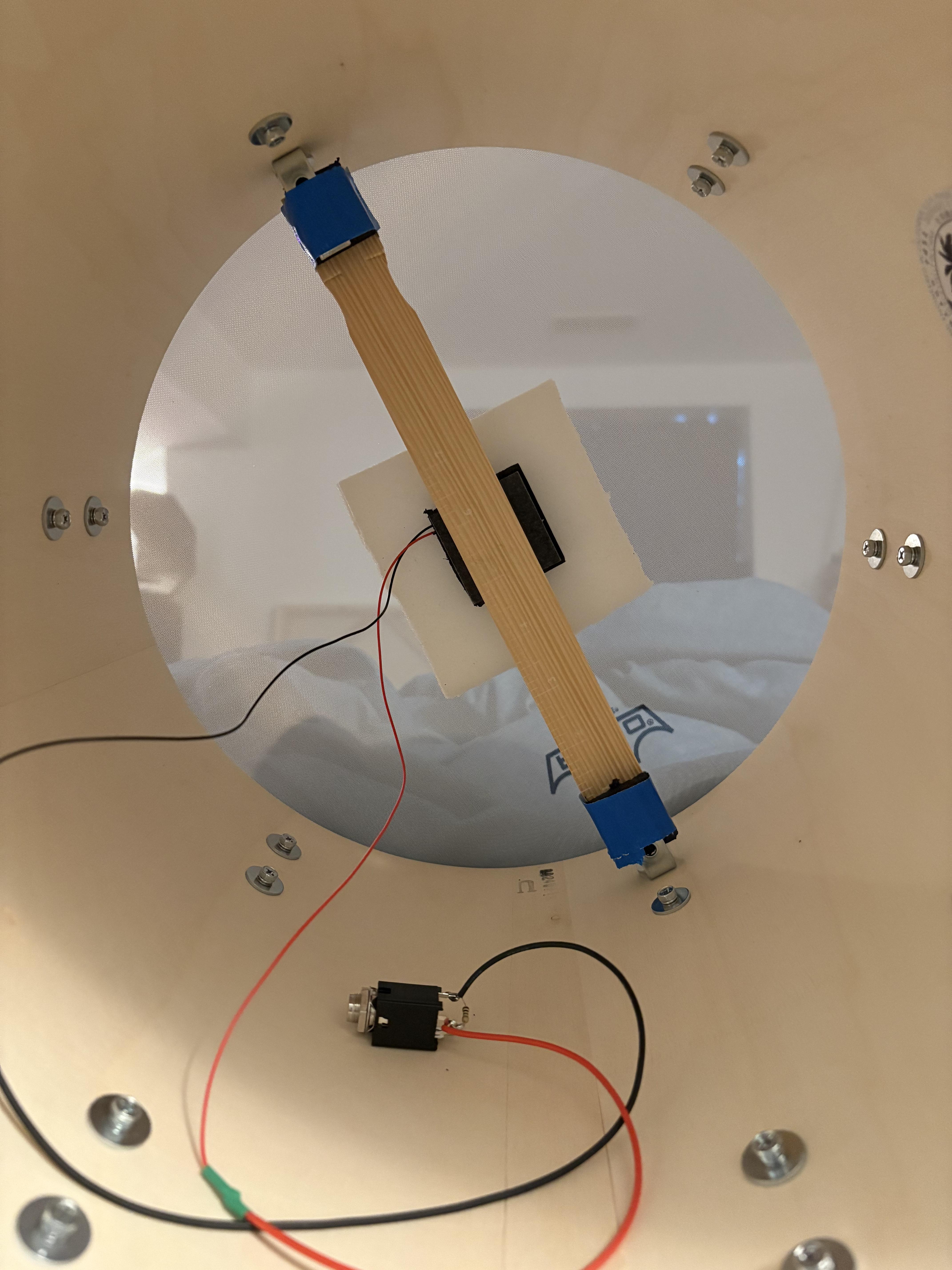
It might sound like a complicated project, but creating a basic set of electronic drums can actually be quite simple if you’ve already got an acoustic kit. You just need to damp all the drums and cymbals to make them quieter, and then fit all the individual elements with their own piezo sensors. These are basically small discs that can pick up vibrations and turn them into electricity—which can be used to trigger an electronic drum module.
[PocketBoy]’s build started with a PDP New Yorker kit, some mesh heads to dull the snares and toms, and some low-volume cymbals sourced off Amazon. Each drum got a small piezo element, which was soldered to a 6.5mm jack for easy hookup. They’re installed inside the drums on foam squares with a simple bracket system [PocketBoy] whipped up from hardware store parts. A DDrum DDti interface picks up the signals from the piezo elements and sends commands to an attached PC. It’s paired with Ableton 12 Lite, which plays the drum sounds as triggered by the drummer.
[PocketBoy] notes it’s a quick and dirty setup, good for quiet practice but not quite gig-ready. You’d want to probably just run it as a regular acoustic kit in that context, but there’s nothing about the conversion that prevents that. Ultimately, it’s a useful project if you find yourself needing to practice the drums quietly and you don’t have space for a second electric-only kit. There’s lots of other fun you can have with those piezos, too. Video after the break.
@the606queer
How I’m getting away with a drumset in an apartment building! Mesh heads + DIY triggers + Plain wash cloth + Stick Rods + DDTI DDrum Trigger i/o into Ableton. I need a better snare sample but this thing is whisper quiet! #drums #beginner #acoustics #fyp #drumtok

FRITZ!Box 7390 - Questo è un post automatico da FediMercatino.it
Prezzo: 0 €
Zuletzt befand sich das Gerät in einer Bootschleife, also wohl defekt.
Unklar, ob der Router noch softwaretechnisch zu retten ist.
Il Mercatino del Fediverso 💵♻️ reshared this.
Gli hacker trasformano Google Cloud in un bunker segreto. Scoperta un’operazione shock
I ricercatori di sicurezza hanno scoperto una sofisticata campagna di exploitche sfrutta un servizio privato di test di sicurezza delle applicazioni out-of-band (OAST) ospitato sull’infrastruttura Google Cloud. La campagna prende di mira principalmente i sistemi in Brasile e sfrutta oltre 200 vulnerabilità comuni (CVE).
Metodo di attacco
Gli endpoint OAST in genere aiutano gli aggressori a verificare il successo degli exploit per l’esecuzione di comandi, la falsificazione delle richieste lato server (SSRF) e la deserializzazione. La maggior parte degli aggressori utilizza servizi OAST disponibili pubblicamente come toast.fun e interact.sh, ma gli autori di questa operazione di minaccia gestivano un dominio privato chiamato i-sh.detectors-testing.com.
Il sistema di threat intelligence Canary di VulnCheck ha rilevato circa 1400 tentativi di exploit relativi a questa infrastruttura tra il 12 ottobre e il 14 novembre 2025. Questa insolita configurazione OAST privata la distingue chiaramente dalla tipica attività di scansione.
Infrastruttura
Tutto il traffico di attacco osservato proveniva da indirizzi IP di Google Cloud situati negli Stati Uniti. Gli IP di scansione identificati includono: 34.172.194.72, 35.194.0.176, 34.133.225.171, 34.68.101.3, 34.42.21.27 e 34.16.7.161.
Un host OAST dedicato, 34.136.22.26, esegue il servizio Interactsh sulle porte 80, 443 e 389. L’utilizzo dell’hosting di Google Cloud offre un vantaggio tattico. I difensori raramente bloccano completamente il traffico proveniente da grandi provider di servizi cloud, facilitando l’infiltrazione del traffico di attacco nelle comunicazioni di rete legittime.
Caratteristiche dell’attacco
Sebbene VulnCheck distribuisca Canary a livello globale, questa campagna di attacco ha preso di mira solo i sistemi distribuiti in Brasile. Sebbene i report di AbuseIPDB indichino che lo stesso gruppo di IP degli aggressori sia stato segnalato anche in Serbia e Turchia, i dati di VulnCheck confermano che il suo obiettivo era esclusivamente quello di colpire obiettivi brasiliani.
Gli aggressori hanno combinato template Nuclei con versioni precedenti non più mantenute nel repository ufficiale. Ad esempio, l’attacco ha utilizzato il template obsoleto grafana-file-read. Questo template YAML è stato rimosso dal repository nuclei-templates nell’ottobre 2025.
Ciò suggerisce che gli aggressori potrebbero aver utilizzato strumenti obsoleti o scanner di terze parti.
Payload personalizzato
L’attacco ha utilizzato anche un payload personalizzato. L’aggressore ha esposto una directory aperta sulla porta 9000 contenente un file TouchFile.class modificato, progettato per sfruttare una vulnerabilità in Fastjson 1.2.47.
A differenza della versione standard di Vulhub, questo payload personalizzato poteva eseguire comandi arbitrari e avviare richieste HTTP in base a parametri. Le prove suggeriscono che l’infrastruttura di attacco sia operativa almeno da novembre 2024, dimostrando un’insolita persistenza.
Mentre la maggior parte degli scanner sostituisce rapidamente la propria infrastruttura, questo aggressore ha mantenuto una presenza stabile a lungo termine.
Raccomandazioni di sicurezza
Questo attacco evidenzia come gli aggressori stiano utilizzando strumenti di scansione open source come Nuclei per diffondere payload di exploit su larga scala su Internet.
Sono indifferenti al lasciare tracce, purché riescano a individuare rapidamente obiettivi vulnerabili. Per prevenire minacce così persistenti, le organizzazioni dovrebbero monitorare il traffico di rete alla ricerca di callback OAST insoliti, bloccare gli indirizzi IP dannosi noti e assicurarsi che i sistemi esposti vengano tempestivamente aggiornati.
L'articolo Gli hacker trasformano Google Cloud in un bunker segreto. Scoperta un’operazione shock proviene da Red Hot Cyber.

Cosa penso su leva militare e caso Bologna-Esercito. Parla il generale Goretti
@Notizie dall'Italia e dal mondo
Infine, anche in Italia si è cominciato a parlare della possibilità del ritorno della leva militare. Il dibattito, già in corso da tempo negli altri Paesi europei, si apre in un momento complesso per l’opinione pubblica italiana, proprio mentre la vicenda legata
Notizie dall'Italia e dal mondo reshared this.
Australia’s New Asbestos Scare In Schools

Asbestos is a nasty old mineral. It’s known for releasing fine, microscopic fibers that can lodge in the body’s tissues and cause deadly disease over a period of decades. Originally prized for its fire resistance and insulating properties, it was widely used in all sorts of building materials. Years after the dangers became clear, many countries eventually banned its use, with strict rules around disposal to protect the public from the risk it poses to health.
Australia is one of the stricter countries when it comes to asbestos, taking great pains to limit its use and its entry into the country. This made it all the more surprising when it became apparent that schools across the nation had been contaminated with loose asbestos material. The culprit was something altogether unexpected, too—in the form of tiny little tubes of colored sand. Authorities have rushed to shut down schools as the media asked the obvious question—how could this be allowed to happen?
Hiding In Plain Sight
Australia takes asbestos very seriously. Typically, asbestos disposal is supposed to occur according to very specific rules. Most state laws generally require that the material must be collected by qualified individuals except in minor cases, and that it must be bagged in multiple layers of plastic prior to disposal to avoid release of dangerous fibers into the environment. The use, sale, and import of asbestos has been outright banned since 2003, and border officials enforce strict checks on any imports deemed a high risk to potentially contain the material.
Thus, by and large, you would expect that any item you bought in an Australian retailer would be free of asbestos. That seemed to be true, until a recent chance discovery. A laboratory running tests on some new equipment happened to accidentally find asbestos contamination in a sample of colored sand—a product typically marketed for artistic use by children. The manager of the lab happened to mention the finding in a podcast, with the matter eventually reaching New Zealand authorities who then raised the alarm with their Australian counterparts. This led to a investigation by the Australian Competition and Consumer Commission (ACCC), which instituted a national safety recall in short order.
The response from there was swift. At least 450 schools instituted temporary shutdowns due to the presence or suspected presence of the offending material. Some began cleanup efforts in earnest, hiring professional asbestos removalists to deal with the colored sand. In many cases, the sand wasn’t just in sealed packaging—it had been used in countless student artworks or spilled in carpeted classrooms. Meanwhile, parents feared the worst after finding the offending products in their own homes. Cleanup efforts in many schools are ongoing, due in part to the massive spike in demand for the limited asbestos removal services available across the country. Authorities in various states have issued guidelines on how to handle cleanup and proper disposal of any such material found in the workplace.
At this stage, it’s unclear how asbestos came to contaminate colored sand products sold across the country, though links have been found to a quarry in China. It’s believed that the products in question have been imported into Australia since 2020, but have never faced any testing regarding asbestos content. Different batches have tested positive for both tremolite and chrysotile asbestos, both of which present health risks to the public. However, authorities have thus far stated the health risks of the colored sand are low. “The danger from asbestos comes when there are very, very fine fibres that are released and inhaled by humans,” stated ACCC deputy chair, Catriona Lowe. “We understand from expert advice that the risk of that in relation to these products is low because the asbestos is in effect naturally occurring and hasn’t been ground down as such to release those fibres.”
Investigations are ongoing as to how asbestos-containing material was distributed across the country for years, and often used by children who might inhale or ingest the material during use. The health concerns are obvious, even if the stated risks are low. The obvious reaction is to state that the material should have been tested when first imported, but such a policy would have a lot of caveats. It’s simply not possible to test every item that enters the country for every possible contaminant. At the same time, one could argue that a mined sand product is more likely to contain asbestos than a box of Hot Wheels cars or a crate of Belgian chocolates. A measured guess would say this event will be ruled out as a freak occurrence, with authorities perhaps stepping up random spot checks on these products to try and limit the damage if similar contamination occurs again in future.
Featured image and other sand product images from the Australian government’s recall page.
Psyche reshared this.


It looks like someone invented a fake Russia advance in Ukraine to manipulate online gambling markets.#News #war


'Unauthorized' Edit to Ukraine's Frontline Maps Point to Polymarket's War Betting
A live map that tracks frontlines of the war in Ukraine was edited to show a fake Russian advance on the city of Myrnohrad on November 15. The edit coincided with the resolution of a bet on Polymarket, a site where users can bet on anything from basketball games to presidential election and ongoing conflicts. If Russia captured Myrnohrad by the middle of November, then some gamblers would make money. According to the map that Polymarket relies on, they secured the town just before 10:48 UTC on November 15. The bet resolved and then, mysteriously, the map was edited again and the Russian advance vanished.The degenerate gamblers on Polymarket are making money by betting on the outcomes of battles big and small in the war between Ukraine and Russia. To adjudicate the real time exchange of territory in a complicated war, Polymarket uses a map generated by the Institute for the Study of War (ISW), a DC-based think tank that monitors conflict around the globe.
playlist.megaphone.fm?p=TBIEA2…
One of ISW’s most famous products is its live map of the war in Ukraine. The think tank updates the map throughout the day based on a number of different factors including on the ground reports. The map is considered the gold standard for reporting on the current front lines of the conflict, so much so that Polymarket uses it to resolve bets on its website.The battle around Myrnohrad has dragged on for weeks and Polymarket has run bets on Russia capturing the site since September. News around the pending battle has generated more than $1 million in trading volume for the Polymarket bet “Will Russia capture Myrnohrad.” According to Polymarket, “this market will resolve to ‘Yes’ if, according to the ISW map, Russia captures the intersection between Vatutina Vulytsya and Puhachova Vulytsya located in Myrnohrad by December 31, 2025, at 11:59 PM ET. The intersection station will be considered captured if any part of the intersection is shaded red on the ISW map by the resolution date. If the area is not shaded red by December 31, 2025, 11:59 PM ET, the market will resolve to ‘NO.’” On November 15, just before one of the bets was resolved, someone at ISW edited its map to show that Russia had advanced through the intersection and taken control of it. After the market resolved, the red shading on the map vanished, suggesting someone at ISW editing permissions on the map had tweaked it ahead of the market resolving.
According to Polymarket’s ledger, the market resolved without dispute and paid out its winnings. Polymarket did not immediately respond to 404 Media’s request for a comment about the incident.
ISW acknowledged the stealth edit, but did not say if it was made because of the betting markets. “It has come to ISW’s attention that an unauthorized and unapproved edit to the interactive map of Russia’s invasion of Ukraine was made on the night of November 15-16 EST. The unauthorized edit was removed before the day’s normal workflow began on November 16 and did not affect ISW mapping on that or any subsequent day. The edit did not form any part of the assessment of authorized map changes on that or any other day. We apologize to our readers and the users of our maps for this incident,” ISW said in a statement on its website.
ISW did say it isn’t happy that Polymarket is using its map of the war as a gambling resource.
“ISW is committed to providing trusted, objective assessments of conflicts that pose threats to the United States and its allies and partners to inform decision-makers, journalists, humanitarian organizations, and citizens about devastating wars,” the think tank told 404 Media. “ISW has become aware that some organizations and individuals are promoting betting on the course of the war in Ukraine and that ISW’s maps are being used to adjudicate that betting. ISW strongly disapproves of such activities and strenuously objects to the use of our maps for such purposes, for which we emphatically do not give consent.”
💡
Do you know anything else about this story? I would love to hear from you. Using a non-work device, you can message me securely on Signal at +1 347 762-9212 or send me an email at matthew@404media.co.But ISW can’t do anything to stop people from gambling on the outcome of a brutal conflict and the prediction markets are full of gamblers laying money on various aspects of the conflict. Will Russia x Ukraine ceasefire in 2025? has a trading volume of more than $46 million. Polymarket is trending “no.” Will Russia enter Khatine by December 31? is a smaller bet with a little more than $5,000 in trading volume.
Practically every town and city along the frontlines of the war between Russia and Ukraine has a market and gamblers with an interest in geopolitics can get lost in the minutia about the war. To bet on the outcome of a war is grotesque. On Polymarket and other predictive gambling sites, millions of dollars trade hands based on the outcomes of battles that kill hundreds of people. It also creates an incentive for the manipulation of the war and data about the war. If someone involved can make extra cash by manipulating a map, they will. It’s 2025 and war is still a racket. Humans have just figured out new ways to profit from it.
Interactive Map: Russia's Invasion of Ukraine
This interactive map complements the static control-of-terrain maps that ISW daily produces with high-fidelity.Esri

Support independent journalism this Cyber Monday!#Sponsored
404 Media's Cyber Monday Sale! 25% Off!
We're having a Cyber Monday sale! You can get 25% off an annual subscription. With that, you get access to all of our articles (including today's piece about how surveillance company Flock is using overseas gig workers to review and classify footage); bonus podcast content every week where we talk about an extra story; bonus episodes where we respond to subscribers' best comments; our full archive of FOIA Forums, which are live-streamed events where we teach you how to pry records from the government; behind-the-scenes content every week; and, most importantly, you'll be supporting journalists who quit corporate media and went independent.Get your deal below if you'd like to support 404 Media. We can't do this work without you.
FOIA Forum Archive
Here is a single page with links to all of our previous FOIA Forum livestreams! In these hour-long (maybe a little bit more) interactive sessions, Jason and Joseph talk about how we approach filing public records requests.Joseph Cox (404 Media)

Giornata mondiale contro l’AIDS, un invito ad assumerci una responsabilità collettiva
Nel 2024 in Italia sono state registrate 2.379 nuove diagnosi di HIV e 450 nuovi casi di AIDS. Numeri che si accompagnano ad un fenomeno che continua a preoccuparci: molte di queste diagnosi arrivano tardi. Non per mancanza di attenzione da parte delle persone, ma perché il nostro Paese non garantisce ancora un’informazione chiara, capillare e accessibile sulla salute sessuale, né condizioni che rendano semplice e naturale il ricorso ai test o ai percorsi di prevenzione.
La realtà è che, mentre si parla costantemente di “emergenza educativa”, la politica continua a ignorare ciò che davvero serve a creare consapevolezza: percorsi seri e laici di educazione alle differenze, all’affettività e alla sessualità in tutte le scuole. Le nuove generazioni crescono senza strumenti, senza linguaggi adeguati, senza una cultura che normalizzi la salute sessuale come parte integrante del benessere di tutt*. E così l’HIV resta un fenomeno reale ma poco discusso, confinato ai margini di un dibattito pubblico che spesso preferisce evitarlo. In altre parole, resta tabù, e le persone sierocoinvolte continuano a pagare il prezzo dello stigma.
Nel frattempo, sono le associazioni nei territori a portare avanti il lavoro più importante: costruire informazione, offrire supporto, organizzare test, orientare le persone ai servizi, creare luoghi dove parlare di salute sessuale sia possibile e non eccezionale. La loro presenza sopperisce a un vuoto politico che non dovrebbe esistere.
Come Possibile e Possibile LGBTI+ continuiamo a chiedere che la salute sessuale debba tornare al centro delle politiche pubbliche. Significa introdurre percorsi formativi strutturati nelle scuole e diffondere la cultura della prevenzione come parte della vita quotidiana, non come un gesto coraggioso. Significa garantire l’accesso gratuito ai contraccettivi e ai preservativi per le persone under 30, e rendere davvero accessibile la PrEP, che in molti Paesi europei ha già dimostrato di ridurre drasticamente le nuove diagnosi. E significa investire in campagne di informazione continuative, non iniziative sporadiche legate a una data sul calendario.
Non abbiamo bisogno di retorica né di moralismi. Abbiamo bisogno di una politica che riconosca che la salute è libertà e dignità, che la prevenzione è un diritto e che l’accesso agli strumenti per esercitarlo deve essere semplice e garantito. Il 1° dicembre non è una parentesi: è il promemoria annuale di ciò che dovremmo fare tutto l’anno e che, invece, ancora non facciamo.
Parlare di HIV significa parlare di conoscenza, autodeterminazione, dignità. E soprattutto significa ribadire che nessuna persona deve sentirsi sola o abbandonata.
Gianmarco Capogna
L'articolo Giornata mondiale contro l’AIDS, un invito ad assumerci una responsabilità collettiva proviene da Possibile.
Un aggiornamento al volo? Anche no.
@Privacy Pride
Il post completo di Christian Bernieri è sul suo blog: garantepiracy.it/blog/aggiorni…
"Si informano i signori passeggeri che, su questo volo, per la vostra sicurezza, fra poco verrà installato un importante aggiornamento software. Ci scusiamo per gli eventuali disagi. L'aggiornamento si concluderà prima dell'atterraggio. Siamo lieti che
Privacy Pride reshared this.

Microchip, perché Nvidia investe in Synopsys
Per vedere altri post come questo, segui la comunità @Informatica (Italy e non Italy 😁)
Nvidia continua con gli investimenti: dopo OpenAi, CoreWeave e Intel, il colosso dei processori ha acquistato azioni di Synopsys - specializzata nei software per il design di microchip - per 2 miliardi di dollari. Numeri e obiettivi.
Informatica (Italy e non Italy 😁) reshared this.
possibile.com/giornata-mondial…
Parlare di HIV significa parlare di conoscenza, autodeterminazione, dignità. E soprattutto significa ribadire che nessuna persona deve sentirsi sola o abbandonata.
L'articolo
How To Design 3D Printed Pins that Won’t Break

[Slant 3D] has a useful video explaining some thoughtful CAD techniques for designing 3D printed pins that don’t break and the concepts can be extended to similar features.
Sure, one can make pins stronger simply by upping infill density or increasing the number of perimeters, but those depend on having access to the slicer settings. If someone else is printing a part, that part’s designer has no actual control over these things. So how can one ensure sturdier pins without relying on specific print settings? [Slant 3D] covers two approaches.
The first approach includes making a pin thick, making it short (less leverage for stress), and adding a fillet to the sharp corner where the pin meets the rest of the part. Why? Because a rounded corner spreads stress out, compared to a sharp corner.
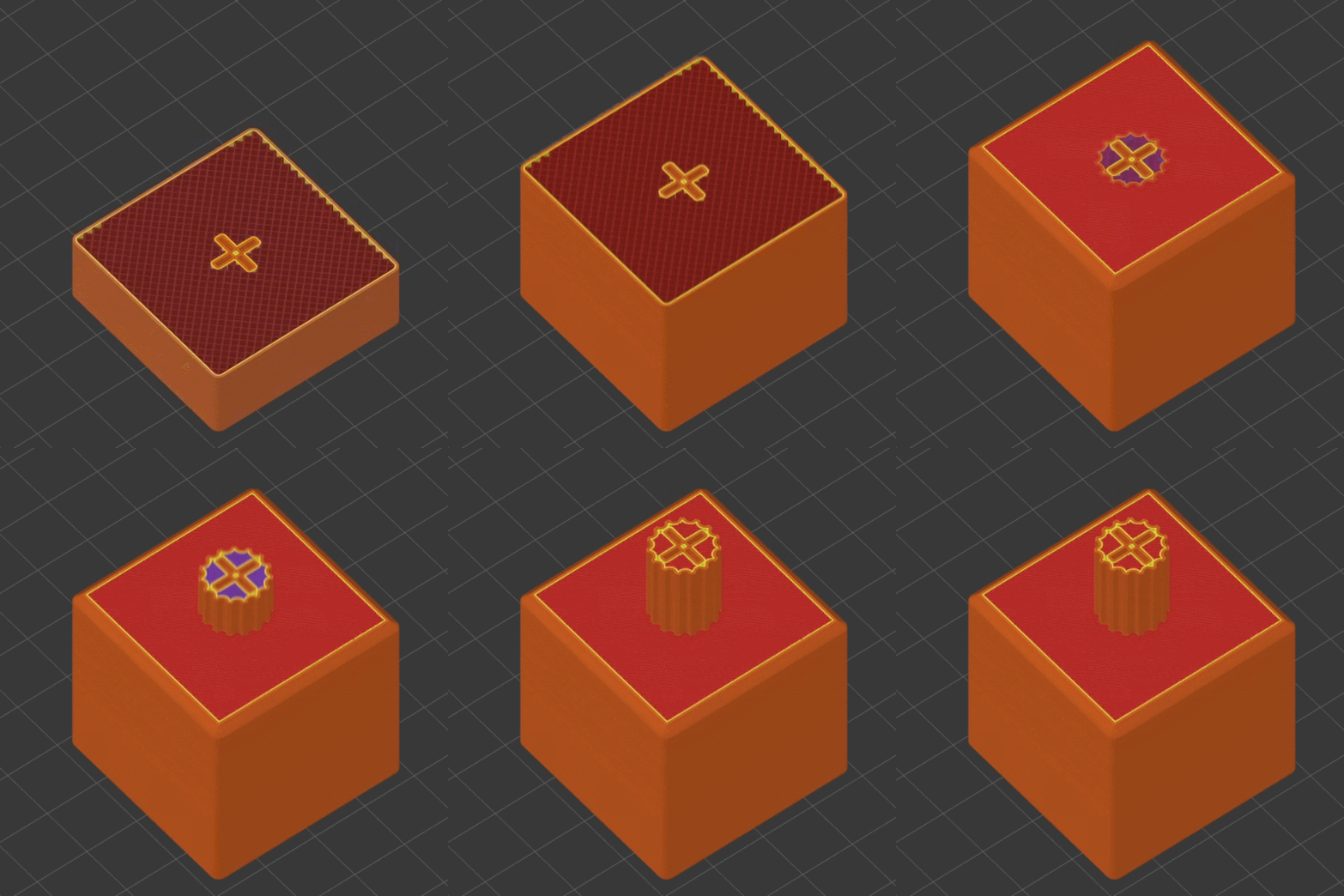
Those are general best practices, but there’s even more that can be done with microfeatures. These are used to get increased strength as a side effect of how a 3D printer actually works when making a part.
One type of microfeature is to give the pin a bunch of little cutouts, making the cross-section look like a gear instead of a circle. The little cutouts don’t affect how the pin works, but increase the surface area of each layer, making the part stronger.
A denser infill increases strength, too. Again, instead of relying on slicer settings, one can use microfeatures for a similar result. Small slots extending down through the pin (and going into the part itself) don’t affect how the part works, but make the part sturdier. Because of how filament-based 3D printing works, these sorts of features are more or less “free” and don’t rely on specific printer or slicer settings.
[Slant 3D] frequently shares design tips like this, often focused on designing parts that are easier and more reliable to print. For example, while printers are great at generating useful support structures, sometimes it’s better and easier in the long run to just design supports directly into the part.
youtube.com/embed/uMA-Wt-z_BU?…
Giochi di guerra italiani nel deserto del Qatar
@Notizie dall'Italia e dal mondo
Il complesso militare industriale italiano rafforza la partnership con il ricco e potente petro-emirato arabo
L'articolo Giochi di guerra italiani nel deserto del Qatar proviene da Pagine Esteri.
Notizie dall'Italia e dal mondo reshared this.
Difesa comune e asset russi, la sfida che Kallas lancia ai Ventisette
@Notizie dall'Italia e dal mondo
La conferenza stampa di Kaja Kallas ha mostrato una Commissione che tenta di spingere l’Unione oltre la gestione emergenziale della guerra e verso un salto politico che definisca il ruolo dell’Europa nella sicurezza del continente. La vicepresidente ha insistito sul fatto che il
Notizie dall'Italia e dal mondo reshared this.
Vannacci e il presepe nello zaino militare: l’ultima trovata dell’eurodeputato della Lega | VIDEO
@Politica interna, europea e internazionale
Roberto Vannacci mette il presepe nello zaino militare: è questa l’ultima trovata dell’eurodeputato della Lega. L’ex generale ha mostrato sui suoi profili social una versione portatile del presepe incastonata nella tasca esterna dello zaino e resa visibile da una grossa
Politica interna, europea e internazionale reshared this.
Magnetico e NEVERHACK Italy insieme per formare talenti in Cybersecurity
Magnetico Associazione Culturale e NEVERHACK Italy, società leader nella cybersecurity, hanno ufficializzato un Protocollo di Intesa e un Contratto di Co-Working per avviare una collaborazione strategica volta allo sviluppo di competenze avanzate nel settore tecnologico e alla valorizzazione dei giovani talenti.
La partnership prevede l’apertura di una nuova unità locale di NEVERHACK dedicata alle attività di Ricerca & Sviluppo (R&D) e Delivery presso il complesso Tecno Polo di Regalbuto (EN) gestito da Magnetico, e l’istituzione di un’Academy con percorsi formativi dedicati a specializzazioni critiche come Cybersecurity, Network e Network Security. Grazie a questa collaborazione, NEVERHACK avrà l’opportunità di accedere ai profili formati e selezionati tramite il network educativo di Magnetico.
Nel primo anno di attività, saranno coinvolti fino a 25 tirocinanti formati attraverso i laboratori e le piattaforme simulate di Magnetico, agevolando il loro ingresso nel mondo del lavoro. I percorsi di formazione on-demand, personalizzati ed erogati da istruttori certificati, saranno orientati alle specifiche esigenze operative di NEVERHACK.
Al termine della formazione, gli studenti più meritevoli avranno l’opportunità di partecipare al processo di selezione per un potenziale inserimento all’interno dei team di NEVERHACK.
Il Circuito Virtuoso per l’Occupazione
L’accelerazione della trasformazione digitale e l’aumento delle minacce informatiche rendono sempre di più la cybersecurity una priorità strategica. Tuttavia, permane una carenza strutturale di competenze che indebolisce la capacità difensiva di aziende e amministrazioni: a livello globale, la forza lavoro specializzata in cybersecurity conta circa 5,5 milioni di professionisti, ma per soddisfare la domanda ne servirebbero almeno altri 4 milioni.
In Italia, il mercato è cresciuto del 15% nel 2024, raggiungendo i 2,48 miliardi di euro, ma ancora il 62% delle aziende ritiene insufficiente l’offerta di tecnici ed esperti nella protezione dei sistemi ICT, OT e IoT.
La partnership fra Magnetico e NEVERHACK Italy si inserisce in questo contesto, mirando a contrastare la scarsità di profili di cybersecurity adeguatamente formati e creando un circuito virtuoso di orientamento, formazione specialistica e inserimento lavorativo, in particolare per le aree interne della Sicilia. L’obiettivo è creare un corretto percorso di orientamento, formazione e inserimento al lavoro, trovando nel mondo della cybersecurity un’occasione per rilanciare il territorio.
Ing. Giancarlo Di Lieto, Head Of Cyber Security NEVERHACK Southern Region: “La partnership con Magnetico e l’avvio dell’Academy in Sicilia segna un passo in avanti nel nostro impegno, avviato da tempo in altre aree del Paese, per formare nuovi talenti, riducendo lo skill gap ancora troppo elevato tra domanda e offerta di lavoro nel campo della cybersecurity: investire in formazione significa, infatti, contribuire in modo concreto a colmare un gap che oggi pesa su aziende, istituzioni e cittadini. Con questo progetto valorizziamo il territorio, creando nuove opportunità occupazionali per i giovani che desiderano inserirsi nel mondo del lavoro e costruire il proprio futuro nella loro regione d’origine. L’edizione siciliana dell’Academy conferma, inoltre, la nostra volontà di continuare a investire in persone e territori, accompagnandoli nella transizione digitale e partecipando allo sviluppo tecnologico del Paese”.
Matteo Mirenda, vice-presidente di Magnetico Associazione Culturale: “Questo Protocollo è la prova che anche dai territori dell’entroterra siciliano si può generare eccellenza e attrarre investimenti qualificati. Creare un’Academy focalizzata su Cybersecurity e Network Security con un partner di rilievo come NEVERHACK non solo colma un gap formativo critico, ma offre ai nostri giovani la possibilità di costruire una carriera ICT ad alto valore senza dover lasciare la propria terra. È il nostro modo di rilanciare il territorio attraverso le competenze“.
L'articolo Magnetico e NEVERHACK Italy insieme per formare talenti in Cybersecurity proviene da Red Hot Cyber.

Patent office trying to silence your right to challenge bad patents
The US Patent Office has put forth regulations to end the our ability to challenge improperly granted patents in the Patent Office. These new rules will be a gift to patent trolls by keeping bad patents alive to stifle innovation. As the EFF notes: People targeted with troll lawsuits will be left with almost no realistic or affordable way to defend themselves.
We have until the end of Tuesday, December 2nd to file comments opposing these rules. The Biden administration tried to get these rules passed in 2023, but thousands of people stopped them. We need to stop the Trump administration from getting these rules passed!
The Inter partes review (IPR) process what voted on by Congress in 2013. Congress defined how it should work and who it applies to. The Patent Office must not add additional regulations that limit our access to it. The EFF points out why these rule changes are harmful:
Inter partes review, (IPR), isn’t perfect. It hasn’t eliminated patent trolling, and it’s not available in every case. But it is one of the few practical ways for ordinary developers, small companies, nonprofits, and creators to challenge a bad patent without spending millions of dollars in federal court. That’s why patent trolls hate it—and why the USPTO’s new rules are so dangerous.IPR isn’t easy or cheap, but compared to years of litigation, it’s a lifeline. When the system works, it removes bogus patents from the table for everyone, not just the target of a single lawsuit.
IPR petitions are decided by the Patent Trial and Appeal Board (PTAB), a panel of specialized administrative judges inside the USPTO. Congress designed IPR to provide a fresh, expert look at whether a patent should have been granted in the first place—especially when strong prior art surfaces. Unlike full federal trials, PTAB review is faster, more technical, and actually accessible to small companies, developers, and public-interest groups.
As an example why we need the IPR process: Personal Audio tried to squeeze royalties from podcasters. Without IPR, EFF would not have been able to challenge their patent and Personal Audio would have continued to shake down podcasters.
Please take a couple of minutes to submit your comments about why we cannot let bad patents slip through unchallenged. You can write your own or use the following draft comment we borrowed from the EFF and modified:
I oppose the USPTO’s proposed rule changes for inter partes review (IPR), Docket No. PTO-P-2025-0025. The IPR process must remain open and fair. The Patent Office does not have the ability to legislate and must not limit who can take advantage of the IPR process beyond what Congress has authorized. Patent challenges should be decided on their merits, not shut out because of legal activity elsewhere. These rules would make it nearly impossible for the public to challenge bad patents, and that will harm innovation and everyday technology users.
or you can use their comment as they wrote it:
I oppose the USPTO’s proposed rule changes for inter partes review (IPR), Docket No. PTO-P-2025-0025. The IPR process must remain open and fair. Patent challenges should be decided on their merits, not shut out because of legal activity elsewhere. These rules would make it nearly impossible for the public to challenge bad patents, and that will harm innovation and everyday technology users.
2026 Pirate National Conference Location Tournament: Round 3 (Final Four)
The 2026 Pirate National Conference has been subject to an elimination style bracket tournament to determine where we will host what will mark the 20th birthday of the United States Pirate Party.
As of today, we are down to four potential cities:
- Boston, Massachusetts
- Chicago, Illinois
- Seattle, Washington
- Vicksburg, Mississippi
Results from Round 2 are posted on our Discord server.
Eight other cities were previously in consideration and will no longer be considered for the 2026 conference. The eight eliminated cities, as well as the three cities that shall be eliminated by the conclusion of this tournament, shall be in permanent consideration for future Pirate National Conference locations until they have hosted. Albuquerque, Las Vegas, Louisville, Mobile, New Orleans, Plattsburgh, Portland (OR) and Providence shall all be in consideration in 2027 and beyond.
We now find ourselves in the Final Four, with two matchups this week that our members and supporters can vote on. Boston (1) will take on Seattle (9) while Vicksburg (4) takes on Chicago (6).
The tournament shall conclude on December 15th.
This tournament ending up in four totally different regions of the country is emblematic of the growth of this party. We might have states with a stronger presence of their Pirate Party, but our growth is nationwide and undeniable. After 20 years, the second oldest Pirate Party in the world will celebrate our conference on a boat and prepare for the next 20 years. We are looking forward to June 6th and hope you all are too.
Regardless of location, the conference will be A.) held on a boat and B.) hybrid, meaning those unable to attend in-person may still attend online.
Those who wish to vote can join our Discord server to find a link to the tournament. The Final Four closes out next week and the championship vote will begin from there.
È disponibile il nuovo numero della newsletter del Ministero dell’Istruzione e del Merito.

Ministero dell'Istruzione
#NotiziePerLaScuola È disponibile il nuovo numero della newsletter del Ministero dell’Istruzione e del Merito.Telegram
Joseph talks to a former FBI official about how the FBI secretly ran an encrypted phone for organized criminals, sweeping up tens of millions of messages.#Podcast
Inside the Biggest Sting Operation Ever (with Michael Bobbitt)
Joseph speaks to Michael Bobbitt, a former FBI official who worked directly on Operation Trojan Shield. In this operation the FBI secretly ran its own encrypted phone company for organized crime, backdoored the phone, and collected tens of millions of messages. Michael and Joseph discuss how Michael handled intelligence sourced from the phones, how to navigate an operation that complex, and its fallout.
playlist.megaphone.fm?e=TBIEA3…
Listen to the weekly podcast on Apple Podcasts,Spotify, or YouTube. Become a paid subscriber for access to this episode's bonus content and to power our journalism. If you become a paid subscriber, check your inbox for an email from our podcast host Transistor for a link to the subscribers-only version! You can also add that subscribers feed to your podcast app of choice and never miss an episode that way. The email should also contain the subscribers-only unlisted YouTube link for the extended video version too. It will also be in the show notes in your podcast player.
youtube.com/embed/bLeueG5V4QY?…
- Dark Wire: The Incredible True Story of the Largest Sting Operation Ever
- Podcast: Signal's President Meredith Whittaker on Backdoors and AI
Podcast: Signal's President Meredith Whittaker on Backdoors and AI
We speak to Meredith Whittaker about the threat posed by AI to end-to-end encryption, what backdoors actually look like, and much more in this special interview episode.Joseph Cox (404 Media)

Flock accidentally exposed training materials and a panel which tracked what its AI annotators were working on. It showed that Flock, which has cameras in thousands of U.S. communities, is using workers in the Philippines to review and classify footage.#Flock
Flock Uses Overseas Gig Workers to Build its Surveillance AI
This article was produced with support from WIRED.Flock, the automatic license plate reader (ALPR) and AI-powered camera company, uses overseas workers from Upwork to train its machine learning algorithms, with training material telling workers how to review and categorize footage including images people and vehicles in the U.S., according to material reviewed by 404 Media that was accidentally exposed by the company.
The findings bring up questions about who exactly has access to footage collected by Flock surveillance cameras and where people reviewing the footage may be based. Flock has become a pervasive technology in the U.S., with its cameras present in thousands of communities that cops use everyday to investigate things like car jackings. Local police have also performed numerous lookups for ICE in the system.
Companies that use AI or machine learning regularly turn to overseas workers to train their algorithms, often because the labor is cheaper than hiring domestically. But the nature of Flock’s business—creating a surveillance system that constantly monitors U.S. residents’ movements—means that footage might be more sensitive than other AI training jobs.
💡
Do you work at Flock or know more about the company? I would love to hear from you. Using a non-work device, you can message me securely on Signal at joseph.404 or send me an email at joseph@404media.co.Flock’s cameras continuously scan the license plate, color, brand, and model of all vehicles that drive by. Law enforcement are then able to search cameras nationwide to see where else a vehicle has driven. Authorities typically dig through this data without a warrant, leading the American Civil Liberties Union (ACLU) and Electronic Frontier Foundation (EFF) to recently sue a city blanketed in nearly 500 Flock cameras.
Broadly, Flock uses AI or machine learning to automatically detect license plates, vehicles, and people, including what clothes they are wearing, from camera footage. A Flock patent also mentions cameras detecting “race.”
Screenshots from the exposed material. Redactions by 404 Media.
Multiple tipsters pointed 404 Media to an exposed online panel which showed various metrics associated with Flock’s AI training.
This post is for subscribers only
Become a member to get access to all content
Subscribe now


Marco Perduca alla Camera dei Deputati per la presentazione “Il bosco fiorito, Psichedelia: orizzonti di cura”
Camera dei Deputati- Piazza Del Parlamento 24, Roma
Martedì 2 dicembre 2025
Ore 17:30
Marco Perduca, Coordinatore delle attività internazionali dell’Associazione Luca Coscioni, interverrà presso la Camera dei Deputati a Roma, durante la presentazione del libro Il bosco fiorito, Psichedelia: orizzonti di cura.
L’evento l’ospitato dall’On. Riccardo Magi è introdotto dalla curatrice del volume Letizia Renzini di MAPS Italia.
Il dibattito vedrà inoltre i contributi di Rick Doblin di MAPS , Tommaso Barba neuroscienziato dell’Imperial College e Antonella Soldo vicesegretaria +Europa e Meglio Legale
Sarà un momento per approfondire come la ricerca scientifica in continua evoluzione stia svelando costantemente nuovi ambiti di applicazione e utilizzo.
Per partecipare scrivere a magi_r@camera.it
L'articolo Marco Perduca alla Camera dei Deputati per la presentazione “Il bosco fiorito, Psichedelia: orizzonti di cura” proviene da Associazione Luca Coscioni.
“Lasciatemi morire ridendo” a Roma – Proiezione al Cinema Barberini
Cinema Barberini, Piazza Barberini 25 –Roma
Martedì 2 dicembre 2025
Ore 21:30
Una nuova proiezione del docufilm “Lasciatemi morire ridendo”, diretto da Massimiliano Fumagalli, che racconta la storia di Stefano Gheller, primo in Veneto e secondo in Italia ad ottenere l’autorizzazione alla morte volontaria medicalmente assistita, secondo i criteri fissati dalla Corte costituzionale.
Una storia personale che diventa universale, un viaggio lucido e struggente nel cuore del dibattito dei diritti civili.
L'articolo “Lasciatemi morire ridendo” a Roma – Proiezione al Cinema Barberini proviene da Associazione Luca Coscioni.
Omnibus digitale: Prima analisi delle proposte GDPR ed ePrivacy della Commissionemickey01 December 2025


Danneggiata l'unica rampa di lancio russa per le Soyuz - Spazio e Astronomia - Ansa.it
Danneggiata l'unica rampa di lancio della base russa di Baikonur dalla quale partono le missioni con astronauti a bordo. Lo rende noto sui social l'agenzia spaziale russa Roscosmos. (ANSA)Agenzia ANSA
Sale la produzione asiatica ed europea, frena quella cinese. Cosa dice il Report Sipri sull’industria militare
@Notizie dall'Italia e dal mondo
Il nuovo rapporto annuale dello Stockholm international peace research institute (Sipri) certifica un’ulteriore crescita dell’industria mondiale degli armamenti. Nel 2024, i ricavi dei cento maggiori
Notizie dall'Italia e dal mondo reshared this.
L’ONU accusa Israele: “utilizza la tortura contro i prigionieri palestinesi”
@Notizie dall'Italia e dal mondo
Un rapporto delle Nazioni Unite accusa Israele di condurre una politica statale che "de facto" sostiene l'utilizzo della tortura nei confronti dei prigionieri palestinesi
L'articolo L’ONU accusa Israele: “utilizza la tortura contro i prigionieri palestinesi” proviene da Pagine
Notizie dall'Italia e dal mondo reshared this.
I coloni israeliani picchiano quattro attiviste straniere e sconfinano in Siria
@Notizie dall'Italia e dal mondo
Un gruppo di coloni armati ha picchiato e derubato quattro volontari italiani e canadesi, un altro ha sconfinato nella Siria meridionale per fondare un insediamento
L'articolo I coloni israeliani picchiano quattro attiviste straniere e sconfinano
Notizie dall'Italia e dal mondo reshared this.
I ragazzi e le ragazze della IIE dell'istituto comprensivo Sferracavallo-Onorato chiedono un piano di rinaturalizzazione dell'area di Barcarello e Capo Gallo
che comprenda:
- identificazione delle specie vegetali più adatte al contesto climatico e paesaggistico, preferendo quelle autoctone;
- definizione di misure di prevenzione degli incendi, quali la manutenzione regolare delle aree verdi e la sensibilizzazione della popolazione;
- coinvolgimento di associazioni locali, scuole, e cittadini volontari per favorire la partecipazione attiva della comunità;
- possibilità di accedere a fondi regionali, nazionali ed europei destinati a progetti ambientali.
https://c.org/ByYscBVtDT
change.org/p/aiutate-la-riserv…

reshared this
sono certa che a parte sporadici gruppi di nazisti presenti in tutto il mondo, l'unico stato che li ha istituzionallizzati e a cui ha dato potere è quello russo. se putin fosse sincero per combattere il nazismo dovrebbe auto distruggersi.
L’Ateneo che chiude le porte allo Stato. Il paradosso dell’Alma Mater letto da Caruso
@Notizie dall'Italia e dal mondo
Siamo di fronte a un paradosso che sfida la logica istituzionale: un’università statale, finanziata con oltre 540 milioni di euro di fondi pubblici, nega l’accesso a rappresentanti di un’altra istituzione dello Stato. L’Esercito italiano, previsto e
Notizie dall'Italia e dal mondo reshared this.
Apple torna ad allearsi con Intel per far felice Trump?
Per vedere altri post come questo, segui la comunità @Informatica (Italy e non Italy 😁)
Secondo indiscrezioni Apple sarebbe pronta a riportare in patria parte della propria filiera siglando una partnership sui processori con Intel. Una mossa che va nella direzione indicata da Trump ma utile anche a ridurre la propria esposizione alle
reshared this
Invece di sanzionare Report e non solo, l’autorità perché non si autosanziona e si dimette?
@Giornalismo e disordine informativo
articolo21.org/2025/12/invece-…
Da qualche settimana la trasmissione Report ci racconta di quanto accaduto a Report. Sanzioni contro la
Giornalismo e disordine informativo reshared this.