
DRUETTI-MARRO: ARRESTO BLENGINO, UNA NORMA ASSURDA CHE COLPISCE CHI LAVORA NELLA LEGALITÀ
Oggi a Torino è stato arrestato Filippo Blengino, segretario dei Radicali Italiani, durante un’azione dimostrativa in cui ha ceduto cannabis CBD non drogante. Un gesto di disobbedienza civile che mette in luce l’assurdità dell’articolo 18 del Decreto Sicurezza, una norma che equipara prodotti non stupefacenti allo spaccio e espone le persone a pene fino a vent’anni di carcere.
«Solidarietà da parte di tutta Possibile a Filippo Blengino, arrestato a Torino sulla base di norme inutili e proibizioniste che non producono alcun risultato se non criminalizzare cittadini e imprenditori della cannabis CBD. È un’impostazione anti-scientifica e repressiva, pienamente fatta propria dal governo e dal ddl Sicurezza. Speriamo che la determinazione di Blengino porti l’articolo 18 davanti alla Corte Costituzionale: saremo al suo fianco», dichiara Francesca Druetti, Segretaria nazionale di Possibile.
“Quello che è accaduto a Blengino accade ogni giorno in tutta Italia: anche in Piemonte, da Cuneo in giù, negozi di cannabis legale vengono perquisiti, prodotti sequestrati e persone denunciate come spacciatori, con danni enormi a un intero comparto economico che opera nella legalità”, commenta Giulia Marro, Consigliera Regionale del Piemonte AVS.
Come Possibile e come consigliera regionale del Piemonte di Alleanza Verdi Sinistra, ribadiamo che questa norma va cambiata. Serve una legislazione basata su evidenze scientifiche, non sulla propaganda proibizionista. Serve tutelare chi lavora onestamente, non criminalizzarlo.
L'articolo DRUETTI-MARRO: ARRESTO BLENGINO, UNA NORMA ASSURDA CHE COLPISCE CHI LAVORA NELLA LEGALITÀ proviene da Possibile.
Druetti (Pos): ONU critica i centri per migranti in Albania, Meloni abbandoni il progetto
Druetti (Possibile): ONU critica i centri per migranti in Albania, Meloni abbandoni il progetto
“Mentre Meloni continua a dire che “funzioneranno”, i campi per le persone migranti di Gjadër in Albania sono finiti al centro delle preoccupazioni e critiche del comitato ONU contro la Tortura e Comportamenti Disumani e Degradanti. E la notizia già si commenta da sola sottolineando il fallimento e lo scempio etico e politico di questo progetto.”
Lo dichiara la Segretaria Nazionale di Possibile Francesca Druetti, commentando il report del Comitato ONU, disponibile qui: ohchr.org/en/press-releases/20…
“Il Comitato ONU — continua Druetti — ha espresso dubbi sul Protocollo Italia-Albania, in particolare sulla mancanza di chiarezza sulla giurisdizione e sul rispetto del divieto di refoulment (principio fondamentale del diritto internazionale).
Ha inoltre evidenziato dubbi riguardo la conformità alla Convenzione contro la tortura così come l’assenza di dati affidabili su torture, maltrattamenti e uso eccessivo della forza da parte della polizia. La detenzione delle persone migranti è una violazione della dignità umana, come dimostrano chiaramente le numerose prove dai nostri CPR. Deportare le persone contro la propria volontà perlopiù in un paese con cui non hanno legami, non può in alcun modo essere considerato ragionevole o sostenibile.
Noi continueremo a chiedere la chiusura non solo del CPR di Gjader ma anche di tutti quelli presenti in Italia, perché rappresentano luoghi in cui i diritti umani vengono calpestati quotidianamente.”
L'articolo Druetti (Pos): ONU critica i centri per migranti in Albania, Meloni abbandoni il progetto proviene da Possibile.

Ministero dell'Istruzione
Oggi il Ministro Giuseppe Valditara e il Presidente dell’Associazione Nazionale Alpini, Sebastiano Favero, hanno siglato un Protocollo d’Intesa che consente di promuovere nelle #scuole i valori dell’etica della partecipazione civile, della solidariet…Telegram
166: Maxie
Maxie Reynolds loves an adventure, especially the kind where she’s breaking into buildings (legally). In this episode, she shares stories from her time as a professional penetration tester, including high-stakes physical intrusions, red team chaos, a…

PALESTINA. Quando Ada Sereni lavorava alla “emigrazione volontaria” da Gaza
@Notizie dall'Italia e dal mondo
Viaggio di solo andata per i gazawi. I piani si Israele per svuotare la Striscia sono antichi e l’icona del sionismo italiano vi partecipò da protagonista
L'articolo PALESTINA. Quando Ada Sereni lavorava alla “emigrazione volontaria” da Gaza proviene da
Notizie dall'Italia e dal mondo reshared this.
Italia e Romania: scompaginata una rete rumena di traffico di esseri umani

Condotta congiuntamente da Italia e Romania, l'operazione ha preso di mira un clan familiare di cittadini rumeni con sede a Iasi, in Romania.
Il gruppo criminale organizzato, operante da oltre 20 anni, sfruttava le ragazze attraverso la coercizione, la violenza e la manipolazione psicologica e aveva forti legami con cittadini albanesi coinvolti nello sfruttamento sessuale a Roma, in Italia.
Nel corso dell'attività sono state effettuate 25 perquisizioni domiciliari condotte (20 in Romania, 5 in Italia);sequestrati 20 000 euro in contanti;
arrestati 19 sospetti rumeni; due persone poste sotto controllo giudiziario;
individuati 99 conti bancari presumibilmente utilizzati per riciclare i proventi criminali; sequestrate 7 spade, 1 ascia e 4 pistole; sequestrati in Romania 10 immobili, 8 auto di lusso, gioielli, 45 documenti, 32 telefoni cellulari e 3 computer.
La rete criminale utilizzava la tecnica del "lover boy" per reclutare e adescare le vittime, spesso a partire dalla giovane età, e costringerle a prostituirsi a Roma. Soltanto nei tempi delle indagini si sospetta che la rete criminale abbia generato un utile stimato di 1,7 milioni di euro.
#Europol ha sostenuto l'operazione facilitando lo scambio di informazioni, fornendo supporto analitico e coordinando la cooperazione transfrontaliera, mentre #Eurojust ha coordinato l'indagine internazionale istituendo una squadra investigativa congiunta e organizzando diverse riunioni presso la sede di Eurojust all'Aia.
Inoltre l'indagine è stata sostenuta dalla Rete @ON (#atON) finanziata dalla Commissione Europea, guidata dalla Direzione Investigativa Antimafia Italiana (#DIA), che ha sostenuto finanziariamente le riunioni operative e il reciproco dispiegamento degli investigatori.
Prosegue la persistente minaccia posta dalle reti criminali coinvolte nella tratta di esseri umani, sì da esaltare l’importanza della #cooperazioneinternazionale nella lotta a questi crimini.
La tratta di esseri umani è un crimine grave che abusa dei diritti fondamentali e della dignità delle persone.
Implica lo sfruttamento criminale delle persone vulnerabili al solo scopo di guadagno economico.
La tratta di esseri umani è una forma moderna di schiavitù. È spesso di carattere internazionale e le sue vittime appartengono ad entrambi i sessi, a tutte le età e origini.
Paesi e agenzie partecipanti:
Italia: Polizia di Stato Italiana – Squadra Mobile di Roma e il Servizio Centrale Operativo (Polizia di Stato – Squadra Mobile di Roma e Servizio Centrale Operativo); Procura della Repubblica Roma (Procura Distrettuale di Roma)
Romania: Polizia rumena - Brigata per la lotta alla criminalità organizzata Iaяi (Poli Brigadiei Română - Brigada de Combaterea Criminalităii Organizate Ia Iii)
Eurojust
reshared this
Retro Style VFO Has Single-Digit Parts Count

Not every project has to be complicated– reinventing the wheel has its place, but sometimes you find a module or two that does exactly what you want, and the project is more than halfway done. That the kind of project [mircemk]’s Simple Retro Style VFO is — it’s a variable frequency oscillator for HAM and other use, built with just a couple of modules.
The modules in question are the SI5351 Clock Generator module, which is a handy bit of kit with its own crystal reference and PLL to generate frequencies up to 150 MHz, and the Elecrow CrowPanel 1.28inch-HMI ESP32 Rotary Display. The ESP32 in the CrowPanel controls the SI5351 module via I2C; control is via the rest of the CrowPanel module. This Rotary Display is a circular touchscreen surrounded by a rotary display, so [mircmk] has all the inputs he needs to control the VFO.
To round out the parts count, he adds an appropriate connector, plus a power switch, red LED and a lithium battery. One could include a battery charger module as well, but [mircmk] didn’t have one on hand. Even if he had, that still keeps the parts count well inside the single digits. If you like video, we’ve embedded his about the project below; if not the write up on Hackaday.io is upto [mircmk]’s typical standard.
People have been using the SI5351 to make VFOs for years now, but the addition of the round display makes for a delightfully retro presentation.
Thanks to [mircmk] for the tip.
youtube.com/embed/_3T-qhv57ZI?…
hackaday.com/2025/12/02/retro-…

LoRa Repeater Lasts 5 Years on PVC Pipe and D Cells

Sometimes it makes sense to go with plain old batteries and off-the-shelf PVC pipe. That’s the thinking behind [Bertrand Selva]’s clever LoRaTube project.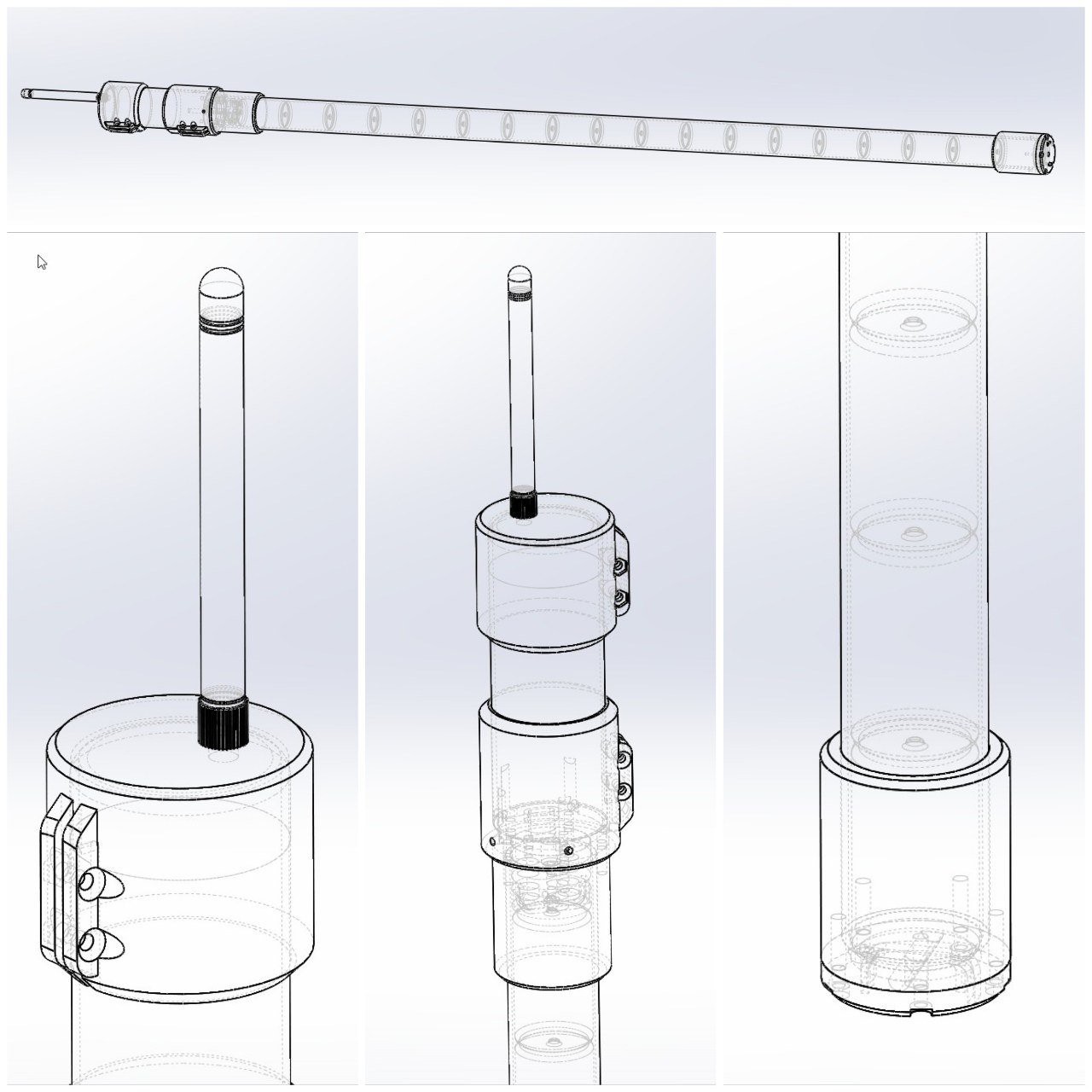
LoRa is a fantastic solution for long-range and low-power wireless communication (and popular, judging by the number of projects built around it) and LoRaTube provides an autonomous repeater, contained entirely in a length of PVC pipe. Out the top comes the antenna and inside is all the necessary hardware, along with a stack of good old D-sized alkaline cells feeding a supercap-buffered power supply of his own design. It’s weatherproof, inexpensive, self-contained, and thanks to extremely low standby current should last a good five years by [Bertrand]’s reckoning.
One can make a quick LoRa repeater in about an hour but while the core hardware can be inexpensive, supporting electronics and components (not to mention enclosure) for off-grid deployment can quickly add significant cost. Solar panels, charge controllers, and a rechargeable power supply also add potential points of failure. Sometimes it makes more sense to go cheap, simple, and rugged. Eighteen D-sized alkaline cells stacked in a PVC tube is as rugged as it is affordable, especially if one gets several years’ worth of operation out of it.
You can watch [Bertrand] raise a LoRaTube repeater and do a range test in the video (French), embedded below. Source code and CAD files are on the project page. Black outdoor helper cat not included.
youtube.com/embed/_I2cU9q78XQ?…
Retrotechtacular: Learning the Slide Rule the New Old Fashioned Way

Learning something on YouTube seems kind of modern. But if you are watching a 1957 instructional film about slide rules, it also seems old-fashioned. But Encyclopædia Britannica has a complete 30-minute training film, which, what it lacks in glitz, it makes up for in mathematical rigor.
We appreciated that it started out talking about numbers and significant figures instead of jumping right into the slide rule. One thing about the slide rule is that you have to sort of understand roughly what the answer is. So, on a rule, 2×3, 20×30, 20×3, and 0.2×300 are all the same operation.
You don’t actually get to the slide rule part for about seven minutes, but it is a good idea to watch the introductory part. The lecturer, [Dr. Havery E. White] shows a fifty-cent plastic rule and some larger ones, including a classroom demonstration model. We were a bit surprised that the prestigious Britannica wouldn’t have a bit better production values, but it is clear. Perhaps we are just spoiled by modern productions.
We love our slide rules. Maybe we are ready for the collapse of civilization and the need for advanced math with no computers. If you prefer reading something more modern, try this post. Our favorites, though, are the cylindrical ones that work the same, but have more digits.
youtube.com/embed/RA0uRxVjZL4?…
How Cross-Channel Plumbing Fuelled The Allied March On Berlin

During World War II, as the Allies planned the invasion of Normandy, there was one major hurdle to overcome—logistics. In particular, planners needed to guarantee a solid supply of fuel to keep the mechanized army functional. Tanks, trucks, jeeps, and aircraft all drink petroleum at a prodigious rate. The challenge, then, was to figure out how to get fuel over to France in as great a quantity as possible.
War planners took a diverse approach. A bulk supply of fuel in jerry cans was produced to supply the initial invasion effort, while plans were made to capture port facilities that could handle deliveries from ocean-going tankers. Both had their limitations, so a third method was sought to back them up. Thus was born Operation Pluto—an innovative plan to simply lay fuel pipelines right across the English channel.
Precious Juice

Back in the 1940s, undersea pipelines were rather underexplored technology. However, they promised certain benefits over other methods of shipping fuel to the continent. They would be far more difficult to destroy by aerial attack compared to surface ships or floating pipelines. An undersea pipeline would also be less likely to be damaged by rough sea conditions that were typical in the English Channel.
The idea was granted the codename PLUTO—for Pipe-Line Under The Ocean. Development began as soon as 1942, and the engineering challenges ahead were formidable. The Channel stood a good twenty miles wide at its narrowest point, with strong currents, variable depths, and the ever-present threat of German interference. Any pipeline would need to withstand high pressure from the fuel flowing inside, resist corrosion in seawater, and be flexible enough to handle the uneven seabed. It also needed to be laid quickly and surreptitiously, to ensure that German forces weren’t able to identify and strike the pipelines supplying Allied forces.
The first pipe developed as part of the scheme was HAIS. It was developed by Siemens Brothers and was in part the brainchild of Clifford Hartley, then Chief Engineer of Anglo-Iranian Oil and an experienced hand at delivering fuel pipelines in tough conditions. Thus the name—which stood for Hartly-Anglo-Iranian-Siemens. It used a 2-inch diameter pipe of extruded pipe to carry the fuel, surrounded by asphalt and paper doused in a vinyl-based resin. It was then wound with a layer of steel tape for strength, and then further layered with jute fiber and more asphalt and paper. The final layers were an armored sheath of galvanized steel wires and a canvas outer cover. The techniques used were inspired by those that had proved successful in the construction of undersea telegraph cables. As designed, the two-inch diameter pipe was intended to flow up to 3,500 imperial gallons of fuel a day when running at 500 psi.
HAIS pipe was produced across several firms in the UK and the US. Initial testing took place with pipe laid across the River Medway. Early efforts proved unsuccessful, with leaks caused by lead from the central core pushing out through the steel tape layer. The steel tape wraps were increased, however, and subsequent testing over the Firth of Clyde was more successful. Trials pushed the pipe up to 1,500 psi, showing that up to 250,000 liters of fuel could be delivered per day. The pipeline also proved robust, surviving a chance attack by a German bomb landing nearby. The positive results from testing led to the development of a larger 3-inch verison of the HAIS pipe to support even greater flow.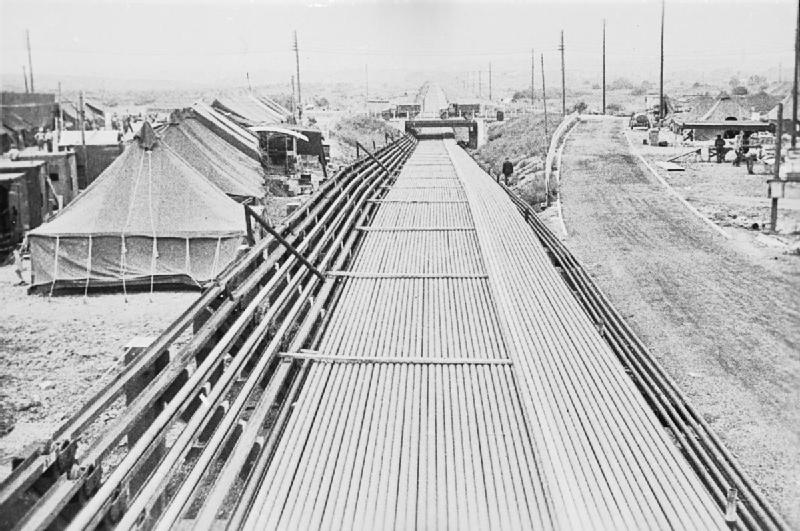
By this point in the war, however, supplies were becoming constrained on all sides. In particular, lead was becoming scarce, which spurred a desire for a cheaper pipe design to support Operation PLUTO. Thus was born HAMEL, named after engineers Bernard J. Ellis and H.A. Hammick, who worked on the project.
The HAMEL design concerned a flexible pipe constructed out of mild steel, at 3-½ inches in diameter. Lengths of the pipe were produced in 40-foot segments which would then be resistance welded together to create a longer flexible pipeline that could be laid on the seafloor. The steel-based pipe was stiffer than the cable-like HAIS, which caused an issue—it couldn’t readily be coiled up in a ship’s hold. Instead, giant floating drums were constructed at some 40 feet in diameter, nicknamed “Conundrums.” These were to be towed by tugs or hauled by barges to lay the pipeline across the Channel. Testing took place by laying pipelines to the Isle of Wight, which proved the concept was viable for deployment.
Beyond the two types of pipeline, a great deal of work went into the supporting infrastructure for the project. War planners had to build pumping stations to feed the pipelines, as well as ensure that they could in turn be fed fresh fuel from the UK’s network of fuel storage facilities and refineries. All this had to be done with a certain level of camouflage, lest German aircraft destroy the coastal pumping stations prior to the British invasion of the continent. Two main stations at Sandown and Dungeness were selected, and were intended to be connected via undersea pipe to the French ports of Cherbourg and Ambleteuse, respectively. The Sandown-Cherbourg link was to be named Bambi, while the Dungeness-Ambleteuse link would be named Dumbo, referencing further Disney properties since the overall project was called Pluto.
The Big Dance
On D-Day, the initial landings and immediate securing of the beachhead would run on pre-packaged fuel supplies in jerry cans and drums. The pipelines were intended to come later, ensuring that the Allied forces had the fuel supplies to push deep into Europe as they forced back the German lines. It would take some time to lay the pipelines, and the work could only realistically begin once the initial ports were secure.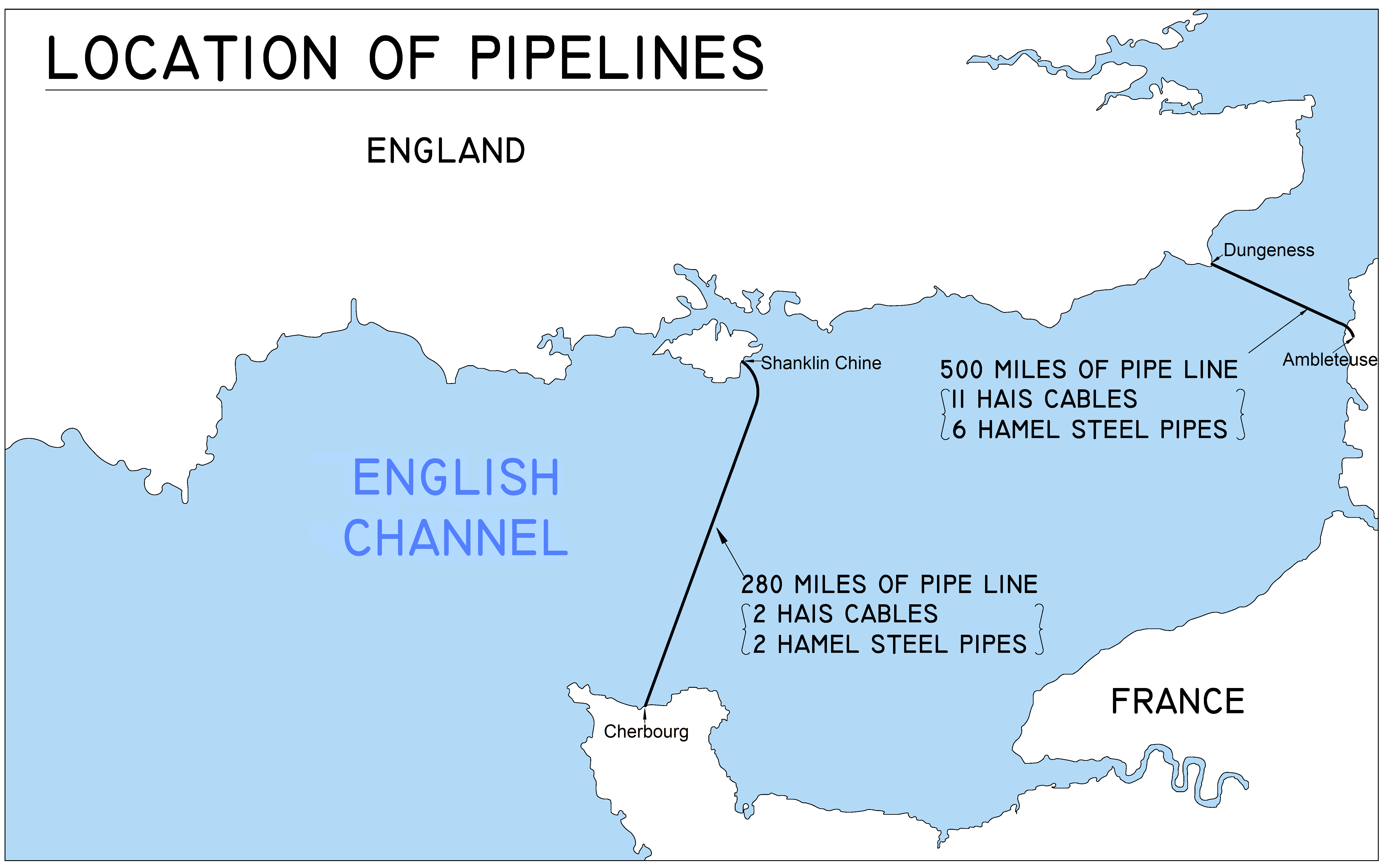
Bambi was intended to go into operation just 75 days after D-Day, assuming that Allied forces had managed to capture the port of Cherbourg within eight days of the landings. This process instead took 21 days due to the vagaries of war. Efforts to lay a HAIS pipeline began as soon as 12 August 1944, just 67 days after D-Day, only to fail due to an anchor strike by an escort destroyer. The second effort days later was scuppered when the piping was wound up in the propeller of a supporting craft. A HAMEL pipelaying effort on 27 August would also fail thanks to barnacles jamming the massive Conundrum from rotating, and while cleaning efforts freed it up, the pipeline eventually broke after just 29 nautical miles of the 65 nautical mile journey.
It wasn’t until 22 September that a HAIS cable was successfully installed across the Channel, and began delivering 56,000 imperial gallons a day. A HAMEL pipe was then completed on the 29 September. However, both pipes would fail just days later on October 3 as pressure was increased to up the rate of fuel delivery, and the Bambi effort was cancelled. Despite the great efforts of all involved, the pipelines had delivered just 935,000 imperial gallons, or 3,300 long tons of fuel—a drop in the ocean relative to what the war effort required.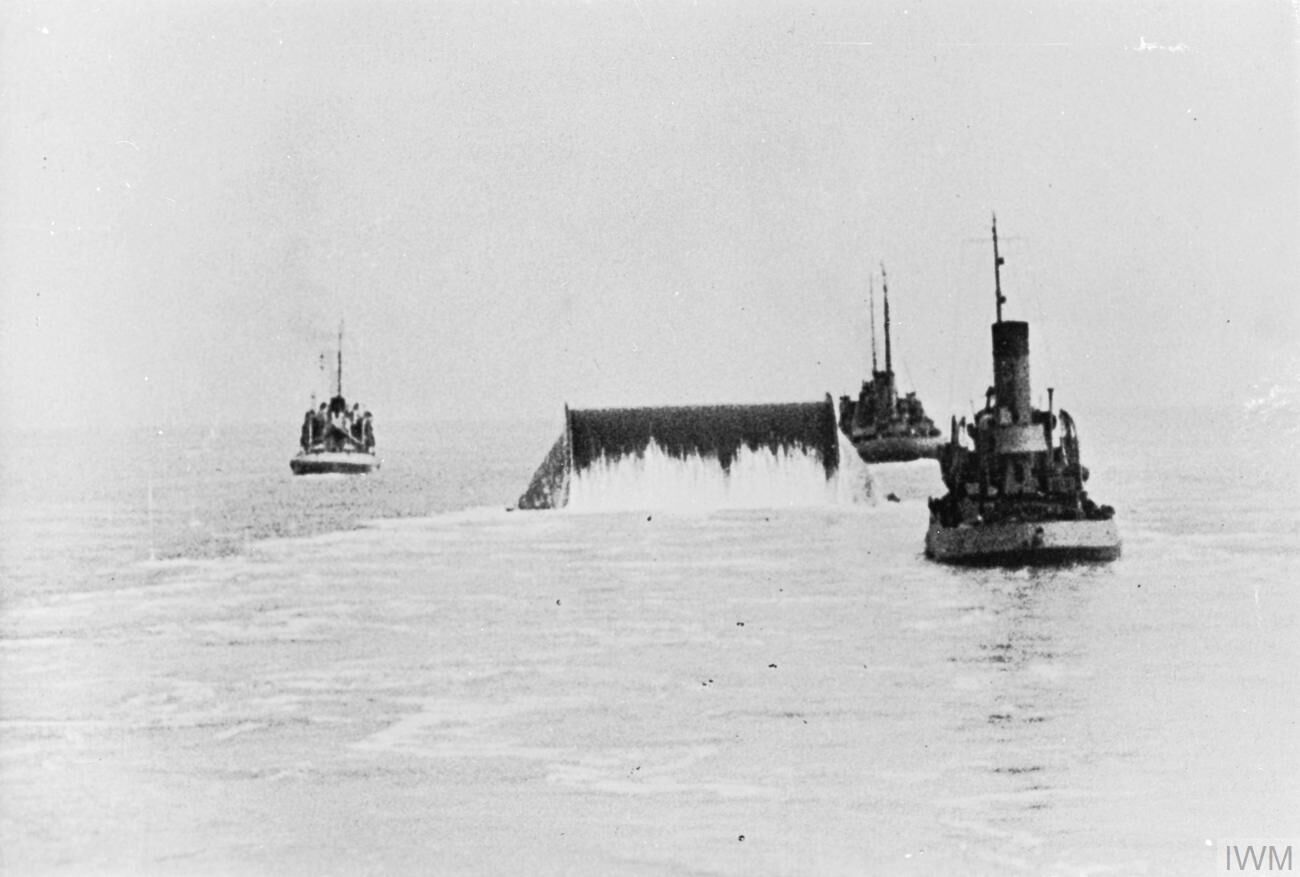
Dumbo would prove more successful, perhaps with little surprise that the distances involved were shorter. The first HAIS pipeline was completed and operational by 26 October. The pipeline was redirected from Dungeness to Boulogne instead of the original plan to go to Ambleteuse thanks to heavy mining by the Germans, and covered a distance of 23 nautical miles. More HAIS and HAMEL pipelines followed, and the pipeline would later be extended to Calais to use its rail links for delivery further inland.
A total of 17 pipelines were eventually laid between the two coasts by the end of 1944. They could deliver up to 1,300 long tons of fuel per day—soon eclipsing the Bambi efforts many times over. The HAMEL pipelines proved somewhat unreliable, but the HAIS cable-like pipes held up well and none broke during their use until the end of the war in Europe. The pipelines stuck to supplying petrol, while initial plans to deliver other fuels such as high-octane aviation spirit were discarded.
Overall, Operation Pluto would deliver 370,000 long tons of fuel to support Allied forces, or about 8 percent of the total. The rest was largely delivered by oceangoing tankers, with some additional highly-expensive aerial delivery operations used when logistical lines were stretched to their very limits. Bulk fuel delivery by undersea pipeline had been proven possible, but perhaps not decisively important when it came to wartime logistics.
Arguments as to the value of the project abound in war history circles. On the one hand, Operation Pluto was yet another impressive engineering feat achieved in the effort to bring the war to an end. On the other hand, it was a great deal of fuss and ultimately only delivered a moderate portion of the fuel needed to support forces in theatre. In any case, there are still lingering reminders of Operation Pluto today—like a former pumping station that has been converted into a minigolf course, or remnants of the pipelines on the Isle of Wight.
Since World War II, we’ve seen precious few conflicts where infrastructure plays such a grand role in the results of combat. Nevertheless, the old saying always rings true—when it comes to war, amateurs discuss tactics, while professionals study logistics.


Censorship by invoice: Public records cost $164,000 in Michigan township
Michigan’s Grand Blanc Township thinks it has discovered a trick to weasel out of accountability: charging a reporter more for government records than most people earn in two years.
Independent journalist Anna Matson filed two requests for records about the township’s fire chief, Jamie Jent, being placed on administrative leave. That decision — later lifted after outcry from residents and firefighters — reportedly came after he raised concerns about staffing issues following the tragic September shooting at the township’s Church of Jesus Christ of Latter-day Saints.
The government told her she’d have to pay a combined $164,000 in labor costs ($100,000 for her first request and $64,000 for a second) for finding and reviewing the records in order for them to respond to the request. That’s ridiculous. Michigan’s legislature should act to ensure that other local governments don’t get any ideas.
There’s nothing unusually burdensome about Matson’s requests. If the township’s recordkeeping is so shoddy and its search capabilities so lacking that it costs six figures’ worth of employee time to find some emails and documents, that’s the township’s problem, not Matson’s. If anything, it begs another Freedom of Information Act request to figure out how the township reached that level of incompetence, and what officials are spending money on instead of basic software.
The township doubled down on evasiveness when Matson showed up to a board meeting last week to contest the fees, and it made nonsensical excuses to enter into closed session so that it could discuss its secrecy in secret.
Maybe the township thinks the fees will discourage the press from trying to hold it accountable. More likely, it will do the opposite: inspire reporters to keep digging. Intrepid journalists see obvious obstruction tactics like these and think, “I must be on to something.” We’re confident Matson will eventually uncover whatever the township doesn’t want her and her readers to see.
Michigan’s Freedom of Information Act, like the federal FOIA and state public records laws across the country, was intended to let everyone — not just rich people — find out what their government is up to and how their money is being spent.
The law allows agencies to charge reasonable fees — copying costs, mailing expenses, and limited labor charges calculated at the hourly wage of the lowest-paid employee capable of doing the work. Agencies aren’t permitted to charge for the first two hours of labor, and they can only charge for search and review time if not doing so would result in “unreasonably high costs.”
Officials are taking advantage of the media’s weak financial position to hold accountability for ransom.
We’re not fans of charging any labor costs for FOIAs. Tax dollars already pay for agencies to maintain public records. Allowing the public to access them is a basic government function. But putting that aside, how does finding records about one employee during a limited time frame — which was all her first request sought — cost six figures? The $64,000 price tag for the second request for departmental records is equally absurd and also shows the arbitrariness of the whole thing — how does the broader request cost less than the narrower one?
This obstruction tactic is hardly a local innovation. Last year, Nebraska’s legislature had to step in after the state’s Department of Environment and Energy tried charging the Flatwater Free Press more than $44,000 to review environmental records. It claimed figuring out what exemptions to the public’s records law applied would be time-consuming — essentially making the press pay for their time figuring out legal arguments to not give it the records it wanted.
The Trump administration — which has attempted to close FOIA offices and fired officials who released embarrassing information pursuant to FOIAs — recently demanded journalist Brian Karem pay a $50,000 bond just to expedite a lawsuit for documents about the classified records Trump took to Mar-a-Lago. It’s far from the first instance of fee bullying by the federal government, regardless of who is president.
Trump, of course, claims he did nothing wrong by taking those documents, but doesn’t want to let the public be the judge. The situation in Grand Blanc Township is similar — the same government that may have punished a fire chief for speaking up about public safety wants to punish a journalist for asking questions about it. It’s secrecy stacked on secrecy.
It’s no coincidence that so many of these overcharging cases involve requests by independent journalists or small local outlets. The government knows the news industry is struggling economically. That’s no secret. Officials are taking advantage of the media’s weak financial position to hold accountability for ransom. If they get their way, transparency will become a luxury only affordable to major media outlets that are unlikely to have much interest in public records from Grand Blanc Township in the first place.
The township needs to rescind its invoice, apologize to Matson, and get her the records she’s entitled to right away. Beyond that, state legislators need to put politics aside and follow Nebraska’s example by narrowing what the government can charge the public for its own records and making those limits unambiguous (and of course, they should also remove absurd provisions exempting the governor and legislature from transparency).
And if agencies have the nerve to defend these shakedowns in court, judges should hold government lawyers accountable for whatever frivolous legal arguments they concoct to justify charging well over the cost of a house in Detroit for basic transparency.
White House media bias tracker: Another tired gimmick
FOR IMMEDIATE RELEASE:
The White House has launched a media bias tracker to catalog instances of supposedly distorted coverage by the press. Predictably, the site is long on hyperbole and short on substance.
The following statement can be attributed to Seth Stern, director of advocacy for Freedom of the Press Foundation (FPF):
“If Trump thinks the media is getting stories wrong or being unfair to him, he should release the public records, correspondence, and legal memoranda that prove it, instead of wasting time and taxpayer money on silly websites.“He’s got more power than anyone to correct the record with documented facts and has countless platforms on which to do so. Instead, he calls reporters ‘piggy’ and posts empty rants that don’t refute anything, while doing everything in his power to hinder Americans’ access to public records containing verifiable facts.
“Trump’s anti-speech antics are highly unpopular, and I doubt many people take his ramblings about ‘fake news’ seriously at this point. He has made it extremely clear that his beef is not with media bias but with journalists not flattering him and regurgitating his lies. It’s a safe bet that his bias tracker will not have anything to say about the influencers and propagandists he favors over serious journalists.
“People understand the obvious conflict inherent in an image-obsessed presidential administration appointing itself the arbiter of media bias. I expect that after the initial wave of publicity, few Americans will be paying attention to this latest stunt, let alone consulting it when deciding what news to consume. The gimmick is wearing thin.”
Please contact us if you would like further comment.
freedom.press/issues/white-hou…


Trump Administration Outlines Plan to Throw Out an Agency's FOIA Requests En Masse
The Department of Energy (DOE) said in a public notice scheduled to be published Thursday that it will throw out all Freedom of Information Act (FOIA) requests sent to the agency before October 1, 2024 unless the requester proactively emails the agency to tell it they are still interested in the documents they requested. This will result in the improper closure of likely thousands of FOIA requests if not more; government transparency experts told 404 Media that the move is “insane,” “ludicrous,” a “Pandora’s Box,” and “an underhanded attempt to close out as many FOIA requests as possible.”The DOE notice says “requesters who submitted a FOIA request to DOE HQ at any time prior to October 1, 2024 (FY25), that is still open and is not under active litigation with DOE (or another Federal agency) shall email StillInterestedFOIA@hq.doe.gov to continue processing of the FOIA request […] If DOE HQ does not receive a response from requesters within the 30-day time-period with a DOE control number, no further action will be taken on the open FOIA request(s), and the file may be administratively closed.” A note at the top of the notice says it is scheduled to be formally published in the Federal Register on Thursday.
The agency will send out what are known as “still interested” letters, which federal agencies have used over the years to see if a requester wants to withdraw their request after a certain period of inactivity. These types of letters are controversial and perhaps not legal, and previous administrations have said that they should be used rarely and that requests should only be closed after an agency made multiple attempts to contact a requester over multiple methods of communication. What the DOE is doing now is sending these letters to submitters of all requests prior to October 1, 2024, which is not really that long ago; it also said it will close the requests of people who do not respond in a specific way to a specific email address.
FOIA requests—especially complicated ones—can often take months or years to process. I have outstanding FOIA requests with numerous federal agencies that I filed years ago, and am still interested in getting back, and I have gotten useful documents from federal agencies after years of waiting. The notion that large numbers of people who filed FOIA requests as recently as September 2024, which is less than a year ago, are suddenly uninterested in getting the documents they requested is absurd and should be seen as an attack on public transparency, experts told 404 Media. The DOE’s own reports show that it often does not respond to FOIA requests within a year, and, of course, a backlog exists in part because agencies are not terribly responsive to FOIA.
“If a requester proactively reaches out and says I am withdrawing my request, then no problem, they don’t have to process it,” Adam Marshall, senior staff attorney at the Reporters Committee for Freedom of the Press, told me. “The agency can’t say we’ve decided we’ve gotten a lot of requests and we don’t want to do them so we’re throwing them out.”
“I was pretty shocked when I saw this to be honest,” Marshall added. “I’ve never seen anything like this in 10 years of doing FOIA work, and it’s egregious for a few reasons. I don’t think agencies have the authority to close a FOIA request if they don’t get a response to a ‘still interested’ letter. The statute doesn’t provide for that authority, and the amount of time the agency is giving people to respond—30 days—it sounds like a long time but if you happen to miss that email or aren’t digging through your backlogs, it’s not a lot of time. The notion that FOIA requesters should keep an eye out in the Federal Register for this kind of notice is ludicrous.”
The DOE notice essentially claims that the agency believes it gets too many FOIA requests and doesn’t feel like answering them. “DOE’s incoming FOIA requests have more than tripled in the past four years, with over 4,000 requests received in FY24, and an expected 5,000 or more requests in FY25. DOE has limited resources to process the burgeoning number of FOIA requests,” the notice says. “Therefore, DOE is undertaking this endeavor as an attempt to free up government resources to better serve the American people and focus its efforts on more efficiently connecting the citizenry with the work of its government.”
Lauren Harper of the Freedom of the Press Foundation told me in an email that she also has not seen any sort of precedent for this and that “it is an underhanded attempt to close out as many FOIA requests as possible, because who in their right mind checks the federal register regularly, and it should be challenged in court. (On that note, I am filing a FOIA request about this proposal.)”
“The use of still interested letters isn't explicitly allowed in the FOIA statute at all, and, as far as I know, there is absolutely zero case law that would support the department sending a mass ‘still interested’ letter via the federal register,” she added. “That they are also sending emails is not a saving grace; these types of letters are supposed to be used sparingly—not as a flagrant attempt to reduce their backlog by any means necessary. I also worry it will open a Pandora's Box—if other agencies see this, some are sure to follow.”
Marshall said that FOIA response times have been getting worse for years across multiple administrations (which has also been my experience). The Trump administration and the Department of Government Efficiency (DOGE) have cut a large number of jobs in many agencies across the government, which may have further degraded response times. But until this, there hadn’t been major proactive attempts taken by the self-defined “most transparent administration in history” to destroy FOIA.
“This is of a different nature than what we have seen so far, this affirmative, large-scale effort to purport to cancel a large number of pending FOIA requests,” Marshall said.

reshared this
Werbeanzeigen: EuGH nimmt Plattformen bei Datenschutzverstößen in die Pflicht
netzpolitik.org/2025/werbeanze…

Für gemeinwohlorientierten Journalismus: So unterstützt ihr uns mit Spenden aus und von Unternehmen
netzpolitik.org/2025/fuer-geme…

Digital Fights: Digital Riots: Wie wir alle die verpflichtende Chatkontrolle gestoppt haben
netzpolitik.org/2025/digital-f…

Quindi, caro Putin, ti diamo altri due anni ma vedi di sbrigarti con l'Ucraina perché non è che possiamo tenere il piede in due scarpe per sempre.


C'è un accordo per cessare le importazioni di gas russo in Europa entro il 2027 - Il Post
https://www.ilpost.it/2025/12/03/divieto-gas-russo-europa/?utm_source=flipboard&utm_medium=activitypubPubblicato su News @news-ilPost

Poliversity - Università ricerca e giornalismo reshared this.
MESSICO. Le insidie della legge sull’acqua: «un lupo travestito da agnello»
@Notizie dall'Italia e dal mondo
Dopo più di una settimana di dibattiti, gli esperti denunciano che la nuova proposta di legge sulle risorse idriche perpetua il modello mercantilista e centralizza il potere in una Commissione Nazionale dell’Acqua (Conagua) opaca, ignorando gli accordi
Notizie dall'Italia e dal mondo reshared this.
Sinagoga Monteverde. Sant’Egidio: un’offesa alla memoria di tutta la città
@Giornalismo e disordine informativo
articolo21.org/2025/12/sinagog…
La Comunità di Sant’Egidio esprime la sua solidarietà alla Comunità ebraica romana per il vergognoso vandalismo subito nella sinagoga del quartiere di
Il filo che collega attacchi alla magistratura e più scorta a Ranucci: controllo in cambio di sicurezza
@Giornalismo e disordine informativo
articolo21.org/2025/12/il-filo…
C’è un filo che lega gli attacchi alla magistratura, i più
Piena solidarietà e sostegno al vescovo Derio. Ci uniamo a lui nella difesa dell’imam Mohamed Shahin
@Giornalismo e disordine informativo
articolo21.org/2025/12/piena-s…
Abbiamo letto con sconcerto la lettera aperta inviata ai giornali da parte
Give peace a chance
@Giornalismo e disordine informativo
articolo21.org/2025/12/give-pe…
Dopo quasi quattro anni di combattimenti ininterrotti, dopo centinaia di migliaia di morti e feriti da entrambe le parti, dopo incommensurabili devastazioni ambientali, dopo un’escalation irrefrenabile della violenza bellica, finalmente con l’annuncio del piano di pace in 28 punti proposto da Trump, si è aperta la
Giornalismo e disordine informativo reshared this.
Continua l’assalto del Governo a Bologna: è la volta dell’Università
@Giornalismo e disordine informativo
articolo21.org/2025/12/continu…
Un giorno sì e uno no il capogruppo di Fratelli d’Italia alla Camera Galeazzo Bignami, bolognese doc e fedelissimo di Giorgia Meloni, attacca chi governa Bologna chiedendo in
Alice Ceresa, tradotta e traduttrice
Alice Ceresa, tradotta e traduttrice
a cura di Tania Collani, Tatiana Crivelli
edu.sefeditrice.it/catalogo/al…
Società Editrice Fiorentina
il pdf del libro è liberamente scaricabile

Alice Ceresa, tradotta e traduttrice
Questo volume indaga per la prima volta la dimensione plurilingue e transnazionale dell’opera di Alice Ceresa (1923-2001), una delle voci più originali della letteratura in lingua italiana del Novecento.edu.sefeditrice.it
reshared this

Se funziona come Immuni, l'app prodotta dallo stato che ti doveva avvisare se eri vicino ad una persona con il COVID-19, direi che gli indiani possono dormire sonni tranquilli.
Il governo indiano ha ordinato ai produttori di telefoni di installare su tutti i nuovi dispositivi un'app prodotta dallo stato per la cybersicurezza - Il Post
https://www.ilpost.it/2025/12/02/india-app-smartphone-controllo/?utm_source=flipboard&utm_medium=activitypubPubblicato su News @news-ilPost

Poliversity - Università ricerca e giornalismo reshared this.
No, Putin non ha minacciato nessuno: sono l’Unione Europea e la Nato a minacciare la Russia!
La stampa di regime e la politica stanno totalmente capovolgendo, ancora una volta, la situazione. Partiamo dal fatto che Putin, qualche giorno fa, ha lanciato un’apertura enorme verso i guerrafondai europei, ovvero sedersi attorno a un tavolo e mettere nero su bianco un accordo. Ma in quel caso venne inascoltato.
Ma andiamo a ciò che ha detto oggi, visto che la propaganda, pur di mettere paura all’opinione pubblica, continua a mentire o a usare dichiarazioni in modo del tutto strumentale:
“L’Europa si è esclusa da sola dal processo negoziale ucraino. Non ha un’agenda di pace e attualmente sta intralciando gli sforzi degli Stati Uniti per le trattative. L’Europa avanza proposte inaccettabili per la Russia nel piano di pace sull’Ucraina.
La Russia non intende fare la guerra all’Europa, l’ho detto cento volte. Se invece l’Europa decidesse di cominciare la sua guerra e la cominciasse davvero, allora la situazione cambierebbe molto rapidamente in una in cui a noi semplicemente non resterà più nessuno con cui negoziare. La Russia non ha intenzione di combattere con l’Europa, ma se inizierà, saremo subito pronti”.
Ecco, questo ha detto Putin e non mi pare abbia minacciato qualcuno. Ha solamente detto che, se la Russia dovesse essere attaccata – come auspicato qualche ora fa da Cavo Dragone – risponderebbe. Cosa dovrebbe dire? “No, per favore, combattiamo con le pale, smontiamo i chip dalle lavastoviglie, abbiamo un’economia totalmente fallita grazie alle vostre sanzioni, quindi lasciateci in pace”?
Ma io dico: ci rendiamo conto di quanto ridicoli e pericolosi siano quelli che ci governano e quelli che dovrebbero informarvi?
Giuseppe Salamone

Incontro online su "Oggettistica" (e gli 'oggetti' testuali/letterari) in collegamento con l'Università di Perugia
Giovedì 4 dicembre, h. 12:30, “Oggettistica”_
Incontro in collegamento con l’Università di Perugia
info:
slowforward.net/2025/12/01/4-d…
per assistere in diretta:
https://t.ly/0jBvh


4 dicembre, “oggettistica”: incontro in collegamento con l’università di perugia
grazie a Fabrizio Scrivano per questo invito
cliccare per ingrandirelink per assistere: t.ly/0jBvh
#dipartimentoDiLettere #fabrizioScrivano #letteratura #mg #oggetti #oggettiLetterari #oggettistica #oggettivita #teoriaDellaLetteratura #tic #ticEdizioni #universitaDegliStudiDiPerugia #universitaDiPerugia

reshared this
C'erano i panettoni nei negozi, le luminarie, ma sentivo che mancava qualcosa... poi ho capito: la Lega che si strappa le vesti a favore di telecamera perché a scuola non si può fare il presepe.
È perché non si può fare il presepe? Per colpa degli stranieri maledetti!
Ooohhh... adesso è Natale!


L’istituto comprensivo di Chiuduno, nel bergamasco, come avviene da diversi anni nel periodo natalizio decide di impostare spettacoli e momenti conviviali senza riferimenti religiosi, nel rispetto della laicità e del pluralismo, in una scuola dove quasi il 40% degli alunni è di origine straniera. Si scatenano le "tradizionali" polemiche dei clericali – in prima fila l’europarlamentare leghista Silvia Sardone – che paventano la cancellazione dell’identità cristiana.👇
bergamonews.it/2025/12/02/a-ch…A Chiuduno un Natale 'laico': "Rispetto per tutte le religioni"
Nelle scuole di Chiuduno la componente straniera si avvicina al 40%: la polemica dell'europarlamentare della Lega Silvia Sardone sul NataleBergamonews

like this
reshared this
si chia
non capisco una cosa, ma anche per i più scettici, se putin dice di aver conquistato la città per 4 volte, non è la dimostrazione che o le 3 volte prima erano false, o l'ha persa già 3 volte e quindi una quarta conquista suona nel migliore dei casi "molto temporanea"? a casa mia a uno che racconta balle puoi credere giusto la prima volta... siamo così coglioni che raccontano N volte una balla e ogni volta ci ricaschiamo? tipo i no vax... a sentire loro chi si vaccinava doveva morire in 1 anno massimo. direi che è evidente che non è successo. ci potevi credere all'inizio ma adesso è palese che era una cazzata, no? a casa mia mi freghi la prima volta ma non le successive... si chiama imparare dall'esperienza.
STATI UNITI. “L’ICE funziona come un esercito di occupazione. Lo so perché ne ho fatto parte”
@Notizie dall'Italia e dal mondo
La testimonianza di un ex militare statunitense impiegato in Afghanistan sulle retate contro gli immigrati affidate da Donald Trump all'ICE, un corpo di polizia pesantemente armato e responsabile di atti di violenza ingiustificati
L'articolo STATI UNITI. “L’ICE funziona
Social Media in Italia 2024/2025: mercato saturo, ma cresce il tempo di utilizzo
Anche quest'anno è arrivato il momento di fare il consueto punto sull’utilizzo dei social media in Italia, rielaborando i dati del sistema di rilevazione Audicom – sistema Audiweb di cui sono venuto in possesso.
Complessivamente assistiamo ad una inedita contrazione nell’uso di alcuni social media, che inizia nel 2024 e prosegue nei primi mesi del 2025. Analizziamola considerando ciascuna piattaforma [qui la pagina dell’Osservatorio Social Media i dati aggiornati di Settembre].
Considerando le medie mensili del 2024, il social più usato dagli italiani è stato YouTube, che ha collezionato una audience di 37,1 milioni di persone (+0,5% rispetto alla media del 2023). Ma se confrontiamo i primi nove mesi del 2024 e del 2025 notiamo un lieve calo dell’1%.
A poca distanza Facebook, che ha fatto registrare una media mensile di circa 35,8 milioni di utilizzatori (-0,1%). Il calo nei primi 9 mesi del 2025 è di ben 1 milione di utenti, pari al 2,9%.
Chiude il podio ancora una volta Instagram con quasi 32,9 milioni di utenti ossia +2,7% sul 2023, ma con un decremento di 1,9 punti in quest’anno (sempre rispetto ai primi nove mesi del 2024)TikTok è stabile al quarto posto con una audience di 22,4 milioni di utenti, in crescita dal 2023 al 2024 del 3,6%, ma in leggera flessione negli ultimi nove mesi dello 0,6%.
Sale al quinto posto Telegram (qui considerato perché ha anche una parte di funzioni tipiche dei social media) con 16,5 milioni di utilizzatori (+1,2% sul 2023, ma in calo dell’1,5% negli ultimi mesi).
A seguire troviamo LinkedIn con circa 15 milioni di utenti al mese. Il suo è un calo continuo, prima del 13% e ora del 7,7%.
Nelle immediate vicinanze c’è X che ha subito un calo del 12,8% tra 2023 e 2024 e negli ultimi mesi del 27,6% pari ad un’emorragia di 4,4 milioni di utenti.
Segue Pinterest con 14,3 milioni di fedeli, in calo del 2% sul 2023 e del 14,3% in questi ultimi mesi.Al nono posto troviamo la piattaforma che sta crescendo di più, Reddit, aggregatore di forum online, che ha avuto una media mensile di 6,1 milioni di utenti nel 2024 (+46%) e che continua a crescere anche nel 2025 (+81%).
Segnalo l’entrata di Threads, social di Meta, che ha già conquistato 5 milioni di utenti nel 2024. A settembre 2025 ne aveva 6 milioni (+31,6% considerando il confronto con i primi nove mesi del 2024).
Chiudono la classifica tre piattaforme in calo: Twitch con 2,6 milioni di utenti nel 2024 (-35%), Snapchat con 1,8 milioni (-4,4%) e Tumblr 1,2 milioni di fedelissimi (-40%). Tutte e tre continuano a crollare a velocità simile anche in questi mesi del 2025.
Grazie a @Xab per la segnalazionevincos.it/2025/11/29/social-me…
Se vuoi seguire post come questo, puoi seguire il gruppo Activitypub @Informatica (Italy e non Italy 😁)

Osservatorio Social Media
Statistiche e analisi aggiornate sui social media in Italia. Quanti sono gli utenti di Facebook, Instagram, TikTok, Twitter, Snapchat, Pinterest, LinkedInVincenzo Cosenza (Vincos di Vincenzo Cosenza)

Abbastanza interessante la crescita di Reddit, che non avrei mai pensato potesse trovare un buon bacino nel target italofonovincos.it/2025/11/29/social-me…
Social Media in Italia 2024/2025: mercato saturo, ma cresce il tempo di utilizzo
Analisi social media in Italia 2024-2025: TikTok vince sull'engagement, crollano X e Twitch, Reddit e Threads in crescita. Scopri i trend.vincos (Vincos di Vincenzo Cosenza)

Informatica (Italy e non Italy 😁) reshared this.
Corrotti in Italia così come nella UE. Le euromerde burocrate si riconoscono ovunque vadano e fanno i moralisti la voce grossa agli altri.
Mogherini fermata, Tajani: "sono garantista" • Imola Oggi
imolaoggi.it/2025/12/02/mogher…
possibile.com/druetti-marro-ar…
Solidarietà da parte di tutta Possibile a Filippo Blengino, arrestato a Torino sulla base di norme inutili e proibizioniste che non producono alcun risultato se
Enav al centro del rinnovo radar. Siglata l’intesa con la Difesa
@Notizie dall'Italia e dal mondo
Enav ha annunciato un’importante commessa per il rafforzamento della difesa aerea e della sorveglianza del traffico aereo in Italia. Con un accordo siglato con ministero della Difesa, tramite Teledife, Enav guiderà un raggruppamento con Techno Sky (sua controllata al 100%) e Leonardo per
Notizie dall'Italia e dal mondo reshared this.
fanpage.it/podcast/scanner/la-…
mi dici cosa dovresti fare quando sai che un pazzo che vuole rifondare l'unione sovietica ha intenzione di tornare alla guerra fredda o quanto necessario per completare quanto lasciato a metà? una mia amica che ha combattuto contro la dittatura a panama sosteneva che la peggiore e più corrotte delle democrazie era preferibile alla migliore e più efficiente delle dittature. se ti attaccano puoi solo difenderti. quali alternative ci sono? arrenderti e sperare che il tuo amore smisurato converta il nemico?
possibile.com/cpr-albania-onu/…
Mentre Meloni continua a dire che "funzioneranno", i campi per le persone migranti di Gjadër in Albania sono finiti al centro delle preoccupazioni e critiche del comitato ONU contro la Tortura e Comportamenti Disumani e Degradanti. E la notizia già si commenta da sola sottolineando il fallimento e lo
Il Belgio vieta l’uso dell’intelligenza artificiale cinese DeepSeek sui dispositivi governativi
Per vedere altri post sull' #IntelligenzaArtificiale, segui la comunità @Intelligenza Artificiale
Il Belgio si è aggiunto alla lista sempre più lunga dei Paesi che hanno vietato l’uso dello strumento di intelligenza artificiale generativa
Intelligenza Artificiale reshared this.
Ecco perché l’Italia ha bisogno di un polo cibernetico nazionale. Parla Festucci
@Notizie dall'Italia e dal mondo
Nel cyberspazio, la competizione non conosce tregua. Gli attacchi informatici aumentano per frequenza e complessità, colpiscono infrastrutture civili e militari e rappresentano una minaccia che va ben oltre quella convenzionale. L’Italia, tuttavia, non ha ancora sviluppato una
Notizie dall'Italia e dal mondo reshared this.
“Lasciatemi morire ridendo” arriva a Prato – Proiezione del documentario e dibattito post-film
Cinema Garibaldi, Via Giuseppe Garibaldi 6 – Prato
Lunedì 8 dicembre 2025
Ore 20:30
Nell’ambito della campagna nazionale di presentazione del documentario Lasciatemi morire ridendo, la Cellula Coscioni di Prato invita alla proiezione del film dedicato alla storia di Stefano Gheller, primo cittadino veneto a ottenere il via libera per l’aiuto medico alla morte volontaria.
A seguire, dibattito post-proiezione con:
- Marco Perduca, Senatore, Coordinatore attività internazionali Associazione Luca Coscioni
- Bernard Dika, Sottosegretario alla Presidenza Regione Toscana
- Erica Mazzetti, Deputata della Repubblica
- Sabrina Pientini, Coordinamento Cure Palliative ASL Toscana
Modera: Matteo Giusti, Coordinatore Cellula Coscioni Prato.
L’appuntamento sarà un’occasione per riflettere sui diritti ancora negati nel fine vita e sull’urgenza di garantire piena libertà di scelta alle persone in condizioni di sofferenza estrema.
L'articolo “Lasciatemi morire ridendo” arriva a Prato – Proiezione del documentario e dibattito post-film proviene da Associazione Luca Coscioni.

Il caso Alma Mater di Bologna e il dovere di non alimentare nuovi estremismi. Il commento di Butticé
@Notizie dall'Italia e dal mondo
Alla luce di quanto accaduto a Bologna, sento il dovere di intervenire pubblicamente. Non per alimentare polemiche sterili, ma perché ciò che è successo tocca il cuore del rapporto tra Forze Armate, Università e società democratica. Parlo da soldato e Fiamma
Notizie dall'Italia e dal mondo reshared this.
il mio #differxdiario brontola qui: noblogo.org/differx/ci-sono-au…
reshared this
Ottawa entra in Safe e l’Ue apre il gioco lungo della difesa
@Notizie dall'Italia e dal mondo
L’ingresso del Canada nello strumento Safe dell’Unione europea segna una svolta nella costruzione di una difesa sempre più integrata e industrialmente strutturata. La decisione porta per la prima volta un Paese del G7 non appartenente all’Unione dentro il meccanismo europeo dei prestiti per gli
Notizie dall'Italia e dal mondo reshared this.
Krypt3ia
in reply to The Pirate Post • • •