
‘L’investitore di Big Short’ Michael Burry accusa gli iperscaler AI di aumentare artificialmente gli utili
Michael Burry, l’investitore reso famoso da “The Big Short” che ha recentemente ribollito il mercato con una breve scommessa tecnologica, sta accusando alcune delle più grandi aziende tecnologiche americane di utilizzare una contabilità aggressiva per trarre profitto dal boom dell’intelligenza artificiale.
In un post lunedì su X, il fondatore di Scion Asset Management ha affermato che “hyperscalers” —, i principali fornitori di infrastrutture cloud e AI —, stanno sottostimando le spese di ammortamento stimando che i chip avranno un ciclo di vita più lungo di quanto sia realistico.
reshared this
Hackaday Links: November 16, 2025

We make no claims to be an expert on anything, but we do know that rule number one of working with big, expensive, mission-critical equipment is: Don’t break the big, expensive, mission-critical equipment. Unfortunately, though, that’s just what happened to the Deep Space Network’s 70-meter dish antenna at Goldstone, California. NASA announced the outage this week, but the accident that damaged the dish occurred much earlier, in mid-September. DSS-14, as the antenna is known, is a vital part of the Deep Space Network, which uses huge antennas at three sites (Goldstone, Madrid, and Canberra) to stay in touch with satellites and probes from the Moon to the edge of the solar system. The three sites are located roughly 120 degrees apart on the globe, which gives the network full coverage of the sky regardless of the local time.
Losing the “Mars Antenna,” as DSS-14 is informally known, is a blow to the DSN, a network that was already stretched to the limit of its capabilities, and is likely to be further challenged as the race back to the Moon heats up. As for the cause of the accident, NASA explains that the antenna was “over-rotated, causing stress on the cabling and piping in the center of the structure.” It’s not clear which axis was over-rotated, but based on some specs we found that say the azimuth travel range is ±265 degrees “from wrap center,” we suspect it was the vertical axis in the base. It sounds like the azimuth went past that limit, which wrapped the swags of cables and hoses that run the antenna tightly, causing the damage. We’d have thought there would be a physical stop of some sort to prevent over-rotation, but then again, running a structure that big up against a stop would be very much an “irresistible force, immovable object” scenario. Here’s hoping they can get DSS-14 patched up quickly and back in service.
Speaking of having a bad day on the job, we have to take pity on these Russian engineers for the “demo hell” they went through while revealing the country’s first AI-powered humanoid robot. AIdol, as the bot is known, seemed to struggle from the start, doddering from behind some curtains like a nursing home patient with a couple of nervous-looking fellows flanking it. The bot paused briefly before continuing its drunk-walk, pausing again to deliver a somewhat feeble wave to the crowd before entering the terminal stumble and face-plant part of the demo. The bot’s attendants quickly dragged it away, leaving a pile of parts on the stage while more helpers tried — and failed — to deploy a curtain to hide the scene. It was a pretty sad scene to behold, made worse by the choice of walk-out music (Bill Conti’s iconic “Gonna Fly Now,” better known as the theme from Rocky).
youtube.com/embed/LyfCLRkXKYs?…
We just noticed that pretty much everything we have to write about this week has a “bad day at work” vibe to it, so to continue on with that theme, witness this absolutely disgusting restoration of a GPU that spent way too many years in a smoker’s house. The card, an Asus 9800GT Matrix, is from 2008, so it may have spent the last 17 years getting caked with tar and nicotine, along with a fair amount of dust and perhaps cat hair, from the look of it. Having spent way too much time cleaning TVs similarly caked with grossness most foul, we couldn’t stomach watching the video of the restoration process, but it’s available in the article if you dare.
And the final entry in our “So you think your job sucks?” roundup, behold the poor saps who have to generate training data for AI-powered domestic robots. The story details the travails of Naveen Kumar, who spends his workday on simple chores such as folding towels, with the twist of doing it with a GoPro strapped to his forehead to capture all the action. The videos are then sent to a U.S. client, who uses them to develop a training model so that humanoid robots can eventually copy the surprisingly complex physical movements needed to perform such a mundane task. Training a robot is all well and good, but how about training them how to move around inside a house made for humans? That’s where it gets really creepy, as an AI startup has partnered with a big real estate company to share video footage captured from those “walk-through” videos real estate agents are so fond of. So if your house has recently been on the market, there’s a non-zero chance that it’s being used to train an army of domestic robots.
And finally, we guess this one fits the rough-day-at-work theme, but only if your job is being a European astronaut, who may someday be chowing down on protein powder made from their own urine. The product is known as Solein — sorry, but have they never seen the movie Soylent Green? — and is made via a gas fermentation process using microbes, electricity, and air. The Earth-based process uses ammonia as a nitrogen source, but in orbit or on long-duration deep-space missions, urea harvested from astronaut pee would be used instead. There’s no word on what Solein tastes like, but from the look of it, and considering the source, we’d be a bit reluctant to dig in.
Poliversity - Università ricerca e giornalismo reshared this.
The Simplest Ultrasound Sensor Module, Minus the Module

Just about every “getting started with microcontrollers” kit, Arduino or otherwise, includes an ultrasonic distance sensor module. Given the power of microcontrollers these days, it was only a matter of time before someone asked: “Could I do better without the module?” Well, [Martin Pittermann] asked, and his answer, at least with the Pi Pico, is a resounding “Yes”. A micro and a couple of transducers can offer a better view of the world.
The project isn’t really about removing the extra circuitry on the SR-HC0, since there really isn’t that much to start. [Martin] wanted to know just how far he could push ultrasound scanning technology using RADAR signal processing techniques. Instead of bat-like chirps, [Martin] is using something called Frequency-Modulated Continuous Wave, which comes from RADAR and is exactly what it sounds like. The transmitter emits a continuous carrier wave with a varying frequency modulation, and the received wave is compared to see when it must have been sent. That gives you the time of flight, and the usual math gives you a distance.
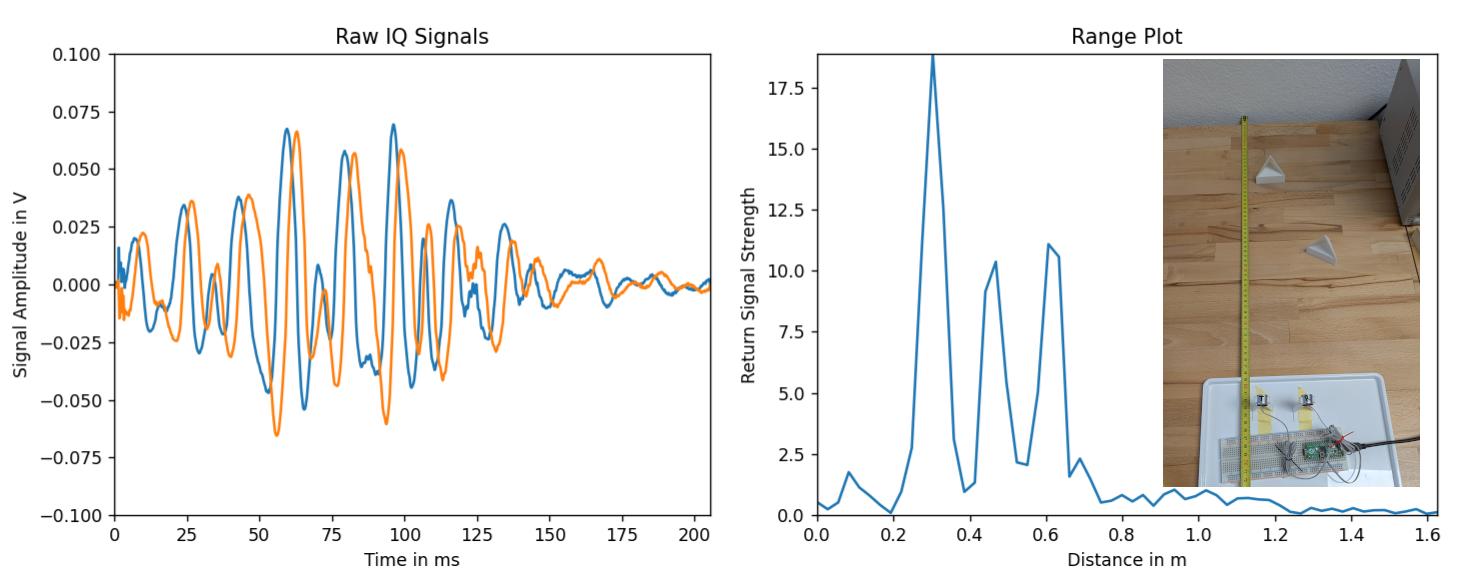
Since he’s inspired by RADAR, it’s no surprise perhaps that [Martin]’s project reminds us of SDR, and the write-up gets right into the signal-processing code. Does it work better than a chirping module? Well, aside from using fewer parts, [Martin] can generate a full range plot for all objects in the arc of the sensor’s emissions out to 4 meters using just the Pico. [Martin] points out that it wouldn’t take much amplification to get a greater range. He’s not finished yet, though — the real goal here is to measure wind speed, which means he’s going to have to go full Doppler. We look forward to it.
This isn’t the first time we’ve seen the Pico doing fun stuff at these frequencies, and Doppler RADAR is a thing hackers do, so why not ultrasound?
Google è pronta a lanciare Gemini 3.0: sarà davvero la svolta nella corsa all’AI?
Google si avvicina alla presentazione ufficiale di Gemini 3.0, il nuovo modello di intelligenza artificiale destinato a rappresentare uno dei passaggi più rilevanti nella strategia dell’azienda. Secondo quanto indicato internamente, il rilascio sarebbe imminente e programmato entro la fine dell’anno, come confermato dal CEO Sundar Pichai.
Negli ultimi giorni l’attenzione attorno al modello è cresciuta rapidamente. Su X e in diversi server Discord, alcuni appassionati di IA sostengono che Gemini 3 sia già in fase di test avanzatissimi, ipotesi alimentata dalla consueta modalità di sperimentazione riservata con cui Google prova spesso le sue tecnologie. L’interesse è stato ulteriormente amplificato dalla presenza del modello nei discorsi di analisti e addetti ai lavori, che lo considerano il prossimo banco di prova per valutare la capacità dell’azienda di tornare protagonista nella corsa all’intelligenza artificiale generativa.
Le aspettative sono elevate: Gemini 3 dovrebbe mostrare progressi significativi nella programmazione e nella produzione di contenuti multimediali. Tra le novità attese figura anche un aggiornamento di Nano Banana, lo strumento di Google dedicato alla creazione di immagini.
Il contesto in cui arriva questo lancio è particolarmente competitivo. Dall’uscita di ChatGPT alla fine del 2022, Google è stata spesso descritta come un gruppo costretto a rincorrere. La pressione ha portato a una riorganizzazione interna e all’integrazione accelerata dell’IA generativa nei prodotti principali dell’azienda. Negli ultimi mesi, però, i dati sembrano indicare una ripresa: l’utilizzo di Gemini è in crescita e il modello non ha inciso negativamente sul business pubblicitario, storicamente centrale per Google.
Per recuperare terreno, l’azienda ha fatto leva sul proprio vantaggio strutturale: oltre a sviluppare i modelli, dispone dell’infrastruttura cloud e dei canali di distribuzione necessari a integrarli rapidamente nei suoi servizi. Questo approccio le ha permesso di rimanere relativamente autonoma rispetto alla rete di alleanze sempre più fitta che caratterizza il settore.
La sfida più immediata resta il confronto con OpenAI, che quest’anno ha introdotto il nuovo ChatGPT 5, accolto con grande attenzione ma con un impatto inferiore alle aspettative. Secondo fonti citate da Business Insider, Gemini 3 sarebbe considerato “estremamente impressionante” da chi ha avuto modo di testarlo, tanto da poter rappresentare un’occasione concreta per Google di rialzare la testa e tornare a competere ai massimi livelli.
Resta tuttavia un ostacolo importante: il brand. ChatGPT continua a essere il nome più riconoscibile nel pubblico generalista, analogo al ruolo che “Google” ricopre nella ricerca web. Sebbene l’app Gemini abbia raggiunto 650 milioni di utenti attivi mensili, il servizio di OpenAI continua a mantenere una presenza superiore con circa 800 milioni di utenti settimanali. La diffusione crescente di Gemini tra gli utenti più giovani potrebbe contribuire a ridurre il divario, ma la distanza rimane significativa.
Le scelte compiute negli ultimi anni in materia di infrastrutture cloud, progettazione di chip e investimento nella ricerca sembrano ora iniziare a produrre risultati tangibili. Se Gemini 3 dovesse confermarsi all’altezza delle aspettative, Google potrebbe trovarsi nella posizione di rilanciare in modo deciso la propria corsa nell’intelligenza artificiale generativa.
L'articolo Google è pronta a lanciare Gemini 3.0: sarà davvero la svolta nella corsa all’AI? proviene da Red Hot Cyber.
The King of Rocket Photography

If you are a nerdy kid today, you have your choice of wondrous gadgets and time wasters. When we were nerdy kids, our options were somewhat limited: there was ham radio, or you could blow things up with a chemistry set. There were also model rockets. Not only were model rockets undeniably cool, but thanks to a company called Estes, you could find ready-to-go kits and gear that made it possible to launch something into the heavens, relatively speaking. But what about photographic proof? No live streams or digital cameras. But there was the Estes AstroCam 100. [Bill Engar] remembers the joy of getting film from your rocket developed.
Of course, photography was another nerdy kid staple, so maybe you did your own darkroom work. Either way, the Astrocam 110 was a big improvement over the company’s earlier Camroc. In 1965, if you wanted to fly Camroc, you had to cut a 1.5-inch piece of film in a darkroom and mount it just to get one terrible black-and-white photo. Or, you could buy the film canisters loaded if you had the extra money, which, of course, you didn’t.
You might think it would be easy to strap a consumer-grade camera to a model rocket. The problem is, the rocket is moving fast. A regular camera of the era would give you a nicely exposed blur, but that’s about it. You had to send your little 1.5-inch film to Estes, who would use special processing methods to account for the fast shutter speed.
By 1979, the company came out with the Astrocam, and it took a standard but small 110 film cartridge. This gave you lower resolution, but was easy to shoot, easy to develop, and — even better — in grainy ASA 400 color. By 1993, the camera had upgrades and could use 200-speed film.
[Bill] treats us to plenty of pictures of his boyhood neighborhood. He also mentions that you can still get 110 film if you look for it, so if you pick up a camera on eBay, you could still fly it. Or, 3D print the latest from Estes. If you want to mount some serious cameras, maybe try liquid fuel.

servizi editoriali a cura di MG
#editing #schede #pareri #ufficiostampa #curatele #lezioni #conferenze
reshared this
De Cataldo torna in libreria con ‘Una storia sbagliata’
@Giornalismo e disordine informativo
articolo21.org/2025/11/de-cata…
Un intreccio tra il noir di denuncia e la memoria storica degli anni ’70: un periodo segnato dal terrorismo e culminato nel rapimento Moro. La storia, quella ufficiale, è sbagliata, distorta e in contrasto con
Giornalismo e disordine informativo reshared this.
Salvare Alberto Trentini non è né di destra, né di sinistra. È solo giusto, urgente, umano
@Giornalismo e disordine informativo
articolo21.org/2025/11/salvare…
Presidente Meloni, Alberto Trentini è da un anno in un carcere del Venezuela, senza neanche un’imputazione.
Giornalismo e disordine informativo reshared this.
Perché Epstein è un guaio serio per Trump
@Giornalismo e disordine informativo
articolo21.org/2025/11/perche-…
Se vi aspettate che dai “file” su Epstein emerga una foto o un video di Trump che fa sesso co una minorenne vi sbagliate, non accadrà. Ma se vi aspettate che Trump riesca con diversivi e minacce a uscire indenne anche da questo scandalo vi
Giornalismo e disordine informativo reshared this.

In un paese normale, davanti ad un partito che organizza una manifestazione in auto per protestare contro le piste ciclabili, uno si domanderebbe "ma che problemi hanno?".
Qui sali nei sondaggi...

Fratelli d’Italia ha organizzato una protesta in macchina contro le piste ciclabili
A Roma, contro le politiche di mobilità sostenibile del sindaco Roberto GualtieriIl Post

like this
reshared this

Using Multiple Quadcopters to Efficiently Lift Loads Together

Much like calling over a buddy or two to help with moving a large piece of furniture and pivot it up a narrow flight of stairs, so too can quadcopters increase their carrying capacity through the power of friendship and cooperation. However, unless you want to do a lot of yelling at your mates about when to pivot and lift, you’d better make sure that your coordination is up to snuff. The same is true with quadcopters, where creating an efficient coordination algorithm for sharing a load is far from easy and usually leads to fairly slow and clumsy maneuvering.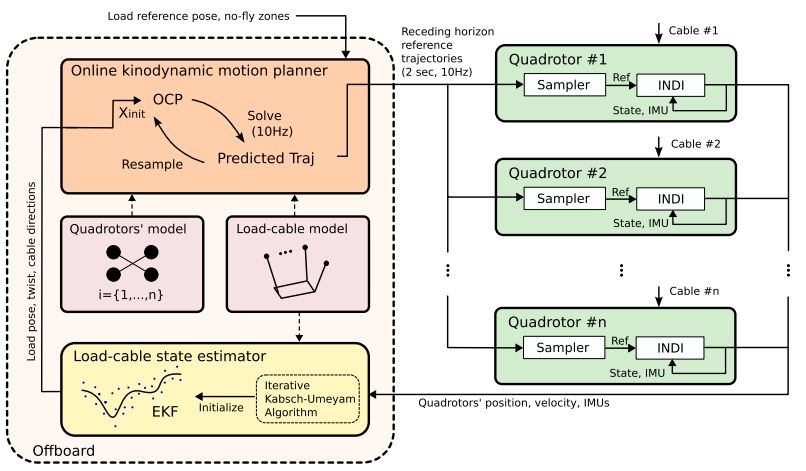
Recently. researchers at the Technical University of Delft came up with what appears to be a quite efficient algorithm for this purpose. In the demonstration video below, it’s easy to see how the quadcopters make short work of even convoluted obstacles while keeping themselves and their mates from getting tangled.
The research by [Sihao Sun] et al. appears in Science Robotics (preprint), in which they detail their trajectory-based framework and its kinodynamic motion planner. In short, this planner considers the whole-body dynamics of the load, the cables, and the quadcopters. An onboard controller for each quadcopter is responsible for translating the higher-level commands into specific changes to its rotor speeds and orientation.
Along with tests of its robustness to various environmental factors, such as wind, the researchers experimented with how many simultaneous quadcopters could work together with their available computing capacity. The answer, so far, is nine units, though they think that the implementation can be further optimized.
Of course, sometimes you just want to watch synchronized drones.
youtube.com/embed/tMvNCUuXai8?…
James likes this.
Perplexity è il nuovo pitbull dell’Ia? Report Bloomberg
L'articolo proviene da #StartMag e viene ricondiviso sulla comunità Lemmy @Informatica (Italy e non Italy 😁)
Che cosa scrive Bloomberg di Perplexity. Estratto dalla rassegna stampa di Liturri.
reshared this
Dai, non contribuiamo alla linea piatta della rete...
Informa Pirata likes this.
Informa Pirata reshared this.
@invernomuto AHAHAH! Capisco perfettamente! L'articolo è scritto con il culo (di una IA) 🤣
Però attenzione perché in realtà il blog "Ora Basta" di Giuseppe Liturri (quello linkato sopra è solo la distillazione della sezione tecnologica fatta da StartMag) è una bellissima rassegna stampa internazionale di articoli quasi sempre sotto paywall
Informatica nella scuola: ci siamo … quasi
L'articolo proviene da #StartMag e viene ricondiviso sulla comunità Lemmy @Informatica (Italy e non Italy 😁)
Il via libera dal Consiglio di Stato apre una nuova fase per la scuola italiana: ora la vera sfida è costruire in dieci anni una classe docente preparata a insegnare davvero l’informatica. La riflessione del prof. Enrico Nardelli, università di Roma
Informatica (Italy e non Italy 😁) reshared this.

Antonio Rotelli likes this.
Gli agenti AI sono realmente intelligenti?
L'articolo proviene da #StartMag e viene ricondiviso sulla comunità Lemmy @Informatica (Italy e non Italy 😁)
Anche una semplice operazione come prenotare un pranzo o una cena al ristorante rischia di mandare in tilt gli agenti AI sviluppati per affiancarci (sostituirci?) nella maggior parte dei compiti. Sono risultati di un test che dovrebbero far
reshared this

- pasta e sugo 16 euro
- pasta e sugo con foglia di basilico 16 euro
- pasta con il sugo 15 euro
- pasta con passata di pomodoro 30
E così via.
Immagini l'agente ia che sbarella a chiedere una pasta e sugo 🤣
Informatica (Italy e non Italy 😁) reshared this.
Oggi, 16 novembre, nel 1922, il discorso di Mussolini alla Camera: "Potevo fare di questa aula sorda e grigia un bivacco di manipoli"

La mattina del 28 ottobre, migliaia di squadristi fascisti, calcolati in circa 26.000, provenienti per lo più dalla Toscana e dall'Italia centro-settentrionale, si radunarono nei pressi di Roma, pronti a marciare sulla Capitale.
Vestiti con camicie nere e scarsamente armati ed equipaggiati, erano convinti di essere protagonisti di un'epopea nazionale destinata a rovesciare il governo e a instaurare un nuovo ordine politico. In realtà la "marcia su Roma" non era intesa da Mussolini che l'aveva promossa come una battaglia, ma come una dimostrazione di potenza.
Il 16 novembre Benito Mussolini tenne un discorso alla Camera dei Deputati, il suo primo discorso da Primo Ministro.
Dopo essere stato incaricato di formare un nuovo governo, prese la parola per presentare i suoi ministri. Si mostrò arrogante e affermò che avrebbe potuto chiudere il Parlamento e formare un governo composto solo da fascisti. Ma aveva deciso di non farlo, almeno non subito.
Affermò inoltre che la "rivoluzione delle camicie nere" era sua, da proteggere e ampliare. Una frase celebre del suo discorso fu: "Avrei potuto trasformare questa stanza silenziosa e grigia in un bivacco di squadristi" (leggi il discorso qui:it.wikisource.org/wiki/Italia_… )
Il suo atteggiamento e il suo modo di parlare mostravano una mancanza di rispetto per il Parlamento.
Dopo il suo discorso, il leader socialista Filippo Turati rispose con un testo intitolato "Il Parlamento è morto", criticando Mussolini e la sua visione per l'Italia.
Nicola Pizzamiglio likes this.
Storia reshared this.
Un'immagine in bianco e nero mostra un ampio interno con diverse file di uomini seduti a tavoli. In primo piano e nelle file successive, si vedono uomini vestiti con abiti scuri, la maggior parte con gilet e cravatte. In alcune file, gli uomini guardano in avanti. A una distanza maggiore, c'è una fila di uomini che guardano in avanti. Sul tavolo più vicino, sono posizionati molti oggetti che sembrano essere vasi o trofei. Sul tavolo più lontano sono posizionati alcuni documenti.
Alt-text: L'immagine in bianco e nero mostra un ampio interno con diversi file di uomini seduti a tavoli. Gli uomini sono vestiti con abiti scuri. Molti oggetti sembrano essere vasi o trofei sul tavolo più vicino, mentre alcuni documenti sono sul tavolo più lontano. Gli uomini appaiono impegnati in una discussione o riunione formale.
Fornito da @altbot, generato localmente e privatamente utilizzando Gemma3:27b
🌱 Energia utilizzata: 0.132 Wh

Servizi pubblici, tutte le sinergie fra PagoPa e comuni
L'articolo proviene da #StartMag e viene ricondiviso sulla comunità Lemmy @Informatica (Italy e non Italy 😁)
Che cosa è emerso durante il workshop “Innovazioni e sviluppi nell’ecosistema PagoPA. Dal welfare alle notifiche: sfide e soluzioni startmag.it/innovazione/serviz…
Informatica (Italy e non Italy 😁) reshared this.
Il bollettino di guerra quotidiano delle morti sul lavoro
@Giornalismo e disordine informativo
articolo21.org/2025/11/il-boll…
La strage nell’indifferenza, quella di cui nessuno parla (tranne raramente) e nessuno vuole vedere. Un bollettino di guerra sul lavoro che fa paura. Non fredde statistiche, non freddi numeri, ma
reshared this

Ho scoperto che #AIMP ha un tag editor che ti permette di caricare anche un'immagine.
Adesso la mia vita non avrà più senso finché non avrò messo le copertine degli album di provenienza a tutti i miei mp3.
😍
Poliversity - Università ricerca e giornalismo reshared this.
La legge di Onan
@Politica interna, europea e internazionale
L'articolo La legge di Onan proviene da Fondazione Luigi Einaudi.
Politica interna, europea e internazionale reshared this.
Does anybody know how to change the mp3 tags that are displayed by AIMP?
In the image below I'd like to see the "date" tag ("1982") instead of the "album" tag ("Collezione").
#AIMP

Poliversity - Università ricerca e giornalismo reshared this.

The newly sequenced RNA is 25,000 years older than the previous record-holder, opening a new window into genetic evolution and revealing a surprise about a famous mammoth mummy.#TheAbstract


Scientists Make Genetic Breakthrough with 39,000-Year-Old Mammoth RNA
Welcome back to the Abstract! These are the studies this week that reached back through time, flooded the zone, counted the stars, scored science goals, and topped it all off with a ten-course meal.First, scientists make a major breakthrough thanks to a very cute mammoth mummy. Then: the climate case for busy beavers; how to reconnect with 3,000 estranged siblings; this is your brain on football; and last, what Queen Elizabeth II had for lunch on February 20, 1957.
As always, for more of my work, check out my book First Contact: The Story of Our Obsession with Aliens, or subscribe to my personal newsletter the BeX Files.
The long afterlife of Yuka the mammoth
Scientists have sequenced RNA—a key ingredient of life as we know it—from the remains of a mammoth that lived 39,000 years ago during the Pleistocene “Ice Age” period, making it by far the oldest RNA on record.
The previous record holder for oldest RNA was sourced from a puppy that lived in Siberia 14,300 years ago. The new study has now pushed that timeline back by an extraordinary 25,000 years, opening a new window into ancient genetics and revealing a surprise about a famous mammoth mummy called Yuka.
“Ancient DNA has revolutionized the study of extinct and extant organisms that lived up to 2 million years ago, enabling the reconstruction of genomes from multiple extinct species, as well as the ecosystems where they once thrived,” said researchers led by Emilio Mármol Sánchez of the Globe Institute in Copenhagen, who completed the study while at Stockholm University.
“However, current DNA sequencing techniques alone cannot directly provide insights into tissue identity, gene expression dynamics, or transcriptional regulation, as these are encoded in the RNA fraction.”
“Here, we report transcriptional profiles from 10 late Pleistocene woolly mammoths,” the team continued. “One of these, dated to be ∼39,000 years old, yielded sufficient detail to recover…the oldest ancient RNA sequences recorded to date.”
DNA, the double-stranded “blueprint” molecule that stores genetic information, is far sturdier than RNA, which is why it can be traced back for millions of years instead of thousands. Single-stranded RNA, a “messenger” molecule that carries out the orders of DNA, is more fragile and rare in the paleontological record.
In addition to proving that RNA can survive much longer than previously known, the team discovered that Yuka—the mammoth that died 39,000 years ago—has been misgendered for years (yes, I realize gender is a social construct that does not apply to extremely dead mammoths, but mis-sexed just doesn’t have the same ring).
Yuka was originally deemed female according to a 2021 study that observed the “presence of skin folds in the genital area compatible with labia vulvae structures in modern elephants and the absence of male-specific muscle structures.” Mármol Sánchez and his colleagues have now overturned this anatomical judgement by probing the genetic remnants of Yuka’s Y chromosome.
In fact, as I write this on Thursday, November 13—a day before the embargo on this study lifts on Friday—Yuka is still listed as female on Wikipedia.
Just a day until you can live your truth, buddy.In other news…
Leave it to beavers
Every era has a champion; in our warming world, eager beavers may rise to claim this lofty title.
These enterprising rodents are textbook “ecosystem engineers” that reshape environments with sturdy dams that create biodiverse havens that are resistant to climate change. To better assess the role of beavers in the climate crisis, researchers reviewed the reported behavioral beaver-related restoration (BRR) projects across North America.
“Climate change is projected to impact streamflow patterns in western North America, reducing aquatic habitat quantity and quality and harming native species, but BRR has the potential to ameliorate some of these impacts,” said researchers led by Jesse A. S. Burgher of Washington State University.
The team reports “substantial evidence that BRR increases climate resiliency…by reducing summer water temperatures, increasing water storage, and enhancing floodplain connectivity” while also creating “fire-resistant habitat patches.”
So go forth and get busy, beavers! May we survive this crisis in part through the skin of your teeth.
One big happy stellar family
Visible from both the Northern and Southern Hemispheres, the Pleiades is the most widely recognized and culturally significant star cluster in the night sky. While this asterism is defined by a handful of especially radiant stars, known as the Seven Sisters, scientists have now tracked down thousands of other stellar siblings born from the same clutch scattered across some 2,000 light years.
Wide-field shot of Pleiades. Image Antonio Ferretti & Attilio Bruzzone
“We find that the Pleiades constitutes the bound core of a much larger, coeval structure” and “we refer to this structure as the Greater Pleiades Complex,” said researchers led by Andrew W. Boyle of the University of North Carolina at Chapel Hill. “On the basis of uniform ages, coherent space velocities, detailed elemental abundances, and traceback histories, we conclude that most stars in this complex originated from the same giant molecular cloud.”The work “further cements the Pleiades as a cornerstone of stellar astrophysics” and adds new allure to a cluster that first exploded into the skies during the Cretaceous age. (For more on the Pleiades, check out this piece I wrote earlier this year about the deep roots of its lore).
Getting inside your head(er)
Scientists have peered into a place I would never dare to visit—the minds of football fans during high-stakes plays. To tap into the neural side of fanaticism, researchers enlisted 60 healthy male fans from the ages of 20 to 45 to witness dozens of goal sequences from matches involving their favorite teams, rival teams, and “neutral” teams while their brains were scanned by an fMRI machine.
The participants were rated according to a “Football Supporters Fanaticism Scale (FSFS)” with criteria like “violent thought and/or action tendencies” and “institutional belonging and/or identification.” The scale divided the group up into 38 casual spectators, 19 committed fans, and four deranged fanatics (adjectives are mine for flourish).
Rendering of the negative effect of significant defeat. Image: Radiological Society of North America (RSNA)
“Our key findings revealed that scoring against rivals activated the reward system…while conceding to rivals triggered the mentalization network and inhibited the dorsal anterior cingulate cortex (dACC)”—a region responsible for cognitive control and decision-making—said researchers led by Francisco Zamorano of the Universidad San Sebastián in Chile. “Higher Football Supporters Fanaticism Scale scores correlated with reduced dACC activation during defeats, suggesting impaired emotional regulation in highly engaged fans.”In other words, it is now scientifically confirmed that football fanatics are Messi bitches who love drama.
Diplomacy served up fresh
We’ll close, as all things should, with a century of fine Portuguese dining. In yet another edition of “yes, this can be a job,” researchers collected 457 menus served at various diplomatic meals in Portugal from 1910 to 2023 to probe “how Portuguese gastronomic culture has been leveraged as a culinary diplomacy and geopolitical rapprochement strategy.”
As a lover of both food and geopolitical bureaucracy, this study really hit the spot. Highlights include a 1957 “regional lunch” for Queen Elizabeth II that aimed to channel “Portugality” through dishes like lobster and fruit tarts from the cities of Peniche and Alcobaça. The study is also filled with amazing asides like “the inclusion of imperial ice cream in the European Free Trade Association official luncheon (ID45, 1960) seems to transmit a sense of geopolitical greatness and vast governing capacity.” Ice cream just tastes so much better when it’s a symbol of international power.
Menu of the “Luncheon in honour of her Majesty Queen Elizabeth II and his Royal Highness the Duke of Edinburgh” held in Alcobaça (Portugal) on February 20th, 1957. Image: Cabral et al., 2025.
The team also unearthed a possible faux pas: Indian president Ramaswamy Venkataraman, a vegetarian who was raised Hindu, was served roast beef in 1990. In a footnote, Cabral and his colleagues concluded that “further investigation is deemed necessary to understand the context of ‘roast beef’ service to the Indian President in 1990.” Talk about juicy gossip!Thanks for reading! See you next week.
Power for dinner. Culinary diplomacy and geopolitical aspects in Portuguese diplomatic tables (1910-2023)
IntroductionThis paper examines how diplomatic meals in Portugal (1910–2023) have been shaped by Portuguese foreign policy and geopolitical contexts, and con...Óscar Cabral (Frontiers)


La Giornata Internazionale contro il traffico illecito di beni culturali

Il 14 novembre del 1970 venne elaborata a Parigi la Convenzione universalmente riconosciuta come il primo strumento legislativo sulle misure da adottare per interdire e impedire gli illeciti relativi all’importazione, all’esportazione e al trasferimento di proprietà dei beni culturali.
Nel 2020, a distanza di 50 anni, l’UNESCO indisse, in ricordo di quella data, la Giornata Internazionale contro il traffico illecito di beni culturali col fine di sensibilizzare l’opinione pubblica su un tema ancora oggi di estrema attualità,
In seno alla Giornata Internazionale, The Journal of Cultural Heritage Crime, La Sapienza Università di Roma e Art Crime Project APS hanno organizzato il Convegno di Studi Database e archivi per il contrasto ai crimini contro il patrimonio culturale. L’iniziativa è giunta al terzo appuntamento, dopo aver dato voce nelle precedenti edizioni alle principali istituzioni preposte alla tutela e alla ricerca accademica impegnate, ognuna per le proprie finalità, al contrasto dei fenomeni illeciti contro il patrimonio culturale e, successivamente, ai musei italiani quali presidi impegnati nel quotidiano nella promozione di una cultura della legalità.
Nella giornata presso Sapienza Università di Roma e’ stata la volta dell’incontro tra le istituzioni nazionali ed internazionali impegnate contro il traffico illecito dei beni culturali, gli scavi clandestini e i rischi a cui sono soggetti i luoghi della cultura e la dolorosa dispersione del patrimonio archeologico e culturale, in particolare l’interesse era sui database e gli archivi creati per supportare il lavoro di contrasto al traffico illecito ed ai crimini contro il patrimonio. All’azione fondamentale dei corpi di polizia dedicati alla lotta a tutte le azioni illecite contro il patrimonio, in primis i Carabinieri per la tutela del Patrimonio Culturale, si affianca l’attività delle più importanti organizzazioni internazionali, istituzioni universitarie e centri di ricerca che interverranno illustrando i progetti in corso, aventi come oggetto lo studio scientifico del patrimonio disperso, i materiali provenienti da sequestro, la gestione dei depositi, gli studi sulla provenienza e sull’autenticità dei manufatti che entrano nelle collezioni museali.

Nel corso della giornata e’ stato conferito il Premio ‘Paolo Giorgio Ferri‘, alla sua prima edizione, istituito in memoria del magistrato che ha dedicato la propria vita professionale alla tutela del patrimonio culturale e al contrasto del traffico illecito di beni culturali. Il riconoscimento nasce con l’intento di onorare, con cadenza annuale, personalità che si siano distinte per l’impegno, la competenza e la visione nel campo della protezione dei beni culturali. La scelta di intitolarlo a Paolo Giorgio Ferri, figura centrale nelle politiche italiane di recupero e restituzione, ha voluto ribadire il valore etico e giuridico del suo contributo, che ha ridefinito un modello di cooperazione tra magistratura, forze di polizia e istituzioni museali a livello internazionale. Il premio assegnato in questa occasione rappresenta il simbolo di una continuità ideale tra la memoria e l’attualità del contrasto ai crimini contro il patrimonio.
La Giornata del 14 novembre come un momento di incontro e di scambio di buone pratiche tra tutti gli attori coinvolti nella lotta alla cultura dell’illegalità e del crimine contro il patrimonio, ma anche di riflessione sulle modalità di narrazione e sensibilizzazione dei pubblici verso una sempre più attenta e collaborativa cultura della legalità.
#carabinieriTPC
#ArmadeiCarabinieri
#TUTELAPATRIMONIOCULTURALE
fabrizio reshared this.
Convocazione Assemblea dei Genitori del Liceo Augusto per il giorno venerdì 21 novembre alle ore 17
In base
- all'art. 5, Parte Seconda del Regolamento di Istituto
- all'art. 5 del Regolamento del Comitato dei Genitori,
- al consenso accordato alla convocazione da parte della maggioranza dei rappresentanti di classe membri dell'Assemblea dei Rappresentanti
- alle necessità di modificare la data inizialmente stabilita dal Comitato dei Genitori, a causa delle esigenze logistiche della Scuola
- all'esito dell'Assemblea dei Rappresentanti tenutasi il 13 novembre 2025 che ha dato mandato al Presidente di individuare una data sulla base delle disponibilità del maggior numero e alla maggior rappresentanza da parte dei genitori candidati come consiglieri di Istituto alle elezioni del 23 e 24 novembre
- alla risposta positiva di almeno due terzi dei candidati in ciascuna delle due liste concorrenti
il Presidente del Comitato dei Genitori
CONVOCA L'ASSEMBLEA DEI GENITORI DEL LICEO AUGUSTO PER IL GIORNO VENERDÌ 21 NOVEMBRE ALLE ORE 17
Trattandosi di Assemblea on line organizzata con strumenti e risorse del Comitato dei Genitori e non essendoci bisogno dell'autorizzazione della Scuola, non è necessario proporre due date di convocazione alla dirigenza scolastica.
L'Assemblea si terrà in videoconferenza con accesso tramite link che sarà inoltrato almeno mezz'ora prima dell'assemblea tramite:
- la presente mailing list
- l'account social del Comitato
- la bacheca delle attività del Comitato
L'ordine del giorno è il seguente:
1) Approvazione del regolamento dell'Assemblea e dell'ordine del giorno (il regolamento verrà inviato nei prossimi giorni)
2) Presentazione delle due liste di candidati della componente genitori per le elezioni per il Consiglio di Istituto e sessione di domande e risposte
3) Considerazioni relative alla rappresentanza dei genitori e raccolta delle istanze dei genitori
4) Varie ed eventuali
Fino alle 24 ore precedenti l'assemblea, tutti i genitori e tutori degli studenti del Liceo Augusto potranno richiedere, rispondendo a questa email, l'aggiunta di punti all'ordine del giorno nella sezione Varie ed Eventuali.
In forza dell'art. 5 del Regolamento di Istituto, all'assemblea di istituto possono partecipare con diritto di parola il Dirigente scolastico e i docenti dell'istituto; per ragioni organizzative, costoro potranno richiedere il link della riunione prendendo contatto con la presidenza del Comitato entro le 12 ore precedenti.

Ora Trump ha paura dell’inflazione: riduce i dazi su carne, pomodori, banane, caffè
Nell’elenco alcuni prodotti che gli Stati Uniti non possono coltivare e anche il manzo il cui prezzo ha raggiunto livelli record nel PaeseRedazione Esteri (Quotidiano Nazionale)
Venezuelani deportati dagli Stati Uniti e torturati in El Salvador
@Notizie dall'Italia e dal mondo
I venezuelani mandati in El Salvador dagli Usa all'inizio di quest'anno sono stati torturati e sottoposti ad altri abusi, tra cui violenze sessuali
L'articolo Venezuelani pagineesteri.it/2025/11/15/mon…
Notizie dall'Italia e dal mondo reshared this.


Marion County Record settlement: A step toward accountability
Dear Friend of Press Freedom,
Rümeysa Öztürk has been facing deportation for 234 days for co-writing an op-ed the government didn’t like. As we’ll discuss during an online panel next Tuesday, the government hasn’t stopped targeting journalists for removal. Read on for news from Kansas, Ohio, and more.
Kansas county pays $3M for forgetting the First Amendment
Press freedom just scored a $3 million win in Kansas. The county that participated in an illegal raid on the Marion County Record in 2023 is cutting big checks to journalists and a city councilor to settle their lawsuits.
As part of the settlement, the Marion County Sheriff’s Office also made a statement of “regret” for the raid, saying, “This likely would not have happened if established law had been reviewed and applied prior to the execution of the warrants.”
Ya think? FPF Senior Advocacy Adviser Caitlin Vogus broke down the flashing red lights any judge or cop should heed before storming a newsroom. Read her article here. And check out our March interview with Record publisher Eric Meyer.
No, journalists don’t need permission to cover immigration courts
Last month, we wrote to the Hyattsville immigration court in Maryland to express our alarm over a report that two journalists from Capital News Service had been expelled for not seeking express permission from the federal government to cover immigration proceedings.
That expulsion was contrary not only to the Constitution but also to the Executive Office of Immigration Review’s own guidance. But we noticed another problem with their fact sheet. It said reporters “must” check in upon arriving at immigration court. We’d been hearing anecdotes for some time about journalists being asked to “check in” at lobbies of immigration courts in other parts of the country. The fact sheet confirmed it.
In response, EOIR clarified that journalists are not required to either coordinate visits with the government in advance or check in upon arrival. And it issued an amended fact sheet to remove any doubt. We posted the fact sheet and email exchange on our site so any reporters given wrong information can have them handy. Read more here.
Secrecy and the midterms
The midterm elections are a year away, and it is essential to ensure that they are free and fair. Transparency is key, specifically surrounding the Department of Homeland Security’s election integrity unit and the Justice Department’s attempts to access voter data and equipment.
DHS’s election integrity unit is particularly secretive. For example, President Donald Trump appointed prominent election denier Heather Honey to lead the effort, but very little is known about what she’s doing with her newfound power. FPF’s Daniel Ellsberg Chair on Government Secrecy Lauren Harper has more about our efforts to hold the unit accountable. Subscribe to The Classifieds for more secrecy news.
Charges dropped against Cincinnati journalist
Charges have finally been dropped against CityBeat reporter Madeline Fening, who was arrested while covering a protest at the Roebling Bridge in northern Kentucky in July. Congratulations to the American Civil Liberties Union of Kentucky and their legal partners on the important win.
We led two letters in support of Fening and CityBeat intern Lucas Griffith. After the first, felony charges against the two were dropped. The second led prosecutors to admit to a reporter that they’d offered to drop charges in exchange for the journalists waiving their right to sue — a likely violation of both the Constitution and attorney ethics rules.
Now, both cases are over, but Griffith was found guilty of failure to disperse and fined $50. That may not sound like much, but the constitutional violation is still significant – journalists are not required to disperse along with protesters because they need to be free to cover the aftermath of protests. Read CityBeat’s coverage here.
What we’re reading
Trump vs. the BBC: What hurdles might the president’s legal argument face? (BBC). Trump “doesn’t care” if he wins the lawsuits he’s filed against newsrooms he doesn’t like, FPF’’sbsky.app/profile/did:plc:sabyz…Advocacy Director Seth Stern told BBC. “The point is to intimidate and punish those he views as critical (of) him.”
When reporting is a crime (Inquest). “Prison journalism should not be illegal. It should not be starved, stifled, or silenced. ... laws need to change.” Readbsky.app/profile/did:plc:yvl5j…Inquest’s article featuring FPF columnist Jeremy Busby’s account of how his own journalism, and that of outside reporters wanting to tell his story, is stifled by prison authorities. And watch our video featuring journalist Daniel Moritz-Rabson discussing the guide to reporting on prisons that he wrote for FPF.
The FCC’s news distortion policy should be rescinded (Protect Democracy). Thanks to our friends atbsky.app/profile/did:plc:4fvbd…Protect Democracy for furthering the fight against Brendan Carr’s censorial FCC. Carr’s selective enforcement of the policy to characterize any coverage Trump doesn’t like as “distortion” shows why the policy shouldn’t exist in the first place.
Larry Wilson: Stop shooting at the press while we do our jobs (Los Angeles Daily News). “Cops are banned from shooting non-violent people with deadly projectiles — whether they’re protesters or journalists. Because it’s illegal,” said First Amendment lawyer Susan Seager.
I tried to deliver aid to Gaza. Israel kidnapped and tortured me (The Nation). Journalist and human rights lawyer Thomas Becker writes about his treatment while detained by Israel. Watch our online discussion last week, in partnership with Defending Rights & Dissent, with three U.S. journalists who reported similar experiences after being abducted from aid flotillas.

⚠️Avviso agli utenti di Poliverso.org e poliversity.it⚠️
Stiamo facendo degli interventi di manutenzione e aggiornamento e il server potrebbe non essere disponibile per alcune ore.
Ci scusiamo per il disagio 😅
Tech companies are betting big on nuclear energy to meet AIs massive power demands and they're using that AI to speed up the construction of new nuclear power plants.
Tech companies are betting big on nuclear energy to meet AIs massive power demands and theyx27;re using that AI to speed up the construction of new nuclear power plants.#News #nuclear
Power Companies Are Using AI To Build Nuclear Power Plants
Microsoft and nuclear power company Westinghouse Nuclear want to use AI to speed up the construction of new nuclear power plants in the United States. According to a report from think tank AI Now, this push could lead to disaster.“If these initiatives continue to be pursued, their lack of safety may lead not only to catastrophic nuclear consequences, but also to an irreversible distrust within public perception of nuclear technologies that may inhibit the support of the nuclear sector as part of our global decarbonization efforts in the future,” the report said.
playlist.megaphone.fm?p=TBIEA2…
The construction of a nuclear plant involves a long legal and regulatory process called licensing that’s aimed at minimizing the risks of irradiating the public. Licensing is complicated and expensive but it’s also largely worked and nuclear accidents in the US are uncommon. But AI is driving a demand for energy and new players, mostly tech companies like Microsoft, are entering the nuclear field.“Licensing is the single biggest bottleneck for getting new projects online,” a slide from a Microsoft presentation about using generative AI to fast track nuclear construction said. “10 years and $100 [million.]”
The presentation, which is archived on the website for the US Nuclear Regulatory Commission (the independent government agency that’s charged with setting standards for reactors and keeping the public safe), detailed how the company would use AI to speed up licensing. In the company’s conception, existing nuclear licensing documents and data about nuclear sites data would be used to train an LLM that’s then used to generate documents to speed up the process.
But the authors of the report from AI Now told 404 Media that they have major concerns about trusting nuclear safety to an LLM. “Nuclear licensing is a process, it’s not a set of documents,” Heidy Khlaaf, the head AI scientist at the AI Now Institute and a co-author of the report, told 404 Media. “Which I think is the first flag in seeing proposals by Microsoft. They don’t understand what it means to have nuclear licensing.”
“Please draft a full Environmental Review for new project with these details,” Microsoft’s presentation imagines as a possible prompt for an AI licensing program. The AI would then send the completed draft to a human for review, who would use Copilot in a Word doc for “review and refinement.” At the end of Microsoft’s imagined process, it would have “Licensing documents created with reduced cost and time.”
The Idaho National Laboratory, a Department of Energy run nuclear lab, is already using Microsoft’s AI to “streamline” nuclear licensing. “INL will generate the engineering and safety analysis reports that are required to be submitted for construction permits and operating licenses for nuclear power plants,” INL said in a press release. Lloyd's Register, a UK-based maritime organization, is doing the same. American power company Westinghouse is marketing its own AI, called bertha, that promises to make the licensing process go from "months to minutes.”
The authors of the AI Now report worry that using AI to speed up the licensing process will bypass safety checks and lead to disaster. “Producing these highly structured licensing documents is not this box taking exercise as implied by these generative AI proposals that we're seeing,” Khlaaf told 404 Media. “The whole point of the lesson in process is to reason and understand the safety of the plant and to also use that process to explore the trade offs between the different approaches, the architectures, the safety designs, and to communicate to a regulator why that plant is safe. So when you use AI, it's not going to support these objectives, because it is not a set of documents or agreements, which I think you know, is kind of the myth that is now being put forward by these proposals.”
Sofia Guerra, Khlaaf’s co-author, agreed. Guerra is a career nuclear safety expert who has advised the U.S. Nuclear Regulatory Commission (NRC) and works with the International Atomic Energy Agency (IAEA) on the safe deployment of AI in nuclear applications. “This is really missing the point of licensing,” Guerra said of the push to use AI. “The licensing process is not perfect. It takes a long time and there’s a lot of iterations. Not everything is perfectly useful and targeted …but I think the process of doing that, in a way, is really the objective.”
Both Guerra and Khlaaf are proponents of nuclear energy, but worry that the proliferation of LLMs, the fast tracking of nuclear licenses, and the AI-driven push to build more plants is dangerous. “Nuclear energy is safe. It is safe, as we use it. But it’s safe because we make it safe and it’s safe because we spend a lot of time doing the licensing and we spend a lot of time learning from the things that go wrong and understanding where it went wrong and we try to address it next time,” Guerra said.
Law is another profession where people have attempted to use AI to streamline the process of writing complicated and involved technical documents. It hasn’t gone well. Lawyers who’ve attempted to write legal briefs have been caught, over and over again, in court. AI-constructed legal arguments cite precedents that do not exist, hallucinate cases, and generally foul up legal proceedings.
Might something similar happen if AI was used in nuclear licensing? “It could be something as simple as software and hardware version control,” Khlaaf said. “Typically in nuclear equipment, the supply chain is incredibly rigorous. Every component, every part, even when it was manufactured is accounted for. Large language models make these really minute mistakes that are hard to track. If you are off in the software version by a letter or a number, that can lead to a misunderstanding of which software version you have, what it entails, the expectation of the behavior of both the software and the hardware and from there, it can cascade into a much larger accident.”
Khlaaf pointed to Three Mile Island as an example of an entirely human-made accident that AI may replicate. The accident was a partial nuclear meltdown of a Pennsylvania reactor in 1979. “What happened is that you had some equipment failure and design flaws, and the operators misunderstood what those were due to a combination of a lack of training…that they did not have the correct indicators in their operating room,” Khlaaf said. “So it was an accident that was caused by a number of relatively minor equipment failures that cascaded. So you can imagine, if something this minor cascades quite easily, and you use a large language model and have a very small mistake in your design.”
In addition to the safety concerns, Khlaaf and Guerra told 404 Media that using sensitive nuclear data to train AI models increases the risk of nuclear proliferation. They pointed out that Microsoft is asking not only for historical NRC data but for real-time and project specific data. “This is a signal that AI providers are asking for nuclear secrets,” Khlaaf said. “To build a nuclear plant there is actually a lot of know-how that is not public knowledge…what’s available publicly versus what’s required to build a plant requires a lot of nuclear secrets that are not in the public domain.”
“This is a signal that AI providers are asking for nuclear secrets. To build a nuclear plant there is actually a lot of know-how that is not public knowledge…what’s available publicly versus what’s required to build a plant requires a lot of nuclear secrets that are not in the public domain.”
Tech companies maintain cloud servers that comply with federal regulations around secrecy and are sold to the US government. Anthropic and the National Nuclear Security Administration traded information across an Amazon Top Secret cloud server during a recent collaboration, and it’s likely that Microsoft and others would do something similar. Microsoft’s presentation on nuclear licensing references its own Azure Government cloud servers and notes that it’s compliant with Department of Energy regulations. 404 Media reached out to both Westinghouse Nuclear and Microsoft for this story. Microsoft declined to comment and Westinghouse did not respond.“Where is this data going to end up and who is going to have the knowledge?” Guerra told 404 Media.
💡
Do you know anything else about this story? I would love to hear from you. Using a non-work device, you can message me securely on Signal at +1 347 762-9212 or send me an email at matthew@404media.co.Nuclear is a dual use technology. You can use the knowledge of nuclear reactors to build a power plant or you can use it to build a nuclear weapon. The line between nukes for peace and nukes for war is porous. “The knowledge is analogous," Khlaaf said. “This is why we have very strict export controls, not just for the transfer of nuclear material but nuclear data.”
Proliferation concerns around nuclear energy are real. Fear that a nuclear energy program would become a nuclear weapons program was the justification the Trump administration used to bomb Iran earlier this year. And as part of the rush to produce more nuclear reactors and create infrastructure for AI, the White House has said it will begin selling old weapon-grade plutonium to the private sector for use in nuclear reactors.
Trump’s done a lot to make it easier for companies to build new nuclear reactors and use AI for licensing. The AI Now report pointed to a May 23, 2025 executive order that seeks to overhaul the NRC. The EO called for the NRC to reform its culture, reform its structure, and consult with the Pentagon and the Department of Energy as it navigated changing standards. The goal of the EO is to speed up the construction of reactors and get through the licensing process faster.
A different May 23 executive order made it clear why the White House wants to overhaul the NRC. “Advanced computing infrastructure for artificial intelligence (AI) capabilities and other mission capability resources at military and national security installations and national laboratories demands reliable, high-density power sources that cannot be disrupted by external threats or grid failures,” it said.
At the same time, the Department of Government Efficiency (DOGE) has gutted the NRC. In September, members of the NRC told Congress they were worried they’d be fired if they didn’t approve nuclear reactor designs favored by the administration. “I think on any given day, I could be fired by the administration for reasons unknown,” Bradley Crowell, a commissioner at the NRC said in Congressional testimony. He also warned that DOGE driven staffing cuts would make it impossible to increase the construction of nuclear reactors while maintaining safety standards.
“The executive orders push the AI message. We’re not just seeing this idea of the rollback of nuclear regulation because we’re suddenly very excited about nuclear energy. We’re seeing it being done in service of AI,” Khlaaf said. “When you're looking at this rolling back of Nuclear Regulation and also this monopolization of nuclear energy to explicitly power AI, this raises a lot of serious concerns about whether the risk associated with nuclear facilities, in combination with the sort of these initiatives can be justified if they're not to the benefit of civil energy consumption.”
Matthew Wald, an independent nuclear energy analyst and former New York Times science journalist is more bullish on the use of AI in the nuclear energy field. Like Khlaaf, he also referenced the accident at Three Mile Island. “The tragedy of Three Mile Island was there was a badly designed control room, badly trained operators, and there was a control room indication that was very easy to misunderstand, and they misunderstood it, and it turned out that the same event had begun at another reactor. It was almost identical in Ohio, but that information was never shared, and the guys in Pennsylvania didn't know about it, so they wrecked a reactor,” Wald told 404 Media.
"AI is helpful, but let’s not get messianic about it.”
According to Wald, using AI to consolidate government databases full of nuclear regulatory information could have prevented that. “If you've got AI that can take data from one plant or from a set of plants, and it can arrange and organize that data in a way that's helpful to other plants, that's good news,” he said. “It could be good for safety. It could also just be good for efficiency. And certainly in licensing, it would be more efficient for both the licensee and the regulator if they had a clearer idea of precedent, of relevant other data.”He also said that the nuclear industry is full of safety-minded engineers who triple check everything. “One of the virtues of people in this business is they are challenging and inquisitive and they want to check things. Whether or not they use computers as a tool, they’re still challenging and inquisitive and want to check things,” he said. “And I think anybody who uses AI unquestionably is asking for trouble, and I think the industry knows that…AI is helpful, but let’s not get messianic about it.”
But Khlaaf and Guerra are worried that the framing of nuclear power as a national security concern and the embrace of AI to speed up construction will setback the embrace of nuclear power. If nuclear isn’t safe, it’s not worth doing. “People seem to have lost sight of why nuclear regulation and safety thresholds exist to begin with. And the reason why nuclear risks, or civilian nuclear risk, were ever justified, was due to the capacity for nuclear power. To provide flexible civilian energy demands at low cost emissions in line with climate targets,” Khlaaf said.
“So when you move away from that…and you pull in the AI arms race into this cost benefit justification for risk proportionality, it leads government to sort of over index on these unproven benefits of AI as a reason to have nuclear risk, which ultimately undermines the risks of ionizing radiation to the general population, and also the increased risk of nuclear proliferation, which happens if you were to use AI like large language models in the licensing process.”
Dem NRC members warn they could be fired over safety decisions - E&E News by POLITICO
A Wednesday hearing also revealed more details about a meeting with a Department of Government Efficiency official.Nico Portuondo, Francisco "A.J." Camacho (E&E News by POLITICO)


reshared this
*Libertà per il Dott. Husam Abu Safiyya*
Ecco alcuni punti chiave sulla sua situazione e le richieste di liberazione:
• Arrestato il 27 dicembre 2024 durante un raid israeliano all’ospedale Kamal Adwan.

Are EU Austerity Cuts Adding To The Inequalities?
Europe stands at perhaps the most difficult crossroads of recent times, a tough call to make between social welfare and stabilizing fiscal balance. On 4 November 2025, the IMF issued a warning, citing the deep fiscal troubles the EU is facing and how the situation is likely to worsen if immediate and more decisive steps are not taken. The rising debt levels, which could double to 140% by 2040, as suggested by the IMF, pose an imminent threat to disturbing the existing fragile balance between revenue and expenditure. Funding various social schemes, including pensions, unemployment benefits, healthcare, and education, has long been a mainstay of government policies across the EU. Now, the IMF calls for a re-evaluation of those spending policies. The message is clear: harsh measures are crucial now to have a better future. Across Europe, governments have already joined the austerity drive. For the last 18 months, the EU has been experimenting with various ideas as part of a strict fiscal policy aimed at restoring the budgetary balance. Below is a list of measures adopted across the EU countries:
- Raising the statutory retirement age.
- Freezing or delaying pension indexation.
- Limiting the duration of unemployment benefits.
- Reducing public-sector wage growth or hiring.
- Cutting healthcare and education budgets.
- Phasing out early-retirement schemes.
- Increasing consumption or environmental taxes.
- Reducing energy or transport subsidies.
- Capping family and housing support payments.
- Restricting public investment spending.
These measures have either been implemented/approved, or are currently under parliamentary debate. As policymakers adjust the policy machinery to cope with an impending economic peril, implementations are faced with a formidable opposition from the affected groups. In fact, over the last two months, a wave of rising resentment has been evident. Belgium, France, Germany, Italy, and more have all witnessed nationwide strikes, and many more are likely to follow.
Although cutting public spending might seem like a straightforward solution to rectify the current fiscal imbalance from the government’s perspective, the situation is not entirely linear. Cutting public funding, such as pensions, social benefits, or unemployment funds, reduces the disposable income of the impacted groups. Low disposable income means lower consumer demand. With demand spiraling downward, supply needs to be downsized as well, following a fundamental economic principle that matches market demand. As a result, businesses respond with layoffs, further reducing tax revenues and pushing up unemployment levels. In short, economies can face a self-perpetuating cycle that widens inequality and, even worse, triggers an economic recession (something the world witnessed in the 1930s – The Great Depression).
Furthermore, a reduction in expenditure on human infrastructure, whether in health or education, has a long-term negative impact on the economy. The immediate effect could be a robust balance sheet and good fiscal ratios. In the longer run, it weakens the foundation for sustainable growth, something which the EU stands for and identifies with. Decline in human capital, lack of innovation and global competitiveness, brain drain, social inequality, and other issues are a few notable consequences. Excessively rigid austerity measures, in a way, can undermine growth and social cohesion.
The IMF’s warning, therefore, should not be examined in a single dimension. Instead of treating it as a call to cut, it can be perceived as an invitation to rethink how Europe balances its books while safeguarding its people.
The solution lies in achieving a balance:
According to Friedrich Ebert Stiftung’s “Alternative to Austerity”, if fiscal strategies are growth-oriented, rather than simply focusing on cutting expenditure, a balance can be reinstated without impacting the welfare. Budgetary discipline will have to be achieved through the use of a balanced mix of responsible budgeting and investing public funds wisely. Pumping investments into areas such as infrastructure, education, and green technology can help countries build strong and sustainable economies, as well as secure their futures. These investments can help create more jobs, improve skills, and support long-term growth. It also calls for a fairer tax system where the wealthy and large companies contribute more, reducing the pressure on working families.
The problem the EU is facing at this moment goes beyond the budget. The challenge is about protecting fairness and dignity. Financial discipline should always go hand-in-hand with social justice.
The goal should not be to weaken the social support systems people depend on, but to strengthen and make them more sustainable, so that growth and fairness work together, rather than against each other.
Reference Links:
politico.eu/article/police-cla… | archive.ph/pYghC
euronews.com/2025/09/24/french… | archive.ph/JetNb
berlintoday.com/public-sector-… | archive.ph/8ZdCM
Oltre il dovuto
@Privacy Pride
Il post completo di Christian Bernieri è sul suo blog: garantepiracy.it/blog/oltre-il…
Che periodo! Settimane molto complicate per chi riveste un ruolo di responsabilità presso gli uffici del Garante Privacy Settimane infernali per i quattro componenti del Collegio. Dopo la magistrale overture eseguita dalla trasmissione Report, l’orchestra dell’informazione sta
Privacy Pride reshared this.

L 'Alchimista Digitale
in reply to Max - Poliverso 🇪🇺🇮🇹 • • •